









How Does the Female Reproductive System Function in NEET Biology?
The female reproductive system is a vital concept in Biology and is frequently tested in the NEET exam. Understanding this system helps NEET aspirants master topics like human physiology and reproduction, which form a foundational part of the NEET syllabus. Clear knowledge of the structure, functions, and importance of the female reproductive system not only aids in solving direct questions but also strengthens related biological concepts required for competitive exams.
What is the Female Reproductive System?
The female reproductive system is a collection of internal and external organs in females that work together for the process of reproduction. Its main roles include producing female gametes (ova or eggs), providing conditions for fertilization, supporting fetal development during pregnancy, and helping in the birth process. Mastering this concept lays the groundwork for understanding human reproduction and allied topics in NEET.
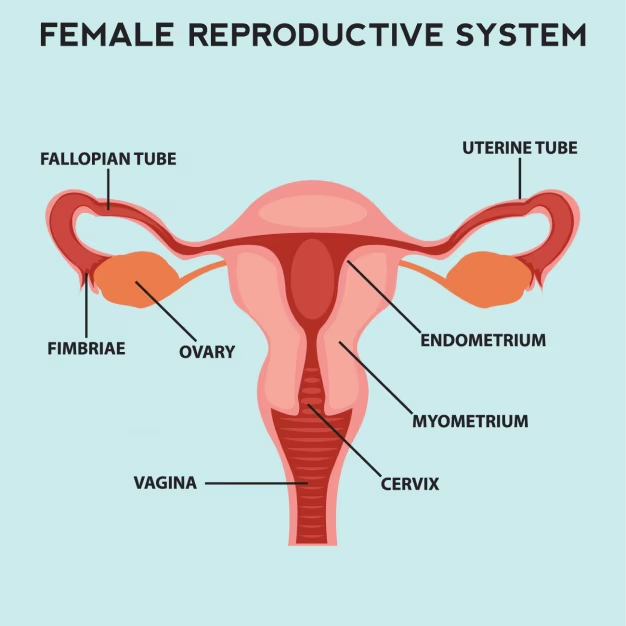
Core Ideas and Fundamentals of the Female Reproductive System
Main Components
The female reproductive system consists of several important organs working in coordination. They can broadly be divided into internal and external organs, each with specific functions necessary for successful reproduction.
- Ovaries: Pair of almond-shaped glands that produce eggs (ova) and female sex hormones like estrogen and progesterone.
- Fallopian Tubes (Oviducts): Tubes that transport the released ova from the ovaries to the uterus and serve as the site for fertilization.
- Uterus: Muscular organ where the fertilized egg implants and develops into a fetus.
- Cervix: Lower, narrow part of the uterus that opens into the vagina.
- Vagina: Muscular canal that connects the uterus to the outside of the body, serving as birth canal and receiving the penis during intercourse.
- External Genitalia: Includes structures such as the labia, clitoris, and vaginal opening, collectively called the vulva.
Functions of Each Component
Each part of the system plays a unique and essential role, from hormone production to childbirth. Understanding both structure and function is key for NEET-level questions, which often test application-based knowledge in this area.
Important Sub-Concepts Related to the Female Reproductive System
Menstrual Cycle
The menstrual cycle is the regular, cyclic changes that occur in the female reproductive system, especially the ovaries and uterus, to prepare for potential pregnancy. It involves phases such as menstruation, follicular phase, ovulation, and luteal phase, all regulated by hormones. Understanding cycle phases, hormonal regulation, and timing of ovulation is crucial for NEET questions.
Ovulation
Ovulation refers to the release of a mature egg from the ovary, which is then available for fertilization. NEET often asks about the timing of ovulation, its hormonal control, and its significance in the menstrual cycle.
Fertilization and Implantation
Fertilization is the fusion of a male sperm and a female egg, usually occurring in the fallopian tubes. If successful, the zygote travels to the uterus and gets implanted in the endometrial lining to develop into an embryo. These steps are essential for linking the physiology of reproduction with later stages like pregnancy and birth.
Key Principles and Relationships in the Female Reproductive System
While there are no direct mathematical formulas in this topic, several relationships and principles are crucial for NEET:
- Hormonal Control: Cyclic changes are tightly regulated by hormones like FSH, LH, estrogen, and progesterone from the pituitary and ovaries.
- Feedback Mechanisms: Negative and positive feedback loops maintain hormonal balance and regulate ovulation and menstruation.
- Cycle Length and Phases: The typical menstrual cycle is about 28 days, but can vary; ovulation generally occurs around the 14th day.
Special Features and Significance of the Female Reproductive System
Key features include the presence of cyclical changes (menstruation), the ability for internal fertilization and development, and role in producing vital hormones. The system has adaptive and protective mechanisms, such as the cervical mucus that protects against pathogens. An in-depth understanding clarifies related disease states and medical techniques, which are also tested in NEET.
Why is the Female Reproductive System Important for NEET?
This concept is at the heart of human physiology and reproductive biology questions in NEET. Questions often appear on structure identification, function, hormonal control, menstruation, fertilization, and clinical scenarios like disorders or contraceptive methods. A strong grasp helps in:
- Answering direct and diagram-based MCQs
- Integrating knowledge across physiology, endocrinology, and genetics
- Solving applied and case-based NEET questions in reproductive health
This topic also connects with other chapters, such as human health, development, and genetics, making it a conceptual cornerstone in Biology for NEET.
How to Study the Female Reproductive System Effectively for NEET
- Start by understanding diagrams and labeling all organs carefully; visual learning helps in quick recall.
- Learn the main functions of each organ and how they connect to hormonal control and the menstrual cycle.
- Map the menstrual cycle phases and the hormones involved; make your own summary charts.
- Practice NEET-type MCQs and assertion-reasoning questions to build application skills.
- Use NCERT diagrams and reinforce with labeled images, like the one above, for better retention.
- Revise regularly to remember cycle timings, hormone names, and sequential changes.
- Clarify common confusions, such as which hormone peaks during ovulation or phases of endometrial changes.
Common Mistakes Students Make in This Concept
- Confusing the roles of different hormones (e.g., FSH vs. LH, estrogen vs. progesterone)
- Forgetting the sequence of menstrual cycle phases and their timeline
- Mislabeling organs in diagrams and mixing up structural functions
- Overlooking feedback mechanisms and their impact on hormone release
- Not connecting the menstrual cycle to fertility window or to contraceptive methods
Quick Revision Points
- Ovaries produce ova and sex hormones (estrogen and progesterone).
- Fertilization usually occurs in the ampulla of the fallopian tube.
- The uterus supports fetal development and is the site of implantation.
- Menstrual cycle averages 28 days; ovulation happens mid-cycle.
- Hormones involved: FSH, LH (pituitary), estrogen, progesterone (ovaries).
- The cervix acts as a gateway between the uterus and vagina.
- Know the order and function of organs using diagrams for better recall.


FAQs on Biology Female Reproductive System for NEET Aspirants
1. What is the female reproductive system?
The female reproductive system is a group of organs and structures involved in reproduction, hormonal regulation, and the production of gametes necessary for fertilization. Key components include:
- Ovaries: Produce eggs (ova) and secrete hormones like estrogen and progesterone.
- Fallopian Tubes: Transport the ovum from the ovaries to the uterus and are the site of fertilization.
- Uterus: Supports and nourishes the developing embryo and fetus during pregnancy.
- Vagina: Serves as the birth canal and receives the sperm during copulation.
- External Genitalia (Vulva): Protects internal reproductive organs.
2. What are the main functions of the female reproductive system?
The primary functions of the female reproductive system are the production of female gametes and enabling fertilization, conception, and childbirth. Major functions include:
- Oogenesis: Formation of eggs in the ovaries.
- Hormone secretion: Release of estrogen and progesterone for menstrual cycle regulation.
- Providing environment for fertilization: Fallopian tubes serve as the fertilization site.
- Supporting fetal development: Uterus provides nourishment and protection.
- Enabling birth and lactation: Vagina and mammary glands play vital roles.
3. Name the parts of the female reproductive system.
The main parts of the female reproductive system include both internal and external structures, all of which are essential for reproduction. The major parts are:
- Ovaries
- Fallopian Tubes (Oviducts)
- Uterus
- Cervix
- Vagina
- Vulva (External Genitalia)
4. What is the function of the ovary in the female reproductive system?
The ovary is the primary female reproductive organ responsible for egg production and hormone secretion. Its main functions include:
- Oogenesis – Formation and maturation of ova (eggs).
- Secretion of hormones such as estrogen and progesterone that regulate the menstrual cycle and secondary sexual characteristics.
5. Where does fertilization occur in the female reproductive system?
Fertilization usually occurs in the ampulla region of the fallopian tube, which is the widest section of the tube. Key facts:
- Ampulla is the typical site where sperm meets and fuses with the ovum.
- The fertilized egg (zygote) then moves towards the uterus for implantation.
6. What hormones are secreted by the female reproductive system?
The female reproductive system primarily secretes estrogen, progesterone, and small amounts of testosterone, which are essential for reproductive health. Main hormones are:
- Estrogen: Responsible for development of secondary sexual characteristics and regulation of the menstrual cycle.
- Progesterone: Prepares the uterus for pregnancy and supports early gestation.
- Inhibin: Inhibits FSH secretion to regulate egg maturation.
7. What is the menstrual cycle and how is it regulated?
The menstrual cycle is a monthly series of events involving the preparation of the uterus for pregnancy, regulated by hormones. The key phases are:
- Menstrual Phase: Shedding of the uterine lining (days 1-5).
- Follicular Phase: Follicle and egg development (days 6-14).
- Ovulation: Release of mature egg (around day 14).
- Luteal Phase: Uterus prepares for possible implantation (days 15-28).
8. What are the features of the uterine wall?
The uterine wall is composed of three main layers, each with specific functions in human reproduction. The layers are:
- Perimetrium: Outer thin layer providing protection.
- Myometrium: Middle muscular layer responsible for contractions during childbirth.
- Endometrium: Inner glandular layer where implantation occurs and which is shed during menstruation.
9. What is the function of the fallopian tubes?
Fallopian tubes are essential ducts connecting the ovaries to the uterus and serve as the site of fertilization. Their main functions include:
- Transporting eggs from the ovaries to the uterus.
- Providing a suitable environment for fertilization by sperm.
- Assisting the movement of the fertilized egg (zygote) towards the uterus for implantation.
10. Describe the structure and function of the vagina.
The vagina is a muscular, elastic canal that serves as the passage for menstrual flow, receives sperm during intercourse, and acts as the birth canal during delivery. Main points:
- It is lined with a mucous membrane to protect from pathogens.
- Allows passage of menstrual fluids and sperm entry.
- Expands significantly during childbirth to deliver the baby.
11. What are common disorders of the female reproductive system?
Common disorders of the female reproductive system include conditions that affect reproductive health and fertility. Frequently referenced disorders are:
- Polycystic Ovary Syndrome (PCOS)
- Endometriosis
- Fibroids
- Menstrual irregularities
- Pelvic inflammatory disease (PID)
