








Nervous System Structure and Function Explained for NEET Students
The nervous system is one of the most essential concepts in Biology for NEET aspirants. It forms the foundation for understanding how the human body perceives, processes, and responds to internal and external stimuli. A thorough conceptual understanding of the nervous system not only helps students answer direct questions but also supports problem-solving in Physiology, Coordination, and Health chapters. Building a solid grasp of this topic is crucial for scoring well in NEET Biology and for developing a scientific approach to human body functions.
What is the Nervous System?
The nervous system is a highly organized network in the human body responsible for receiving, transmitting, and processing information. It coordinates voluntary and involuntary actions, senses environmental changes, interprets signals, and enables rapid responses by controlling muscles and glands. Essentially, the nervous system acts as the communication and command center of our body, ensuring smooth and coordinated functioning of all organs. In NEET, understanding its structure and function is vital for mastering Human Physiology topics and interdisciplinary connections.
Core Ideas and Fundamentals of the Nervous System
Structural Organization
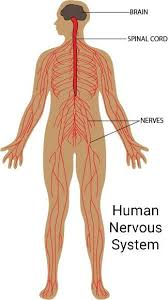
The nervous system is primarily divided into two major parts: the Central Nervous System (CNS) and the Peripheral Nervous System (PNS). The CNS includes the brain and spinal cord, handling integration and command. The PNS consists of all nervous tissue outside the CNS and links the CNS to limbs and organs.
Basic Units: Neurons
Neurons are the functional and structural units of the nervous system. They are specialized cells that generate and conduct electrical impulses. Each neuron comprises a cell body (soma), dendrites (receiving ends), and an axon (transmitting end). The intricate connections between neurons, called synapses, form complex networks responsible for signaling and coordination.
Transmission of Signals
Signals in the nervous system are transmitted in two main ways: electrical impulses travel within neurons, while neurotransmitters carry signals between neurons via synapses. This system enables rapid, precise communication throughout the body.
Important Sub-Concepts Related to the Nervous System
Central Nervous System (CNS)
The CNS includes the brain and spinal cord. The brain is the control center, responsible for thought, memory, emotions, and most body processes. The spinal cord acts as a conduit for messages between the brain and the rest of the body, and also mediates reflexes.
Peripheral Nervous System (PNS)
The PNS links the CNS to limbs, organs, and skin via cranial nerves and spinal nerves. It is further divided into the somatic nervous system (controls voluntary movements) and the autonomic nervous system (controls involuntary functions like heartbeat and digestion).
Autonomic Nervous System (ANS)
The ANS regulates involuntary physiological functions and is divided into the sympathetic (fight-or-flight) and parasympathetic (rest-and-digest) divisions. It helps maintain homeostasis and responds to stress, which is a frequent NEET question context.
Key Relationships and Principles in the Nervous System
Reflex Action: Reflexes are rapid, automatic responses to stimuli that occur without conscious effort. The classic example is the knee-jerk reflex. Reflex arcs involve receptors, sensory neurons, integration centers, motor neurons, and effectors, demonstrating the pathway of nervous communication in the body.
Synaptic Transmission: When an electrical impulse reaches a synapse, neurotransmitters are released, which then bind to the next neuron, propagating the signal. Chemical synapses are unidirectional and allow for complex modulation of signals - a point often tested in NEET MCQs.
Characteristics and Functions of the Human Nervous System
- Highly specialized for communication and control
- Enables sensation, interpretation, movement, and regulation
- Integrates voluntary and involuntary actions through the CNS and PNS
- Maintains homeostasis via feedback mechanisms
- Has protective structures like meninges and bone (skull, vertebral column)
Importance of the Nervous System Concept for NEET
A clear understanding of the nervous system is critical for NEET because this topic frequently appears in both direct and conceptual questions. It integrates with other areas such as hormones, sense organs, and even plant coordination, allowing students to approach interdisciplinary questions confidently. Mastering this concept builds a solid base for interpreting physiology-based diagrams, understanding human health mechanisms, and answering application-type MCQs. In many NEET papers, accurate knowledge of the nervous system can be the difference between selecting correct and confusing options.
How to Study the Nervous System Effectively for NEET
- Start by drawing and labeling diagrams of the human nervous system for better retention.
- Focus on understanding functional differences between CNS, PNS, and ANS - do not just memorize.
- Study the key roles of neurons, synapses, and neurotransmitters using flowcharts and analogies.
- Practice MCQs from previous years and standard NEET guides, focusing on tricky options and application-based questions.
- Regularly revise through self-made notes and summary tables to reinforce important facts.
- Solve assertion-reason and diagram-based questions for conceptual clarity.
- Teach peers or explain concepts aloud to check your own understanding.
Common Mistakes Students Make in the Nervous System
- Confusing the roles of CNS and PNS or their sub-divisions (sympathetic vs parasympathetic)
- Memorizing diagrams without truly understanding structure-function relationships
- Overlooking the importance of neurotransmitters and synaptic mechanisms
- Ignoring reflex arcs or misunderstanding the sequence of events in reflex action
- Neglecting diagram-based or flowchart-based practice, which is often tested in NEET
Quick Revision Points for the Nervous System
- The nervous system is divided into CNS (brain, spinal cord) and PNS (nerves outside CNS).
- Neurons are the basic units - remember dendrite (input), axon (output).
- Signal transmission: electrical within neurons, chemical across synapses.
- Reflex arc sequence: receptor → sensory neuron → CNS → motor neuron → effector.
- ANS regulates involuntary functions - sympathetic increases activity, parasympathetic calms.
- Study and practice labeled diagrams for CNS, PNS, neuron, and reflex arc.
- Relate structure with function to improve memory and understanding.
FAQs on Biology Nervous System for NEET: Complete Guide and Insights
1. What is the nervous system and why is it important in humans for NEET?
The nervous system is a complex network of nerve cells and fibers that controls and coordinates body functions, making it essential for survival and quick response to stimuli, which is highly relevant for NEET Biology exam.
Main features:
- Consists of the Central Nervous System (CNS) and Peripheral Nervous System (PNS)
- Enables coordination, communication, and control throughout the body
- Integrates sensory input and creates motor output
- Vital for homeostasis and interacting with the environment
2. What are the main parts of the human nervous system for NEET?
The human nervous system is divided into two major parts: the central nervous system and the peripheral nervous system, both covered in the NEET syllabus.
Main parts:
- Central Nervous System (CNS): Consists of the brain and spinal cord
- Peripheral Nervous System (PNS): Includes all nerves outside the CNS, subdivided into somatic and autonomic systems
3. What is a neuron and what are its parts?
Neurons, the structural and functional units of the nervous system, transmit signals rapidly across the body, a key point for NEET questions.
Main parts:
- Cell body (Soma): Contains the nucleus and organelles
- Dendrites: Receive incoming nerve impulses
- Axon: Conducts nerve impulses away from the cell body
4. What is the difference between the central and peripheral nervous system?
The central nervous system (CNS) and peripheral nervous system (PNS) differ in structure and function, an important distinction for NEET.
CNS:
- Comprises brain and spinal cord
- Processes information and coordinates responses
- Consists of cranial and spinal nerves
- Connects the CNS to the rest of the body
5. What are the main functions of the nervous system in humans?
The nervous system controls and coordinates body activities, responding to both internal and external stimuli, which is frequently asked in NEET Biology.
Main functions:
- Sensory input: Receives and processes information
- Integration: Interprets and processes sensory data
- Motor output: Sends signals to muscles and glands
6. How does the nervous system help to maintain homeostasis?
The nervous system helps to maintain homeostasis by detecting changes inside and outside the body and triggering appropriate responses, important for NEET syllabus.
Key processes:
- Receives sensory input
- Integrates and processes information
- Initiates rapid responses to maintain balance
7. What is the autonomic nervous system? Name its two main divisions.
The autonomic nervous system (ANS) regulates involuntary bodily functions and has two major divisions, which are crucial NEET concepts.
Divisions of ANS:
- Sympathetic nervous system: Prepares the body for 'fight or flight' responses
- Parasympathetic nervous system: Promotes 'rest and digest' activities
8. How do nerve impulses travel in the nervous system (NEET)?
Nerve impulses travel as electrical signals along neurons, enabling rapid communication, a principle highlighted in NEET examinations.
Steps:
- Resting potential: Neuron is polarized
- Action potential: Stimulus triggers depolarization
- Impulse transmission: Signal moves along the axon
- Synaptic transmission: Neurotransmitters cross the synapse to next neuron or muscle
9. Name the parts of the human brain and their functions.
The human brain consists of several major parts with distinct functions, often asked in NEET.
Main parts:
- Cerebrum: Controls voluntary actions, intelligence, memory
- Cerebellum: Maintains balance and posture
- Medulla oblongata: Regulates involuntary actions like breathing and heartbeat
10. What is the difference between sensory and motor neurons?
Sensory neurons and motor neurons differ in the direction of impulse transmission, a vital concept for NEET students.
- Sensory neurons: Carry impulses from sense organs to the central nervous system
- Motor neurons: Transmit impulses from the central nervous system to effectors (muscles or glands)
11. What is a reflex action? Give examples relevant for NEET.
Reflex action is an involuntary, immediate response to a stimulus, a topic frequently discussed in NEET biology.
Examples:
- Withdrawal of hand from a hot object
- Knee-jerk reflex
- Blinking of eyes in bright light
12. How is the nervous system different from the endocrine system in humans?
The nervous system and endocrine system differ in how they regulate body functions, a key NEET topic.
- Nervous system: Acts quickly using electrical impulses
- Endocrine system: Uses hormones for slower, long-lasting effects
- Both systems maintain homeostasis, but through different mechanisms
