








How Does Glycolysis Work in NEET Biology? Steps, Enzymes Explained
Glycolysis is a fundamental biological process where glucose is broken down to release energy, making it a key concept in Biology for NEET aspirants. Understanding glycolysis helps students grasp how cells generate ATP, which is essential for various life functions. Since questions from glycolysis regularly appear in NEET, mastering this topic can significantly boost your confidence and score in the exam.
What is Glycolysis?
Glycolysis is a step-by-step biochemical pathway that takes place in the cytoplasm of all living cells. It involves the breakdown of one molecule of glucose (a six-carbon sugar) into two molecules of pyruvate (a three-carbon compound), producing energy in the form of ATP and NADH. Glycolysis forms the first stage of cellular respiration and does not require oxygen, making it an anaerobic process.
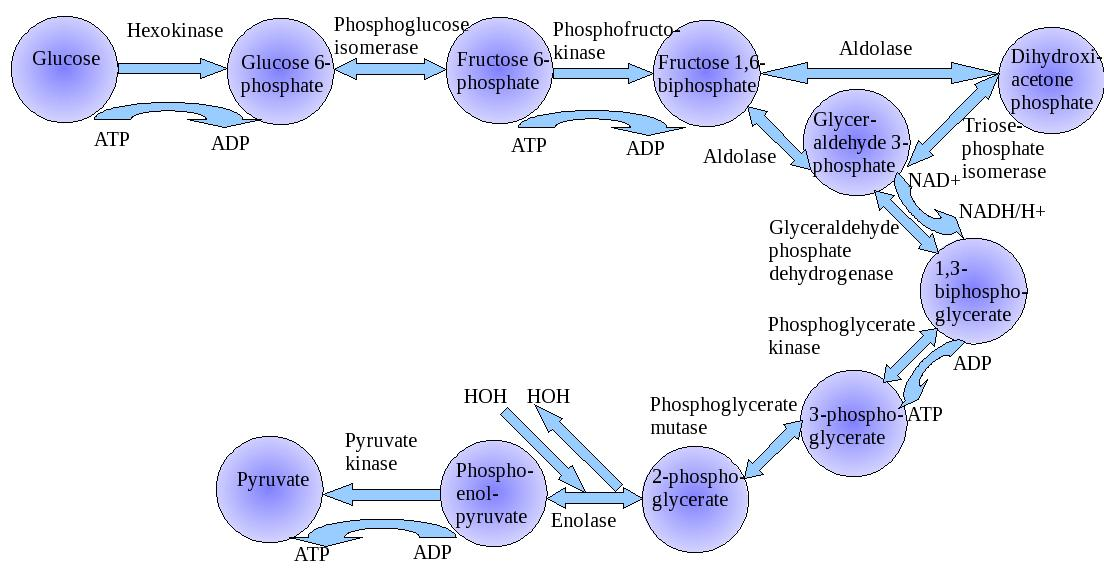
Core Ideas and Fundamentals of Glycolysis
Stages of Glycolysis
Glycolysis is divided into two main phases: the energy investment phase and the energy generation phase. Each phase involves specific steps and enzymes that facilitate the conversion of glucose to pyruvate.
- Energy Investment Phase: The cell uses 2 ATP molecules to phosphorylate glucose and its intermediates, preparing it for breakdown.
- Energy Generation Phase: The breakdown of phosphorylated intermediates results in the production of 4 ATP molecules and 2 NADH molecules, with a net gain of 2 ATP per glucose.
Cellular Location
Glycolysis occurs entirely in the cytoplasm of cells, unlike later steps of cellular respiration which take place in mitochondria.
Anaerobic Nature
Glycolysis does not require oxygen. It can function in both aerobic (oxygen-present) and anaerobic (oxygen-absent) environments, making it universal for energy production in all cells.
Important Sub-Concepts Related to Glycolysis
Key Enzymes of Glycolysis
Several specific enzymes catalyze the steps of glycolysis. Some of the most important exam-relevant enzymes include:
- Hexokinase/Glucokinase - phosphorylates glucose in the first step
- Phosphofructokinase-1 (PFK-1) - key regulatory enzyme and rate-limiting step
- Pyruvate kinase - catalyzes the final step, producing pyruvate
Fate of Pyruvate
The end product of glycolysis, pyruvate, can either enter aerobic respiration (Krebs cycle) if oxygen is available or undergo fermentation (lactic acid or ethanol formation) in the absence of oxygen. This makes glycolysis central to both aerobic and anaerobic energy production.
Substrate-Level Phosphorylation
Glycolysis features substrate-level phosphorylation, where ATP is produced directly from the transfer of a phosphate group to ADP from a phosphorylated substrate, without the involvement of electron transport chain.
Formulas, Principles, and Relationships in Glycolysis
General Equation of Glycolysis
A summary equation for glycolysis per molecule of glucose is:
Glucose + 2 NAD+ + 2 ADP + 2 Pi → 2 Pyruvate + 2 ATP + 2 NADH + 2 H2O + 2 H+
This equation highlights the net gain of 2 ATP molecules and 2 NADH molecules during glycolysis.
Table of ATP and NADH Yield in Glycolysis
| Step | ATP Used/Produced | NADH Produced |
|---|---|---|
| Glucose phosphorylation (Hexokinase/Glucokinase) | -1 ATP | 0 |
| Phosphofructokinase-1 reaction | -1 ATP | 0 |
| Substrate-level phosphorylation steps (Phosphoglycerate kinase, Pyruvate kinase) | +4 ATP | 0 |
| Glyceraldehyde-3-phosphate dehydrogenase reaction | 0 | +2 NADH |
Net result: 2 ATP (produced 4, used 2) and 2 NADH per glucose.
Importance, Features, and Limitations of Glycolysis
- Features: Universal, ancient pathway found in nearly all living organisms; does not require oxygen; occurs in cytoplasm.
- Importance: Provides quick energy and intermediates for other metabolic pathways; essential in tissues like RBCs and muscle during intense activity.
- Limitations: Yields less ATP per glucose than aerobic respiration (only 2 ATP), with further energy extracted during subsequent pathways if oxygen is present.
Why is Glycolysis Important for NEET?
Glycolysis is a frequent topic in NEET exams as it integrates core concepts from cell biology and metabolism. Mastery of glycolysis enables you to tackle MCQs related to cellular respiration, ATP generation, enzyme function, and metabolic regulation. Understanding glycolysis also forms a base for more advanced biochemical topics like the Krebs cycle, electron transport chain, and energy metabolism disorders, increasing your overall conceptual strength in Biology for NEET.
How to Study Glycolysis Effectively for NEET
- Understand the flow of each step rather than just memorizing the sequence.
- Draw and practice the glycolysis pathway diagram regularly to visualize the process.
- Focus on the net ATP and NADH production, and know where ATP is used vs produced.
- Learn the names and functions of key enzymes (like hexokinase, PFK-1, pyruvate kinase) and what regulates them.
- Solve past year NEET MCQs and practice conceptual questions on glycolysis.
- Review the fates of pyruvate under aerobic and anaerobic conditions and related clinical scenarios (lactic acid production, fermentation).
- Use flashcards or quick revision notes for important facts and steps.
Common Mistakes Students Make in Glycolysis
- Confusing the net ATP gain (2 ATP) with the total ATP produced (4 ATP).
- Incorrectly remembering the subcellular location (it occurs in the cytoplasm, not mitochondria).
- Mixing up enzyme names or steps, especially the regulatory ones (hexokinase/glucokinase, PFK-1, pyruvate kinase).
- Not understanding substrate-level phosphorylation vs oxidative phosphorylation.
- Overlooking the fate of pyruvate under different oxygen conditions.
Quick Revision Points on Glycolysis
- Glycolysis occurs in all cells in the cytoplasm.
- It is an anaerobic process converting 1 glucose to 2 pyruvate.
- Net energy yield: 2 ATP and 2 NADH per glucose molecule.
- Phosphofructokinase-1 (PFK-1) is the main regulatory enzyme.
- Substrate-level phosphorylation occurs at two steps.
- End product pyruvate enters either aerobic or anaerobic pathways.
- Regular diagram practice aids memorization and understanding.
FAQs on Glycolysis in NEET Biology: Detailed Process and Importance
1. What is glycolysis in biology?
Glycolysis is a fundamental metabolic pathway that breaks down glucose into two molecules of pyruvate, producing energy in the form of ATP and NADH, and is covered extensively in NEET Biology.
Key points:
- Occurs in the cytoplasm of the cell
- Does not require oxygen (anaerobic process)
- Produces net 2 ATP and 2 NADH per glucose molecule
- Essential part of cellular respiration and NEET syllabus
2. Where does glycolysis take place in a cell?
Glycolysis takes place exclusively in the cytoplasm of both prokaryotic and eukaryotic cells, making it a key NEET Biology fact.
Highlights:
- Entire process occurs in the cytoplasm
- No involvement of mitochondria
- Important in both aerobic and anaerobic respiration
3. What are the steps of glycolysis?
Glycolysis comprises ten enzyme-catalyzed steps grouped into two main phases: the energy investment phase and the energy payoff phase.
Main steps:
- Phosphorylation of glucose
- Conversion to fructose-6-phosphate
- Fructose-1,6-bisphosphate formation
- Cleavage into two 3-carbon molecules
- ATP and NADH formation
- Understanding these steps is crucial for NEET exam preparation
4. What is the net gain of ATP in glycolysis?
The net gain from glycolysis is 2 ATP molecules per molecule of glucose, which is important for NEET MCQs.
- Total ATP produced: 4 ATP
- ATP consumed: 2 ATP
- Net ATP gain: 2 ATP
- Also produces 2 NADH and 2 pyruvate
5. What are the end products of glycolysis?
The main end products of glycolysis are 2 pyruvate molecules, with 2 ATP and 2 NADH molecules, all vital for NEET syllabus.
- 2 Pyruvate
- 2 ATP (net gain)
- 2 NADH
- 2 H2O
6. Why is glycolysis called the Embden-Meyerhof-Parnas pathway?
Glycolysis is also called the Embden-Meyerhof-Parnas (EMP) pathway because it was described by Gustav Embden, Otto Meyerhof, and Jakub Parnas.
- Historical importance in biochemical research
- EMP pathway is synonymous with glycolysis in NEET textbooks
7. Is glycolysis aerobic or anaerobic?
Glycolysis is an anaerobic process, meaning it does not require oxygen to occur, which is a frequently asked NEET Biology question.
- Occurs in both presence and absence of oxygen
- Precedes both aerobic and anaerobic respiration
8. What is the significance of glycolysis for NEET exam preparation?
Glycolysis is significant in NEET exams because it is a core pathway in cellular respiration with direct implications for energy production and metabolism.
- Frequently tested in NEET Biology
- Important for understanding energy cycles in cells
- Key for MCQs on enzymes, end products, and energy yield
9. Can glycolysis occur in the absence of oxygen?
Yes, glycolysis can occur without oxygen (anaerobic conditions), making it universal in both aerobic and anaerobic organisms, a key NEET concept.
- Facilitates fermentation in the absence of oxygen
- Prepares pyruvate for further energy-yielding processes
10. Which enzymes are involved in glycolysis?
Glycolysis involves a series of ten enzymes that catalyze each reaction, knowledge of which can be crucial for NEET.
Key enzymes:
- Hexokinase
- Phosphofructokinase
- Aldolase
- Glyceraldehyde-3-phosphate dehydrogenase
- Pyruvate kinase
11. What is the role of NAD+ in glycolysis?
In glycolysis, NAD+ acts as an essential electron acceptor, getting reduced to NADH.
- Allows for oxidation of glyceraldehyde-3-phosphate
- Maintains redox balance in cells
- NEET-relevant for understanding cellular energy transfer
12. What is substrate level phosphorylation in glycolysis?
Substrate level phosphorylation in glycolysis refers to the direct synthesis of ATP from ADP using phosphorylated substrates, which is important for NEET.
- Does not require electron transport chain
- Occurs in steps involving phosphoglycerate kinase and pyruvate kinase
- Produces 4 ATP per glucose molecule (gross)
