









Key Steps of Nitrogen Fixation in NEET Biology
Nitrogen fixation and nitrogen metabolism are vital biological processes essential for plant growth and ecosystem balance. They transform inert atmospheric nitrogen into forms usable by living organisms. For NEET aspirants, understanding these processes not only builds a strong foundation in biology but also helps answer a variety of conceptual and application-based questions. Mastery of this topic is crucial for scoring well in NEET Biology and for developing a deeper appreciation of life’s biochemical cycles.
What is Nitrogen Fixation and Nitrogen Metabolism?
Nitrogen fixation is the process of converting atmospheric nitrogen gas (N2), which most organisms cannot use directly, into ammonia (NH3) or related compounds plants and other organisms can assimilate. Nitrogen metabolism refers to the series of chemical pathways in living organisms that process and utilize these nitrogen-containing compounds to synthesize proteins, nucleic acids, and other essential biomolecules. These interconnected processes ensure a continuous supply of usable nitrogen in ecosystems, making them critical concepts in plant physiology and ecology.
Core Ideas and Fundamentals of Nitrogen Fixation and Nitrogen Metabolism
Significance of Nitrogen in Life
Nitrogen is a fundamental building block of amino acids, nucleic acids (DNA, RNA), and cellular structures. Despite its abundance in the atmosphere, most organisms cannot use N2 directly because of its strong triple bond, making fixation essential.
Nitrogen Fixation: The Process
Nitrogen fixation involves the conversion of atmospheric nitrogen (N2) into ammonia or related molecules. This process mainly occurs through biological means involving specific prokaryotes, although industrial and atmospheric methods also contribute.
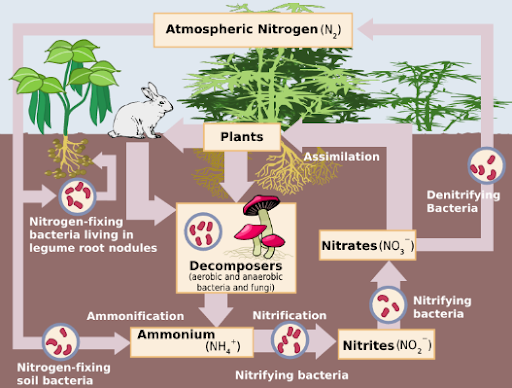
Biological Nitrogen Fixation
Biological nitrogen fixation is carried out by specialized bacteria and cyanobacteria (also known as blue-green algae). The most important nitrogen-fixing bacteria include free-living forms (like Azotobacter) and symbiotic forms (like Rhizobium).
Nitrogenase Enzyme
The key enzyme required for nitrogen fixation is nitrogenase, which reduces atmospheric N2 to ammonia (NH3). This enzyme works only under anaerobic conditions and is highly energy-intensive.
Nitrogen Metabolism in Plants
Once fixed nitrogen enters the plant, it is assimilated via metabolic pathways such as the formation of amino acids, nucleotides, and other biomolecules. Key steps in nitrogen metabolism include ammonification, nitrification, and assimilation.
Important Sub-Concepts Related to Nitrogen Fixation and Nitrogen Metabolism
Symbiotic Nitrogen Fixation in Legumes
A classical example is the symbiotic relationship between Rhizobium bacteria and leguminous plants. Rhizobium invades root hairs and forms nodules, where it fixes nitrogen in exchange for nutrients from the plant.
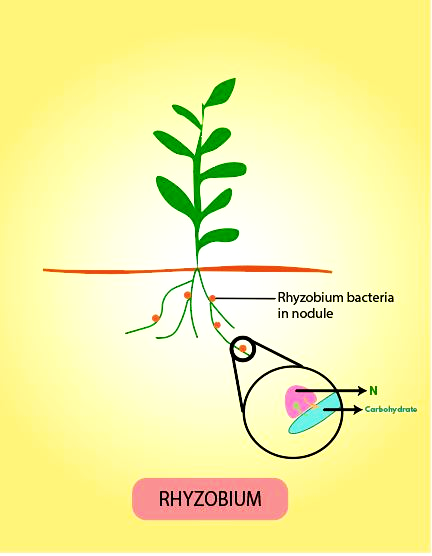
Free-Living Nitrogen Fixing Microorganisms
Some bacteria, such as Azotobacter (aerobic) and Clostridium (anaerobic), fix nitrogen independently in the soil, improving soil fertility without a host plant.
Other Steps in the Nitrogen Cycle
- Ammonification: Conversion of organic nitrogen into ammonia by decomposers.
- Nitrification: Conversion of ammonia into nitrite (NO2-) and then nitrate (NO3-) by nitrifying bacteria.
- Assimilation: Uptake of ammonia or nitrate by plants to form amino acids and proteins.
- Denitrification: Conversion of nitrates back to nitrogen gas by denitrifying bacteria, returning N2 to the atmosphere.
Key Formulas, Principles, and Relationships
Basic Chemical Equation of Biological Nitrogen Fixation:
N2 + 8 H+ + 8 e- + 16 ATP → 2 NH3 + H2 + 16 ADP + 16 Pi
This shows that the nitrogenase enzyme complex requires substantial energy (in the form of ATP) to reduce atmospheric nitrogen into ammonia. This reaction is the core of biological nitrogen fixation and is fundamental for NEET students to understand.
Methods of Nitrogen Fixation
- Biological Nitrogen Fixation (by bacteria & cyanobacteria)
- Industrial Nitrogen Fixation (Haber-Bosch process)
- Atmospheric Nitrogen Fixation (lightning converts N2 to nitrates)
For NEET, biological processes are most important, especially their mechanisms and ecological roles.
Features and Importance of Nitrogen Fixation and Nitrogen Metabolism
- Vital for protein, DNA, and RNA synthesis, supporting all life forms.
- Essential for plant productivity and agriculture.
- Promotes ecological balance through recycling of nitrogen in nature.
Why is Nitrogen Fixation and Nitrogen Metabolism Important for NEET?
Nitrogen fixation and metabolism are frequently tested in NEET due to their central role in plant physiology and ecology. Questions often assess knowledge of the processes, key enzymes, and the organisms involved. A clear conceptual grasp helps tackle application-based MCQs and connections with other units like mineral nutrition, ecosystems, or biotechnology. Knowing these pathways also aids in understanding related cycles and reinforces overall biological problem-solving skills.
How to Study Nitrogen Fixation and Nitrogen Metabolism Effectively for NEET
- Start by understanding the nitrogen cycle diagram and the role of fixation, nitrification, assimilation, and denitrification.
- Focus on biological nitrogen fixation, especially symbiotic relationships (e.g., Rhizobium and legumes) and the nitrogenase enzyme.
- Revise the basic chemical equation associated with nitrogen fixation.
- Use diagrams and flowcharts to reinforce understanding; try redrawing them from memory.
- Solve previous year NEET MCQs and conceptual questions regularly to spot patterns in questioning.
- Regularly review differences between free-living and symbiotic nitrogen-fixers.
- Practice explaining the concepts out loud as if teaching someone else; this clarifies doubts.
Common Mistakes Students Make in This Concept
- Confusing the roles of different bacteria in nitrogen fixation, nitrification, and denitrification.
- Forgetting that plants cannot directly use atmospheric N2 and require fixation.
- Mixing up the requirements and conditions for the nitrogenase enzyme (anaerobic conditions, energy dependency).
- Ignoring the significance of symbiotic relationships, especially the structure and function of root nodules in legumes.
- Overlooking the difference between industrial and biological fixation in NEET-context questions.
Quick Revision Points for Last-Minute Study
- Nitrogen fixation converts N2 to NH3 (ammonia).
- Biological nitrogen fixation is mainly by Rhizobium (symbiotic) and Azotobacter (free-living).
- Nitrogenase enzyme only works in anaerobic environments and uses high ATP.
- Legume root nodules are sites of symbiotic nitrogen fixation.
- Nitrifying bacteria convert ammonia to nitrites and nitrates.
- Denitrification turns nitrates back to atmospheric N2.
- Nitrogen is essential for amino acids, proteins, and nucleic acids.
- Carefully read diagrams - they are commonly tested.
FAQs on Nitrogen Fixation and Nitrogen Metabolism for NEET Biology
1. What is nitrogen fixation in biology NEET?
Nitrogen fixation is the process of converting atmospheric nitrogen (N₂) into usable forms like ammonia (NH₃) for plants.
- It is mainly carried out by certain bacteria (e.g., Rhizobium, Azotobacter).
- Occurs in both free-living and symbiotic relationships (e.g., legume root nodules).
- Essential for the nitrogen cycle and plant growth, making it a key NEET biology topic.
2. What are the steps involved in biological nitrogen fixation?
Biological nitrogen fixation follows a specific pathway to convert atmospheric nitrogen into plant-usable forms.
- Initiation: Nitrogenase enzyme complex becomes active.
- Reduction: Nitrogenase reduces N₂ to ammonia using ATP and electrons.
- Assimilation: Ammonia is converted into amino acids and other compounds inside plant cells.
- Critical for understanding nitrogen metabolism in NEET biology.
3. Which organisms are responsible for nitrogen fixation?
Several prokaryotic organisms are responsible for nitrogen fixation.
- Free-living bacteria: Azotobacter, Clostridium
- Symbiotic bacteria: Rhizobium (in legume roots), Frankia
- Cyanobacteria: Nostoc, Anabaena (fixes nitrogen in aquatic environments)
- These microbes are crucial for soil fertility and directly linked to nitrogen metabolism in the NEET exam.
4. Explain the role of nitrogenase enzyme in nitrogen fixation.
The nitrogenase enzyme is essential for converting atmospheric nitrogen into ammonia during biological nitrogen fixation.
- Functions under anaerobic conditions (inactive in oxygen).
- Consists of two proteins: Fe-protein and Mo-Fe protein.
- Uses extra ATP to break the triple bond of N₂.
- Forms the basis of many NEET MCQs on nitrogen metabolism.
5. What is the importance of nitrogen fixation for plants and the ecosystem?
Nitrogen fixation is vital because it supplies usable nitrogen compounds needed for plant growth and protein synthesis.
- Makes nitrogen accessible for amino acids and nucleic acids.
- Maintains soil fertility and enhances crop yield.
- Supports the entire nitrogen cycle in ecosystems.
- Key significance for NEET pre-medical exams.
6. What are the types of nitrogen fixation?
Nitrogen fixation can be classified into three main types based on the organisms and processes involved.
- Biological fixation: By microbes (e.g., bacteria, cyanobacteria).
- Atmospheric fixation: By natural phenomena such as lightning.
- Industrial/chemical fixation: By processes like the Haber-Bosch method.
- Biological fixation is most relevant for the NEET syllabus.
7. How does industrial nitrogen fixation differ from biological nitrogen fixation?
Industrial nitrogen fixation and biological nitrogen fixation differ in their process and energy requirements.
- Biological fixation: Occurs naturally via enzymes in microorganisms under gentle conditions.
- Industrial fixation: Occurs by the Haber-Bosch process at high temperature and pressure, producing ammonia for fertilizers.
- Both are important for NEET understanding of nitrogen metabolism.
8. What are the products of nitrogen metabolism in plants?
The products of nitrogen metabolism in plants include key biomolecules needed for survival and growth.
- Amino acids (building blocks of proteins)
- Nucleotides (for DNA and RNA)
- Enzymes and co-enzymes
- Plant hormones (like cytokinins)
- NEET students should focus on these products for exam preparations.
9. What is denitrification in the nitrogen cycle?
Denitrification is the microbial process of converting nitrates (NO₃⁻) back to atmospheric nitrogen (N₂), thus completing the nitrogen cycle.
- Carried out by bacteria like Pseudomonas and Thiobacillus.
- Reduces soil fertility if uncontrolled.
- Essential for maintaining nitrogen balance in ecosystems; a key topic in the NEET syllabus.
10. What is the difference between ammonification, nitrification, and denitrification?
Ammonification, nitrification, and denitrification are sequential steps in the nitrogen cycle crucial for NEET.
- Ammonification: Decomposition of organic matter to form ammonia (NH₃).
- Nitrification: Conversion of ammonia into nitrites (NO₂⁻) and then nitrates (NO₃⁻).
- Denitrification: Reduction of nitrates back to N₂ gas, releasing it into the atmosphere.
- All processes are central for understanding nitrogen metabolism in NEET biology.
11. Name two symbiotic nitrogen-fixing bacteria NEET students should know.
For NEET, important symbiotic nitrogen-fixing bacteria include:
- Rhizobium (associated with leguminous plants)
- Frankia (associated with non-leguminous plants like Alnus)
- These bacteria form root nodules and help plants in nitrogen assimilation.
12. What is the function of root nodules in nitrogen fixation?
Root nodules are specialized structures on legume roots where symbiotic bacteria like Rhizobium fix atmospheric nitrogen.
- Provide anaerobic environment for nitrogenase enzyme to work.
- Facilitate conversion of N₂ to ammonia.
- Enhance soil fertility and plant growth – key point for NEET exams.
