








How is Tissue Culture Used in NEET Biology Preparation?
Tissue culture is a vital concept in Biology that every NEET aspirant should master. It refers to the technique of growing plant or animal cells on a nutrient medium under sterile conditions. This concept not only deepens your understanding of plant tissue organization and biotechnology but is also a commonly asked area in NEET exams. Grasping tissue culture helps you connect laboratory techniques with real-life applications and boosts your conceptual clarity for various related topics in Biology.
What is Tissue Culture?
Tissue culture is a biological technique in which small pieces of plant or animal tissue are placed in a controlled, sterile environment and provided with necessary nutrients for growth. The fragment of tissue used for culture is called an explant. In this environment, the cells divide and organize to form new tissues or even whole plants (in the case of plant tissue culture). The process is widely used in plant biotechnology to replicate plants rapidly or to produce genetically identical plants (clones).
Core Ideas and Fundamentals of Tissue Culture
Sterility and Controlled Conditions
Maintaining a sterile (germ-free) environment is crucial in tissue culture to prevent contamination from microorganisms such as bacteria and fungi. The entire process takes place in aseptic conditions, often inside a Laminar Air Flow chamber, and all tools and media are sterilized before use.
Nutrient Medium
Cells require a combination of nutrients to grow and develop. The nutrient medium typically contains essential minerals, vitamins, hormones (like auxins and cytokinins), carbohydrates (like sucrose), and water. The specific combination of nutrients can influence the type of tissue growth (root, shoot, callus, or whole plant).
Totipotency
A key concept behind tissue culture is totipotency - the ability of a single plant cell to develop into an entire plant if provided with the right environment. It is this property that makes plant tissue culture possible and highly useful.
Important Sub-Concepts in Tissue Culture
Explant Selection
An explant is a small piece of plant tissue (such as leaf, stem, root, or even a single cell) taken from a parent plant for culture. The choice of explant affects the success and type of growth achieved in the culture.
Callus Formation
When plant tissue is placed on the nutrient medium, it often forms a mass of unorganized, undifferentiated cells called a callus. Providing different hormone ratios can encourage this callus to develop into either shoot, root, or entire plantlets.
Micropropagation
Micropropagation is the use of tissue culture techniques to produce a large number of identical (clonal) plants quickly from a single explant. It is widely used for rapid multiplication of disease-free and high-yield varieties in agriculture and horticulture.
Somatic Embryogenesis
This process involves the development of embryos from somatic (non-reproductive) cells instead of fertilized eggs. These somatic embryos can further develop into whole new plants.
Principles and Relationships in Tissue Culture
Tissue culture relies on a few key principles:
- Totipotency: Every plant cell has the potential to regenerate into a full plant.
- Hormone Balance: The ratio of auxins to cytokinins in the medium determines what part of the plant develops.
- Aseptic Technique: Prevents contamination and ensures the success of the culture.
For example, a high auxin to cytokinin ratio generally favors root formation; a high cytokinin to auxin ratio favors shoot formation; a balanced ratio leads to undifferentiated callus formation.
Advantages and Limitations of Tissue Culture
Advantages
- Rapid multiplication of plants in a short period of time.
- Production of disease-free, high-yield plant varieties.
- Does not require seeds for propagation.
- Essential for conservation of rare or endangered plant species.
Limitations
- Requires specialized equipment and trained personnel.
- Risk of contamination is high if sterilization is inadequate.
- May result in somaclonal variations (genetic changes) in some cases.
Why is Tissue Culture Important for NEET?
Tissue culture is frequently tested in NEET because it combines concepts from plant biology, biotechnology, and laboratory techniques. Understanding tissue culture helps clarify key areas such as totipotency, plant hormones, genetic engineering, and plant breeding. Questions often test your ability to connect practical techniques to biological principles or applications - like micropropagation, production of disease-free plants, or conservation of endangered species. Mastery of this topic improves your overall grasp of applied biology and supports learning in chapters on genetics, plant physiology, and biotechnology.
How to Study Tissue Culture Effectively for NEET
- Start by understanding the definition, purpose, and basic process of tissue culture.
- Learn the major principles: totipotency and the effect of plant growth regulators.
- Memorize the key steps by using flowcharts or diagrams.
- Study examples of applications (e.g., micropropagation, conservation) to see real-life relevance.
- Solve previous years' NEET MCQs on tissue culture to get familiar with question patterns.
- Revise regularly using concise notes or quick tables for advantages, limitations, and steps.
- Clear any confusion on plant hormones and their role in shoot/root induction.
Common Mistakes Students Make in Tissue Culture
- Confusing totipotency (cell's power to become a whole plant) with simple cell division.
- Mixing up the roles of auxin and cytokinin in inducing shoot vs. root development.
- Ignoring aseptic technique and underestimating the risk of contamination.
- Forgetting key applications like micropropagation or not connecting them to the principle of totipotency.
- Not practicing enough diagram-based questions, which are common for this topic.
Quick Revision Points for Tissue Culture
- Tissue culture: growth of cells/tissues on a nutrient medium under sterile conditions.
- Based on totipotency - all plant cells can form a whole plant.
- Auxins promote root formation, cytokinins promote shoot formation.
- Callus is an undifferentiated mass of cells; can form plantlets under right hormone balance.
- Micropropagation is rapid cloning using tissue culture.
- Applications: crop improvement, disease-free plants, conservation.
- Aseptic conditions are essential - contamination leads to culture failure.
FAQs on Tissue Culture Concepts for NEET Biology Students
1. What is tissue culture in biology NEET?
Tissue culture in biology (as per NEET syllabus) is a technique for growing plant or animal cells in an artificial nutrient medium under sterile conditions.
- Also called micropropagation or in vitro culture
- Involves using a small piece of plant (explant)
- Maintains controlled temperature, light, and nutrient conditions
- Enables mass propagation and virus-free plant production
2. What are the steps involved in plant tissue culture for NEET?
The main steps in plant tissue culture for NEET include several key stages that ensure successful plant growth in vitro:
- Selection and preparation of explant (part of the plant to be cultured)
- Sterilization of explant and equipment
- Inoculation of explant onto nutrient medium
- Incubation under controlled temperature and light
- Sub-culturing for multiplication
- Regeneration of shoots and roots
- Hardening and transfer to soil
3. What are the types of tissue culture techniques?
The major types of tissue culture techniques (important for NEET) are methods used to propagate plants or cells:
- Callus culture (growing undifferentiated mass of cells)
- Suspension culture (cells grow in liquid medium)
- Embryo culture (growing embryos outside the seed)
- Anther/pollen culture (for haploid plant production)
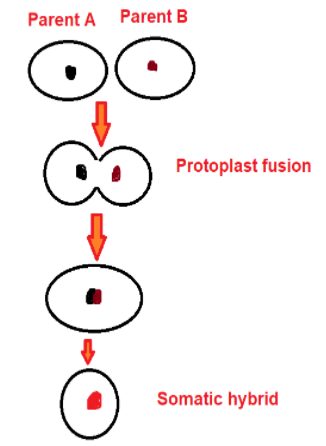
- Protoplast culture (cells without cell walls)
4. What are the applications of tissue culture in NEET biology?
Tissue culture has several practical applications in NEET biology and biotechnology:
- Micropropagation for rapid multiplication of plants
- Production of virus-free plants
- Conservation of rare and endangered species
- Production of secondary metabolites (like drugs, pigments)
- Genetic modification and plant breeding
5. Why is tissue culture called micropropagation?
Tissue culture is called micropropagation because it enables the rapid production of many plantlets from a small tissue sample.
- "Micro" refers to the small size of the initial explant
- "Propagation" means multiplying plants quickly
- Makes use of asexual reproduction under in vitro conditions
6. What medium is used in tissue culture NEET syllabus?
The most commonly used medium in tissue culture (NEET level) is the MS medium (Murashige and Skoog medium):
- Contains essential minerals, vitamins, sucrose, and plant growth regulators
- Can be solidified with agar for solid cultures
- Supports growth and differentiation of explants
7. What are the advantages of tissue culture over conventional propagation?
Tissue culture offers many advantages compared to traditional methods of plant propagation:
- Rapid and large-scale plant production
- Generation of genetically identical (clonal) plants
- Cultivation of disease-free and virus-free plants
- Conservation of endangered and rare species
- Year-round production, independent of seasons
8. What is an explant in tissue culture NEET exam context?
An explant is a small part of plant tissue (such as leaf, stem, root, or meristem) used as the starting material in tissue culture for NEET and biology exams.
- Source for generating new plants in vitro
- Must be surface sterilized before culturing
- Explants can be from various parts depending on the aim of the experiment
9. Define totipotency in tissue culture for NEET.
Totipotency is the ability of a single plant cell or tissue to develop into a complete plant under appropriate conditions in tissue culture.
- Basis for regeneration of whole plants from explants
- Core concept for understanding micropropagation and in vitro techniques
- Highly important in NEET biology and plant biotechnology
10. Mention any two limitations of tissue culture (NEET level).
There are some limitations of tissue culture relevant for NEET exam:
- High cost and requirement of specialized laboratory facilities
- Risk of somaclonal variation (genetic changes) in cultured plants
- Requires skilled personnel and strict sterile techniques
11. Who is known as the father of tissue culture NEET?
Haberlandt is known as the "father of tissue culture" for his pioneering experiments on cell culture in plants.
- Gottlieb Haberlandt - Austrian botanist
- First proposed concept of totipotency and culturing single cells
12. Explain the role of plant growth regulators in tissue culture.
Plant growth regulators control and direct the development of plant tissues in culture by influencing cell division, elongation, and differentiation.
- Auxins induce root formation
- Cytokinins promote shoot initiation
- Balance between auxins and cytokinins determines organ (root or shoot) formation
