









Human Reproductive System Functions and NEET Exam Insights
The human reproductive system is one of the most essential concepts in Biology for NEET aspirants. Understanding this topic helps you grasp the fundamental mechanisms of reproduction in humans, which forms the basis for genetics, evolution, and health topics in the exam. Mastering the human reproductive system not only secures direct questions but also strengthens your conceptual base for several interlinked areas in Biology.
What is the Human Reproductive System?
The human reproductive system consists of specialized organs and glands responsible for producing, nurturing, and transporting gametes (sperm and egg cells), enabling fertilization and the continuation of species. It is divided anatomically and functionally into male and female reproductive systems, each having unique structures and functions. Understanding its workings helps explain how human life begins and develops from a single-celled zygote.
Core Ideas and Fundamentals of the Human Reproductive System
Male Reproductive System
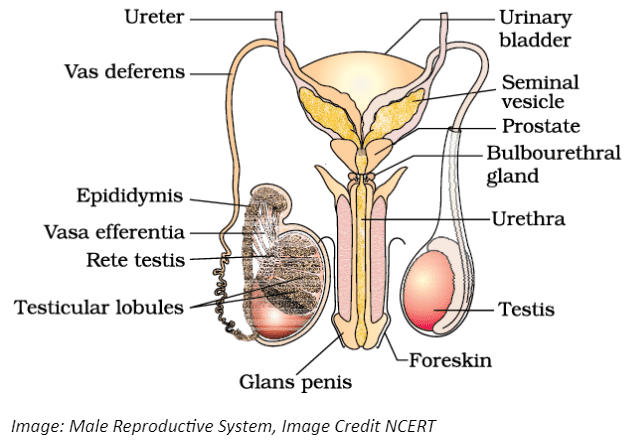
The human male reproductive system includes organs and glands that produce, store, and deliver sperm. Its core components are:
- Testes - Primary male gonads that produce sperm and the hormone testosterone.
- Epididymis - Site where sperm mature and are stored.
- Vas deferens - Duct that transports mature sperm from the epididymis to the urethra.
- Accessory glands - Seminal vesicles, prostate gland, and bulbourethral glands provide seminal fluid for sperm transport and nourishment.
- Penis - Organ that delivers semen (sperm plus seminal fluid) outside the body.
Female Reproductive System
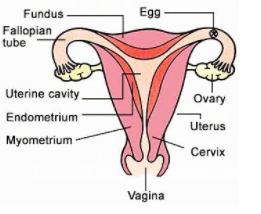
The human female reproductive system consists of organs that produce ova (egg cells), facilitate fertilization, and support the development of the embryo and fetus. The main structures are:
- Ovaries - Primary female gonads producing ova as well as estrogen and progesterone hormones.
- Fallopian tubes (oviducts) - Tubes that transport the egg from the ovary; site of fertilization.
- Uterus - Muscular organ where the embryo implants and develops during pregnancy.
- Vagina - Canal that receives sperm during sexual intercourse and serves as the birth canal.
Important Sub-Concepts Related to the Human Reproductive System
Gametogenesis
Gametogenesis is the process of forming mature gametes - sperm in males (spermatogenesis) and ova in females (oogenesis). It involves cell division and differentiation, ensuring haploid gametes are produced for sexual reproduction. Both processes are tightly regulated by hormones and are essential for maintaining genetic diversity and stability.
Fertilization
Fertilization occurs when a sperm and an ovum fuse, typically in the female's fallopian tube, forming a zygote. Understanding the steps and requirements of fertilization is crucial for NEET, as it connects the molecular, cellular, and systemic aspects of human reproduction.
Hormonal Regulation
Reproductive processes are regulated by hormones, including gonadotropin-releasing hormone (GnRH), follicle-stimulating hormone (FSH), luteinizing hormone (LH), estrogen, progesterone, and testosterone. These hormones regulate processes like gametogenesis, ovulation, menstrual cycle, and pregnancy.
Menstrual Cycle
The menstrual cycle is a recurring process in human females involving the preparation of the uterus for pregnancy, ovulation, and shedding of the uterine lining if fertilization does not occur. It involves complex hormonal feedback mechanisms and is frequently tested in NEET.
Principles and Relationships in Human Reproductive System
The human reproductive system operates through a series of coordinated principles and relationships that ensure successful reproduction. Some key ones include:
- Hormonal feedback loops: Interactions between the hypothalamus, pituitary, and gonads regulate reproductive functions through positive and negative feedback mechanisms.
- Gamete transport mechanisms: Sperm motility, fluid secretions, and ciliary actions in the female tract all cooperate for fertilization.
- Synchrony of ovulation and hormonal changes: Ovulation occurs at the peak of LH and FSH levels, ensuring optimal chances for fertilization.
Significance of the Human Reproductive System for NEET
A strong understanding of the human reproductive system is critical for NEET since direct and case-based questions are frequently asked from this topic. It helps in:
- Answering conceptual, factual, and application-based questions efficiently.
- Building a solid base for genetics, developmental biology, and reproductive health topics.
- Connecting physiological concepts with clinical cases, which is common in NEET problem-solving.
- Understanding diagrams and labeling-type questions, especially for organ and cell structure.
How to Study the Human Reproductive System Effectively for NEET
- Begin with clear, labeled diagrams of male and female reproductive systems. Practice drawing them.
- Understand the key functions of each organ, focusing on gametogenesis, hormonal regulation, and the menstrual cycle.
- Use flowcharts to visualize processes like spermatogenesis, oogenesis, and menstrual cycle phases.
- Regularly revise hormonal feedback mechanisms since these often appear in application-based MCQs.
- Solve previous years’ NEET MCQs and sample questions on reproductive system processes and disorders.
- Use mnemonics for remembering the sequence of hormones and stages in gametogenesis and menstrual cycle.
- Create summary notes for last-minute revision focusing on cycles, hormones, and diagrams.
Common Mistakes Students Make in This Concept
- Confusing the sequence of events in gametogenesis and the menstrual cycle.
- Mixing up the functions and locations of reproductive glands and organs.
- Neglecting hormonal control mechanisms and their exam-level significance.
- Making errors in diagram labeling and interpretation, especially with similar-looking structures.
- Overlooking the integration between reproductive and endocrine systems.
Quick Revision Points for Human Reproductive System
- Testes produce sperm and testosterone; ovaries produce ova, estrogen, and progesterone.
- FSH and LH are key pituitary hormones regulating gametogenesis and ovulation.
- Fertilization usually occurs in the ampulla region of the fallopian tube.
- Menstrual cycle phases: menstrual, proliferative (follicular), and secretory (luteal).
- Semen is a mixture of sperm and fluids from accessory glands.
- Draw and label reproductive system diagrams for quick practice and recall.
- Understand hormonal feedback loops - GnRH stimulates FSH and LH; LH surge triggers ovulation.
FAQs on Biology Human Reproductive System NEET Study Guide
1. What is the human reproductive system?
The human reproductive system is a group of organs and structures responsible for producing offspring and ensuring the continuation of the human species.
Main features include:
- Presence of male (testes, vas deferens, penis) and female (ovaries, fallopian tubes, uterus, vagina) structures
- Production of gametes (sperm and ova)
- Hormonal regulation by testosterone, estrogen, and progesterone
- Coordination of fertilization and fetal development
2. What are the main organs of the male reproductive system?
The primary organs of the male reproductive system produce and deliver sperm for fertilization.
Key organs include:
- Testes – produce sperm and testosterone
- Epididymis – stores and matures sperm
- Vas deferens – transports sperm
- Seminal vesicles and prostate gland – produce seminal fluid
- Penis – organ for sperm deposition
3. What are the components of the female reproductive system?
The female reproductive system consists of organs required for ovum (egg) production, fertilization, and nurturing of the embryo.
Main components include:
- Ovaries – produce ova and estrogen, progesterone
- Fallopian tubes – site for fertilization
- Uterus – supports and nourishes the fetus
- Cervix – connects uterus and vagina
- Vagina – receives sperm and acts as birth canal
4. What is gametogenesis in humans?
Gametogenesis is the process of forming male (spermatogenesis) and female (oogenesis) gametes in humans.
Key points for NEET:
- Spermatogenesis occurs in the seminiferous tubules of testes and produces sperm
- Oogenesis takes place in the ovaries and forms ova
- Both involve meiosis, reducing chromosome number
5. What is the function of hormones in the human reproductive system?
Reproductive hormones regulate development, function, and coordination of the human reproductive system.
Key hormones involved:
- Testosterone – controls male characteristics and sperm production
- Estrogen and Progesterone – regulate ovarian function, menstrual cycle, pregnancy
- Follicle Stimulating Hormone (FSH) and Luteinizing Hormone (LH) – control gametogenesis and ovulation
6. What is fertilization and where does it occur in humans?
Fertilization is the fusion of male (sperm) and female (ovum) gametes to form a zygote.
Essential points:
- Occurs in the ampullary-isthmic junction of the Fallopian tube
- Initiates embryonic development
- Leads to the formation of a diploid zygote
7. What happens during the menstrual cycle?
The menstrual cycle is a regular physiological process in female reproductive system preparing the uterus for pregnancy.
Main phases:
- Menstrual phase (shedding of uterine lining)
- Follicular phase (ovum maturation)
- Ovulation (release of mature ovum, day 14 on average)
- Luteal phase (prepares endometrium for potential implantation)
8. What is spermatogenesis?
Spermatogenesis is the process of sperm formation inside the testes in males.
Main stages:
- Begins at puberty in the seminiferous tubules
- Involves multiplication of spermatogonia
- Undergoes meiosis to form haploid spermatids
- Spermatids mature into spermatozoa
9. What is oogenesis?
Oogenesis is the process by which the female ovaries produce ova (egg cells).
Key stages:
- Starts during fetal development in the ovaries
- Oogonia multiply by mitosis, form primary oocytes
- Meiosis resumes at puberty, one ovum matures per cycle
- Leads to the release of a mature egg cell during ovulation
10. State the difference between male and female gametes for NEET.
Male and female gametes differ in structure, function, and production process.
Main differences:
- Male gametes (sperm) – small, motile, produced continuously in large numbers in testes
- Female gametes (ova) – large, non-motile, produced cyclically in ovaries
- Sperm contributes only genetic material; ovum provides nutrients and organelles
11. What are the stages of embryonic development after fertilization?
Embryonic development follows fertilization, starting with a zygote and ending with an implanted embryo.
Key stages:
- Zygote formation
- Cleavage (mitotic divisions)
- Morula and blastocyst formation
- Implantation in the uterine wall
12. What is the importance of reproduction in living organisms?
Reproduction is essential for the survival and continuity of a species.
Main reasons:
- Ensures transfer of genetic information to next generation
- Enables organisms to adapt through variation
- Prevents extinction
