








Digestive System of Earthworm Explained With Alimentary Canal Structure and Functions
The digestive system of earthworm is a long, straight, and specialized alimentary canal designed to process soil mixed with organic matter. Earthworms feed on decaying leaves, humus, and organic debris present in soil. During digestion, organic matter is broken down, nutrients are absorbed, and the remaining material is expelled as castings. This process plays an important role in improving soil fertility and aeration.
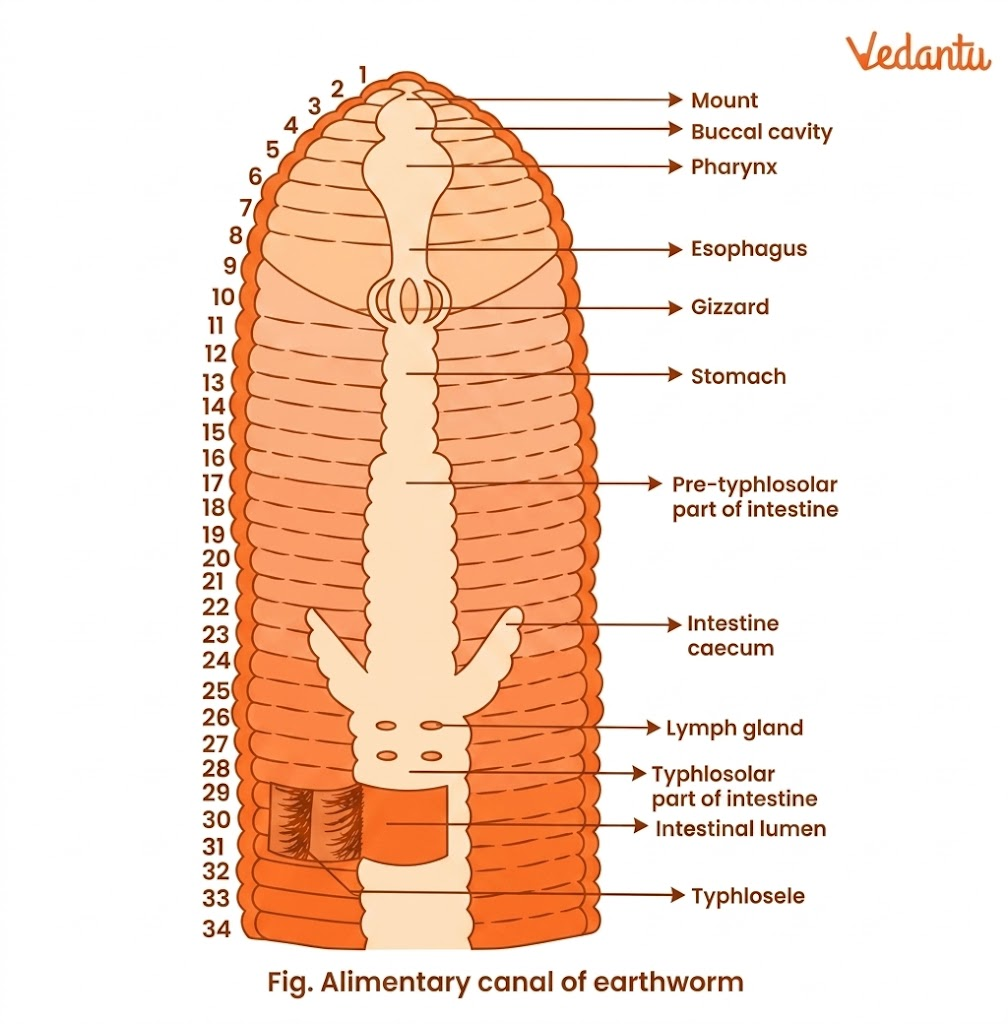
The digestive system includes a complete alimentary canal extending from mouth to anus, along with digestive glands that secrete enzymes. Each region of the canal performs a specific function such as ingestion, grinding, digestion, absorption, and egestion. This makes the alimentary canal of earthworm highly efficient despite its simple tubular structure.
Characteristics of Earthworm Related to Digestion
Earthworms are adapted for feeding on soil and organic matter. Their digestive system shows the following features:
Long straight alimentary canal
Division into specialized regions
Mechanical digestion in gizzard
Chemical digestion in stomach and intestine
Absorption mainly in intestine
Presence of typhlosole for increased absorption
Digestive glands present
Egestion through anus
These characteristics help earthworms process large quantities of soil and extract nutrients efficiently.
Alimentary Canal of Earthworm
The alimentary canal of earthworm is a straight tube extending from the mouth to the anus. It is divided into several regions, each performing a distinct function.
Each region contributes to digestion and nutrient absorption.
Mouth
The mouth is located in the first segment of the body. It is a crescent-shaped opening situated below the prostomium. Food enters the digestive system through the mouth. Earthworms ingest soil rich in organic matter and microorganisms.
Buccal Cavity
The buccal cavity is a short, thin-walled tube located behind the mouth. It can protrude outward with the help of muscles. This helps the earthworm grasp soil and organic particles. The buccal cavity then passes food into the pharynx.
Pharynx
The pharynx is a muscular chamber that acts as a pumping organ. It contains pharyngeal glands that secrete mucus and enzymes.
Functions:
lubricates food
softens food
begins protein digestion
pushes food to oesophagus
The mucus helps in smooth passage of food.
Earthworm Esophagus Function
The earthworm esophagus function is mainly to transport food. It is a narrow tube that connects the pharynx to the gizzard.
Key roles:
passage of food
no digestion occurs
no glands present
directs food toward gizzard
Thus, the oesophagus acts as a conducting tube.
Gizzard
The gizzard is thick-walled and muscular. It performs mechanical digestion.
Functions:
grinds soil particles
crushes organic matter
acts like teeth
reduces food to fine particles
The inner lining has chitin-like projections that help in grinding.
Stomach
The stomach is thin-walled and vascular. It performs chemical digestion.
Functions:
neutralizes food
secretes enzymes
digests proteins
prepares food for intestine
Calciferous glands present here help in neutralizing acidic food.
Intestine of Earthworm
The intestine is the longest part of the digestive system. It extends from the 15th segment to the last segment.
Important features:
thin-walled
vascular
glandular
folded lining
absorption occurs
The intestine is divided into three regions:
pre-typhlosolar region
typhlosolar region
post-typhlosolar region
What is the Function of the Intestine in an Earthworm?
The function of the intestine in an earthworm is digestion and absorption of nutrients. Most chemical digestion occurs here.
Functions Include:
1. Chemical digestion
Enzymes break down food into simpler molecules.
2. Absorption
Digested nutrients pass into blood capillaries.
3. Typhlosole increases absorption
Typhlosole is a fold that increases surface area.
4. Secretion of enzymes
Various enzymes act on food.
5. Formation of castings
Undigested matter forms worm castings.
Thus, the intestine is the most important digestive region.
Typhlosole in Earthworm
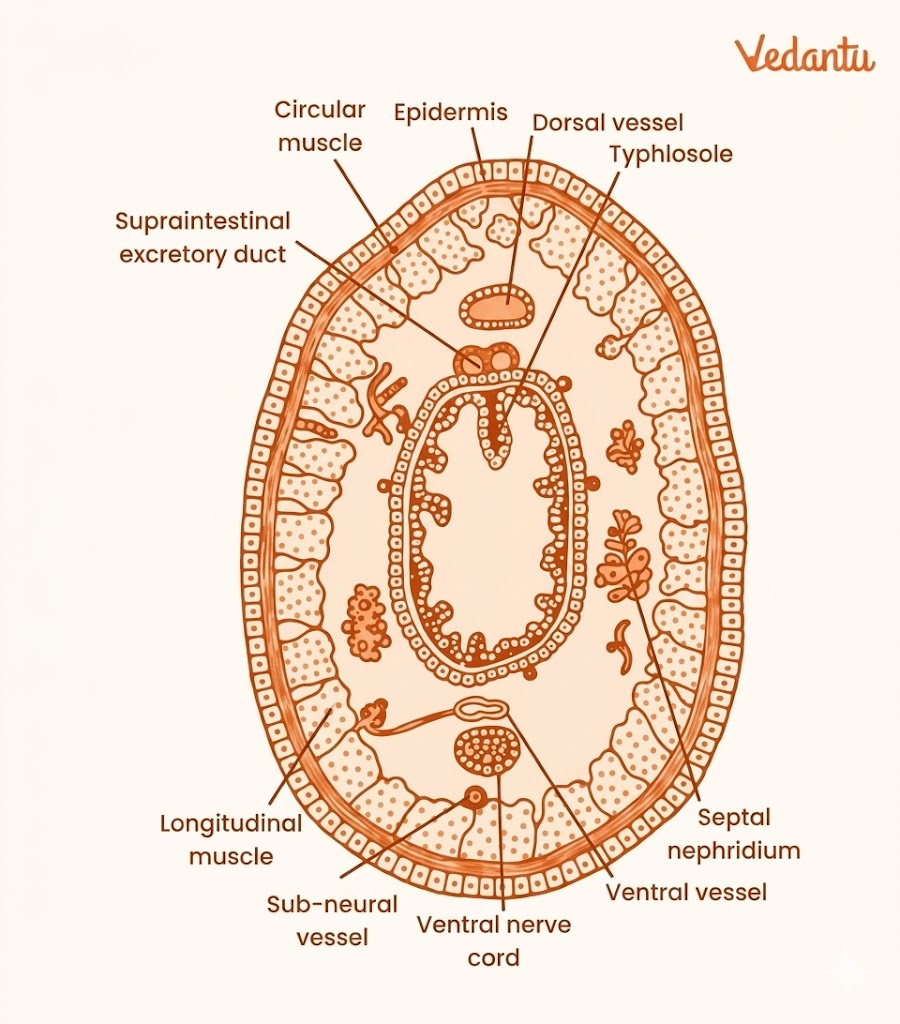
Typhlosole is a dorsal fold in the intestine. It increases surface area for absorption.
Functions:
increases absorption
improves digestion efficiency
vascular and glandular
runs longitudinally
This is an important NEET question.
Digestive Glands of Earthworm
Digestive glands include:
pharyngeal glands
gastric glands
intestinal glands
intestinal caeca
These glands secrete enzymes.
Physiology of Digestion in Earthworm
Digestion occurs in several steps.
Ingestion
Earthworms ingest soil containing organic matter.
Digestion
Food passes through the pharynx, gizzard, stomach, and intestine.
Enzymes involved
Protease → proteins to amino acids
Amylase → starch to glucose
Lipase → fats to fatty acids
Cellulase → cellulose digestion
Chitinase → insect exoskeleton digestion
Digestion occurs mainly in the intestine.
Absorption
Digested nutrients absorbed through the intestinal wall.
Egestion
Undigested soil expelled through anus.
How Many Stomachs Do Worms Have?
Earthworms do not have multiple stomachs like ruminants. They have:
one gizzard (mechanical digestion)
one stomach region (chemical digestion)
So, worms effectively have one stomach, but digestion occurs in multiple specialized regions.
What Experts Have to Conclude?
The digestive system of earthworm consists of a straight alimentary canal from mouth to anus. Food passes through the buccal cavity, pharynx, oesophagus, gizzard, stomach, and intestine. Mechanical digestion occurs in gizzard, while chemical digestion and absorption occur in the intestine. Typhlosole increases absorptive surface area. Undigested matter is expelled through anus as castings.
FAQs on Digestive System of Earthworm: Alimentary Canal, Structure, Intestine Function and Diagram
1. What is the typhlosole, and what is its role?
The typhlosole is a fold present in the intestinal wall of the alimentary canal of earthworm. Its main role is to increase the surface area of the intestine, which improves digestion and absorption of nutrients in the digestive system of earthworms.
2. How do earthworms excrete undigested material?
Undigested food passes through the intestine and is expelled through the anus. It is released as worm castings, which are rich in nutrients and improve soil fertility.
3. What adaptations make the earthworm’s digestive system efficient?
The digestive system of earthworm is efficient due to the muscular gizzard for grinding, enzyme secretion in the intestine, and the presence of typhlosole that increases absorption. These adaptations help in breaking down soil and extracting nutrients.
4. How does an earthworm's diet affect its digestion?
Earthworms feed mainly on soil mixed with organic matter. This diet allows microorganisms and enzymes in the alimentary canal of earthworm to break down organic material effectively, improving nutrient absorption.
5. What is the function of the intestine in an earthworm?
The intestine is the main site of digestion and absorption. Enzymes break down food into simpler substances, and nutrients are absorbed into the blood. The typhlosole increases the absorptive surface area.
6. What is the earthworm esophagus function?
The esophagus acts as a passage that transports food from the pharynx to the gizzard. It does not participate in digestion but helps in smooth movement of food.
