








What is Soil? Formation, Types and Soil Profile Explained
Understanding the "Types of Soil" is essential for NEET aspirants, especially in Biology, where questions often test conceptual clarity about soil as a foundation for plant growth and ecology. This topic explains the major soil types found in India, their properties, and their significance in supporting biodiversity. A clear grasp of soil types not only helps you score well in NEET but also builds a strong foundation for related questions in plant physiology, agriculture, and environmental science.
What are the Types of Soil?
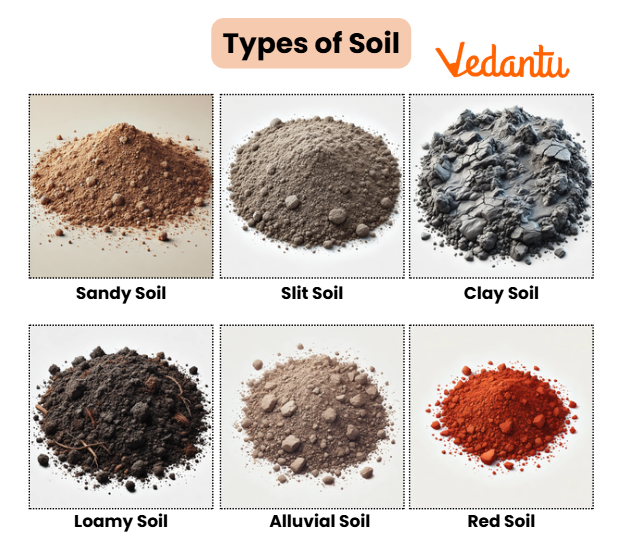
Soil is a vital natural resource formed by the weathering of rocks and organic matter over time. The “types of soil” refer to the classification of soil into categories based on physical and chemical properties such as texture, color, mineral content, water retention capacity, and fertility. In the Indian context, soils are mainly categorized as alluvial, black, red, laterite, desert, and mountain soil, each with distinctive features and importance for plant life. Knowing these distinctions helps NEET aspirants relate soil types to plant growth conditions, adaptations, and ecosystem diversity.
Fundamentals and Core Concepts of Soil Types
Understanding soil types revolves around recognizing what makes one soil type different from another. This includes features like constituents, texture, color, fertility, and how these impact plant life. Let’s break down the fundamentals:
Soil Composition
Soil consists of a mixture of minerals, organic matter, air, and water. The percentage of each component varies across different soil types, affecting properties like fertility, drainage, and structure.
Soil Texture and Particle Size
Soil texture is determined by the relative amounts of sand, silt, and clay particles. The size and proportion of these particles define whether a soil is sandy, clayey, loamy, or silty, which in turn influences water retention, aeration, and nutrient availability for plants.
Soil Color and Fertility
The color of soil gives clues about its composition and fertility. For example, black soil is rich in organic matter and minerals, while red soil has high iron content. Fertility is crucial for supporting plant life and crop productivity.
Major Types of Soil and Related Sub-Concepts
India is known for its diverse soil types which influence agriculture and vegetation. Here are the principal types students should know:
Alluvial Soil
Alluvial soil is the most widespread in India, deposited by rivers in the plains. It is typically fertile, rich in potash and lime, and suitable for crops like wheat, rice, and sugarcane.
Black Soil (Regur Soil)
Black soil is mostly found in the Deccan plateau. It is dark due to the presence of titaniferous magnetite and high clay content, which retains moisture well. This soil suits cotton cultivation and other dry crops.
Red Soil
Red soil derives its color from ferric oxides. It is typically found in regions with low rainfall and is less fertile than alluvial and black soils but can support crops with proper manure and irrigation.
Laterite Soil
Laterite soils are red to yellow and develop in high rainfall regions due to leaching. They are poor in lime and nitrogen but can be farmed with adequate treatment.
Desert Soil
Desert or arid soil is found in Rajasthan and Gujarat. It is sandy with low organic content and moisture but can be made productive with irrigation.
Mountain Soil
Mountain or forest soils develop in hilly and mountainous areas. Rich in humus, their fertility varies with altitude. These soils support coniferous and temperate forests.
Comparison Table of Major Soil Types
| Soil Type | Main Features | Main Crops Grown |
|---|---|---|
| Alluvial Soil | Fertile, light to clayey, found in river plains | Wheat, rice, sugarcane, oilseeds |
| Black Soil | High clay content, moisture retentive, dark color | Cotton, soyabean, pulses, sunflower |
| Red Soil | Rich in iron, poor in nitrogen and humus | Millets, pulses, groundnut, potato |
| Laterite Soil | Porous, acidic, poor in fertility, formed by leaching | Coffee, cashew, tea, rubber |
| Desert Soil | Sandy, low organic matter, low moisture | Barley, millets, dates |
| Mountain Soil | Rich in humus, varies with altitude, well-drained | Tea, coffee, spices, temperate fruits |
This comparison helps to quickly link each soil type with its features and major crops, aiding memory and understanding in NEET-oriented questions.
How is Soil Formed?
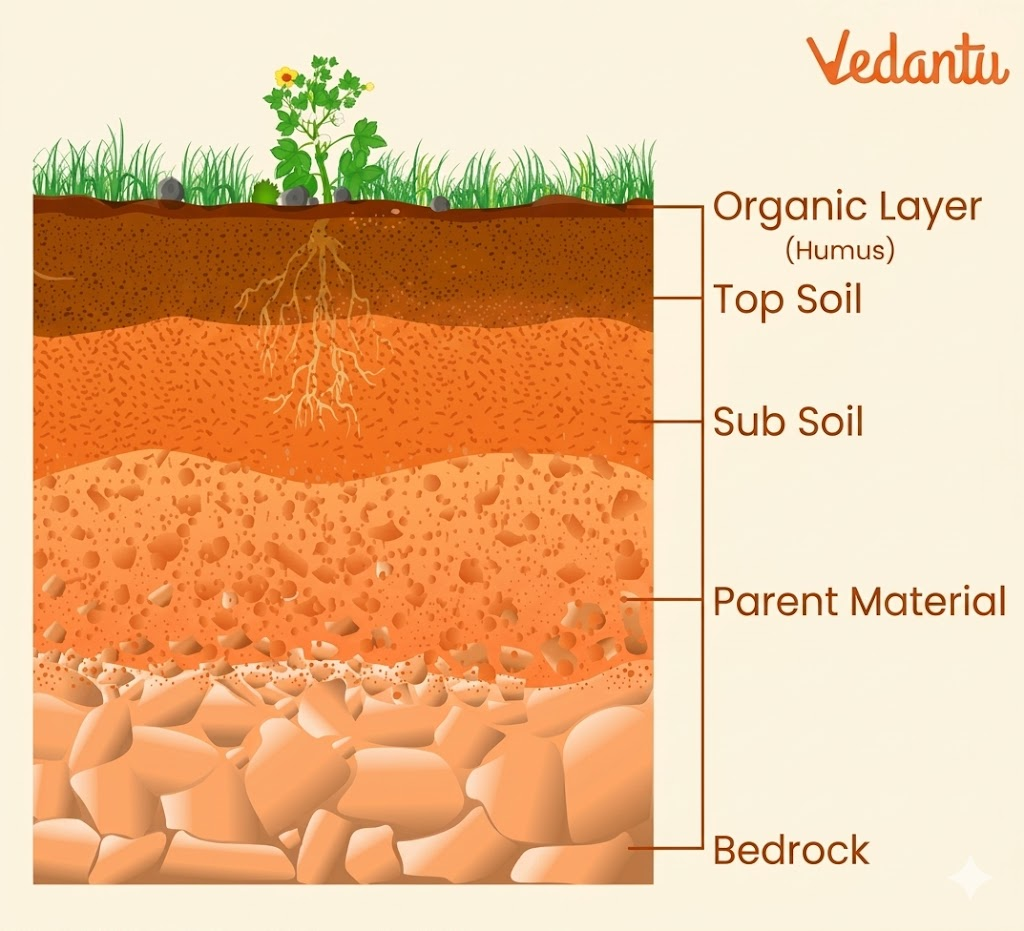
Soil formation is a slow, continuous natural process by which rocks and organic matter gradually turn into soil. This process does not happen in the same way everywhere. Soil can vary greatly from one region to another, and even within different parts of the same garden or field. These differences arise because soils are formed under different environmental conditions. A simple way to remember the main factors that control soil formation is CLORPT, which stands for Climate, Organisms, Relief, Parent Material, and Time.
Climate
Climate is one of the most important factors affecting soil formation. Temperature and moisture control the rate of weathering and decomposition. In warm and humid regions, rocks break down faster and organic matter decomposes more quickly, so soil develops more rapidly. In contrast, in cold or dry regions, soil formation is much slower.
Rainfall is an especially important part of the climate. It influences the amount of water available for weathering, leaching, and the movement of minerals within the soil. Areas with higher rainfall usually show faster soil development than areas with low rainfall.
Organisms
Living organisms also play a major role in soil formation. Plants, animals, fungi, and microorganisms all help break down rocks and add organic matter to the soil. Plant roots grow into rock cracks and help in breaking rocks into smaller pieces. Roots also release carbon dioxide, which mixes with water in the soil to form weak acids that slowly dissolve minerals.
Animals such as earthworms, ants, and termites mix the soil, improve aeration, and bring deeper material to the surface. Microorganisms such as bacteria and fungi decompose dead plants and animals, forming humus and enriching the soil. Some organisms can change the land quite dramatically. For example, termites can build very large mounds and strongly influence the surrounding soil structure.
Relief or Landscape
The shape of the land, called relief or topography, also affects soil formation. Slope, elevation, and the direction a land surface faces all influence how much sunlight, water, and erosion a soil experiences.
Soils on steep slopes are usually thinner because water runs off quickly, carrying away soil particles. On gentle slopes or at the bottom of hills, soils are often deeper because materials moving down the slope get deposited there. Thus, the same hill may have different soil types at the top, middle, and bottom depending on drainage and erosion.
Parent Material
Parent material is the original material from which soil develops. Every soil inherits some of its properties from this source. Parent material may come from rocks that weather in place, or from materials transported and deposited by water, glaciers, wind, or gravity.
For example, soils formed from limestone are generally rich in calcium, while soils formed from lake deposits are often rich in clay. Parent material is gradually altered by weathering, erosion, biological activity, and chemical changes. Over time, it becomes increasingly different from the original material and develops into mature soil.
Time
Time is another essential factor in soil formation. Soil does not form overnight. All the other factors—climate, organisms, relief, and parent material—work together over long periods to produce different soils.
Young soils usually resemble their parent material more closely, while older soils show greater development and clearer horizons. Over time, minerals break down, organic matter accumulates, layers become more distinct, and the soil develops its own character. Since soil is dynamic, its components, such as minerals, water, air, organic matter, and organisms, are always changing. Some materials are added, some are removed, and others are transformed within the soil profile.
Study of Soil Formation
The study of soil and its formation is carried out by specialists such as soil pedologists and soil morphologists. They examine soil profiles to understand how soils have developed, what processes have shaped them, and how they can be managed effectively.
A soil profile reveals a great deal about the history of soil formation. By studying its layers, scientists can understand how climate, organisms, topography, and parent material influence it over time. This knowledge is also useful in agriculture, land use planning, and environmental management.
Soil Mapping
Just like plants and animals are classified, soils are also identified and grouped through soil taxonomy. Scientists who study and map soils classify soils based on their properties and characteristics. Soil mapping helps create detailed records of the soil present in a region and shows how one soil type differs from another.
Such maps are very useful in farming, construction, forestry, and land conservation because they help people understand the nature and suitability of the land beneath their feet.
Disturbed Soils
Human activities can strongly affect soil formation. When roads, buildings, and other structures are built, the natural soil surface is often removed or heavily disturbed. This changes the way soil develops in that area.
Disturbed soils behave differently from natural soils because their structure, composition, and biological activity are altered. Scientists who study disturbed soils observe how these soils respond to human interference and how they change over time.
Principles and Relationships Involved in Soil Types
While there are no complex formulas in soil science at the school level, there are practical principles and relationships worth knowing for NEET Biology:
- Soil Texture Triangle: This diagram helps determine soil types based on the relative percentage of sand, silt, and clay particles.
- Relationship between Soil and Water Retention: Clay soils retain water well whereas sandy soils drain quickly.
- Nutrient Holding Capacity: Loamy and black soils have higher cation exchange and nutrient holding capacities compared to sandy soils.
Importance of Studying Soil Types for NEET
A clear understanding of types of soil is crucial for NEET because:
- Questions often test knowledge about soil properties and their influence on plant distribution and growth.
- Knowing soil types helps link plant adaptations, crop suitability, and ecological balance concepts.
- Concepts of soil are relevant in plant physiology, agriculture, and environmental biology chapters.
- Understanding soil types supports solving assertion-reason and application-based questions.
FAQs on Soil: Types, Formation, Profile, Properties and Importance
1. What are the different types of soil?
Soil types in NEET Biology include a range of categories based on texture, composition, and characteristics essential for plant growth.
Major types of soil:
- Sandy soil – Light, well-drained, low in nutrients
- Clay soil – Heavy, dense, rich in nutrients, poor drainage
- Loamy soil – Balanced mix (sand, silt, clay), fertile for crops
- Silty soil – Smooth, retains moisture, fertile
- Peaty soil – High organic matter, acidic, retains water
- Saline soil – Contains excess salts, affects plant growth
2. What is the importance of soil types in agriculture for NEET?
Soil types play a crucial role in determining crop yield and suitability.
Key points:
- Loamy soil is ideal for most crops due to balanced texture and nutrients.
- Clay soil supports rice and paddy fields because of water retention.
- Sandy soil is suitable for groundnuts and potatoes.
- Matching crop type to soil type ensures higher productivity. This is a common question in NEET exams regarding agriculture and soil science.
3. How do you distinguish between clay, sandy, and loamy soils?
You can identify soils by their texture, water retention, and fertility.
Comparison:
- Clay soil: Sticky, holds water, nutrient-rich.
- Sandy soil: Gritty, good drainage, low fertility.
- Loamy soil: Soft, crumbly, excellent for plants (most favorable for NEET-related questions).
4. Which type of soil is best for growing crops in India?
For NEET, loamy soil is considered the best soil for cultivation in India because of its ideal mix of sand, silt, and clay.
Main reasons:
- Excellent water retention
- Good drainage
- High fertility due to balanced minerals and humus
5. Why is the study of soil types important for NEET Biology?
Soil types affect plant growth, crop selection, and ecology, making them a recurring NEET topic.
Importance includes:
- Understanding nutrient availability
- Determining water retention capacity
- Selecting appropriate crops in agriculture
6. What is alluvial soil, and where is it found in India?
Alluvial soil is fertile soil found mainly in river basins and plains of northern and eastern India.
Characteristics:
- Rich in potash and lime
- Loose and easy to plough
- Promotes growth of crops like rice, wheat, sugarcane
7. What are the characteristics of black soil?
Black soil, also known as Regur soil, is ideal for cotton cultivation.
Main characteristics:
- Dark, clayey texture
- High moisture retention
- Rich in iron, magnesium, and lime
8. How does soil affect plant growth? (Relevant for NEET MCQs)
Soil influences plant growth by providing nutrients, water, and support.
Main effects:
- Supplies essential minerals for plants
- Determines water availability and aeration
- Impacts root development
9. Name at least five types of soil found in India. (Class 11, NEET)
Five important types of soil in India are:
- Alluvial soil
- Black soil
- Red soil
- Laterite soil
- Desert soil
10. What is meant by loamy soil?
Loamy soil is a nutrient-rich mixture of sand, silt, and clay considered ideal for plant growth.
Main features:
- Retains water optimally
- Provides excellent drainage
- Highly fertile, supports a variety of crops
11. What is the difference between red soil and black soil?
Red soil and black soil differ in color, composition, and fertility.
Key differences:
- Red soil: Reddish in color due to iron oxide, less fertile, found in southern/eastern India.
- Black soil: Black in color, high clay content and moisture retention, fertile for cotton.
