








Why is the Plasma Membrane Called Selectively Permeable and How Does Its Structure Support Cell Life?
The plasma membrane is the outer living boundary of the cell that separates the internal contents of the cell from the external environment. It surrounds the cytoplasm and cell organelles and plays a central role in maintaining the cell's identity, survival, and normal functioning. Because it forms the interface between the cell and its surroundings, it regulates what enters and leaves the cell, facilitates communication, supports cell shape, and maintains internal balance.
The plasma membrane is the selectively permeable outer boundary of the cell that surrounds the cytoplasm and regulates the movement of substances in and out of the cell.
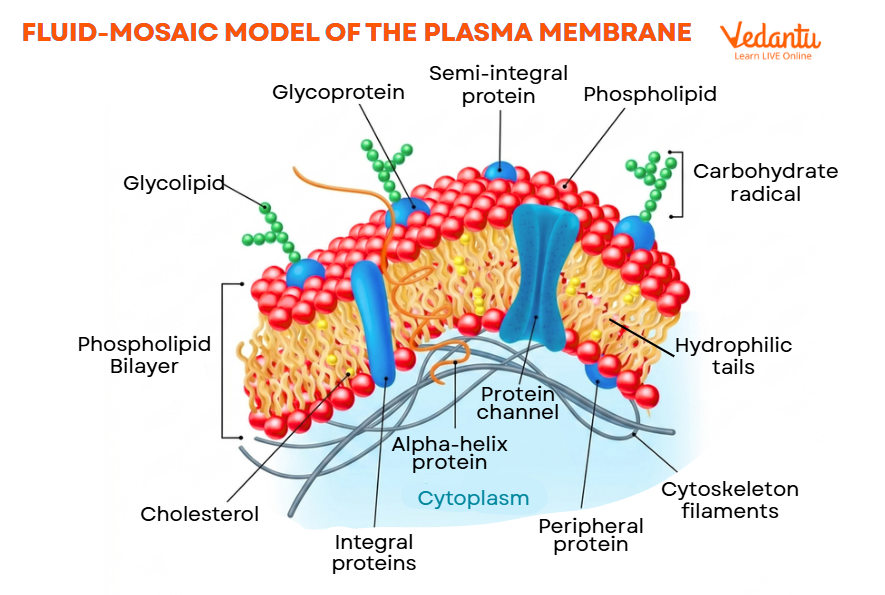
In both prokaryotic and eukaryotic cells, the plasma membrane acts as a selectively permeable barrier. This means the membrane does not allow all substances to pass through freely. Instead, it carefully controls the movement of molecules depending on their size, charge, and nature. This property is essential because the cell must continuously exchange gases, nutrients, ions, and waste products with its surroundings without losing control of its internal environment.
Who Discovered the Plasma Membrane?
The understanding of the plasma membrane developed over time.
In the late 1600s, Robert Hooke discovered cells.
In 1839, Schwann studied animal cells and reported a thin outer layer that is now known as the plasma membrane.
In 1855, Cramer and Nageli called it the cell membrane.
This historical progression is sometimes asked in biology one-mark questions.
The plasma membrane is also commonly called the cell membrane or plasmalemma, although these terms are used slightly differently in some contexts. Structurally, it is described as a phospholipid bilayer and is best explained by the fluid-mosaic model, which describes the membrane as a dynamic, flexible, and organised structure made of lipids, proteins, carbohydrates, and associated molecules.
It is present in:
The plasma membrane is mainly made up of:
Phospholipids
Proteins
Carbohydrates
Conjugated molecules
Cholesterol in many eukaryotic cells
These components are not arranged in a rigid way. Instead, they are organised in a flexible, dynamic pattern that gives the membrane its fluid nature.
Main Components in Detail
1. Phospholipids
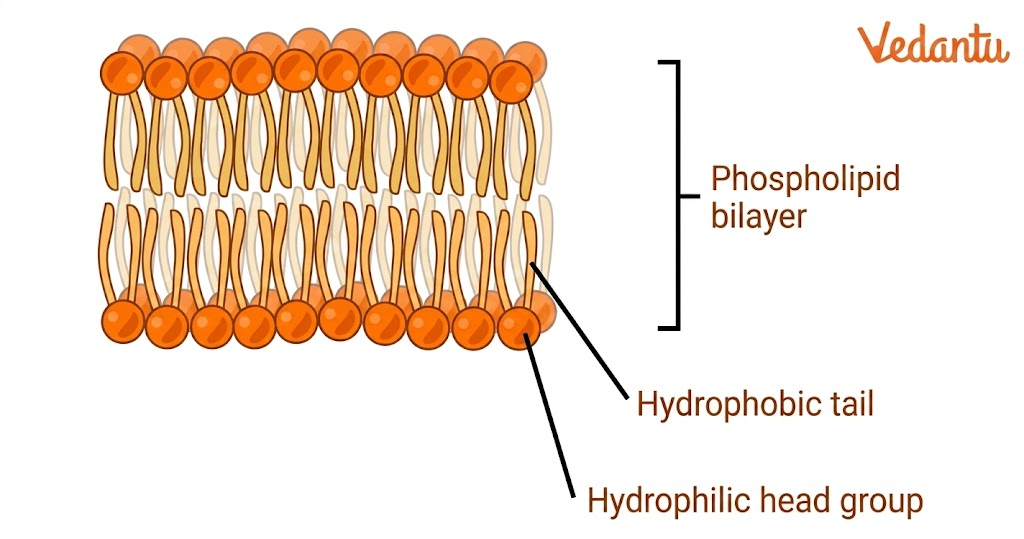
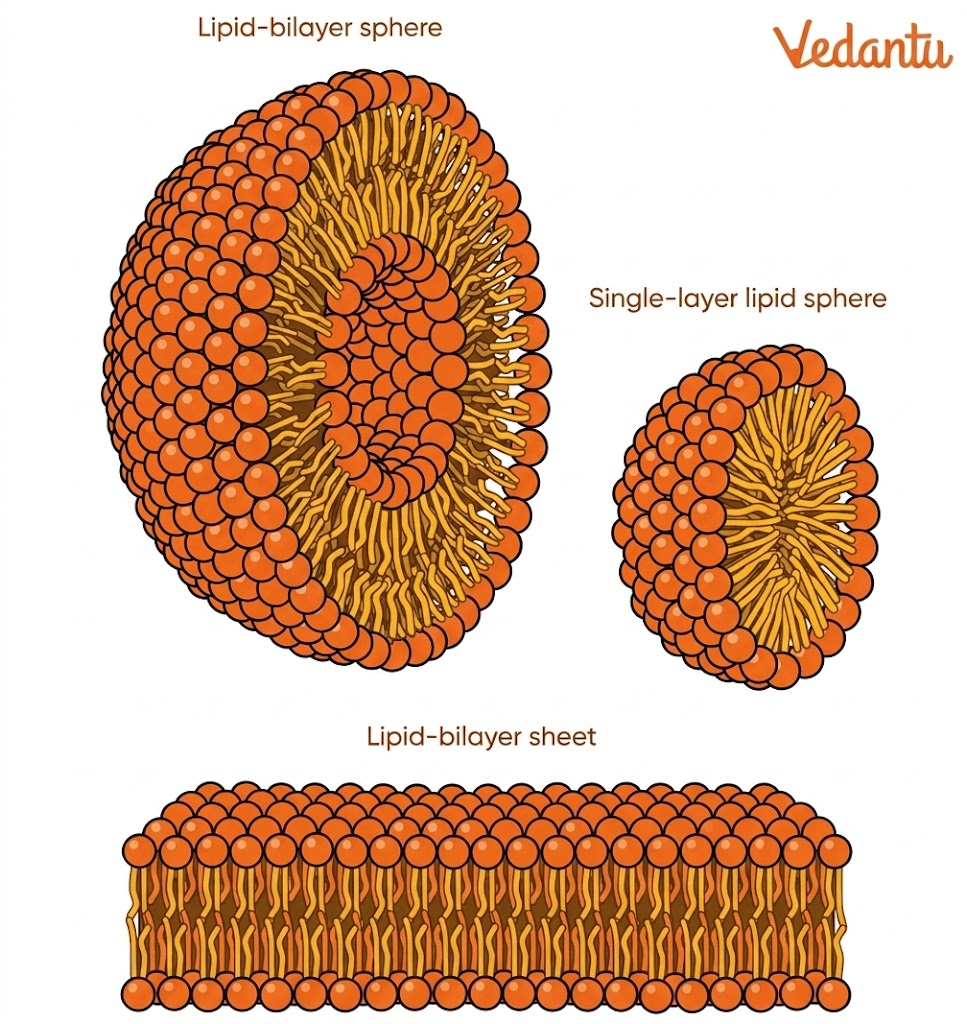
Phospholipids form the basic structural framework of the membrane. They arrange themselves into a bilayer with:
hydrophilic heads facing outward toward water
hydrophobic tails facing inward, away from water
This arrangement creates a stable boundary around the cell.
2. Proteins
Proteins are embedded in or attached to the lipid bilayer. They perform several functions such as:
transport
signaling
enzyme action
receptor activity
anchorage
3. Carbohydrates
Carbohydrates are generally present as:
glycoproteins
glycolipids
They are especially important in:
cell recognition
signaling
cell-to-cell interaction
4. Cholesterol
In many eukaryotic membranes, cholesterol is present and helps:
maintain membrane fluidity
stabilise the bilayer
prevent the membrane from becoming too rigid or too fluid
Composition of Plasma Membrane
The composition of the plasma membrane explains why it can act both as a stable barrier and as an active functional surface.
The membrane is mainly composed of:
lipids, especially phospholipids
proteins
carbohydrates
cholesterol and other associated molecules
This specific composition allows the membrane to:
remain flexible
regulate transport
receive signals
interact with other cells
maintain internal homeostasis
This is why the plasma membrane is not just a passive wall. It is a highly active biological structure.
Structure of Plasma Membrane
The structure of the plasma membrane is one of the most important topics in cell biology. It is described as a thin, flexible, living membrane that surrounds the cell.
Its thickness is approximately:
5 to 8 nanometers
The plasma membrane surrounds and contains the cytoplasm, forming the outer boundary of the cell. It is mainly organised as a lipid bilayer.
Key Structural Features
thin and delicate
flexible
dynamic
made of two phospholipid layers
contains proteins inserted in the bilayer
contains carbohydrates attached to lipids and proteins
may contain cholesterol in eukaryotic cells
This organisation makes the membrane both structurally stable and functionally active.
Fluid Mosaic Model of Plasma Membrane
The most accepted explanation of membrane structure is the fluid-mosaic model of the plasma membrane.
This model was proposed in 1972 by the American biologists:
Seymour Jonathan Singer
Garth L. Nicolson
Why Is It Called “Fluid”?
Because the molecules are not fixed in one place. Many components can move laterally within the membrane.
Why Is It Called “Mosaic”?
Because the membrane contains a variety of molecules arranged in an irregular but functional pattern.
What the Fluid Mosaic Model Explains?
It explains:
membrane flexibility
transport
signaling
membrane repair
interaction with the environment
Sandwich Model of the Plasma Membrane
Before the fluid-mosaic model became widely accepted, earlier models attempted to explain membrane structure. In the sandwich model, the plasma membrane was thought to consist of:
a phospholipid bilayer in the middle
protein layers on both sides
Although this model helped in the early understanding of membrane organisation, it could not explain many membrane properties properly, such as:
fluidity
mobility of proteins
dynamic transport behavior
Why is the Plasma Membrane Called a Selectively Permeable Membrane?
This is one of the most frequently asked conceptual questions.
The plasma membrane is called a selectively permeable membrane because it allows only certain substances to pass through while restricting others.
It Allows Passage of:
small molecules
certain gases
some hydrophobic molecules
selected ions and nutrients through transport proteins
It Restricts:
many large molecules
many charged particles
substances not needed by the cell
This selective behaviour is essential because the cell must:
take in nutrients
remove waste
maintain ion balance
prevent harmful or unnecessary substances from entering
A simpler answer is:
The plasma membrane is called selectively permeable because it controls the entry and exit of substances instead of allowing everything to pass freely.
Is the Plasma Membrane Permeable?
The plasma membrane is not fully permeable. It is selectively permeable.
This means:
Some substances pass easily
Some require special transport
Some cannot pass at all
According to the provided explanation, the plasma membrane allows:
hydrophobic molecules
small polar molecules
But it does not freely allow:
large polar molecules
ions
This selective control is possible because of both:
the lipid bilayer
membrane proteins
Functions of Plasma Membrane
The function of the plasma membrane is not limited to just forming a boundary. It performs several critical biological roles essential for cell survival.
1. Acts as a physical barrier
The plasma membrane separates the external environment from the internal cell contents. This prevents the cytoplasm from mixing directly with the surroundings and protects the cell.
2. Selective permeability
The membrane controls the movement of molecules into and out of the cell. This helps the cell maintain:
internal balance
proper concentration of ions
nutrient availability
waste removal
3. Role in endocytosis and exocytosis
The plasma membrane is directly involved in:
endocytosis – taking substances into the cell
exocytosis – releasing substances out of the cell
These processes are essential for nutrient uptake, secretion, and membrane turnover.
4. Cell Communication and Signalling
The plasma membrane facilitates communication between the cell and its surroundings. Receptor proteins on the membrane help cells respond to external signals, such as:
chemical messengers
5. Anchoring the cytoskeleton
The membrane helps anchor the cytoskeleton, which:
supports cell shape
stabilises the cell
helps maintain internal organisation
6. Maintaining cell potential
The plasma membrane helps maintain the electrochemical gradient across it, which is essential in many cells, especially nerve and muscle cells.
These multiple functions show why the membrane is one of the most active structural components of the cell.
Difference Between Cell Membrane and Plasma Membrane
Students often confuse these two terms because they sound similar. In many school-level contexts, both are used interchangeably, but conceptually, there is a distinction.
The explanation provided says that:
The cell membrane is a type of plasma membrane
It is not always the outermost layer of the cell
This means plasma membrane refers more broadly to the living membrane boundary, while the term cell membrane may be used more generally depending on context.
For NEET preparation, students should mainly remember:
Both terms often refer to the same membrane in most cell biology questions
But the plasma membrane is the more precise biological term
What Would Happen if the Plasma Membrane Ruptures or Breaks Down?
This is an important conceptual question because it tests understanding of membrane function.
If the plasma membrane ruptures or breaks down:
The boundary between the cell and the environment will be lost
Cell contents may leak out
Unwanted substances may enter freely
ion balance will be disturbed
The cell will lose control over transport
Communication with the environment will fail
The cytoplasm and organelles will no longer remain protected
As a result, the cell would not be able to maintain homeostasis and would most likely die.
A direct answer can be written as:
If the plasma membrane ruptures, the cell loses its protective boundary and control over the exchange of substances, leading to leakage of contents, disruption of internal balance, and eventual cell death.
Plasma Membrane in Prokaryotic and Eukaryotic Cells
The plasma membrane is present in:
Prokaryotic cells
Eukaryotic cells
This is important because it means the plasma membrane is a universal feature of life.
In prokaryotic Cells
It forms the outer living boundary just inside the cell wall where it is present.
In eukaryotic Cells
It surrounds the cytoplasm and works with various membrane-bound organelles and the endomembrane system.
Plasmalemma
Plasmalemma is another term used for the plasma membrane or cell membrane.
It is defined as:
a thin layer enclosing the cytoplasm of the cell
The term plasmalemma was given by J. Q. Plowe in 1931.
This is a useful factual point for exam revision.
Role of Plasma Membrane in Transport
Transport is one of the major biological roles of the plasma membrane.
Types of Transport Supported by the Membrane
diffusion
osmosis
facilitated movement
active transport
endocytosis
exocytosis
This transport role is possible because of:
selective permeability
protein channels
carrier molecules
membrane flexibility
Without this transport regulation, the cell would not be able to survive.
Role of Plasma Membrane in Cell Communication
Another very important function is communication.
The plasma membrane contains receptors that help the cell:
receive signals
detect changes
respond to hormones
communicate with neighbouring cells
coordinate biological activity
This signalling function is especially important in multicellular organisms, where cells must act in a coordinated way.
Role of Plasma Membrane in Cell Shape and Support
The plasma membrane is not rigid like a wall, but it contributes to shape and support by anchoring the cytoskeleton. This helps:
maintain cell shape
stabilise internal organisation
assist in movement and transport processes
Thus, the membrane is not just an outer covering; it is part of the cell's functional architecture.
FAQs on Plasma Membrane: Structure, Function, Diagram and Fluid Mosaic Model Explained | NEET Biology
1. What is the plasma membrane and its function?
The plasma membrane is a thin, flexible, and selectively permeable boundary that surrounds the cell. It separates the internal cell contents from the external environment.
Its main functions include:
controlling the entry and exit of substances
protecting the cell from external conditions
enabling cell communication through receptors
supporting transport processes like diffusion, osmosis, endocytosis, and exocytosis
maintaining internal balance (homeostasis)
2. What are the three layers of the plasma membrane?
The plasma membrane mainly consists of three components (often described as layers):
Phospholipid bilayer – forms the basic structure
Proteins (integral and peripheral) – involved in transport and signalling
Cholesterol – present between lipid layers to maintain stability and fluidity
3. Does a human have a plasma membrane?
Yes, every human cell has a plasma membrane. It surrounds the cell, separates it from the external environment, and regulates the movement of substances in and out of the cell.
4. Why is it called a plasma membrane?
It is called the plasma membrane because it forms the boundary of the living cell content (protoplasm) and controls the movement of materials. It is also referred to as a selectively permeable membrane due to its ability to regulate transport.
5. What are the two types of plasma membrane proteins?
The plasma membrane contains two main types of proteins:
Integral proteins – embedded within the phospholipid bilayer, sometimes spanning across it
Peripheral proteins – present on the inner or outer surface of the membrane
6. What are the three components of plasma?
Plasma (in blood) mainly contains:
Plasma proteins like albumin and globulin
Electrolytes such as sodium, potassium, and chloride
Clotting factors like fibrinogen
7. What are the 4 types of phospholipids?
The four major phospholipids found in cell membranes are:
Phosphatidylcholine (PC)
Phosphatidylethanolamine (PE)
Phosphatidylserine (PS)
Sphingomyelin
These phospholipids help maintain the structure and fluidity of the plasma membrane.
8. Why is the plasma membrane called a selectively permeable membrane?
It is called selectively permeable because it allows only certain substances to pass through while restricting others.
9. What is the plasmalemma?
Plasmalemma is another term for the plasma membrane or cell membrane.
