








Key Concepts of Nucleotide for NEET Preparation
A nucleotide is the fundamental unit of nucleic acids such as DNA and RNA. It is an organic molecule made up of three essential components: a nitrogenous base, a pentose sugar, and a phosphate group. These units combine to form long chains called polynucleotides, which store and transmit genetic information in living organisms.
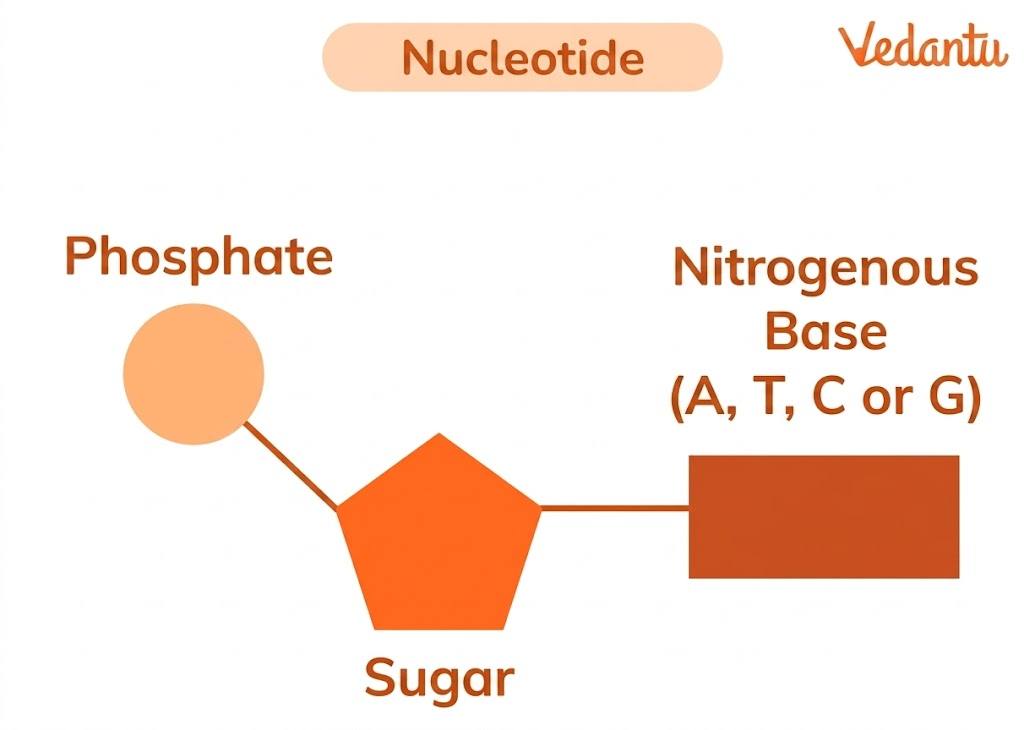
Nucleotides are not only important for genetics but also play a vital role in energy transfer, metabolism, and cellular communication. Molecules like ATP, NAD, and FAD are all derived from nucleotides and are crucial for life processes.
Nucleotide Structure – Detailed Explanation
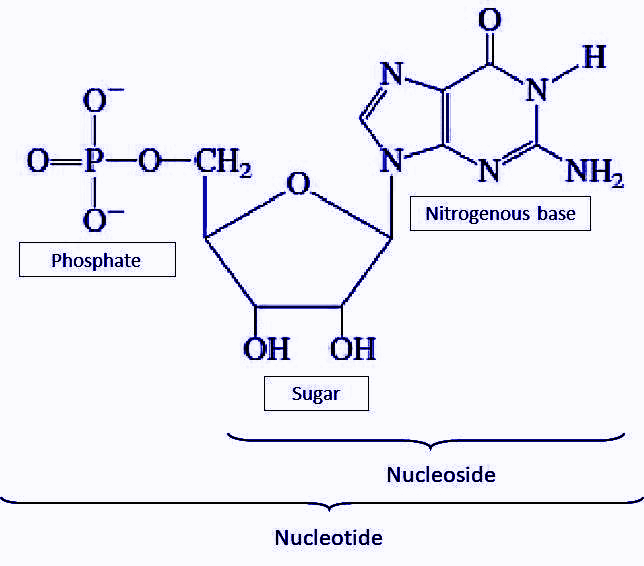
The nucleotide structure consists of three covalently bonded components:
1. Nitrogenous Base
These are nitrogen-containing organic molecules that form the genetic code.
Purines (double ring): Adenine (A), Guanine (G)
Pyrimidines (single ring): Cytosine (C), Thymine (T), Uracil (U)
DNA bases: A, T, G, C
RNA bases: A, U, G, C
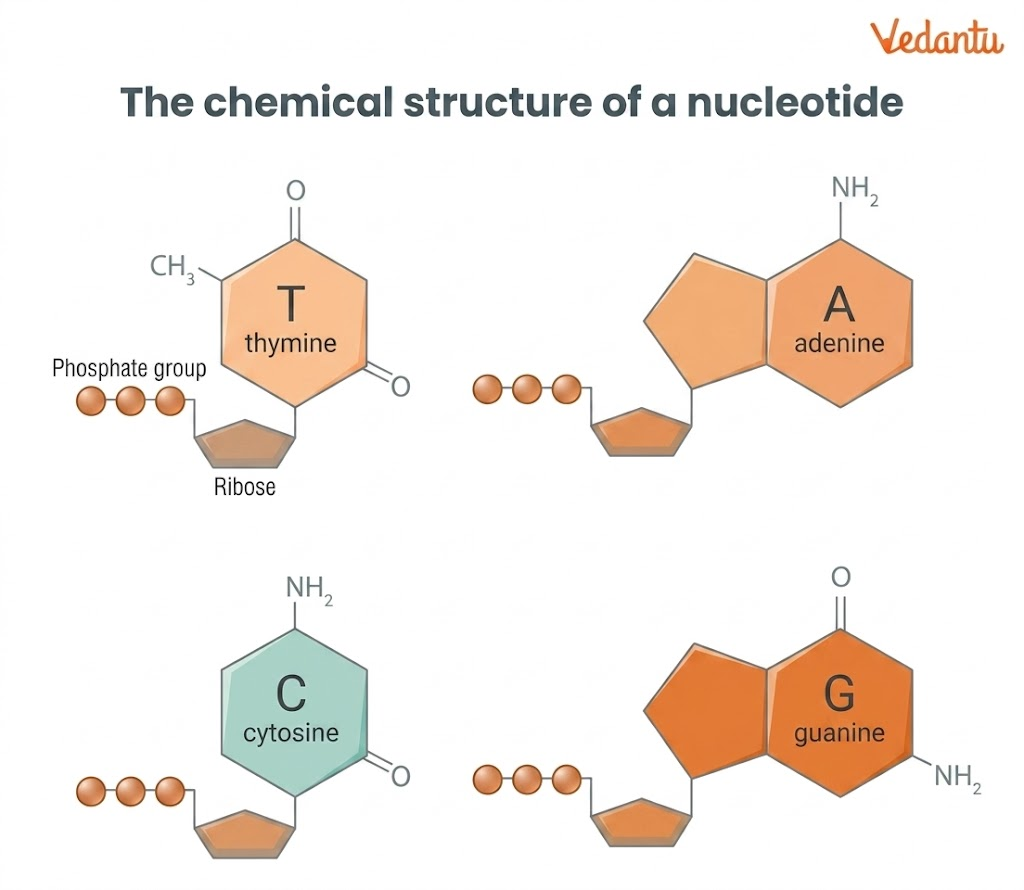
2. Pentose Sugar
Ribose → present in RNA
Deoxyribose → present in DNA
The sugar forms the backbone of nucleic acids and connects to both the base and phosphate group.
3. Phosphate Group
Can be mono-, di-, or triphosphate
Attached to the 5’ carbon of sugar
Responsible for forming bonds between nucleotides
Phosphate groups connect adjacent nucleotides through phosphodiester bonds, forming a chain with 5′ → 3′ directionality.
Components of Nucleotide (Quick Table)
Nucleotide Sequence and Genetic Information
A nucleotide sequence refers to the specific order of nucleotides in DNA or RNA. This sequence determines:
Genetic coding
Cellular function
Example:
A-T-G-C sequence → codes for amino acids
The sequence is read in a specific direction (5′ → 3′) and is crucial for DNA replication and transcription.
Nucleotides vs Nucleosides
Types of Nucleotides
Based on Phosphate Groups:
Monophosphate (AMP)
Diphosphate (ADP)
Triphosphate (ATP)
Based on Function:
Structural (DNA, RNA)
Energy carriers (ATP)
Coenzymes (NAD, FAD)
Signaling molecules (cAMP)
Nucleotide Examples (Important for NEET)
Some important nucleotide examples include:
ATP (Adenosine Triphosphate) → Energy currency of the cell
cAMP (Cyclic AMP) → Secondary messenger
NAD⁺ / NADH → Electron carrier
FAD / FADH₂ → Redox reactions
Coenzyme A → Metabolic processes
Function of Nucleotide
1. Genetic Role
Nucleotides are the building blocks of DNA and RNA and carry hereditary information.
2. Energy Storage
ATP stores and releases energy for cellular activities.
3. Enzyme Function
Acts as coenzymes in biochemical reactions (NAD, FAD).
4. Signal Transduction
cAMP helps in intracellular signaling.
5. Metabolic Regulation
Participates in redox reactions and biosynthesis processes.
Biological Importance of Nucleotides
Form the backbone of genetic material
Essential for DNA replication and transcription
Maintain cellular energy balance
Participate in metabolic pathways
Act as intermediates in enzyme reactions
Nitrogenous Bases and Pairing Rules
A–T → 2 hydrogen bonds
G–C → 3 hydrogen bonds
Special Forms of Nucleotides
Cyclic Nucleotides
Example: cAMP, cGMP
Function: Signal transmission
Dinucleotides
Example: NAD, FAD
Function: Electron transport
Key NEET Points to Remember
Nucleotide = Base + Sugar + Phosphate
DNA has deoxyribose, RNA has ribose
DNA is double-stranded, RNA is single-stranded
Base pairing follows strict rules
ATP is the most important energy molecule
FAQs on Nucleotide: Structure, Components, Functions, Types and Diagram
1. What are the 4 types of nucleotides?
The four main types of nucleotides in DNA are Adenine (A), Thymine (T), Guanine (G), and Cytosine (C).
In RNA, thymine is replaced by Uracil (U), so the four nucleotides are A, U, G, and C. These bases form the genetic code.
2. What is called a nucleotide?
A nucleotide is the basic structural unit of DNA and RNA, made up of a nitrogenous base, a pentose sugar, and a phosphate group. It is responsible for storing and transmitting genetic information.
3. What are 5 nucleotides?
The five nucleotides are based on five nitrogenous bases: Adenine, Guanine, Cytosine, Thymine, and Uracil. DNA contains A, T, G, C, while RNA contains A, U, G, C.
4. What are the 4 types of DNA?
DNA mainly exists in three structural forms: A-DNA, B-DNA, and Z-DNA. Among these, B-DNA is the most common in living cells. These forms differ in shape and helical structure.
5. Which nucleotide is only in DNA?
Thymine (T) is found only in DNA. In RNA, thymine is replaced by uracil (U).
6. What are three nucleotides called?
Three nucleotides together form a codon, which codes for a specific amino acid during protein synthesis.
7. How many nucleotides are in humans?
The human genome contains approximately 3 billion nucleotide base pairs in a single set of chromosomes, and about 6 billion base pairs in total body cells.
8. Can DNA be damaged?
Yes, DNA can be damaged by environmental factors like radiation, chemicals, or internal cellular processes. If not repaired properly, this damage can lead to mutations and diseases.
9. What do we share 98% of our DNA with?
Humans share about 98% of their DNA with chimpanzees, showing a close evolutionary relationship.
10. What is inherited from mother only?
Mitochondrial DNA (mtDNA) is inherited only from the mother. It plays a key role in energy production and is passed to all offspring.
