








Archaebacteria for NEET: Structure, Habitat, and Differences from Other Bacteria
Archaebacteria are a unique and ancient group of microorganisms that play an essential role in biology and often appear in NEET exam questions. Understanding archaebacteria helps NEET aspirants build a solid foundation in Microbiology. This topic is crucial for grasping basic biological classification and the evolutionary significance of early life forms. Mastering archaebacteria enhances concept clarity and prepares students for related MCQs in NEET Biology.
What are Archaebacteria?
Archaebacteria, also called archaea, are single-celled prokaryotic organisms that differ significantly from bacteria and eukaryotes. Found in some of the most extreme environments on Earth, they possess unique adaptations which allow them to survive in hot springs, salt lakes, acidic waters, and marshlands. Archaebacteria have distinct genetic, biochemical, and structural features that separate them from “true bacteria” (eubacteria). In NEET Biology, knowing what sets archaebacteria apart is vital for classification-based and evolutionary questions.
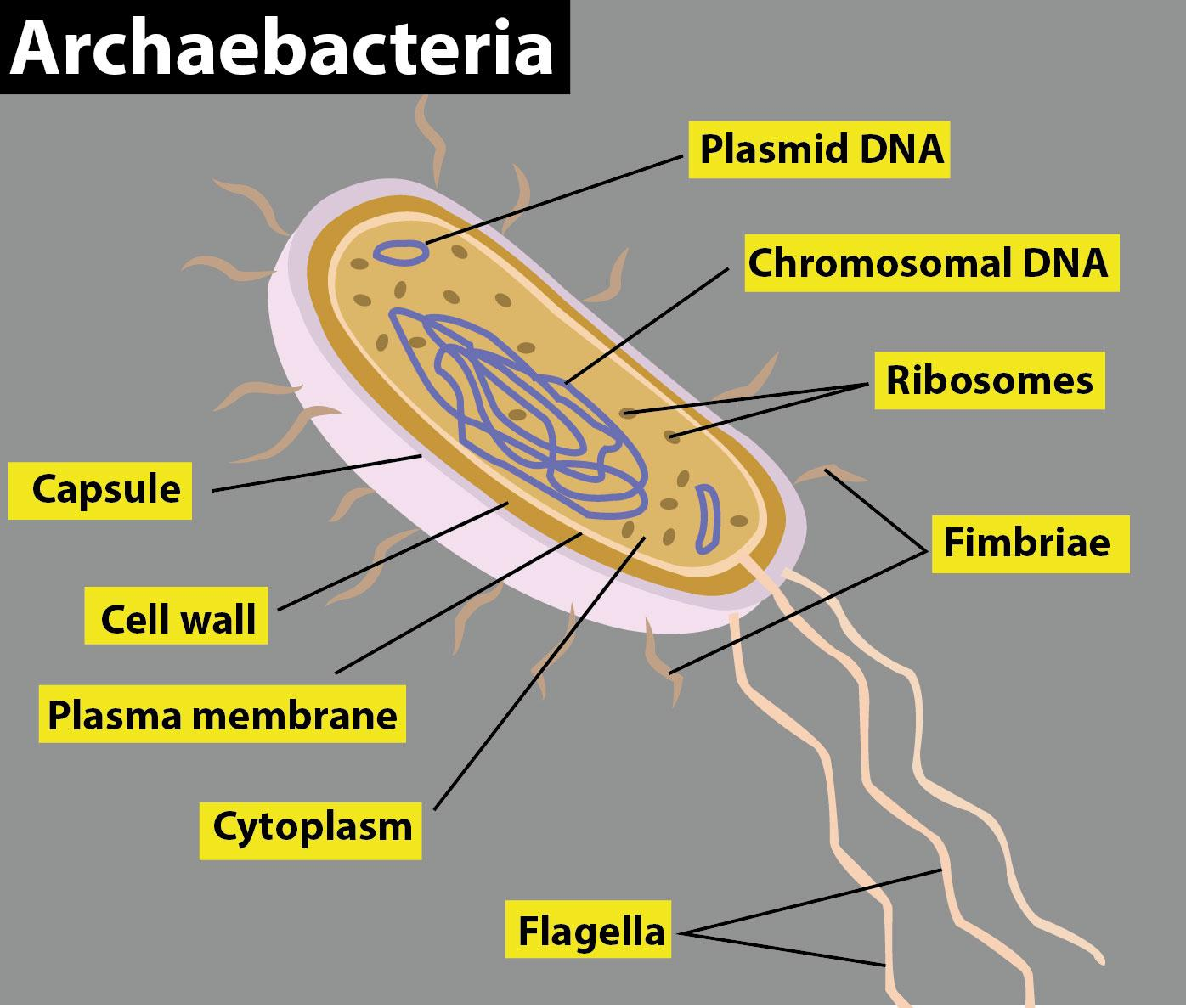
Core Ideas and Fundamentals of Archaebacteria
Prokaryotic Nature
Like bacteria, archaebacteria are prokaryotes, meaning they lack a well-defined nucleus or membrane-bound organelles. However, archaebacteria have unique genetic and metabolic pathways distinguishing them from bacteria and eukaryotes.
Unique Cell Wall Composition
One of the fundamental differences lies in their cell wall composition. Unlike eubacteria, archaebacteria lack peptidoglycan in their cell walls. Instead, they possess pseudopeptidoglycan or other complex polymers, making them resistant to certain antibiotics and harsh conditions.
Membrane Lipids
Archaebacteria have distinctive ether-linked membrane lipids, as opposed to the ester-linked lipids found in bacteria and eukaryotes. This feature provides extra stability to their cell membranes, allowing survival in extreme environments.
Habitats
Archaebacteria thrive in hostile environments where most life forms cannot survive. These include hot springs, salty lakes, acidic peat bogs, and the guts of ruminants. Such organisms are called extremophiles.
Important Sub-Concepts Related to Archaebacteria
Types of Archaebacteria
- Halophiles: These archaebacteria live in highly saline environments like salt lakes or salt mines. They require high salt concentrations to survive.
- Thermoacidophiles: Found in extremely hot (above 80°C) and acidic environments such as hot springs and volcanic vents. They can tolerate both heat and acidity.
- Methanogens: These archaebacteria generate methane gas as a metabolic byproduct. Methanogens are commonly found in anaerobic environments like marshes, swamps, and the digestive tracts of cattle.
Archaebacteria vs. Eubacteria
- Archaebacteria lack peptidoglycan in their cell walls, while eubacteria have it.
- The membrane lipids are ether-linked in archaebacteria but ester-linked in eubacteria.
- Archaebacteria are often extremophiles, whereas most eubacteria prefer moderate conditions.
Key Principles, Relationships, and Facts about Archaebacteria
Unlike many biological topics, archaebacteria do not involve formulas, but there are key relationships and principles related to their biology and evolutionary significance:
- Archaebacteria and eukaryotes share more similarities in some genetic mechanisms than archaebacteria do with bacteria, pointing to a closer evolutionary relationship.
- The existence of archaebacteria helps scientists understand the evolution of life and how early organisms survived harsh conditions of primordial Earth.
- Archaebacteria play crucial roles in biogeochemical cycles such as nitrogen and carbon cycling, especially via methanogenesis.
Characteristics and Importance of Archaebacteria
- Ancient Origin: Among the earliest forms of life, providing vital evolutionary insights.
- Survival in Extremes: Specialized for harsh habitats.
- Economic Contributions: Methanogens are used in biogas production and sewage treatment.
- Contribution to Ecology: Significant impact on nutrient cycles and organic matter decomposition.
- Clinical and Biotechnological Relevance: Source of enzymes for molecular biology (like Taq polymerase in PCR).
Why is Archaebacteria Important for NEET?
Archaebacteria appear in NEET Biology in questions concerning biological classification, microbial diversity, and ecological roles. Questions often test the ability to differentiate archaebacteria from bacteria and to identify their significance. A clear understanding of archaebacteria helps students score better in topics related to Monera, biodiversity, evolution, and questions about special habitats like hot springs or methane production. This topic also has connections with applied biology such as biotechnology and environmental science.
How to Study Archaebacteria Effectively for NEET
- Start by reviewing the basic classification of living organisms and the place of archaebacteria in the Five Kingdom System.
- Focus on the unique features (cell wall, membrane lipids, habitats) that distinguish archaebacteria from eubacteria and eukaryotes.
- Study the major types of archaebacteria and connect their adaptations with their environments.
- Practice NEET MCQs and assertion-reason questions related to archaebacteria to reinforce conceptual clarity.
- Use diagrams (like the provided image) to visualize differences and adaptations.
- Regularly revise key characteristics and ecological roles for quick recall in exams.
Common Mistakes Students Make in Archaebacteria
- Confusing archaebacteria with eubacteria due to similar prokaryotic structure.
- Forgetting that archaebacteria lack peptidoglycan in their cell walls.
- Mixing up examples, especially types like methanogens, halophiles, and thermoacidophiles.
- Ignoring the evolutionary and ecological roles of archaebacteria.
- Neglecting the biotechnological importance of archaebacteria in MCQ preparation.
Quick Revision Points on Archaebacteria
- Archaebacteria are ancient prokaryotes with unique features unlike true bacteria.
- No peptidoglycan in cell walls - use pseudopeptidoglycan or other polymers.
- Cell membranes have ether-linked lipids for extra stability.
- Found in extreme conditions: high salt (halophiles), high temperature and acid (thermoacidophiles), low oxygen (methanogens).
- Play key ecological roles in methane production and nutrient cycles.
- Differ from eubacteria in structure, genetics, and habitat preferences.
- Revisit examples and types for exam MCQs and assertion-reason questions.
FAQs on Archaebacteria in NEET Biology: Unique Features and Importance
1. What are Archaebacteria? [NEET]
Archaebacteria are primitive, single-celled prokaryotic microorganisms known for surviving in extreme environments. These organisms have unique characteristics that set them apart from other bacteria, making them a key topic in the NEET Biology syllabus.
Key features of Archaebacteria include:
- Absence of peptidoglycan in their cell wall
- Ability to live in extreme habitats (high salt, acidity, or temperature)
- Distinctive lipid compositions in the cell membrane
- Possess unique genes for energy production and metabolism
2. What are the main types of Archaebacteria?
The three main types of Archaebacteria are methanogens, halophiles, and thermoacidophiles. These types are classified based on their habitat and metabolic properties:
- Methanogens: Produce methane gas as a byproduct, commonly found in swamps and the guts of ruminants
- Halophiles: Thrive in highly saline environments like salt lakes
- Thermoacidophiles: Survive in hot, acidic environments such as hot springs
3. What is the difference between Archaebacteria and Eubacteria? [NEET]
The major differences between Archaebacteria and Eubacteria are their cell wall composition, habitats, and genetic features.
Key distinctions:
- Cell wall: Archaebacteria do not have peptidoglycan, while Eubacteria do
- Habitat: Archaebacteria live in extreme environments; Eubacteria are found in normal conditions
- Genetics: Archaebacteria have unique ribosomal RNA and membrane lipids
- Antibiotic sensitivity: Eubacteria are often sensitive to antibiotics; Archaebacteria are not
4. Why are Archaebacteria called ancient bacteria?
Archaebacteria are termed 'ancient bacteria' because they are among the earliest forms of life on Earth, evolving billions of years ago.
Facts for NEET:
- Exist since the primitive earth era
- Adapted to survive harsh and extreme conditions
- Represent evolutionary links to early life forms
5. What is the importance of Archaebacteria in NEET Biology?
Archaebacteria are vital for NEET as they represent unique prokaryotes with ecological and evolutionary significance.
NEET focus points:
- Source of biotechnological enzymes (e.g., thermostable DNAses)
- Play essential roles in the nitrogen and carbon cycles
- Study of their adaptation mechanisms helps understand life's evolution
6. What is the cell wall of Archaebacteria made up of?
The cell wall of Archaebacteria lacks peptidoglycan and contains pseudopeptidoglycan, polysaccharides, and proteins.
Key NEET points:
- No peptidoglycan, unlike Eubacteria
- Composition varies by group but often contains pseudo-murein
- Provides structural stability in extreme environments
7. Where are Archaebacteria found?
Archaebacteria are found in extreme environments such as hot springs, salt lakes, marshes, and even guts of ruminant animals.
Common habitats:
- Hot volcanic springs (thermoacidophiles)
- Salty waters (halophiles)
- Oxygen-free environments like swamps or animal intestines (methanogens)
8. Name any two characteristics of Archaebacteria. [NEET]
Two important characteristics of Archaebacteria for NEET are:
- Absence of peptidoglycan in their cell wall
- Survival in extreme environments (such as high temperature or salinity)
9. How are methanogens useful to human beings?
Methanogens are useful in producing biogas through the breakdown of organic matter in anaerobic conditions.
Applications include:
- Biogas generation for fuel and electricity
- Waste management and sewage treatment
- Reducing environmental pollution
10. Which group of Archaebacteria is found in the guts of ruminants and why?
Methanogens are found in the guts of ruminant animals like cows and buffaloes, where they help in digestion by producing methane gas.
Important details:
- Break down cellulose during digestion
- Release methane as a metabolic byproduct
- Play a vital role in anaerobic breakdown of plant material
11. Why are Archaebacteria resistant to antibiotics?
Archaebacteria are resistant to most antibiotics because their cell wall structure and metabolic pathways differ significantly from those of Eubacteria.
Key points:
- Antibiotics typically target peptidoglycan or protein synthesis in Eubacteria
- Archaebacterial enzymes and ribosomes have unique features
- This resistance is a distinguishing feature, important for NEET Biology
12. Give two examples of Archaebacteria.
Two common examples of Archaebacteria are:
- Halobacterium (a halophile that lives in salt-rich environments)
- Methanobacterium (a methanogen found in anaerobic conditions)
