




Stepwise Answers for NCERT Class 5 English Chapter 10 – Santoor Glass Bangles
Let us Think (Page 123)
A. Answer the following questions.
Question 1. How were glass bangles made in Ravi’s small workshop?
Answer: Ravi and his team would first melt the glass in a hot furnace. After that, they shaped it into bangles, decorating them with bright colours and patterns before letting them cool and harden perfectly.
Question 2. Who was Ananya? How did she help Ravi?
Answer: Ananya, Ravi’s daughter, had a natural talent for design. She created fine floral motifs and geometric patterns, blending traditional styles with modern ideas.
Question 3. How did the success of the new bangles help the community?
Answer: The popularity of the new bangles brought benefits to the whole community. As demand grew, local artisans received more work, and additional jobs were created for people involved in packing and transporting the bangles.
B. Think and discuss
Question 1. If you were in Ananya’s place what other modern designs or colours would you add to make the bangles more attractive?
Answer: If I were Ananya, I would create designs inspired by a rising rainbow and a sky filled with soft clouds, using the many colours of the rainbow and blending modern patterns with traditional styles.
Question 2. Ravi and Ananya felt proud seeing people wearing their bangles on Diwali night. Have you ever created something (drawing, writing, or a project) that made you happy? Share your experience with the class.
Answer: I went to visit my grandmother who lives in a village, and I really enjoyed my time there. Our old family house stands beside a pond, and there is a large open field nearby where many animals roam and graze. I saw cows, horses, goats, buffaloes, and more. I especially loved watching the young calves feeding and staying close to their mothers. I also got the chance to look at the fish swimming in the pond.
At midday, the animals rested in the shade of the mango trees that grow around the pond. After returning home, I made a drawing of everything I had observed in the village and shared it with my class. My classmates and teacher admired my artwork. I am grateful to my mother, who is a skilled artist and helped me greatly in completing the drawing.
Question 3. Make a list of things that you buy from local markets during festivals.
Answer: During festival time, we usually purchase a variety of items from nearby markets, such as:
Traditional outfits
Decorative pieces
Sweets and special dishes
Diyas and candles
Handmade craft items
Festive snacks and treats
Bangles
Colourful papers
Let us Learn (Pages 124-126)
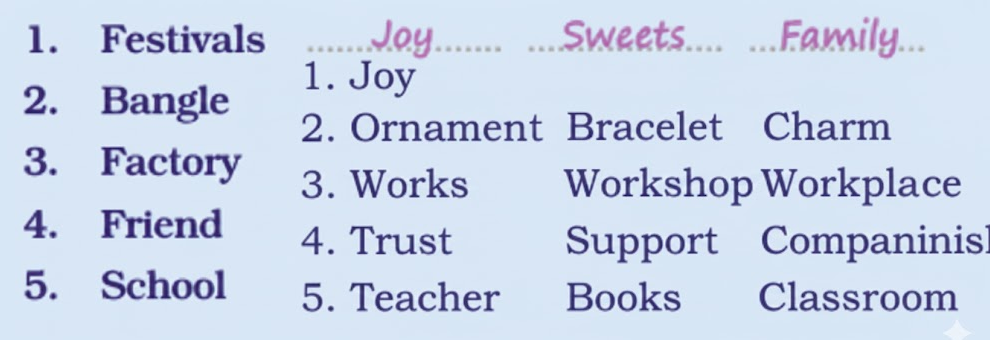
A. For each word, list three other words you associate with it. One has been done for you.
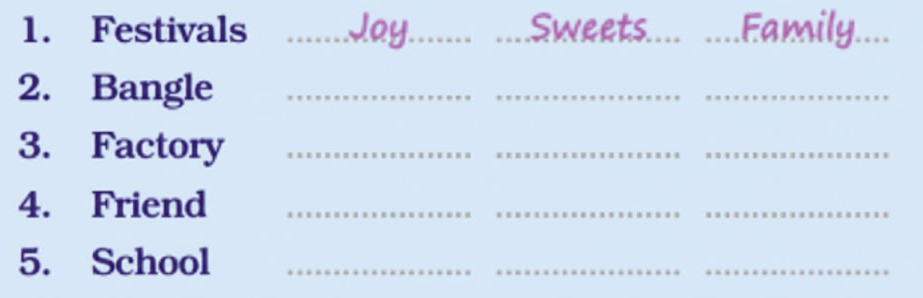
Answer:
B. Use capital letters, full stop (.), comma (,), question mark (?), wherever necessary and rewrite the following sentences.
Question 1. the air was filled with the clinking of glass
Answer: The sound of glass pieces clinking echoed through the air.
Question 2. On diwali night the streets of Firozabad were lit with lamps and lights
Answer: On the night of Diwali, lamps and colourful lights brightened the streets of Firozabad.
Question 3. Did ravi like ananya’s new designs at first
Answer: Did Ravi initially appreciate Ananya’s new designs?
Question 4. ravi and ananya made a special collection for diwali
Answer: Ravi and Ananya created a unique set of bangles especially for Diwali.
Question 5. Did the customers love the new bangles?

Answer: Did people like the newly designed bangles?
Read the following sentence.
Ananya had completed her schooling before she joined the factory.
The underlined part is an example of past perfect tense. We use the past perfect tense to talk about an action that took place and was completed before another action in the past.
We use both past perfect (for the first action) and past simple (for the second action) in such
sentences.
In the above sentence, Ananya’s education is the first action which took place before she joined the factory (next action).
Rule: Subject + has/have + Verb + Object
Identify the first action and the second action in the given sentences.
Answer:
Write more sentences like the ones given previously with the help of your teacher and classmates.
Answer:
She reached the market earlier, before the rain began.
They finished their dinner before I got there.
He wrapped up the project ahead of the deadline.
We toured the museum before it shut for the day.
I completed my homework just before my friend phoned me.
The children spent time playing outdoors before their parents returned home.
She went through the entire book prior to the test starting.
They learnt French before they shifted to Paris.
He prepared the letter before the post office closed.
Let us Speak (Page 126)
A. Try speaking the following lines. Start slow and gradually increase your speed. See how many times you can say each one without stopping or making a mistake.
a. Red lorry blue lorry.
b. Babli bought beautiful bangles but the bangles broke.
e. Ravi read a red book.
d. Green glass globes glow green.
e. Ten tiny turtles take turns talking.
Answer: Students should do it by themselves.
B. Glass bangles are an important part of the Indian culture, especially during festivals. Are there any crafts or traditions in your region that are linked to festivals? Share with your class.

Answer: Students should do it by themselves.
Let us Listen (Page 127)
Your teacher will read out the paragraph given below. Listen carefully.
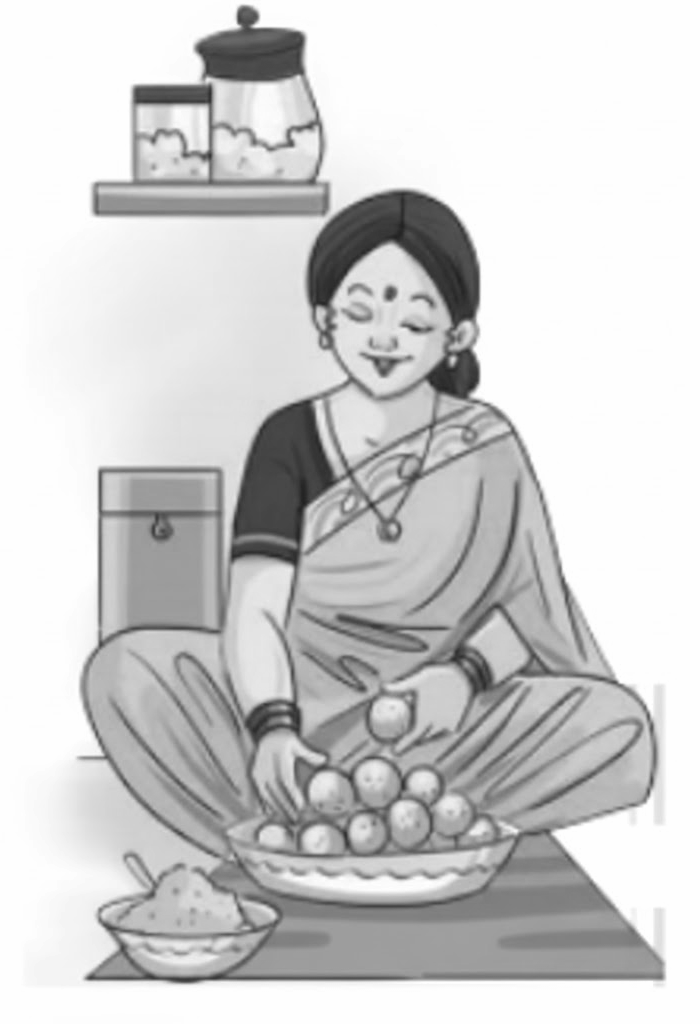
Arjun and his sister, Meera, help their mother prepare besan laddus. First, their mother roasts chickpea flour in a pan until it turns golden brown. Their father then adds ghee and sugar to the mixture and stirs it well and then transfers it to a big bowl to let the mixture cool.
When it is slightly cool, Meera and Arjun shape the mixture into small round balls. Finally, the kids decorate each laddu with a sprinkle of chopped nuts.
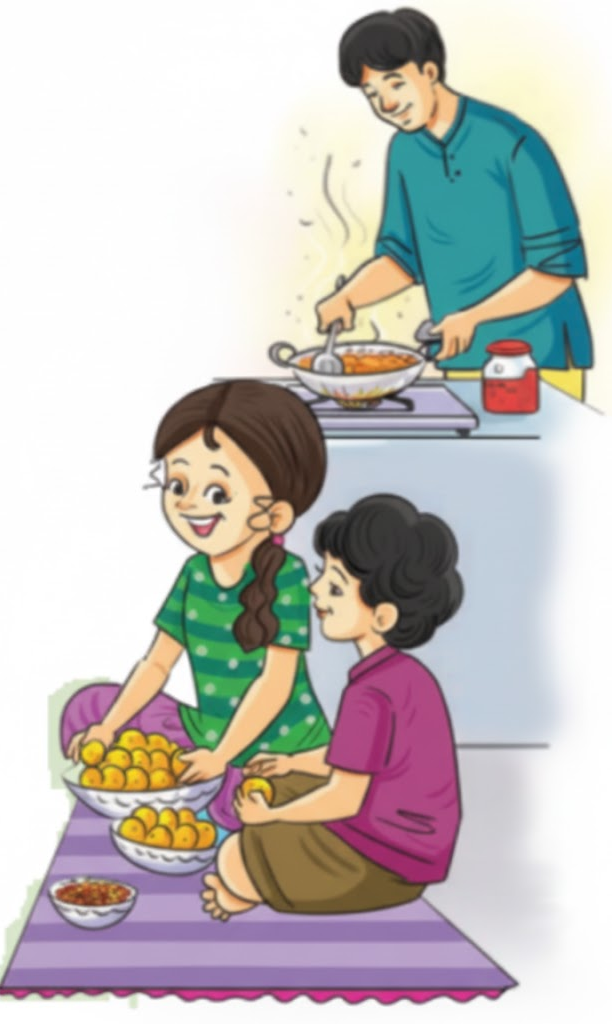
Write the correct sequence of steps that Aarav, Meera, and their parents take to prepare the laddus.
1. The father adds ghee and sugar to the mixture and stirs it well.
2. The mother roasts chickpea flour in a pan until it turns golden brown.
3. The kids decorate each laddu with a sprinkle of chopped nuts.
4. Meera and Arjun shape the mixture into small round balls.
5. Arjun and his sister, Meera, help their mother prepare besan laddus.
Answer: 5 → 2 → 1 → 4 → 3
Let us Write (Page 128)
A. Write a paragraph of 80-100 words on how you recently celebrated a festival.
Hints: Special dish, meeting with friends and family, prayer, any other related ritual.
Answer:
Sample Answer: We recently celebrated Eid al-Fitr, which is also called Ramadan. We dressed in new clothes and offered our prayers at the Eidgah. We asked Allah to bless everyone with good health and happiness.
Our mother made a special sweet dish called sewaiyan, and we all sat on the floor to enjoy it together. Later in the evening, we visited our relatives and shared festive greetings. It was a joyful day for all of us.
B. Look at the pictures given below.
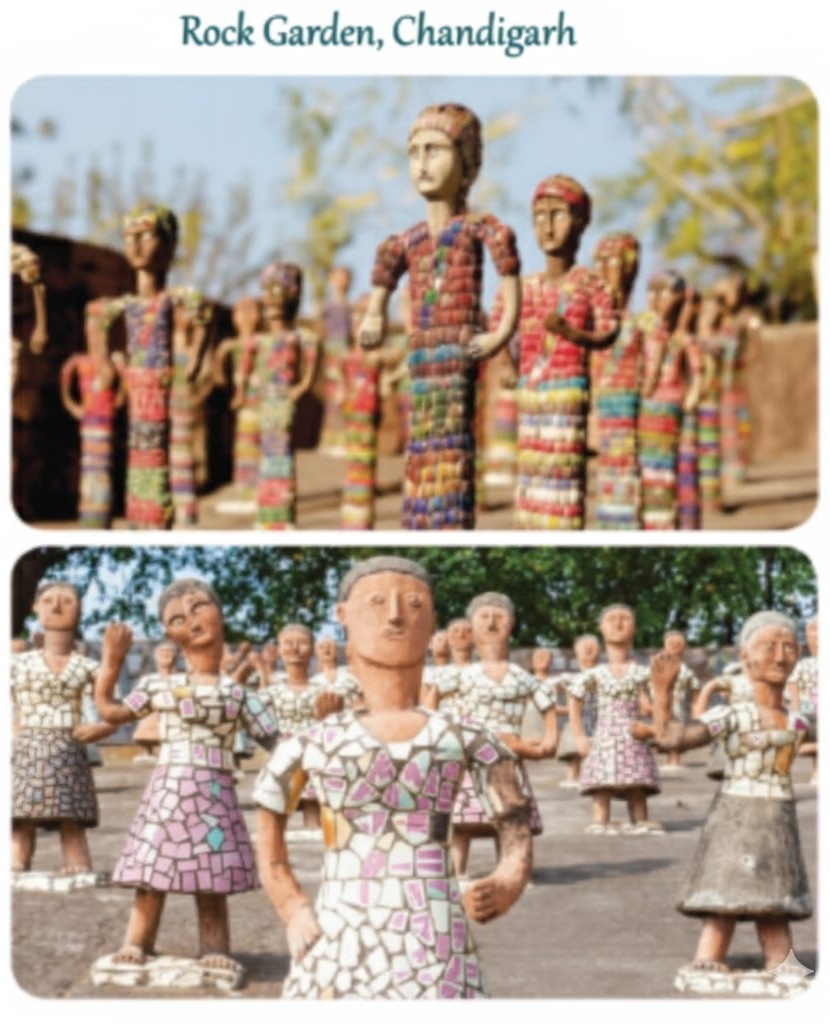
Discuss with your teacher and write a paragraph of 100-120 words in your notebook.
Answer: The Rock Garden of Chandigarh is a famous sculpture garden in India. It is also called Nek Chand Saini’s Rock Garden of Nathupur, named after its creator, Nek Chand Saini. He was a government employee who began working on this garden secretly during his free time in 1957. The garden covers about 40 acres and is made entirely from industrial waste, household leftovers, and discarded materials.
The garden features man-made waterfalls and numerous sculptures crafted from scrap items such as bottles, bangles, tiles, ceramic pieces, sinks, broken pipes, and electrical waste. Nek Chand selected a forest gorge near Sukhna Lake as the location for his creation. Remarkably, he managed to keep his work hidden for 18 years until authorities found it in 1976. Visitors to the garden can see concrete figures of dancers, musicians, animals, and many unique artistic creations.
Let us Do (Pages 129-130)
A. Firozabad is famous for glass bangles. Find out and write the names of places in India known for the following crafts.
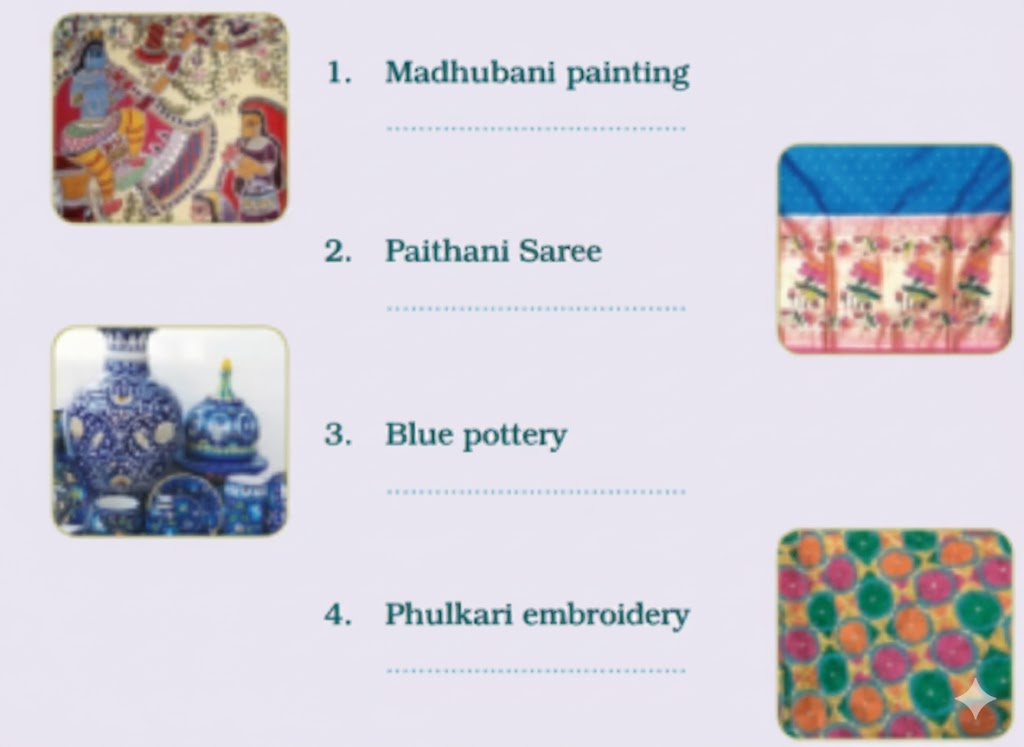
Answer:
1. Madhubani
2. Maharashtra
3. Rajasthan
4. Punjab
B. Find out what your State or Union Territory (UT) is famous for. Speak about it.
Answer: Students should do it by themselves.
C. Follow these steps to create a beautiful rangoli.
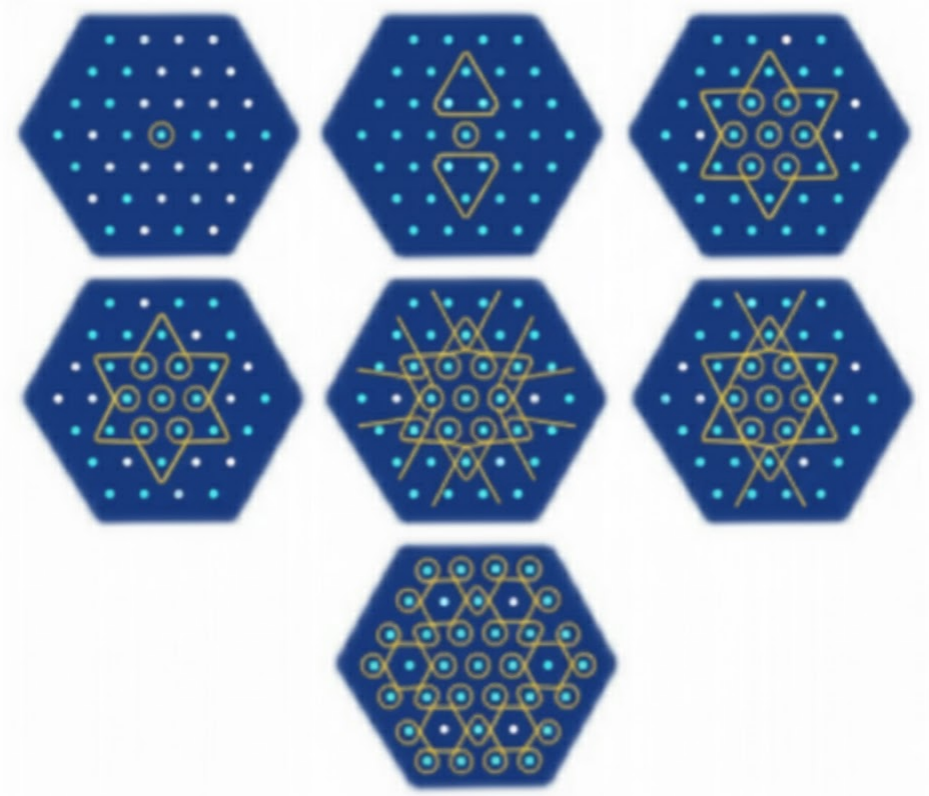

Answer: Students should do it by themselves.
Let us Explore (Page 131)
Do you know what a bank account is?
It is a safe place to keep your money, just like you keep your money safe in a gullak.
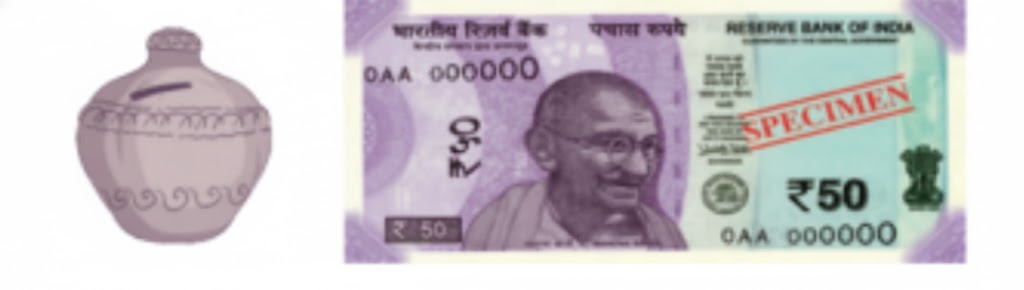
Suppose you get ₹ 50 for your birthday every year. You put it into your Savings Account. After a year, the bank adds ₹ 5 more. This is called interest on the Savings Account.
Benefits of a Savings Account:
Meant for saving money.
You can add or withdraw money anytime.
As a reward for saving, you earn interest.
Question 1. Do you have a bank account? Yes/ No
Answer: Students should do it by themselves.
Question 2. Find out more about Fixed Deposit and Recurring Deposit. Share information on these with your class.
Answer:
Fixed Deposits (FDs):
Fixed Deposits are a form of fixed-income investment provided by banks and other financial institutions. In an FD, a lump sum of money is placed for a set duration, and the bank offers a fixed rate of interest for that entire period. Both the interest rate and the maturity date are decided in advance. This makes FDs a safe and reliable option for growing one’s savings.
Recurring Deposits (RDs):
A Recurring Deposit is a type of time deposit in which a fixed amount of money is deposited at regular intervals, usually every month, for a chosen tenure. It is a widely used savings method that encourages people to save regularly while earning interest on each deposit.
Let us Observe (Page 132)
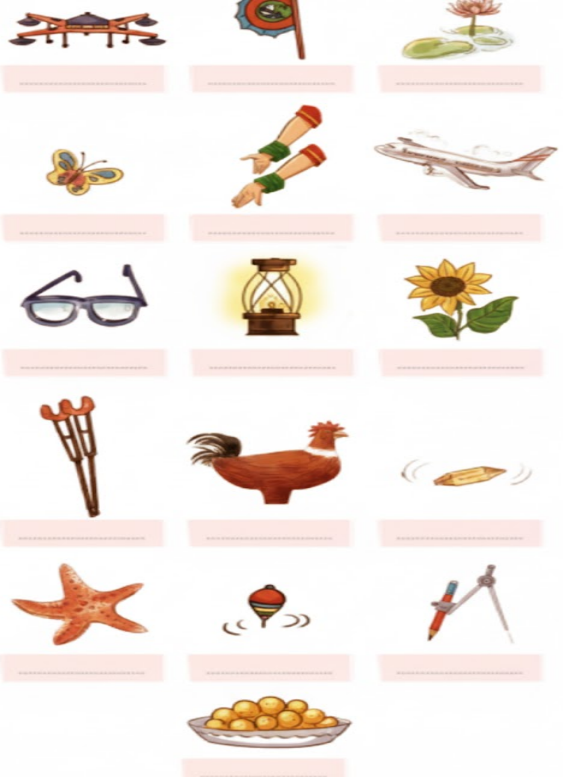
Look at the following pictures. Can you locate them in this textbook and write their name in the space given below?
Answer:
Drone
Cloth Hand Fan
Lotus
Butterfly
Bangles
Aeroplane
Spectacles
Lantern
Sunflower
Crutches
Cock
Gilli
Starfish
Spinning top
Compass
Laddu
Understanding Class 5 English Chapter 10: Glass Bangles
Learning about Glass Bangles in the NCERT Class 5 English Chapter 10 helps students appreciate India’s vibrant culture and tradition. Practice the exercises from the 2026-27 NCERT solutions and explore how creativity and heritage come together in every lesson.
By engaging with chapter-wise solutions, students build strong language skills and understand grammar concepts like the past perfect tense. Focus on direct questions and active learning to perform well in examinations and develop confidence in English.
Reviewing the Class 5 English Glass Bangles exercises regularly boosts your comprehension and writing abilities. Stay organized, revise new words, and make good use of practice activities for better exam scores and overall understanding.
FAQs on NCERT Solutions For Class 5 English Chapter 10 Glass Bangles - 2026-27 Free PDF Download (Login Required)
1. What are NCERT Solutions for Class 5 English Chapter 10 Santoor Glass Bangles?
NCERT Solutions for Class 5 English Chapter 10 Santoor Glass Bangles are comprehensive, stepwise answers to every textbook question.
- They follow the CBSE 2026–27 syllabus and exam marking scheme.
- Cover all intext and back exercises from Chapter 10.
- Enable students to practice accurate, exam-oriented responses for maximum marks.
- Available as free PDF downloads for quick offline revision.
2. How can I write stepwise NCERT answers for full marks in Class 5 English Chapter 10?
To score full marks in NCERT Class 5 English Chapter 10, follow these steps:
- Read the question carefully and identify key points.
- Start your answer with a crisp introduction related to Santoor Glass Bangles.
- Organise information in logical, numbered steps or bullet points, as required.
- Include definitions, relevant examples, or quotes from the chapter.
- For long answers, use proper paragraphing and sequence.
- Revise using sample answers from NCERT Solutions for best results.
3. Where can I download the PDF of NCERT Solutions for Class 5 English Chapter 10?
You can easily download the free PDF of Class 5 English Chapter 10 solutions:
- Visit reliable educational websites offering NCERT Solutions PDF format.
- Ensure the PDF is updated for the latest CBSE syllabus (2026-27).
- Most platforms provide a single-click download option for offline use.
4. Which questions from Class 5 English Chapter 10 are likely to appear in exams?
Questions that are frequently asked from Chapter 10 Santoor Glass Bangles include:
- Short answer questions from the back exercises and intext questions.
- Definitions and key terms related to the story.
- Diagram/map-based questions if included in the exercise.
- Long answer questions based on the main theme and summary of the chapter.
5. Are diagrams or definitions required in the answers for Class 5 English Chapter 10?
Definitions and diagrams are important for scoring full marks when they are specifically asked in the question.
- Provide clear, textbook-based definitions for key terms and concepts.
- If a diagram or map is required, draw it neatly, label all parts, and use proper conventions as outlined in NCERT Solutions.
- Always include supporting details or captions if asked.
6. How do I structure long answers in Class 5 English Chapter 10 to get better marks?
To structure long answers effectively for Class 5 English Chapter 10:
- Begin with an introduction sentence that connects to Santoor Glass Bangles.
- Organise the main content in logical paragraphs following the flow of the chapter.
- Use examples and key points from the lesson to support your answer.
- End with a concluding statement summarising your response.
- Highlight keywords and important phrases for examiner visibility.
7. What are the learning outcomes of NCERT Solutions Class 5 English Chapter 10?
The main learning outcomes after studying Chapter 10 Santoor Glass Bangles with NCERT Solutions are:
- Understanding the theme and moral of the chapter.
- Ability to answer all exercise and exam-style questions confidently.
- Improved presentation and writing skills in English.
- Knowledge of important definitions and key points from the chapter.
8. Are NCERT Solutions enough for Class 5 English exam preparation?
NCERT Solutions for Class 5 English offer comprehensive coverage for exam preparation:
- They help you solve every question from Chapter 10 step by step.
- Based on the CBSE exam pattern and marking scheme for 2026-27.
- Ensure conceptual clarity and confidence for both school tests and final exams.
9. How to revise Class 5 English Chapter 10 quickly before exams?
To revise Chapter 10 Santoor Glass Bangles quickly:
- Refer to summary and key points provided in revision notes or NCERT Solutions.
- Practice all important question answers and definitions.
- Go through diagram/map tips if required by the chapter.
- Attempt MCQs and short answer questions for faster recall.
- Keep a 1-day or 3-day revision planner for focused study.
10. What is the importance of Santoor Glass Bangles in Class 5 English curriculum?
Santoor Glass Bangles is an important chapter in Class 5 English because:
- It develops reading comprehension and vocabulary through an engaging story.
- Teaches values like hard work, creativity, and tradition.
- Includes exercise-wise practice to improve writing and analytical skills.
- Prepares students for CBSE exams by building strong foundational concepts.
