Class 7 Social Science Part 2 Chapter 5 Important Questions with Answers
Use the India, a Home to Many Class 7 questions and answers PDF to revise offline. Practise explaining the meaning of the Parsi milk-and-sugar legend, why different communities came to India and how they kept their traditions alive.
After writing an answer, check it against the solution. If you’ve said that a community preserved its faith, add a specific example, such as the synagogue Jewish settlers built near Kochi.
Class 7 Social Science Part 2 Chapter 5 MCQs on India, a Home to Many
Q1. Which Jewish community settled on the Konkan coast south of Mumbai?
A. Cochin Jews
B. Bene Israel
C. Syriac Christians
D. Parsis
Answer - B. Bene Israel.
Q2. Which route helped Syriac Christians reach the Malabar coast from West Asia?
A. Overland routes across the Himalayas
B. River routes through northern India
C. Trade routes leading east from West Asia
D. Routes through Central Asia into Tibet
Answer - C. Trade routes leading east from West Asia.
Q3. Which pair names the divine drink in Vedic Sanskrit and Old Avestan, respectively?
A. Soma and haoma
B. Yajña and yasna
C. Hotar and haotar
D. Deva and daeva
Answer - A. Soma and haoma.
Q4. Which statement describes how the Baha’i community grew in India?
A. Its members came to India as Arab merchants.
B. It began with Polish families who stayed after the war.
C. It developed from Tibetan monastic settlements.
D. Some Baha’is came from Iran, and many Indians later joined the faith.
Answer - D. Some Baha’is came from Iran, and many Indians later joined the faith.
Q5. Which expression conveys the idea that the whole world is one family?
A. Atithi devo bhava
B. Vasudhaiva kutumbakam
C. Sarve bhavantu sukhinah
D. Ahimsa
Answer - B. Vasudhaiva kutumbakam.
Class 7 Social Science Part 2 Chapter 5 Very Short Answer Questions
Q6. What does religious persecution mean?
Answer
Religious persecution means mistreating people because of their religious beliefs or practices. It can include threats, harassment or violence.
Q7. How did the Raja of Kochi help Jewish settlers practise their faith?
Answer
The Raja gave the settlers land free of cost. They built a synagogue where they could worship.
Q8. Why is Udvada important to the Parsi community?
Answer
Udvada is home to a sacred fire that the Parsi community has kept burning as part of its Zoroastrian tradition.
Q9. How did Hirabai Lobi help Siddi women earn a living?
Answer
She helped Siddi women access banking services and learn about organic farming and other ways to earn an income.
Class 7 Social Science Part 2 Chapter 5 Short Answer Questions
Q10. Why did Syriac Christians face difficulties in both the Roman and Persian empires?
Answer
In the Roman Empire, some Syriac Christian beliefs differed from the teachings of the official Church, so Church authorities treated them as heretics. In the Persian Empire, authorities suspected them of helping the Romans, whom Persia regarded as enemies. Some Syriac Christians travelled east and settled on the Malabar coast, where they could practise their faith.
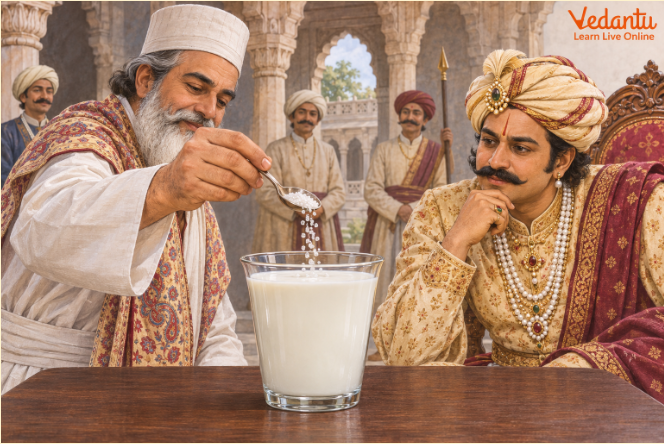
Q11. Look at the picture from the Parsi milk-and-sugar legend. What did the full vessel of milk suggest? What message did the wise man send by adding sugar?
Answer
The full vessel suggested that the ruler felt his kingdom had little room for newcomers. By adding sugar, the wise man showed that the Parsis hoped to become part of society and contribute to it, just as sugar sweetens milk without making it spill.
Q12. How did the journeys of Arab merchants and the ancestors of many Siddis differ? Give one example of how Siddi culture developed in India.
Answer
Arab merchants travelled to India for trade, and some settled along the west coast. Many ancestors of the Siddis were enslaved in Africa and brought to India by force. Over time, Siddi communities combined African and Indian traditions. African-style drumming in their music and dance is one example.
Q13. What do Armenian trading settlements and churches tell us about how Armenians made a home in India?
Answer
The trading settlements show that Armenians earned a living through commerce and took part in local economic life. Their churches show how they kept their religious traditions alive by creating places to worship together.
Q14. What does Sowa Rigpa show about the exchange of medical knowledge?
Answer
Sowa Rigpa is a Tibetan system of medicine that draws on knowledge from several regions, including Indian Ayurveda. It shows how medical ideas can travel between regions and how communities can continue practising them after settling in a new place.
Class 7 Social Science Part 2 Chapter 5 Long Answer Questions
Q15. How did India help Polish children and Tibetan refugees rebuild their lives? Compare why they needed refuge, the help they received and what happened later.
Answer
The help given to Polish children met their needs during wartime. For Tibetan families, settlements and schools also supported community life over the longer term.
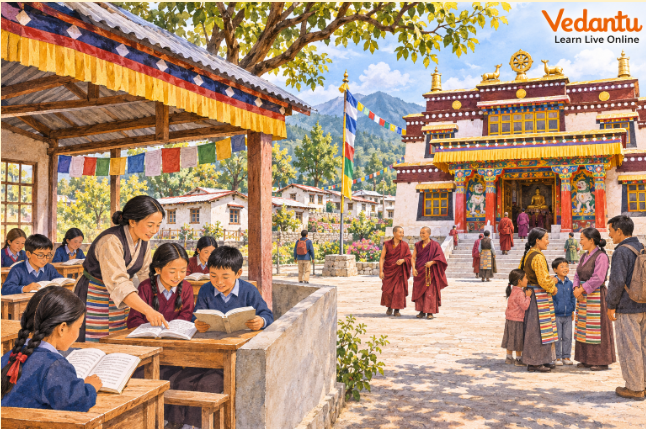
Q16. Look at the illustration of a Tibetan settlement. Choose two visible clues and explain how each could help families preserve their culture in India.
Answer
Children reading in a classroom. The school gave children a place to continue their education. It could also help them learn their language and become familiar with stories and traditions from their community.
Monks and families gathering at a monastery. The monastery gave families a place to worship together. It also helped older generations pass Buddhist practices on to younger members of the community.
Q17. How can you explain vasudhaiva kutumbakam using one example of immediate help and one example of long-term acceptance?
Answer
Vasudhaiva kutumbakam means that the whole world is one family. The idea encourages people to care for others even when they come from different places or follow different traditions.
Immediate help. The Maharaja of Nawanagar arranged shelter, food and care for Polish children affected by the Second World War. This gave them a safe place to live during a crisis.
Long-term acceptance. Jewish settlers near Kochi received land and built a synagogue. It gave them a place to worship as they made a home in the area.
Key Concepts for Class 7 - India, a Home to Many
As you read Chapter 5, follow three ideas that connect the stories of different communities.
Why people came to India. Arab and Armenian merchants came for trade. Polish children came for safety during the Second World War, while many ancestors of the Siddis were brought to India by force.
How people found support. The Raja of Kochi gave Jewish settlers land to build a synagogue. The Maharaja of Nawanagar helped provide shelter and care for Polish children.
How traditions continued. Parsis kept their Zoroastrian faith alive. Tibetan communities established schools and monasteries that helped pass on their language and religious traditions.
As you move through the chapter, pause at each community’s story and see how it fits one or more of these themes.
How to Practise India, a Home to Many Questions and Answers with Vedantu
Use Vedantu’s Class 7 Social Science study material alongside India, a Home to Many. You can practise recalling key details, explaining events and using examples from the chapter.
Recall key facts: Pick a community and name where its members settled. For example, recall where Arab merchants settled along India’s west coast.
Group the journeys: Sort the chapter’s examples into journeys made for trade, journeys made in search of safety and journeys people were forced to make. Give one example for each.
Explain how people helped: Describe why Polish children needed shelter during the Second World War and what the Maharaja of Nawanagar did to help them.
Compare places of worship: Use the synagogue near Kochi and Tibetan monasteries to explain how communities continued their religious practices after settling in India.
Interpret the Parsi legend: Retell the milk-and-sugar story in a few sentences. Explain what the full vessel suggested and what the sugar represented.
Connect an idea to an example: Explain vasudhaiva kutumbakam in your own words, then choose an example from the chapter that shows what it means in practice.
Try each activity aloud or in writing, then use Vedantu’s explanations to check whether you included the key detail.
Class 7 Social Science Part 2 Chapter 5 India, a Home to Many Study Materials
Class 7 Social Science Chapter-wise Important Questions
Important Study Materials for CBSE Class 7 Social Science
FAQs on Important Questions for Class 7 Social Science (Exploring Society: India and Beyond Part 2) Chapter 5 India, a Home to Many | 2026-27
1. What is included in Vedantu’s India, a Home to Many Class 7 extra questions and answers?
The set has 17 solved questions, including five MCQs and two picture-based questions. The answers show how to explain an example, interpret a visible clue and compare the experiences of different communities.
2. Where can I download the India, a Home to Many Class 7 PDF?
Go to the PDF download section above the question set. Save the file to practise offline and check your answers after you finish.
3. Why does the milk-and-sugar legend use sugar?
Sugar mixes with milk and makes it sweeter. In the Parsi legend, this represents the newcomers’ wish to live alongside others and contribute to the society they joined.
4. What is the difference between migration and seeking refuge?
Migration means moving from one place to another to live. People may move for work, trade or other reasons. People seek refuge when they need safety, as the Polish children did during the Second World War.
5. How can I show that a community kept its traditions after settling in India?
Give a specific example and explain what people did there. The synagogue near Kochi, for instance, gave Jewish settlers a place to worship together and continue their religious practices.
6. What should I include in an answer about the Good Maharaja?
Identify him as the Maharaja of Nawanagar and explain how he helped Polish children during the Second World War. Mention the help he arranged, such as food, shelter and care.
7. What does Sowa Rigpa tell us about cultural exchange?
Sowa Rigpa shows that communities can share and adapt knowledge across regions. This Tibetan medical tradition draws on several sources, including Indian Ayurveda.