






Where Do Bluebirds Live and What Do They Eat?
The Bluebird is a small, colourful songbird known for its bright blue feathers and sweet, musical calls. Often seen sitting on fences, tree branches, or flying across open fields, bluebirds are loved for their beauty and gentle nature. These birds are important insect-eaters and help farmers by controlling pests. Let’s explore fascinating Bluebird facts, their habitat, diet, characteristics, and life cycle in a fun and simple way.
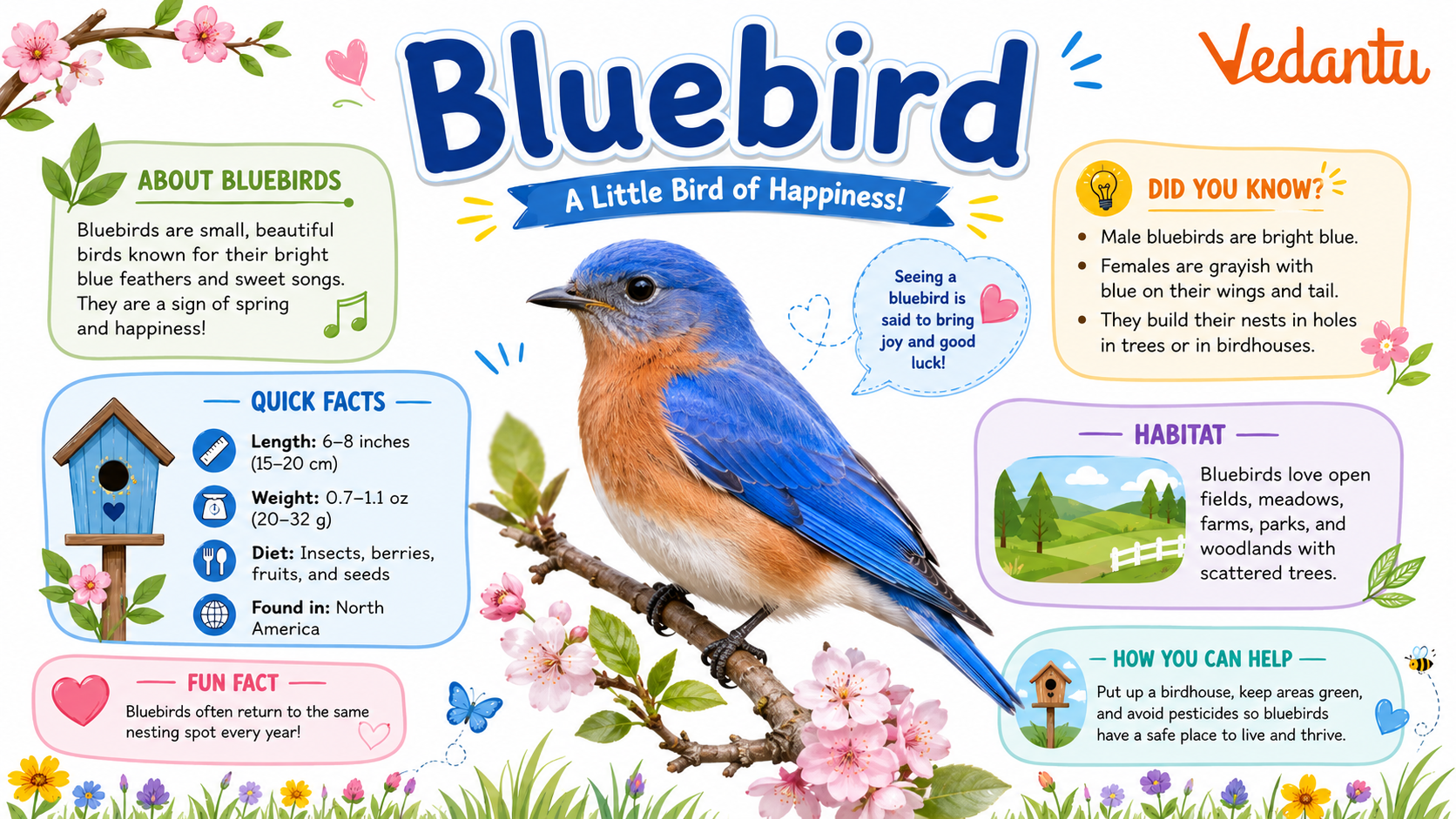
Quick Facts About Bluebird
| Feature | Details |
|---|---|
| Common Name | Bluebird |
| Scientific Genus | Sialia |
| Animal Group | Bird (Songbird) |
| Size | 16–21 cm long |
| Weight | 25–34 grams |
| Lifespan | 6–10 years (in the wild) |
| Habitat | Open fields, meadows, orchards, farmlands |
| Diet | Insects, berries, fruits |
| Movement | Flying and hopping |
| Young One | Chick |
Appearance and Physical Characteristics
- Small, slim-bodied bird with a short tail.
- Bright blue feathers on the back, wings, and head (in males).
- Reddish-brown chest in many species.
- Females are duller blue and grey.
- Thin, pointed beak perfect for catching insects.
- Sharp eyesight to spot prey from a distance.
Habitat and Distribution
The Bluebird habitat mainly includes open areas with scattered trees. They prefer places where they can easily spot insects from a perch.
- Grasslands and meadows
- Farms and orchards
- Gardens and parks
- Woodland edges
Bluebirds are mostly found in North America. Different species live in eastern, western, and mountainous regions.
Diet and Feeding Habits
Insects like beetles, grasshoppers, caterpillars, and spiders.
They also eat berries, especially during winter.
They sit on a branch and quickly fly down to catch insects.
They help control harmful insects in farms and gardens.
Behaviour and Lifestyle
- Usually seen in pairs or small family groups.
- Active during the daytime (diurnal).
- Known for soft, musical songs.
- Gentle and less aggressive compared to many birds.
- Males sing to attract females and defend territory.
Life Cycle of a Bluebird
- Egg Stage: Female lays 3–7 pale blue eggs in a nest.
- Incubation: Eggs hatch in about 12–14 days.
- Chicks: Baby bluebirds are born blind and featherless.
- Growth: Both parents feed the chicks insects.
- Fledging: Young birds leave the nest after about 2–3 weeks.
- Adult Stage: They grow bright feathers and start singing.
Flight Adaptations
- Strong wings for short, quick flights.
- Lightweight hollow bones.
- Streamlined body reduces air resistance.
- Tail helps in balance and direction control.
Sound and Call
Bluebirds make soft, pleasant, whistling sounds. Their songs are:
- Used to attract mates.
- Heard mostly in spring.
- Gentle and musical compared to louder birds.
Importance and Role in Nature
Eat insects that damage crops.
Spread plant seeds by eating berries.
Provide food for hawks and larger birds.
Often seen as a sign of joy and hope.
Amazing Bluebird Facts
Fun Facts for Kids
- Bluebirds love sitting on fences and wires.
- Their eggs are often light blue in colour.
- They are smaller than a sparrow in size.
- They enjoy birdhouses in gardens.
- Seeing a bluebird is considered lucky in many cultures.
FAQs on Bluebird Bird Guide: Species, Habitat, and Symbolism Explained
1. What is a bluebird?
A bluebird is a small, colorful songbird known for its bright blue feathers and cheerful songs.
- Belongs to the thrush family (Turdidae)
- Found mainly in North America
- Symbol of happiness and hope
- Often seen in open fields, gardens, and meadows
2. Where do bluebirds live?
Bluebirds live in open spaces like fields, parks, and backyards across North America.
- Common in the United States, Canada, and Mexico
- Prefer grasslands, orchards, and woodland edges
- Nest in tree holes or birdhouses
3. What do bluebirds eat?
Bluebirds eat insects and fruits, making them helpful garden birds.
- Insects like beetles, caterpillars, and grasshoppers
- Spiders and small bugs
- Berries such as blueberries and holly berries
4. What are the different types of bluebirds?
There are three main types of bluebirds in North America.
- Eastern Bluebird (Sialia sialis)
- Western Bluebird (Sialia mexicana)
- Mountain Bluebird (Sialia currucoides)
5. Why are bluebirds blue?
Bluebirds look blue because of the way light reflects off their feathers.
- Their feathers scatter sunlight
- This reflection creates a bright blue color
- The pigment itself is not actually blue
6. Do bluebirds migrate?
Some bluebirds migrate, while others stay in the same area year-round.
- Northern bluebirds fly south in winter
- Southern bluebirds may not migrate
- They move to find food and warmer weather
7. How do bluebirds build their nests?
Bluebirds build cozy nests inside tree holes or birdhouses.
- Use grass, pine needles, and soft materials
- Females usually build the nest
- Lay about 3 to 7 light blue eggs
8. Are bluebirds friendly to humans?
Bluebirds are generally calm and can become comfortable around people.
- Often visit bird feeders
- Use nesting boxes placed by humans
- Help control insects in gardens
9. What is the lifespan of a bluebird?
A bluebird usually lives 6 to 10 years in the wild.
- Faces dangers like predators and bad weather
- Young birds are most at risk
- Safe nesting boxes can increase survival
10. Why are bluebirds important to nature?
Bluebirds play an important role in keeping ecosystems healthy.
- Control insect populations
- Spread seeds from the berries they eat
- Act as indicators of a healthy environment
