






Are Rottweilers Good Family Dogs? Temperament, Training, and Daily Care Needs
The Rottweiler is a strong, intelligent, and confident dog breed known for its loyalty and protective nature. Originally bred for herding cattle and guarding property, this powerful dog has become a popular family companion and working dog worldwide. With proper training and care, Rottweilers are loving, obedient, and devoted pets. Let’s explore fascinating Rottweiler facts, characteristics, habitat, diet, life cycle, and why this breed is so special.
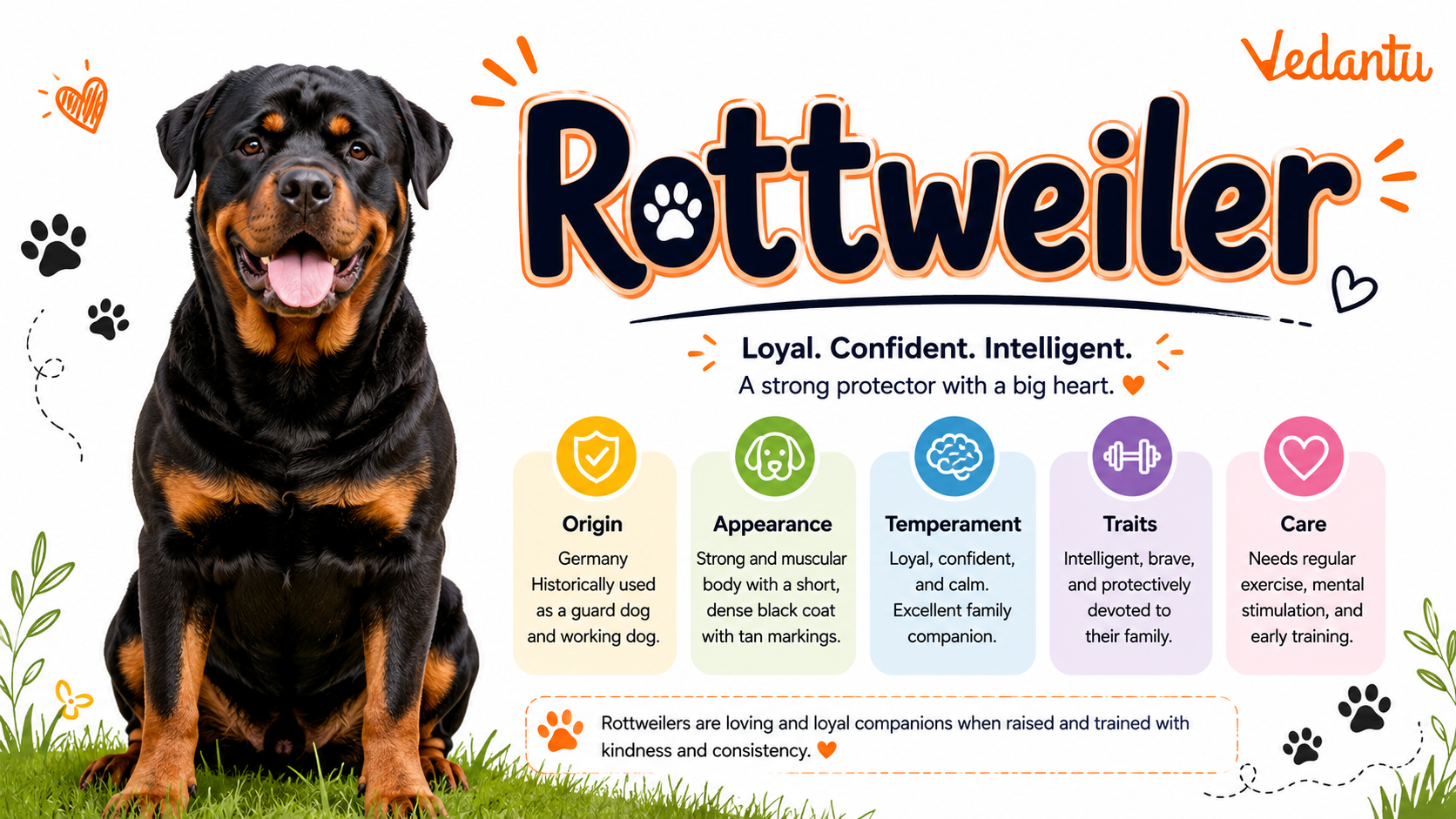
Quick Facts About Rottweiler
| Feature | Details |
|---|---|
| Common Name | Rottweiler |
| Scientific Name | Canis lupus familiaris |
| Animal Group | Mammal |
| Origin | Germany |
| Height | 56–69 cm |
| Weight | 35–60 kg |
| Lifespan | 8–10 years |
| Diet | Omnivore (mainly meat-based diet) |
| Young One | Puppy |
Appearance and Physical Characteristics
- Strong, muscular, and well-built body.
- Short, dense, and shiny black coat.
- Distinct rust or tan markings on face, chest, and legs.
- Broad head with powerful jaws.
- Dark brown, alert eyes.
Habitat and Distribution
- Originally from Rottweil, a town in Germany.
- Now found worldwide as family pets and working dogs.
- Adapt well to homes with yards or large spaces.
- Prefer moderate climates but can adjust with proper care.
Diet and Feeding Habits
- Primarily eat high-quality dog food rich in protein.
- Require balanced meals with meat, vegetables, and grains.
- Need controlled portions to prevent obesity.
- Fresh water must always be available.
Behaviour and Lifestyle
- Very loyal and protective of family members.
- Confident and courageous.
- Highly trainable with proper guidance.
- Can be reserved with strangers.
- Need daily exercise and mental stimulation.
Life Cycle of a Rottweiler
- Puppy Stage (0–6 months): Rapid growth, playful, learning basic commands.
- Adolescent Stage (6–18 months): Increased strength, needs consistent training.
- Adult Stage (2–7 years): Fully grown, strong, protective, and active.
- Senior Stage (7+ years): Slower activity, needs special care and health checks.
Temperament and Domestic Life
Forms deep bonds with family members and loves companionship.
Naturally protective, making them excellent guard dogs.
Intelligent and eager to learn with firm but kind training.
Requires daily walks, playtime, and mental challenges.
What Makes Rottweiler Special?
Importance of Rottweiler
- Assist police in search and rescue missions.
- Serve as therapy and service dogs.
- Provide protection for homes and property.
- Offer companionship and emotional support.
Amazing Rottweiler Facts
Fun Facts for Kids
- A baby Rottweiler is called a puppy.
- They love playing fetch and outdoor games.
- They have shiny black fur with brown patches.
- They enjoy being around their family.
- They can learn many tricks quickly!
FAQs on Rottweiler Dog Breed Guide: Temperament, Size, and Care
1. What is a Rottweiler?
A Rottweiler is a large, strong, and loyal dog breed known for guarding and protecting families.
- The Rottweiler dog breed comes from Germany.
- It was originally used as a herding dog and guard dog.
- Rottweilers are part of the working dog group.
- They are known for being confident, brave, and intelligent.
2. Are Rottweilers good family dogs?
Yes, Rottweilers can be good family dogs when properly trained and socialized.
- They are very loyal and protective of their family.
- They can be gentle and loving with children.
- Early obedience training is very important.
- They need a responsible owner who understands large dog breeds.
3. Are Rottweilers dangerous?
Rottweilers are not naturally dangerous, but they need proper training and care.
- They are strong and powerful guard dogs.
- Poor training or neglect can lead to behavior problems.
- Early socialization helps them stay friendly.
- Responsible ownership reduces risk.
4. How big do Rottweilers get?
Rottweilers grow into large and muscular dogs.
- Male Rottweilers can weigh 95–135 pounds.
- Female Rottweilers usually weigh 80–100 pounds.
- They can grow up to 22–27 inches tall.
- They have a strong, broad chest and powerful build.
5. What do Rottweilers eat?
Rottweilers need a balanced diet to stay healthy and strong.
- High-quality dog food made for large breeds.
- Protein-rich foods to support their muscles.
- Fresh water available at all times.
- Portion control to prevent obesity.
6. How long do Rottweilers live?
The average Rottweiler lifespan is about 8–10 years.
- Regular vet check-ups improve health.
- Daily exercise keeps them fit.
- A healthy diet supports longer life.
- Good breeding reduces health risks.
7. Do Rottweilers need a lot of exercise?
Yes, Rottweilers need daily exercise to stay happy and healthy.
- At least 1–2 hours of activity each day.
- Long walks, playtime, and training games.
- Mental stimulation like puzzle toys.
- Space to move and explore safely.
8. Are Rottweilers easy to train?
Rottweilers are intelligent dogs and can be trained with patience and consistency.
- They respond well to positive reinforcement.
- Early puppy training classes are helpful.
- They learn commands quickly.
- Firm but kind leadership works best.
9. What health problems do Rottweilers have?
Rottweilers can have some common health issues like other large breeds.
- Hip dysplasia and joint problems.
- Heart conditions.
- Certain types of cancer.
- Obesity if overfed.
10. What is the personality of a Rottweiler?
The Rottweiler personality is loyal, confident, and protective.
- Very devoted to their family.
- Calm and steady when trained properly.
- Naturally protective of their home.
- Can be playful and affectionate.
