






What Do Harrier Birds Eat and How Do They Hunt in the Wild?
The Harrier Bird is a fascinating bird of prey known for its low, gliding flight over grasslands and wetlands. Unlike many other raptors, harriers fly close to the ground while searching for food. These elegant hunters are easy to recognise by their long wings, slim body, and owl-like face. In this guide, explore amazing Harrier Bird facts, habitat, diet, characteristics, life cycle, and importance in nature.
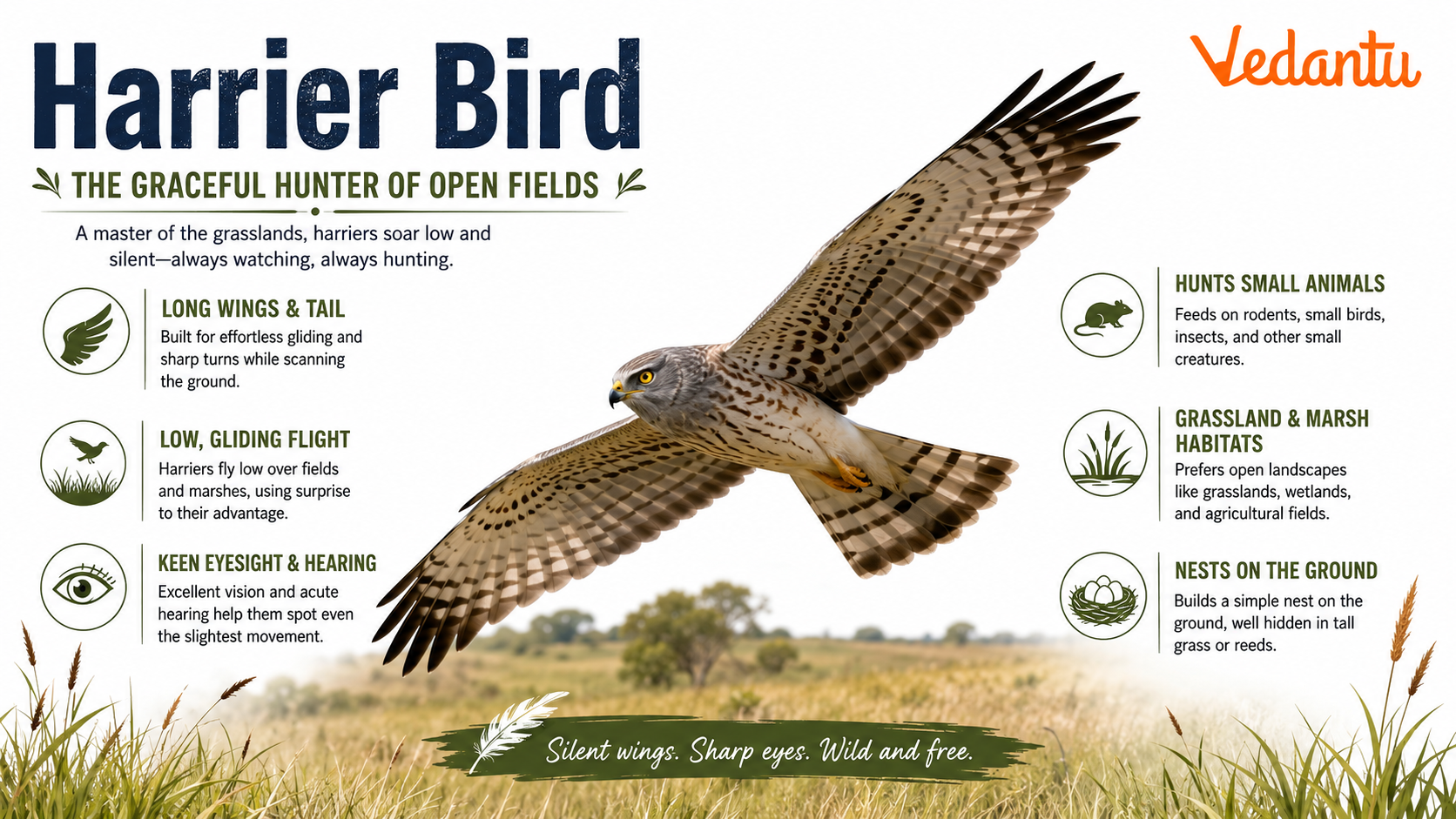
Quick Facts About Harrier Bird
| Feature | Details |
|---|---|
| Common Name | Harrier Bird |
| Scientific Genus | Circus |
| Animal Group | Bird (Raptor) |
| Size | 40–60 cm long |
| Wingspan | 95–120 cm |
| Diet | Small mammals, birds, reptiles, insects |
| Habitat | Grasslands, marshes, wetlands, open fields |
| Lifespan | Up to 16 years in the wild |
| Conservation Status | Varies by species (some are threatened) |
Appearance and Physical Characteristics
- Long, narrow wings and long tail for smooth gliding.
- Slim body built for flying low over fields.
- Rounded, owl-like facial disc that helps in hearing.
- Sharp, hooked beak for tearing meat.
- Strong talons (claws) to catch prey.
- Males and females often have different colours.
Harrier Bird Habitat and Distribution
- Open grasslands
- Marshes and wetlands
- Agricultural fields
- Coastal plains
Harriers prefer wide open spaces where they can fly low and easily spot prey. They usually build nests on the ground, hidden among tall grasses.
Diet and Feeding Habits
Harriers mainly eat small mammals like mice and voles.
Small birds, frogs, reptiles, and large insects.
Flies low over the ground in a V-shaped wing position.
Controls rodent populations in grasslands.
Behaviour and Lifestyle
- Usually solitary hunters.
- Active mainly during the day.
- Glide slowly and gracefully while searching for food.
- Some species migrate long distances during winter.
- Use both sharp eyesight and excellent hearing to find prey.
Flight Adaptations
- Lightweight bones reduce body weight.
- Long wings help in slow and steady gliding.
- Strong chest muscles power their flight.
- Flexible neck allows scanning the ground while flying.
Life Cycle of Harrier Bird
- Egg Stage: Female lays 3–6 eggs in a ground nest.
- Incubation: Eggs hatch after about 30 days.
- Chicks: Born helpless and covered in soft down feathers.
- Growing Stage: Learn to fly in about 4–5 weeks.
- Adult Stage: Start hunting independently.
What Makes Harrier Bird Special?
Importance of Harrier Bird in Nature
- Keeping rodent populations under control.
- Maintaining balance in grassland food chains.
- Indicating healthy wetland and grassland ecosystems.
Amazing Harrier Bird Facts
Fun Facts for Kids
- Harriers look like they are “floating” over fields.
- They build nests directly on the ground.
- Baby harriers grow very quickly.
- They are sometimes called “marsh hawks.”
- They are very quiet hunters.
FAQs on Harrier Bird: Complete Guide to Species, Behavior, and Habitat
1. What is a Harrier bird?
Harrier birds are medium-sized birds of prey known for flying low over fields and wetlands while hunting.
- They belong to the hawk family (Accipitridae)
- They are also called marsh hawks
- They have long wings, long tails, and sharp eyesight
- They hunt small animals like mice, frogs, and small birds
2. Where do Harrier birds live?
Harrier birds live in open habitats such as grasslands, marshes, and meadows around the world.
- Found in North America, Europe, Asia, and Africa
- Prefer wetlands and open countryside
- Build nests on the ground in tall grass
3. What do Harrier birds eat?
Harriers are carnivores that eat small animals they catch while flying low.
- Mice and voles
- Small birds
- Frogs and reptiles
- Large insects
4. How do Harriers hunt their prey?
Harrier birds hunt by gliding slowly and low over open land to spot or hear prey.
- They fly in a V-shaped wing position
- Use their facial disk to hear sounds clearly
- Suddenly swoop down to catch prey with sharp talons
5. What are the different types of Harrier birds?
There are several species of Harriers found across the world.
- Northern Harrier
- Hen Harrier
- Pallid Harrier
- Montagu’s Harrier
- African Marsh Harrier
6. How can you identify a Harrier bird?
Harrier birds can be identified by their long wings, long tail, and low flying style.
- Fly close to the ground
- Have a noticeable white rump patch (especially Northern Harrier)
- Hold wings in a slight V shape
- Males and females often have different colors
7. Are Harrier birds endangered?
Some Harrier species are threatened due to habitat loss and human activities.
- Loss of wetlands and grasslands
- Use of pesticides
- Disturbance of nesting sites
8. How big is a Harrier bird?
Harrier birds are medium-sized raptors with wide wingspans.
- Length: about 16–24 inches
- Wingspan: around 3–4 feet
- Females are usually larger than males
9. Do Harrier birds migrate?
Many Harrier species migrate to warmer regions during winter.
- Travel long distances across countries
- Migrate from northern regions to southern climates
- Return in spring to breed
10. Why are Harrier birds important to the ecosystem?
Harrier birds help keep ecosystems balanced by controlling small animal populations.
- Reduce numbers of rodents and pests
- Support healthy grassland and wetland ecosystems
- Act as indicators of environmental health
