






What Is a Shetland Pony? Size, Lifespan, Diet, and Fun Facts
The Shetland Pony is one of the smallest and strongest pony breeds in the world. Originally from the cold and windy Shetland Islands of Scotland, this tough little pony is known for its thick coat, sturdy body, and friendly nature. Despite its small size, it is incredibly powerful and hardworking. In this page, explore fascinating Shetland Pony facts, habitat, diet, characteristics, life cycle, and why these adorable ponies are so special.
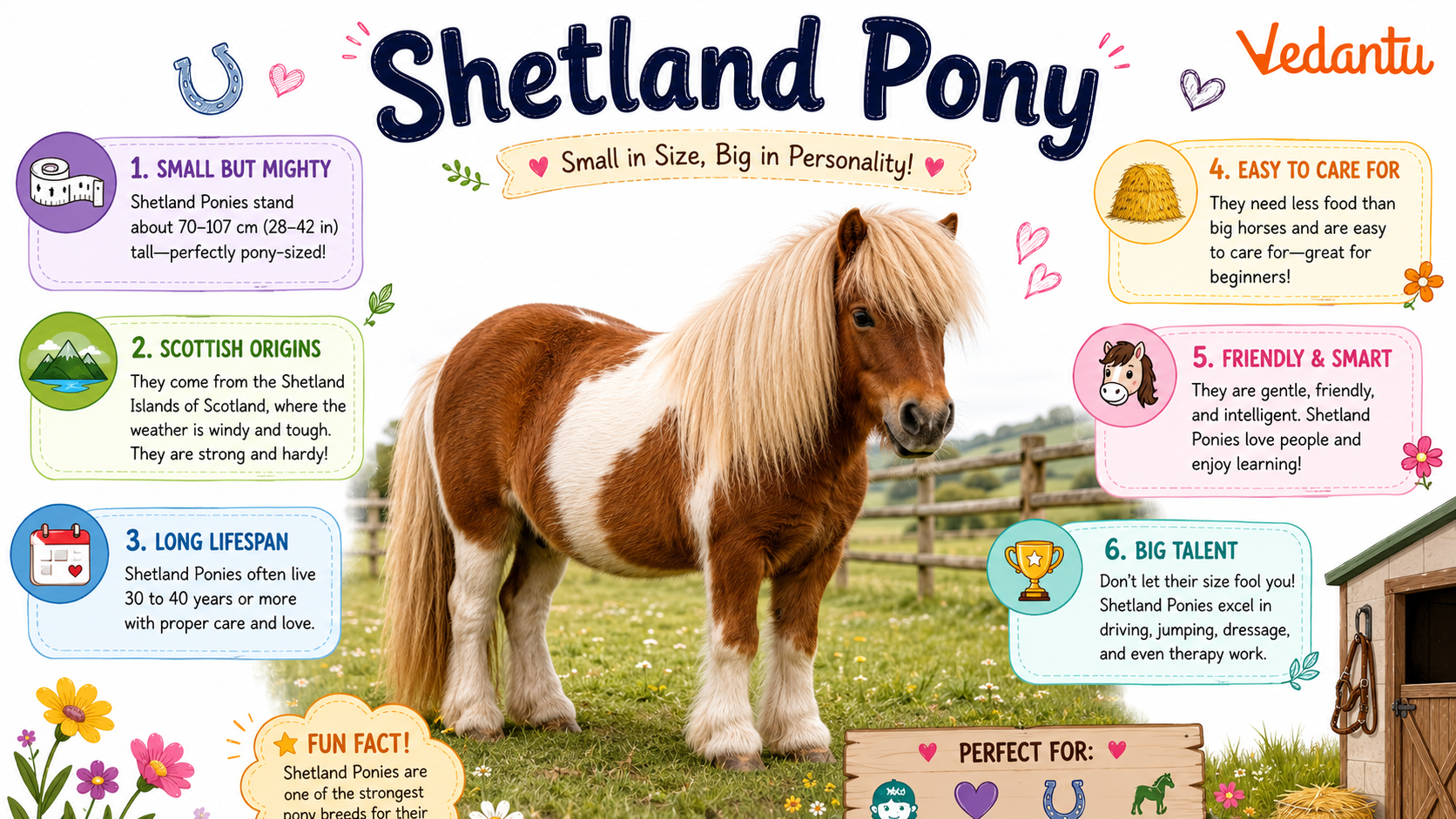
Quick Facts About Shetland Pony
| Feature | Details |
|---|---|
| Common Name | Shetland Pony |
| Scientific Name | Equus ferus caballus |
| Animal Group | Mammal |
| Type | Domestic Pony Breed |
| Height | Up to 42 inches (107 cm) |
| Weight | 180–200 kg (approx.) |
| Lifespan | 25–30 years |
| Habitat | Grasslands, farms, cold islands |
| Diet | Herbivore – grass, hay, plants |
| Young One | Foal |
Appearance and Physical Characteristics
- Small but strong body with short legs and a wide chest.
- Thick double coat that keeps it warm in freezing weather.
- Long mane and tail that protect against wind and rain.
- Short neck and broad head with alert eyes.
- Available in many colours – black, brown, chestnut, grey, and spotted.
Shetland Pony Habitat and Origin
The Shetland Pony habitat originally includes the rough and rocky Shetland Islands in Scotland. These islands have:
- Cold and windy climate
- Limited food supply
- Rocky hills and open grasslands
- Long winters and short summers
Because of these tough conditions, Shetland Ponies developed strong bodies and thick coats. Today, they are found all over the world on farms, riding schools, and family ranches.
Diet and Feeding Habits
The Shetland Pony diet is simple because it is a herbivore.
Behaviour and Temperament
- Friendly and affectionate with proper training.
- Intelligent and quick learners.
- Sometimes stubborn due to their smart nature.
- Very patient with children.
- Social animals – prefer living in groups.
Domestic Life
Shetland Ponies are popular as children’s riding ponies. They are also used in:
- Cart pulling
- Farm work (in the past)
- Pony shows and competitions
- Therapy programs
Life Cycle of a Shetland Pony
- Birth: A baby pony is called a foal. It can stand and walk within hours.
- Young Stage: Foals stay close to their mother for milk and protection.
- Growing Up: They learn social behaviour and basic training.
- Adult Stage: Fully grown by around 4–5 years of age.
- Lifespan: Many live up to 30 years with proper care.
What Makes the Shetland Pony Special?
Importance of Shetland Ponies
- Used in coal mines in the 19th century due to their strength and small size.
- Help children learn horse riding safely.
- Participate in agricultural shows and pony clubs.
- Provide companionship and therapy support.
Amazing Shetland Pony Facts
Fun Facts for Kids
- Shetland Ponies may be small, but they act like big horses!
- They grow thick fur in winter and shed it in summer.
- A baby Shetland Pony can run shortly after birth.
- They love being brushed and groomed.
- Some Shetland Ponies compete in fun pony races.
FAQs on Shetland Pony: Complete Guide to Size, Temperament, and Care
1. What is a Shetland Pony?
A Shetland Pony is a small, strong horse breed that comes from the Shetland Islands of Scotland.
- One of the smallest pony breeds in the world
- Known for its thick coat and short legs
- Very strong for its size
- Popular as a children’s pony and pet
2. How big do Shetland Ponies grow?
A Shetland Pony usually grows up to 28–42 inches tall at the shoulder.
- Maximum height: about 42 inches (107 cm)
- Weighs around 400–450 pounds
- Much smaller than a regular horse
3. Are Shetland Ponies good for kids?
Yes, Shetland Ponies are often great for kids because they are small and sturdy.
- Easy size for children to ride
- Strong and balanced
- Can be friendly and gentle with training
- Used in pony rides and beginner lessons
4. What do Shetland Ponies eat?
A Shetland Pony eats simple foods like grass and hay to stay healthy.
- Fresh grass in pastures
- Hay during winter
- Clean, fresh water every day
- Small amounts of grain if needed
5. Where do Shetland Ponies come from?
The Shetland Pony comes from the cold and windy Shetland Islands in Scotland.
- Lived there for over 2,000 years
- Adapted to harsh weather
- Developed thick fur for warmth
6. How long do Shetland Ponies live?
A healthy Shetland Pony can live a long life of 20 to 30 years.
- Some live even longer with good care
- Regular vet checkups help them stay healthy
- Proper diet and exercise increase lifespan
7. What colors can Shetland Ponies be?
A Shetland Pony can come in almost every horse color.
- Black
- Brown (bay)
- Chestnut
- Gray
- Spotted patterns
8. Are Shetland Ponies strong?
Yes, Shetland Ponies are extremely strong for their small size.
- Can pull heavy carts
- Once worked in coal mines
- Have powerful muscles and thick bones
9. Do Shetland Ponies need special care?
A Shetland Pony needs regular care to stay healthy and happy.
- Daily brushing, especially in winter
- Hoof trimming every 6–8 weeks
- Regular exercise
- Routine veterinary visits
10. What are Shetland Ponies used for today?
Today, Shetland Ponies are mainly used for riding, showing, and as pets.
- Children’s riding lessons
- Pony shows and competitions
- Pulling small carts
- Family farm animals
