






What Do Nightjars Eat and Where Do They Live?
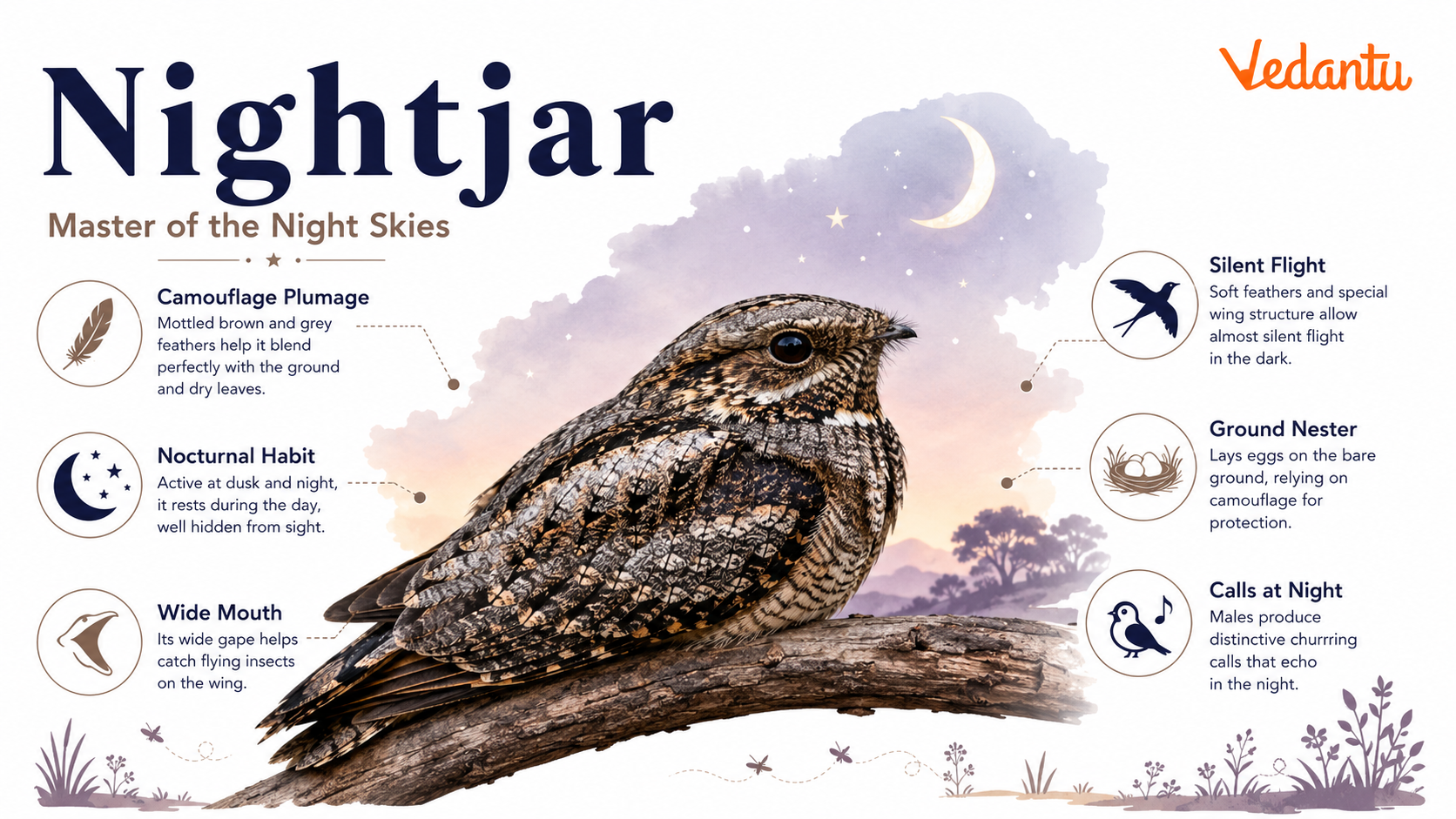
The Nightjar is a mysterious bird known for its quiet flight and excellent camouflage. Often active after sunset, this bird blends so perfectly with tree bark and dry leaves that it is hard to spot during the day. Nightjar facts reveal that it is specially adapted for night hunting, feeding mainly on flying insects. With its soft calls and unique flying style, the Nightjar is one of nature’s most fascinating nocturnal birds.
Quick Facts About Nightjar
| Feature | Details |
|---|---|
| Common Name | Nightjar |
| Scientific Family | Caprimulgidae |
| Animal Group | Bird |
| Size | 22–30 cm (varies by species) |
| Weight | 40–100 grams |
| Diet | Insects |
| Habitat | Forests, grasslands, deserts, scrublands |
| Activity Time | Mostly active at night |
| Conservation Status | Most species – Least Concern |
Appearance and Physical Characteristics
- Medium-sized bird with a flat body.
- Brown, grey, and black feathers for camouflage.
- Large eyes for better night vision.
- Very wide mouth to catch insects while flying.
- Short legs and long pointed wings.
Nightjar Habitat and Distribution
- Found in Europe, Asia, Africa, Australia, and the Americas.
- Lives in open woodlands, grasslands, deserts, and forest edges.
- Prefers dry areas with plenty of insects.
- Rests on the ground or tree branches during the day.
Nightjars usually sit still during daylight, relying on their feather patterns to blend into their surroundings and avoid predators.
Nightjar Diet and Feeding Habits
Nightjars are insectivores. They mainly eat moths, beetles, flies, and other flying insects.
They catch insects in mid-air using their wide mouth like a net.
Most active at dusk and dawn when insects are flying.
They help control insect populations naturally.
Behaviour and Lifestyle
- Mostly solitary birds.
- Active at night (nocturnal).
- Fly silently with soft, smooth wing beats.
- Rest flat on the ground during the day.
- Many species migrate seasonally.
Flight Adaptations
- Long, pointed wings for smooth gliding.
- Lightweight body for easy flight.
- Soft feathers reduce noise while flying.
- Excellent night vision helps them navigate in low light.
Sound or Call
- Calls are often heard at dusk.
- Males call to attract females.
- Sounds help mark their territory.
Nightjar Life Cycle
- Egg Stage: Female lays 1–2 eggs directly on the ground without building a nest.
- Incubation: Eggs hatch in about 2–3 weeks.
- Chicks: Young ones are covered in soft down and stay hidden.
- Growing Up: Chicks learn to fly within a few weeks.
- Adult Stage: Adult Nightjars live up to 10–12 years in the wild.
What Makes Nightjar Special?
Importance and Role in Nature
- Controls insect populations.
- Maintains ecological balance.
- Serves as prey for larger birds and mammals.
- Indicates healthy natural habitats.
Amazing Nightjar Facts
Interesting Facts About Nightjar
- The name “Nightjar” comes from an old belief that they visited farms at night.
- Some cultures once thought they had magical powers.
- They are sometimes called “goatsuckers” in old stories.
- Their quiet behaviour makes them hard to study.
Fun Facts for Kids
FAQs on Nightjar: The Mysterious Nocturnal Bird of the Night Sky
1. What is a Nightjar?
A Nightjar is a nocturnal bird known for its excellent camouflage and nighttime hunting skills.
- Belongs to the bird family Caprimulgidae
- Active mostly at night (nocturnal bird)
- Famous for its soft, churring calls
- Often called a goatsucker in folklore
- Found in forests, grasslands, and open countryside
2. Why is the Nightjar called a "goatsucker"?
The name goatsucker comes from an old myth that Nightjars drank milk from goats.
- Ancient people believed they sucked milk from goats at night
- This myth is not true
- Nightjars actually eat insects, not milk
- The name comes from the Latin word Caprimulgus
3. Where do Nightjars live?
Nightjars live in warm and temperate regions around the world.
- Found in Europe, Asia, Africa, Australia, and the Americas
- Prefer woodlands, grasslands, deserts, and heathlands
- Nest directly on the ground
- Migrate to warmer places during winter
4. What do Nightjars eat?
Nightjars mainly eat flying insects that they catch at night.
- Feed on moths, beetles, flies, and mosquitoes
- Hunt in mid-air with wide mouths
- Use silent flight to sneak up on prey
- Help control insect populations
5. What does a Nightjar look like?
A Nightjar has brown, gray, and black feathers that help it blend into its surroundings.
- Excellent camouflage like tree bark or dry leaves
- Large eyes for night vision
- Short legs and long wings
- Wide mouth with bristles to catch insects
6. Are Nightjars active during the day?
Nightjars rest during the day and become active at dusk and night.
- They are nocturnal birds
- Sleep quietly on the ground or tree branches
- Rely on camouflage to stay safe from predators
- Start hunting when the sun sets
7. How do Nightjars build their nests?
Nightjars do not build traditional nests but lay eggs directly on the ground.
- No sticks or grass nests
- Choose hidden spots in leaf litter or sand
- Usually lay 1–2 eggs
- Eggs are camouflaged to avoid predators
8. What sound does a Nightjar make?
Nightjars make a repeated churring or buzzing sound at night.
- The call sounds like a soft "churr-churr"
- Mostly made by male Nightjars
- Used to attract mates and protect territory
- Commonly heard on warm summer evenings
9. Are Nightjars endangered?
Some Nightjar species face threats, but many are not fully endangered.
- Main threats include habitat loss and land development
- Pesticides reduce insect food sources
- Protected in many countries
- Conservation programs help protect breeding areas
10. How are Nightjars different from owls?
Nightjars and owls are both nocturnal birds, but they belong to different families and hunt differently.
- Nightjars eat mainly insects, while owls eat small animals
- Owls have strong talons; Nightjars have wide mouths
- Nightjars rely on camouflage; owls rely on silent flight and sharp claws
- They belong to different bird groups: Caprimulgidae vs. Strigidae
