






What Do Hermit Crabs Eat, Where Do They Live, and How Do They Change Shells?
Hermit crabs are fascinating sea creatures known for living inside empty shells. Unlike other crabs, they do not have a hard shell covering their whole body. Instead, they protect their soft abdomen by borrowing shells from snails and other sea animals. Found along beaches and in shallow ocean waters, hermit crabs are clever survivors. Let’s explore interesting Hermit Crab facts, their habitat, diet, characteristics, life cycle, and importance in nature.
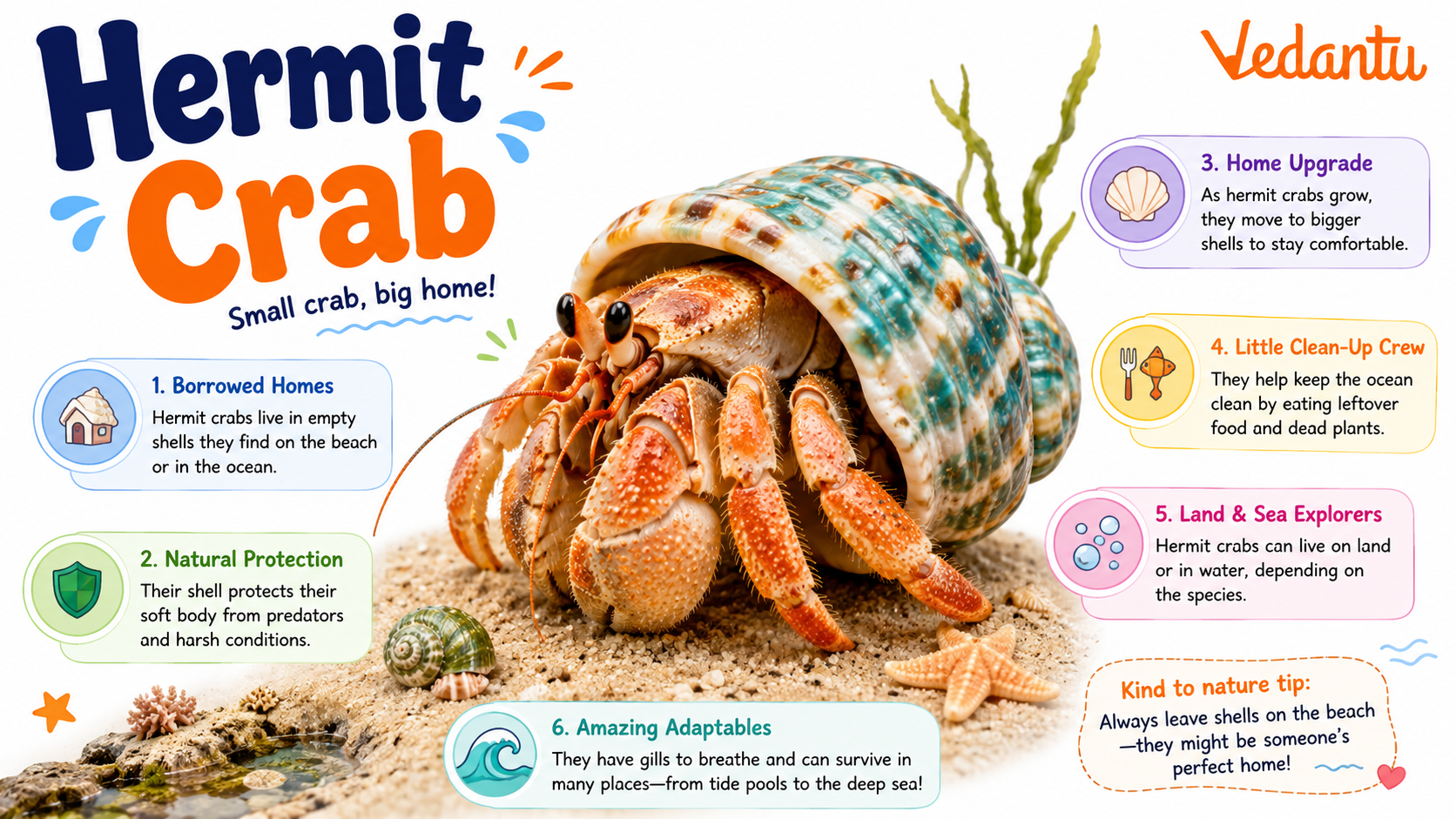
Quick Facts About Hermit Crab
| Feature | Details |
|---|---|
| Common Name | Hermit Crab |
| Scientific Family | Paguroidea |
| Animal Group | Crustacean |
| Size | 2–6 inches (varies by species) |
| Lifespan | Up to 10–30 years (in good conditions) |
| Habitat | Beaches, tidal pools, shallow ocean waters |
| Diet | Omnivore (plants and animals) |
| Special Feature | Uses empty shells for protection |
Appearance and Physical Characteristics
- Have a hard outer shell (exoskeleton) on the front body.
- Soft, curved abdomen that fits inside a shell.
- Two pairs of antennae for sensing.
- Five pairs of legs (front pair forms claws).
- One claw is usually bigger for defence.
- Body colours include red, brown, pink, or purple.
Hermit Crab Habitat and Distribution
- Live in coastal regions around the world.
- Common near tropical and subtropical beaches.
- Found in tidal pools and shallow sea water.
- Some species live on land near the sea.
- Prefer warm and humid climates.
Diet and Feeding Habits
- Eat dead plants and animals (scavengers).
- Feed on algae, plankton, and small insects.
- Sometimes eat fruits and leaves (land species).
- Use claws to pick up and tear food.
As omnivores, hermit crabs help keep beaches clean by eating leftover organic matter.
Behaviour and Lifestyle
- Mostly active at night (nocturnal).
- Can live alone or in small groups.
- Communicate by tapping claws or making soft sounds.
- Hide inside shells when threatened.
- Change shells when they outgrow old ones.
Hermit Crab Life Cycle
- Egg Stage: Female carries fertilised eggs on her abdomen.
- Larva Stage: Eggs hatch into tiny larvae that float in the sea.
- Juvenile Stage: Young crabs find and occupy small shells.
- Adult Stage: Continue growing and changing shells throughout life.
The hermit crab life cycle includes several moulting stages, where they shed their exoskeleton to grow bigger.
What Makes Hermit Crab Special?
Importance and Role in Nature
Amazing Hermit Crab Facts
- There are more than 800 species of hermit crabs.
- Some species live entirely on land.
- They can live for over 20 years in captivity.
- Hermit crabs have gills to breathe.
- They sometimes fight over shells.
- They moult several times in their lifetime.
Fun Facts for Kids
FAQs on Hermit Crab: Amazing Facts About Their Shell-Shifting Life
1. What is a hermit crab?
A hermit crab is a small crustacean that uses empty shells to protect its soft body.
- Belongs to the crustacean family (like crabs, lobsters, and shrimp)
- Has a soft, curved abdomen that needs a shell for safety
- Lives in both marine (ocean) and terrestrial (land) environments
- Often searched as: what are hermit crabs, crab with shell, small pet crab
2. Why do hermit crabs use shells?
Hermit crabs use empty shells to protect their soft bodies from predators and drying out.
- Their abdomen is not hard like other crabs
- They find and move into empty snail shells
- They change shells as they grow bigger
- Related searches: why do hermit crabs change shells, hermit crab shell swapping
3. Where do hermit crabs live?
Hermit crabs live in warm coastal areas, beaches, and tropical regions around the world.
- Found in oceans, coral reefs, and tide pools
- Some species live on land near the sea
- Prefer warm, humid climates
- People also ask: do hermit crabs live in water, hermit crab habitat facts
4. What do hermit crabs eat?
Hermit crabs are omnivores, meaning they eat both plants and animals.
- Fruits like mango and banana
- Small insects and worms
- Algae and plankton
- Dead plants and animals (they are scavengers)
- Related terms: hermit crab diet, what to feed pet hermit crabs
5. How long do hermit crabs live?
Hermit crabs can live for many years, especially with proper care.
- Wild hermit crabs can live over 20–30 years
- Pet hermit crabs often live 5–15 years
- Life span depends on habitat and diet
- Often searched: hermit crab lifespan, how long do pet crabs live
6. Are hermit crabs good pets for kids?
Hermit crabs can be good beginner pets if cared for properly.
- They are quiet and small
- Need a warm and humid terrarium
- Require fresh food and clean water
- Must have extra shells to change into
- People also search: hermit crab care for kids, easy pets for children
7. How do hermit crabs grow?
Hermit crabs grow by molting, which means shedding their old exoskeleton.
- They bury themselves in sand to molt safely
- Shed their hard outer shell called an exoskeleton
- Need a bigger shell after molting
- Related queries: hermit crab molting process, why is my hermit crab buried
8. Do hermit crabs live alone or in groups?
Hermit crabs are social animals and prefer living in groups called colonies.
- Communicate using antennae and sounds
- Often gather to exchange shells
- Feel safer in groups
- People also ask: are hermit crabs social, can hermit crabs live together
9. How do hermit crabs protect themselves?
Hermit crabs protect themselves by hiding inside their shells and using their claws.
- Pull their body completely into the shell
- Use large claw to block the shell opening
- Camouflage with sand and sea plants
- Related terms: hermit crab defense, crab predators
10. What are some fun facts about hermit crabs?
Hermit crabs have many amazing and surprising features that make them unique.
- They are not true crabs but related crustaceans
- Some species can make chirping sounds
- They can walk sideways and forward
- They sometimes line up to trade shells in a “shell chain”
- People also search: cool hermit crab facts, interesting crab facts for kids
