






What Does a Dove Bird Eat and Where Does It Live?
The dove bird is one of the most loved and recognised birds in the world. Known for its soft cooing sound and calm nature, the dove is often seen as a symbol of peace and love. Found in many parts of the world, doves are small to medium-sized birds that belong to the pigeon family. In this page, you will explore dove bird facts, dove habitat, dove diet, dove characteristics, and many interesting facts about this beautiful bird.
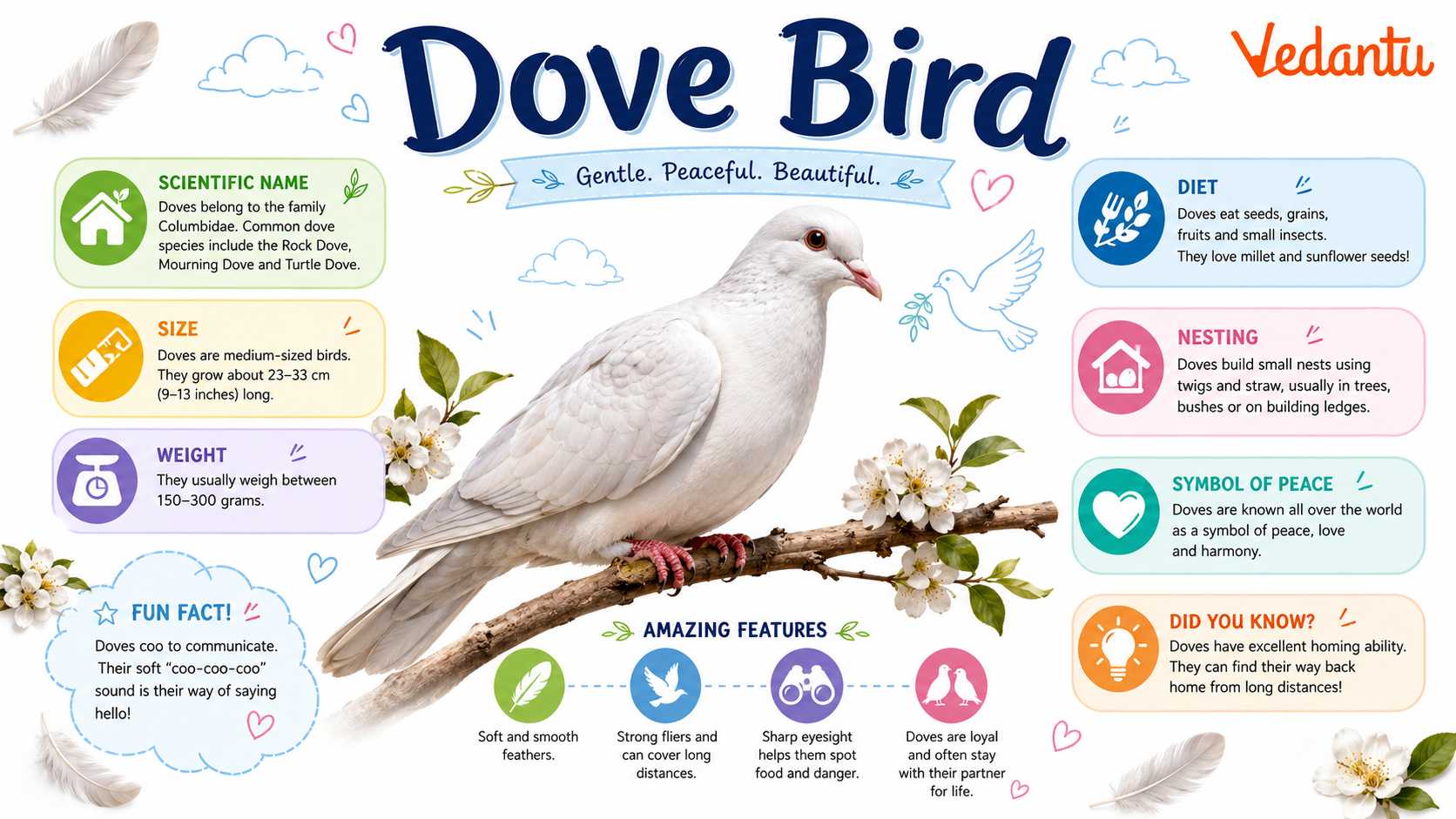
Quick Facts About Dove Bird
| Feature | Details |
|---|---|
| Common Name | Dove |
| Scientific Family | Columbidae |
| Animal Group | Bird |
| Size | 20–35 cm (varies by species) |
| Weight | 50–300 grams |
| Lifespan | 3–15 years |
| Habitat | Forests, grasslands, cities, deserts |
| Diet | Seeds, grains, fruits |
| Young One | Squab |
| Sound | Soft “coo” call |
Appearance and Physical Characteristics
- Small to medium-sized body.
- Short legs and small rounded head.
- Soft, smooth feathers.
- Short beak with a fleshy base.
- Strong, broad wings for fast flight.
Dove Bird Habitat and Distribution
- Live in forests and woodlands.
- Found in grasslands and farmlands.
- Common in cities and parks.
- Some species live in deserts.
- Build simple nests on trees, buildings, or shrubs.
Doves easily adapt to different climates. This adaptability is one reason why they are found in so many parts of the world.
Dove Diet and Feeding Habits
- Eat seeds and grains.
- Feed on small fruits and berries.
- Sometimes eat small insects.
- Drink water by sucking it up without lifting their head.
The dove diet helps in seed dispersal, which supports plant growth and keeps ecosystems balanced.
Behaviour and Lifestyle
Some species migrate to warmer areas during winter, while others stay in the same region throughout the year.
Dove Bird Life Cycle
- Egg Stage: The female lays 1–2 white eggs in a simple nest.
- Incubation: Both parents take turns keeping the eggs warm.
- Hatching: Eggs hatch after about 14–18 days.
- Squab Stage: Baby doves (called squabs) are fed by both parents.
- Adult Stage: Young birds grow feathers and learn to fly within a few weeks.
Flight Adaptations
- Strong chest muscles for powerful wing beats.
- Lightweight hollow bones.
- Broad wings for quick take-off.
- Excellent sense of direction.
Sound or Call
The dove is famous for its soft and soothing “coo” sound. This call is used to:
- Attract a mate.
- Mark their territory.
- Communicate with their partner.
Importance and Role in Nature
Amazing Dove Bird Facts
- Doves belong to the same family as pigeons.
- There are over 300 species of doves and pigeons worldwide.
- Both male and female doves care for their babies.
- Doves can drink water without tilting their heads back.
- They have excellent navigation skills.
- White doves are often released during ceremonies.
- They can fly at speeds of up to 60–80 km/h.
Fun Facts for Kids
FAQs on Dove Bird: Habitat, Diet, Behavior and Symbolism
1. What is a Dove Bird?
A Dove Bird is a small, gentle bird known for its soft cooing sound and peaceful nature.
- Doves belong to the bird family called Columbidae, which also includes pigeons.
- They are famous as symbols of peace, love, and hope.
- Most doves have soft gray, white, or brown feathers.
- They are found in many parts of the world, including forests, cities, and gardens.
2. Where do Dove Birds live?
Dove birds live in many different habitats around the world.
- They are found in forests, woodlands, grasslands, deserts, and cities.
- Some species, like the Mourning Dove, live across North America.
- Others live in Asia, Africa, Europe, and Australia.
- Doves build simple nests in trees, bushes, or on buildings.
3. What do Dove Birds eat?
Dove birds mainly eat seeds and grains.
- Their diet includes seeds, grains, fruits, and small plants.
- Some doves eat tiny insects.
- They drink water by dipping their beaks and sucking it up.
- Doves often feed on the ground in groups.
4. Why is the Dove a symbol of peace?
The dove is a symbol of peace because of its gentle behavior and historical meaning.
- In the Bible story of Noah, a dove brought back an olive branch as a sign of hope.
- The white dove represents love, purity, and harmony.
- Artists like Pablo Picasso used the dove as a peace symbol.
- Doves are calm and rarely fight, which adds to their peaceful image.
5. How long do Dove Birds live?
Dove birds usually live between 1 to 15 years, depending on the species and environment.
- Wild doves often live about 3 to 5 years.
- Some, like the Mourning Dove, can live up to 10–15 years.
- Pet or protected doves may live longer with proper care.
- Predators and weather affect their lifespan.
6. What is the difference between a dove and a pigeon?
There is no major scientific difference between a dove and a pigeon.
- Both belong to the same bird family called Columbidae.
- Smaller species are usually called doves.
- Larger species are often called pigeons.
- They share similar features like plump bodies and small heads.
7. How do Dove Birds build their nests?
Dove birds build simple and light nests using small twigs.
- The male gathers twigs and grass.
- The female arranges them into a small platform nest.
- Nests are usually built in trees, shrubs, or building ledges.
- Doves lay usually two white eggs at a time.
8. What sound does a Dove Bird make?
Dove birds make a soft and gentle cooing sound.
- The sound is often described as “coo-coo”.
- The Mourning Dove has a sad, whistling coo.
- Doves use sounds to communicate and attract mates.
- They may also make wing-whistling sounds while flying.
9. Are Dove Birds friendly to humans?
Dove birds are generally calm and not aggressive toward humans.
- They are known for their gentle and shy nature.
- Some doves can be kept as pets.
- They may visit gardens and bird feeders.
- They usually avoid conflict and fly away if scared.
10. What are some common types of Dove Birds?
There are many different types of dove birds found around the world.
- Mourning Dove – Common in North America.
- White Dove – Often used in ceremonies.
- Ring-necked Dove – Popular as a pet.
- Eurasian Collared Dove – Found in Europe and Asia.
- Zebra Dove – Known for striped feathers.
