






What Is a Viper Snake? Types, Habitat, Diet, and Venom Explained
Viper snakes are one of the most fascinating and feared reptiles in the world. Known for their sharp fangs and powerful venom, vipers are expert hunters that rely on stealth and surprise. These snakes belong to the viper family and are found in many parts of the world. Learning about Viper Snake facts, their habitat, diet, characteristics, and life cycle helps us understand why they are both dangerous and important in nature.
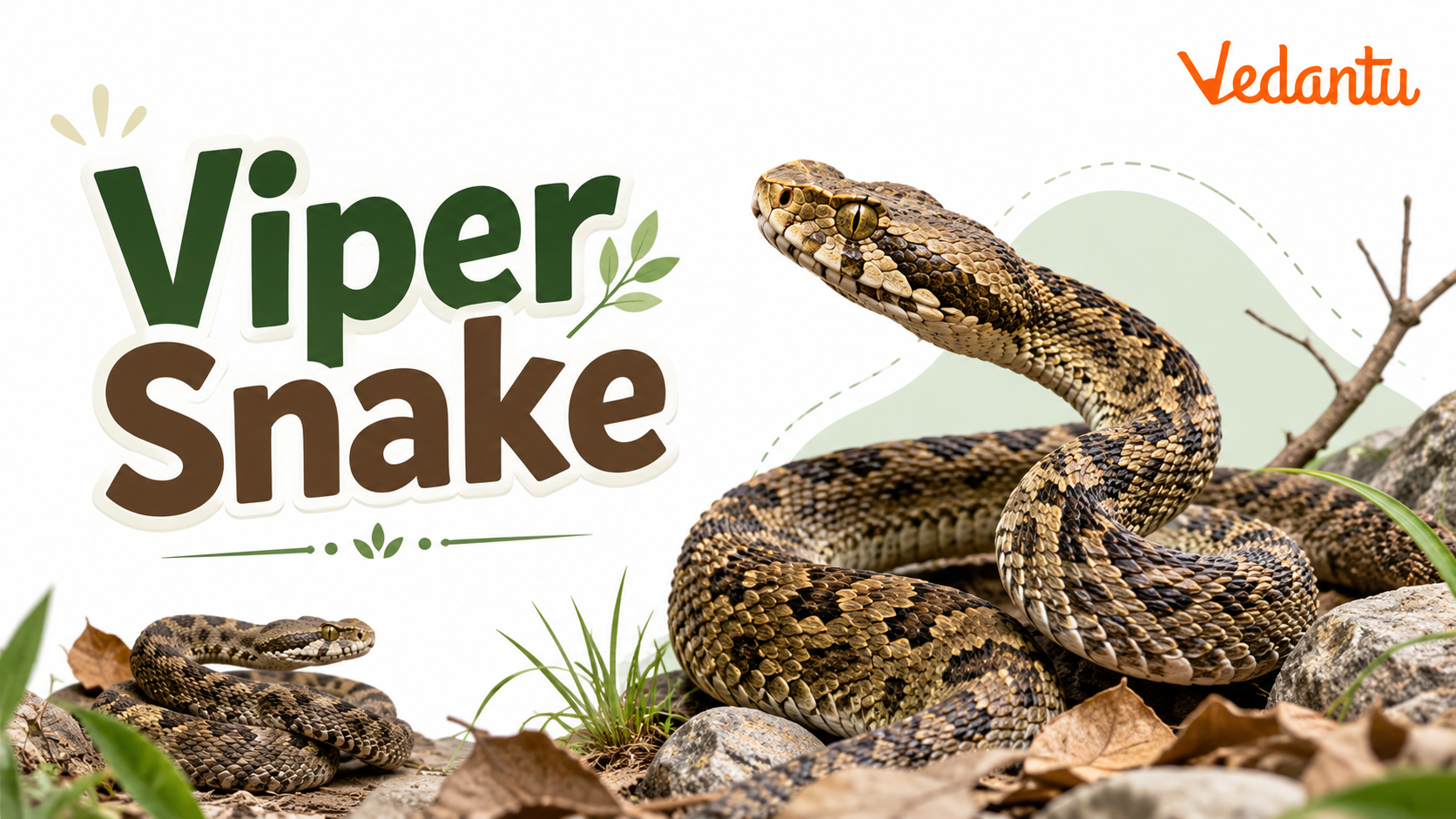
Quick Facts About Viper Snake
| Feature | Details |
|---|---|
| Common Name | Viper Snake |
| Scientific Family | Viperidae |
| Animal Group | Reptile |
| Length | 30 cm to 3.5 meters (varies by species) |
| Diet | Carnivore (rodents, birds, frogs, lizards) |
| Habitat | Forests, deserts, grasslands, mountains |
| Lifespan | 10–20 years (average) |
| Special Feature | Long, hinged venomous fangs |
Appearance and Physical Characteristics
- Thick, heavy body with a short tail.
- Triangular-shaped head, clearly different from the neck.
- Long, hollow fangs that fold back when the mouth is closed.
- Rough, keeled scales that give a textured look.
- Colours include brown, grey, green, or reddish patterns for camouflage.
Habitat and Distribution
The Viper Snake habitat is very diverse. Vipers can survive in many types of environments across the world.
- Found in Europe, Asia, Africa, and the Americas.
- Live in forests, deserts, grasslands, rocky hills, and mountains.
- Prefer places where they can hide easily, such as under rocks or in bushes.
- Some species live in trees, while others stay mostly on the ground.
Diet and Feeding Habits
The Viper Snake diet mainly includes small animals.
- Rats and mice
- Birds and bird eggs
- Frogs and lizards
- Sometimes other small snakes
Behaviour and Lifestyle
- Mostly solitary animals.
- Many species are nocturnal (active at night).
- Move by slithering silently across the ground.
- Use camouflage to avoid predators and catch prey.
- Hiss loudly as a warning before attacking.
Life Cycle of a Viper Snake
- Mating: Usually during warmer months.
- Eggs or Live Birth: Some vipers lay eggs, while others give birth to live young.
- Baby Vipers: Born fully formed with working venom glands.
- Growth: Shed skin several times as they grow.
- Adult Stage: Reach maturity in 2–3 years.
What Makes Viper Snake Special?
Importance and Role in Nature
Amazing Viper Snake Facts
- There are over 200 species of vipers worldwide.
- Some vipers can control how much venom they inject.
- The Gaboon viper has the longest fangs of any snake.
- Vipers can swallow prey larger than their head.
- They shed their skin multiple times each year.
- Some species can live in cold mountain regions.
Fun Facts for Kids
FAQs on Viper Snake: Identification, Venom, and Fascinating Facts
1. What is a Viper Snake?
A Viper snake is a type of venomous snake known for its long fangs and powerful bite.
- Belongs to the family Viperidae
- Has long, hinged venom fangs
- Found in Europe, Asia, Africa, and the Americas
- Includes species like pit vipers and true vipers
- Uses venom to catch prey and for self-defense
2. Are Viper Snakes dangerous to humans?
Yes, many viper snakes are dangerous because they have strong venom, but they usually avoid people.
- Most bites happen when disturbed
- Venom can cause pain, swelling, and tissue damage
- Some species like the Russell’s viper are highly venomous
- Medical treatment and antivenom can save lives
- Vipers do not attack humans on purpose
3. Where do Viper Snakes live?
Viper snakes live in many habitats around the world except Antarctica and Australia.
- Forests and jungles
- Deserts and dry regions
- Grasslands and mountains
- Swamps and wetlands
- Common in Europe, Asia, Africa, and North & South America
4. What do Viper Snakes eat?
Viper snakes are carnivores that eat small animals.
- Rodents like mice and rats
- Birds and bird eggs
- Frogs and lizards
- Sometimes insects (young vipers)
- They inject venom to stop prey quickly
5. How do Viper Snakes hunt their prey?
Vipers hunt by waiting quietly and striking quickly with their long fangs.
- Use camouflage to blend into surroundings
- Some have heat-sensing pits to detect warm prey
- Strike in less than a second
- Inject venom through hinged fangs
- Track prey using smell after biting
6. What is the difference between a pit viper and a true viper?
The main difference is that pit vipers have heat-sensing pits, while true vipers do not.
- Pit vipers include rattlesnakes and copperheads
- True vipers include the puff adder and Gaboon viper
- Pit vipers detect body heat of prey
- Both groups have long venomous fangs
- Both belong to the Viperidae family
7. How big can a Viper Snake grow?
The size of a viper snake depends on the species.
- Small vipers may be 1–2 feet long
- Large species like the Gaboon viper can grow over 6 feet
- Most vipers have thick, heavy bodies
- They usually have triangular-shaped heads
8. Do Viper Snakes lay eggs?
Some vipers lay eggs, but many give birth to live young.
- Many species are ovoviviparous (eggs hatch inside the mother)
- Baby vipers are born fully formed
- Young snakes can use venom right away
- Mother vipers usually do not care for babies
9. What should you do if you see a Viper Snake?
If you see a venomous viper snake, stay calm and keep your distance.
- Do not try to touch or catch it
- Slowly move away without sudden movements
- Tell an adult or local wildlife expert
- Remember that vipers prefer to escape rather than fight
10. Why are Viper Snakes important in nature?
Viper snakes play an important role in keeping ecosystems balanced.
- Control rodent populations
- Help prevent crop damage
- Serve as food for larger predators
- Their venom is studied for medical research
- They are a key part of the food chain
