




How to Write Full-Mark Answers for Class 8 English Poorvi Chapter 14
Magnifying Glass Question Answer – Let us do these activities before we read (Page 222)
I. Work in pairs. Answer the questions that follow the pictures given below.
Share your answers with your classmates and teacher.
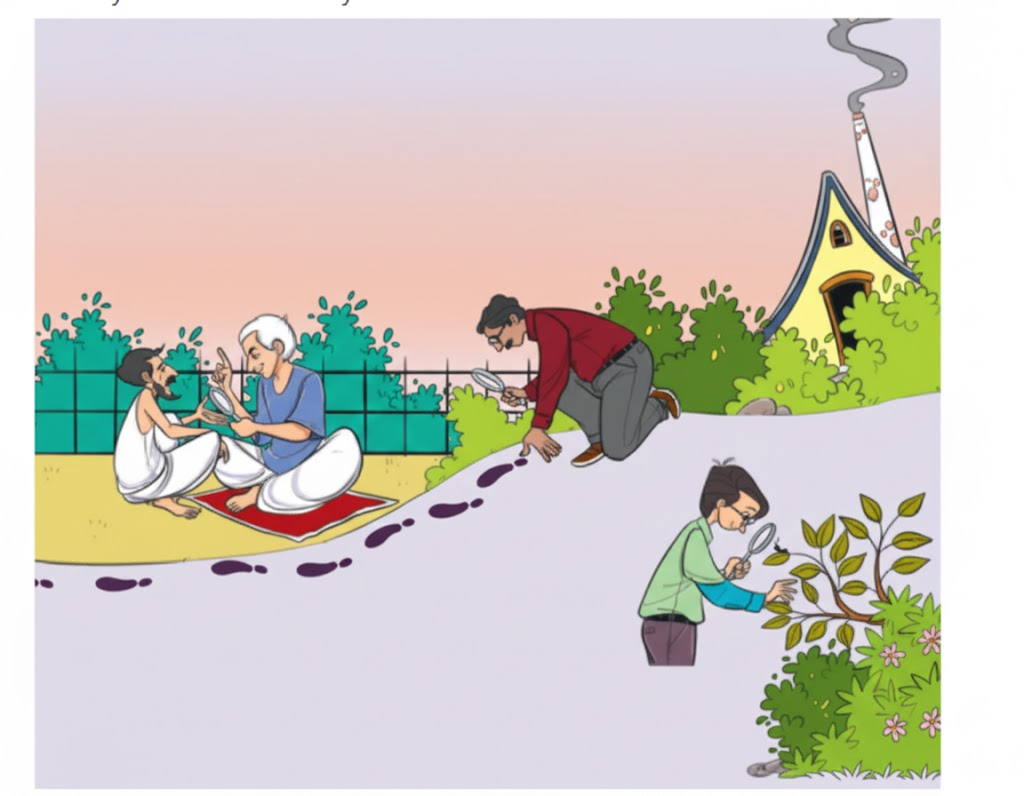
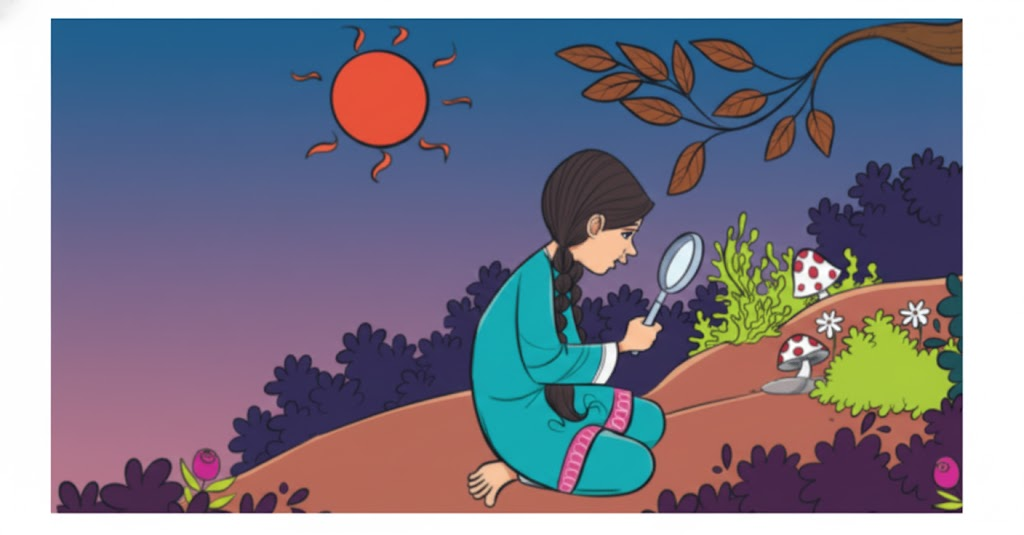
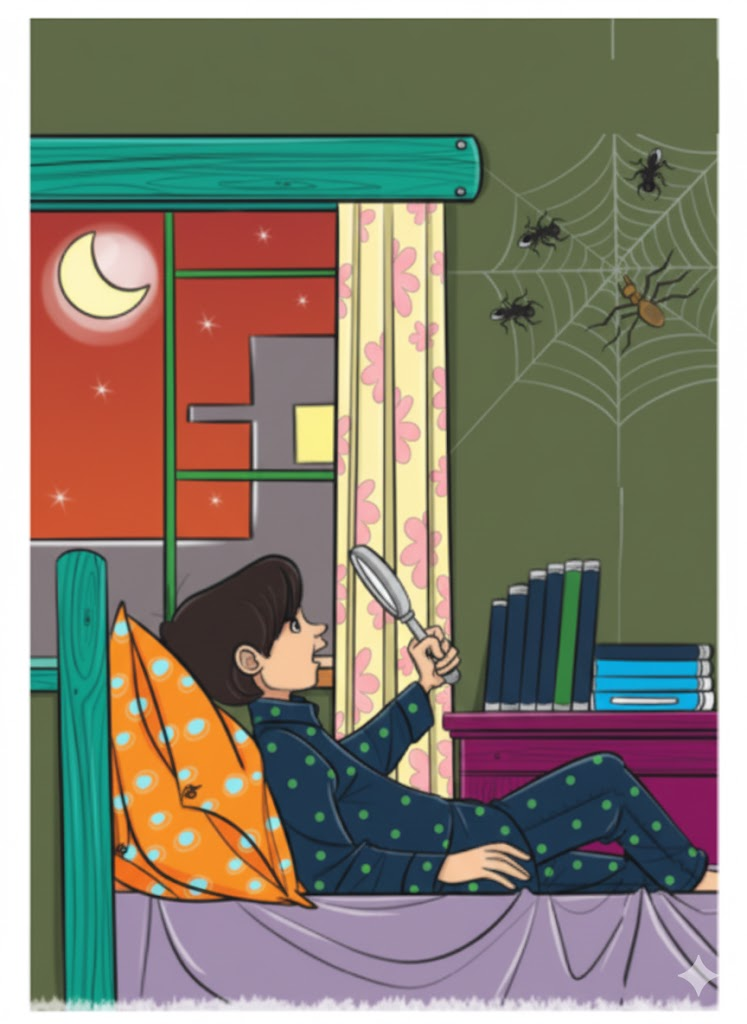
1. What is common in all these pictures?
Answer: All the pictures show people using a magnifying glass to closely examine small or tiny objects.
2. Select the pictures you are familiar with.
Answer: (Responses may differ.) Please complete this activity on your own.
3. Why do you think the people in the pictures need to use a magnifying glass?
Answer: People use a magnifying glass to view small details more clearly, such as the structure of insects, leaves, or patterns that cannot be seen with the naked eye.
4. What other instruments magnify objects?
Answer: Other tools that help enlarge or magnify objects are microscopes, telescopes, binoculars, hand-held magnifiers, and magnifying lenses used in spectacles.
II. If you have a magnifying glass, what would you like to use it for and why? Share your answers with your classmates and teacher.
Answer: If I had a magnifying glass, I would use it to examine leaves, insects, and the tiny patterns on stones or shells. It would help me see nature more clearly and appreciate how detailed and beautiful even the smallest things are.
Magnifying Glass Class 8 Question Answer – Let us discuss (Pages 223-224)
I. Complete the summary of the poem given below with suitable words from the poem.
The poem describes the magic of seeing the world through a 1. __________. It reveals how tiny things like 2. __________ and 3. __________ can appear vast and complex. Even a 4. __________ of water can seem like a hive of 5. __________. The poet is impressed at how the spider spins its 6. __________ from its 7. __________. The poem ends with the idea that, through lenses, the 8. __________ could seem within reach.
Answer:
1. magnifying glass
2. moss
3. chalk
4. drop
5. bees
6. web
7. spinnerets
8. moon
II. Fill in the blanks by choosing the correct answer from the brackets.
1. The main idea of the poem is the transformative power of __________ (wonders in nature/close observation) through the magnifying glass.
2. The tone of the poem is __________ . (wonder and curiosity/peaceful and emotional)
3. The poem has __________ stanzas with __________ lines in each stanza. Hence, it is a quatrain. (four; six/six; four)
4. The rhyme scheme of the poem is __________. (ABCD; ABCB)
Answer:
1. close observation
2. wonder and curiosity
3. six /four
4. ABCB
II. Pick examples from the poem for the following poetic devices.
1. Simile
2. Alliteration
3. Metaphor
Answer:
1. Simile:
A drop of water/Like hive of bees
Yes, and with lenses like it
2. Alliteration:
Shells show, forest-flowers, wait and watch, woven web-silk, make more marvellous
3. Metaphor:
“Magic talk” (the magnifying glass is not literally talking)
The whole poem is metaphorical in how it compares ordinary things to magical wonders.
V. The poem is rich in visual imagery, painting vivid pictures of small, everyday things magnified into something grand.
1. In the line, ‘A myriad shells show in a scrap of chalk’, the magnifying glass reveals ______________________.
2. In the line, ‘A forest—flowers and trees’ the poet uses the imagery of nature to emphasise ______________________.
Answer:
The hidden designs or fossil-like markings inside something as simple as a piece of chalk.
How a small patch of moss can appear like a whole forest when seen through magnification.
V. Complete the following sentences with a reason.
1. The poet uses exclamation marks in lines, ‘The tigerish claws he has!’, ‘With all those eyes!’ and ‘In an afternoon!’ because it ______________________.
2. In the phrase, ‘Magic talk’ the poet uses personification to describe the magnifying glass because it ______________________.
3. Each stanza follows a repetitive pattern of introducing a small or ordinary object and then describing the extraordinary details revealed through magnification. This is because it supports the theme of __________ as the speaker reveals ____________.
4. In the final stanza the poet shifts from small, everyday objects being magnified to a celestial body like moon because __________.
Answer:
1. He shows his amazement and excitement at what the magnifying glass reveals.
2. It seems to uncover secrets or stories that are invisible to the naked eye.
3. It highlights curiosity and discovery, showing how much beauty and wonder small things hold.
4. It reflects how powerful human curiosity is, allowing us to explore even outer space through instruments like telescopes.
I. Read the extracts given below and answer the questions that follow.
1. With this round glass
I can make Magic talk—
A myriad shells show
In a scrap of chalk;
Of but an inch of moss
A forest—flowers and trees;
(i) Identify whether the following statement is true or false:
The poet uses his magical powers to make the round glass powerful.
Answer:
False
Explanation: The poet does not possess any magical ability; it is the magnifying glass that creates the sense of magic by revealing the hidden beauty of small objects when they are viewed closely.
(ii) Select the line from the extract that expresses the presence of intricate patterns in ordinary objects.
Answer:
“A myriad shells show / In a scrap of chalk”
Explanation: This line suggests that even an ordinary piece of chalk can reveal intricate patterns when viewed through a magnifying glass.
(iii) What does the comparison of ‘an inch of moss’ to a fo rest “suggest about the speaker’s view of the world through the magnifying glass?
Answer: It suggests that the speaker finds great beauty and complexity even in the smallest parts of nature. With the magnifying glass, ordinary things appear grand and almost magical.
(iv) How does the poet feel about the ability of the magnifying glass to reveal hidden wonders?
A. Satisfied
B. Fascinated
C. Grateful
D. Determined
Answer: B. Fascinated
Explanation: The poet expresses amazement and wonder at how the magnifying glass uncovers the hidden wonders of the natural world.
II. Answer the following questions.
1. What is the significance of the spider in the poem?
Answer:
The spider symbolizes skill, precision, and the beauty of nature. The poet admires the way it weaves its web with its spinnerets and how even its tiny, tiger-like claws can be seen clearly through magnification. It highlights the hidden details of life that become visible when we look closely.
2. How might the speaker’s view of the natural world change if there was no use of a magnifying glass?
Answer: Without a magnifying glass, the speaker would miss the tiny details and hidden beauty of small objects. The natural world would appear ordinary instead of extraordinary and magical, and much of the curiosity and wonder would be lost.
3. Why does the poem end with the idea of the moon being within reach?
Answer: The poem ends by suggesting that the moon feels within reach, symbolizing how tools like lenses and telescopes broaden our vision and possibilities. It implies that human curiosity and careful observation can carry us far beyond Earth, even to places like the moon.
4. What is the speaker’s attitude towards nature and the act of observation?
Answer: The speaker shows a strong sense of curiosity, fascination, and appreciation for nature. He believes that close observation reveals hidden beauty, and that even the tiniest things contain wonder and mystery when examined carefully.
5. Which is your favourite part of the poem? Why?
Answer: My favourite part is “A drop of water / Like hive of bees” because it vividly compares a tiny drop of water to a bustling beehive, showing how lively and active even the smallest things can appear through a magnifying glass. It reminds me to notice and appreciate the hidden wonders around us.
Magnifying Glass Class 8 Questions and Answers – Let us learn (Pages 225-226)
I. Fill in the blanks in the sentences with the words given in the box below.

With his 1. ____________ description, the author has written the story beautifully 2. ____________with fascinating details. When you read the story, you will surely enjoy the 3. ____________storytelling technique that attracts all kinds of readers. What makes the story interesting is the superb way of describing the 4. ____________emotions and feelings of the characters. The reader will 5. ____________upon the unexpected twists and turns that 6. ____________ all our understanding and make us wonder at the narrative power of the author
Answer:
1.deft
2. woven
3.marvellous
4. myriad
5. stumble
6. Surpass
II. The collective noun ‘a hive of bees’, is used in the poem. Match the phrases in Column 1 with suitable words in Column 2 to make collective nouns.
Answer:
III. The poet uses the expression ‘eyeing the moon’ in the poem. Match the idiomatic expressions with ‘eye’ given in Column 1 with their meanings in Column 2. You may refer to a dictionary.
Answer:
IV. The poet uses the adjective form ‘tigerish’ in the poem by adding the suffix -‘ish’ to the noun ‘tiger’. In the same way, we can make adjectives by adding the suffix -‘ish’ to some nouns. Choose the nouns to which you can add the suffix -‘ish’ to make adjectives.

Answer:
girl → girlish
boy → boyish
silk → silkish
moon → moonish
book → bookish
Magnifying Glass Question Answer Class 8 – Let us listen (Page 227)
I. You will listen to a conversation between a father and daughter about lesser- known Indian inventions. As you listen, mark the four true statements from (1)—(6) given below.
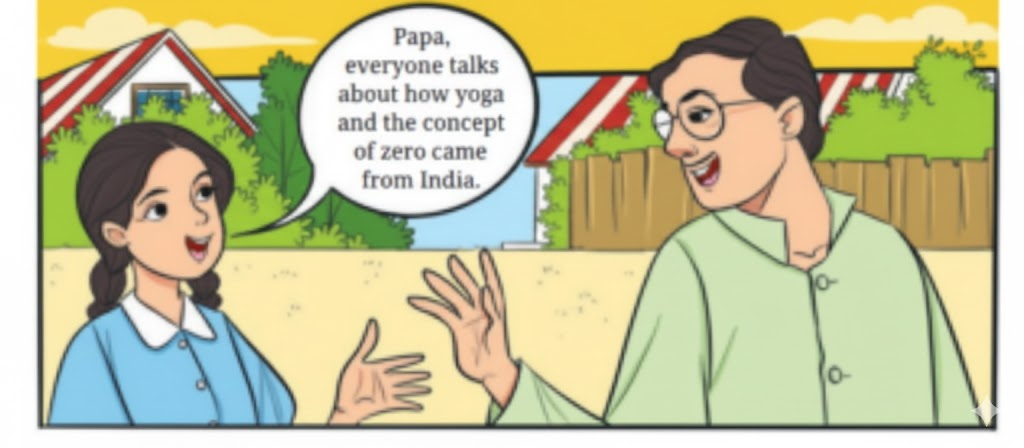
Daughter :Papa, everyone talks about how yoga and the concept of zero came from India, but I recently found out there are so many more inventions that people don’t really know about!
Father : Oh really? Like what?
Daughter : Well, did you know that radio broadcasting has roots in India? We usually credit Marconi, but Jagadish Chandra Bose, a Bengali scientist, actually conducted an experiment using microwaves before Marconi.
Father :Wow, I didn’t know that! That’s incredible. I can recollect something about fire optics.
Daughter :Yes! You’re absolutely right Papa. Can you imagine life without fibre optics? No fast internet, no clear communication… And guess what? It was pioneered by Narinder Kapany, an Indian physicist from Punjab. He’s called the ‘father of fibre optics.’
Father :That’s something I use every day, but I just had an idea that the origins were in India. What about fun things? Any of those that you’ve found out about?
Daughter :Yes indeed! You’ll love this one—Snakes and Ladders! It was actually invented as a game to teach children values, with ladders representing virtues and snakes representing evil. It wasn’t just a board game like we think today. It had a spiritual meaning in ancient times.
Father :So even that simple game had such deep roots. Let me tell you about one that I just remembered.
Daughter : Of course! I’d love to know.
Father :Well, the USB port, something we rely on all the time to connect devices, was invented by Ajay
Bhatt. He’s an Indian-born engineer who helped revolutionise the way we use technology.
Daughter :That’s amazing. USB is such a basic part of life now. It’s hard to imagine a time without it.
Father :That’s incredible. And all this from India. I definitely learned a lot from this conversation.
Adapted from— https://www.bbc.co.uk/programmes/articles/5rnsYs1QcPB7CsyjzvTcmjf/7-surprising-things-india-has-given-the-world
Answer:
True Statements: 1, 4, 5 and 6
Class 8 English Chapter 14 Question Answer – Let us speak
I. When pronouncing /v/ and /f/, the lower lip lightly touches the edge of the upper teeth. Air flows through the small gap, creating a soft friction sound.
Note the difference between /v/ and /f/. When we pronounce words with /v/ sound, there is a vibration, whereas /f/ sound has no vibration. Both the sounds can occur in the beginning, middle, or at the end of words.
Read these words aloud with the help of your teacher.
beginning sound /f/: forest flowers from
middle sound /f/: deft afternoon
end sound /f/: of itself
beginning sound /v/: vase valour victory
middle sound /v/: woven even marvellous
end sound /v/: hive
Answer: Students must do it by themselves
II. If you could travel to space, which planet would you like to visit? Why? What preparations would you like to make? Speak about any five things that you would like to take along.
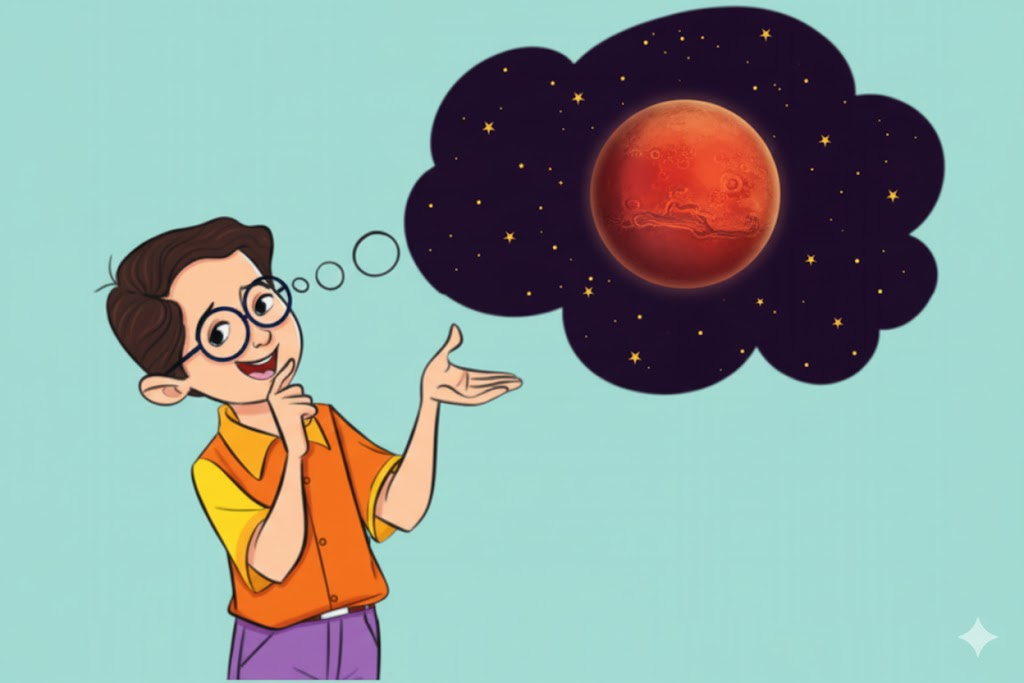
Answer: If I ever had the chance to travel to space, I would choose to visit Mars, the Red Planet. Scientists believe that Mars may once have had water and possibly even life. I would be excited to see its rocky surface, explore its landscapes, and experience its low gravity.
Preparations I would make:
Train under a space programme
Learn how to live and move in zero gravity
Practise using a space suit
Carry all the essential tools and safety equipment
Five things I would take along:
Oxygen supply
Packed space food
A camera to capture my journey
A communication device to stay connected
A journal to record my experiences and observations
III. If you could invent something, what would you like to invent and how? Give reasons for the choice of your invention. Speak about your wonder invention.
Answer: If I could invent something, I would create a Pollution-Cleaner Drone. This drone would fly over cities and absorb harmful gases and dust particles to keep the air clean. I would invent it because pollution has become a major issue today, and clean air is essential for a healthy life. The drone would help people breathe more easily and reduce pollution-related diseases.
It would use advanced sensors to locate polluted areas and special filters to purify the air. To make it eco-friendly, the drone would run on solar energy. Such an invention would truly be a wonderful gift to our planet!
NCERT Class 8 English Poorvi Chapter 14 Question Answer – Let us write (Page 229)
I. In a conversation, we communicate through dialogues. While writing a conversation, we need to ensure that the dialogues are engaging and serve a purpose.
Points to remember:
Mention where, when, and with whom the conversation is taking place.
Identify the word choice and tone—formal or informal.
Include key information, points of agreement and disagreement, etc.
Use words in brackets to express emotions or actions, such as (joyfully) (sits down).
You may use filler words like Uff, Er… , Ugh, etc.
Deepa and Asma, members of the Science Club have a conversation to take a decision about making a model for an upcoming Science Fair.
Create this conversation between Deepa and Asma.
Answer: You may begin the conversation like this.
Deepa : Hi Asma! Our Science teacher mentioned that you have a wonderful idea for the Science Fair project.
Asma : (hesitatingly) Yes, I do. But I’m not sure if it is good enough.
Deepa : (encouragingly) Don’t worry…
Answer:
Deepa: Hi Asma! Our Science teacher told me you have a great idea for the Science Fair project.
Asma: (hesitant) Yes… I do, but I’m not sure if it’s good enough.
Deepa: (encouraging) Don’t worry, Asma! I’d love to hear it. Every idea is worth exploring. Just tell me what you have in mind.
Asma: I was thinking that we could make a working model of a water purification system using natural materials like sand, charcoal, and gravel. It would show how clean water can be produced using simple, eco-friendly methods.
Deepa: That sounds wonderful! It’s practical and it also shares an important message about clean water and sustainability.
Asma: Do you really think so? I was afraid it might seem too simple compared to the high-tech models others might bring.
Deepa: Simple doesn’t mean uninteresting. If we present it well and explain the science clearly, it can actually stand out. It’s something everyone will understand and appreciate.
Asma: That’s true. Maybe we can also show the water before and after filtration so visitors can see the difference.
Deepa: Great! And we can add labels and posters explaining what each layer in the filter does.
Asma: Yes! We could even have an interactive section where people pour ‘dirty’ water in and watch it come out clean.
Deepa: Perfect! Let’s start listing the materials we need and divide the tasks. I’m excited already!
Asma: Me too, Deepa. Thanks for the encouragement. I’m really glad we’re doing this together.
Deepa: Anytime! Let’s make this Science Fair project amazing!
Class 8th English Chapter 14 Magnifying Glass Question Answer – Let us explore (Pages 229-232)
I. Children with low vision may benefit from different types of visual aids, such as magnifying spectacles, stand magnifiers, hand-held magnifiers, and telescopes. Magnifying spectacles are used for reading, threading a needle or doing other close-up tasks. Stand magnifiers rest above the object and are hands-free and help to keep the magnifying lens at a proper distance. Hand-held magnifiers with and without built-in lights, are usually smaller and lighter to move over printed material. They can be moved more easily. Telescopes are used to see objects or signs far away. Some telescopes can even be attached to eyeglasses.
II. Did you know that telescopes also use lenses?
1. The largest telescope in India for studying celestial objects is located in the district of Nainital, Uttarakhand. Commissioned in 2016, it is maintained and operated by ARIES (Āryabhaṭa Research Institute of Observational Sciences).
2. The Indian Astronomical Observatory (IAO) is a high-altitude astronomy station located in Hanle, Ladakh, India. It is situated at an elevation of 4,500 meters (14,764 ft), and supports optical, infrared, and gamma-ray telescopes.
3. The largest, most powerful, and most complex telescope ever launched into space is the James Webb Space Telescope. NASA launched it on, 25 December 2021. It orbits the Sun at a distance of 1.5 million kilometres from Earth. To learn more, visit the link below. https://science.nasa.gov/mission/webb/
4. The Mauna Kea Observatory, astronomical observatory in Hawaii, US, that has become one of the most important in the world because of its outstanding observational conditions. The Mauna Kea Observatory is operated by the University of Hawaii and lies at an elevation of 4,205 metres (13,796 feet) atop the peak of Mauna Kea, a dormant volcano on north-central Hawaii island. The summit hosts a worldrenowned collection of astronomical research facilities and large telescope observatories, including the Keck Observatory and Subaru Telescope, for optical, infrared, and submillimeter astronomy.
The observatories are set up here because of Mauna Kea’s high elevation, dry environment, and stable airflow that make it a prime location for astronomical observation. The focus is scientific research across the electromagnetic spectrum.
Public Access: The Onizuka Center for International Astronomy provides visitor information and exhibits about the mountain and its observatories, and offers guided tours of the summit.
Find out more about them from the internet and discuss with your science teacher and classmates. By Frank Ravizza – Own work, CC BY-SA 4.0
III. Read about ancient Indian scholars.
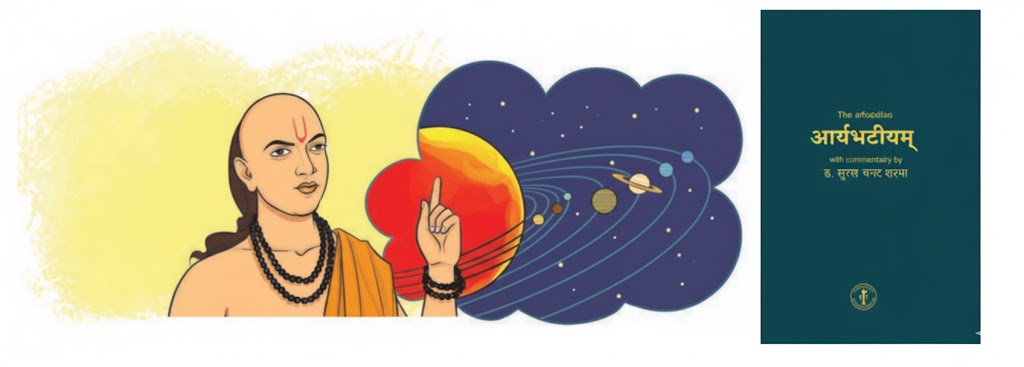
1. One of the eminent astronomers of the ancient India was Āryabhaṭa. His work Āryabhaṭiyam, laid the groundwork for various astronomers to develop in subsequent centuries and continues to be an important work even today. Āryabhaṭa proposed a heliocentric model of the solar system centuries before Copernicus. He also gave a scientific explanation of lunar and solar eclipses.
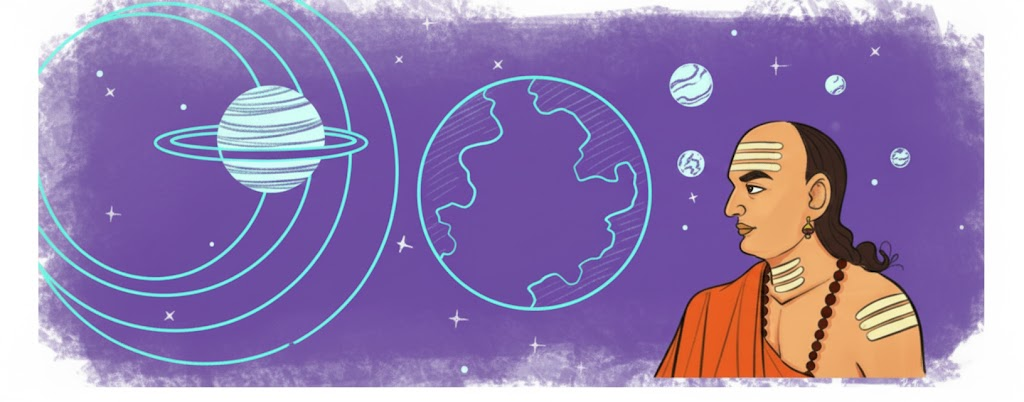
2. Varāmihira, the sixth-century CE astronomer, philosopher, and mathematician wrote the astronomical treatise Pañchasiddhāntika (Fine Treatises), a compendium of Greek, Egyptian, Roman, and Indian astronomy.
3. The tenth-century CE mathematician-astronomer Bhāskarachārya II contributed significantly to the advancement of astronomical concepts. His works Siddhāntaśiromaṇi and Karaṇakutūhala, include compiled data on planetary positions, conjunctions, and eclipses. https://indianculture.gov.in/timeless-trends/unveiling-cosmos-journey-throughhistory-astronomy-india
IV. Jantar Mantar in New Delhi is an astronomical observatory. It has large-scale astronomical instruments designed for precise calculations and measurements of celestial movements. It was built in 1724 by Maharaja Sawai Jai Singh II. The observatory is a UNESCO World Heritage Site. Five such observatories were built by Jai Singh II, the other four are located in Ujjain, Mathura, Varanasi, and Jaipur.
Answer: Do it yourself
Magnifying Glass Class 8 English Poorvi Chapter 14 – Key Concepts
The Ncert Solutions Class 8 English Poorvi Chapter 14 Magnifying Glass helps students build a clear understanding of the poem’s metaphorical expressions and vocabulary. Mastering these solutions makes exam preparation easier and boosts overall confidence in English.
By regularly revising Magnifying Glass Class 8 questions and answers, learners improve their comprehension skills. Each exercise deepens your grasp of word meanings, merged words, and idiomatic expressions essential for scoring high in the 2026-27 exams.
Practising NCERT textbook exercises with detailed explanations ensures you’re exam-ready. Strengthen your basics by revisiting tricky lines and summary tasks, and always review the vocabulary to succeed in Class 8 English.
FAQs on NCERT Solutions For Class 8 English Chapter 14 Magnifying Glass - 2026-27 Free PDF Download (Sign-in Required)
1. What are the NCERT Solutions for Class 8 English Poorvi Chapter 14 Magnifying Glass?
The NCERT Solutions for Class 8 English Poorvi Chapter 14 Magnifying Glass provide step-by-step answers for all textbook exercises, helping students score better in exams.
- Each answer follows the CBSE 2026–27 marking scheme and question pattern.
- Solutions include intext, back exercise, and extra questions for complete coverage.
- Answer structures, keywords, and presentation tips are given to help you attempt every question with confidence.
2. How can I score full marks in Class 8 English Poorvi Chapter 14 using NCERT Solutions?
To score full marks in Class 8 English Poorvi Chapter 14 Magnifying Glass, write your answers with clear steps and keywords as shown in expert NCERT solutions.
- Follow the stepwise answering method for each exercise question.
- Use correct definitions, diagrams, and examples where needed.
- Structure long answers with an introduction, main points, and conclusion.
- Revise key terms and main events for accuracy.
3. Which questions from Magnifying Glass Chapter 14 are most likely to appear in the exam?
The most likely exam questions from Chapter 14 are based on key definitions, main story events, and vocabulary.
- Back exercise questions and important intext questions are often repeated.
- Additional CBSE questions may focus on meanings, character traits, or summary writing.
- Long answer questions typically ask for analysis or explanation of the story's message.
4. Are diagrams or definitions necessary in Class 8 English answers for this chapter?
Diagrams are not usually required in English for Chapter 14; however, exam-ready definitions for important terms should always be included when asked.
- Writing clear, concise definitions can earn you easy marks.
- Label any diagrams or pictures neatly if specifically asked in the exercise.
5. How should I structure long answers for better marks in CBSE Class 8 English?
To achieve high marks in long answer questions, use a structured format:
- Start with an introduction that restates the question.
- Include 2–4 main points, each in a separate paragraph, with examples or supporting details.
- Conclude with a summary sentence or your opinion (if asked).
- Use keywords and phrases from the chapter for CBSE marking alignment.
6. Where can I download NCERT Solutions Class 8 English Poorvi Chapter 14 Magnifying Glass PDF for free?
You can download the free PDF of NCERT Solutions for Class 8 English Poorvi Chapter 14 from trusted platforms offering CBSE study materials.
- Look for a single-click PDF download option on the solutions page.
- Use PDFs for offline study and quick revision before exams.
7. What are the key definitions and main points from Chapter 14 Magnifying Glass?
The key definitions and main points from Chapter 14 focus on the meaning and usage of a magnifying glass, and the moral lesson from the story.
- Definitions: Understand magnification, observation, and related vocabulary.
- Main points: The sequence of events, character actions, and the chapter's message.
8. How does expert guidance in NCERT Solutions help in CBSE 2026–27 English exams?
Expert-reviewed NCERT Solutions ensure your answers meet the latest CBSE 2026–27 marking criteria.
- Provide model answers, step marks, and exam strategies.
- Help avoid common mistakes and improve answer presentation.
- Give tips on time management and key revision areas.
9. What are some common mistakes to avoid when writing NCERT answers for this chapter?
Common mistakes to avoid in Chapter 14:
- Missing out on key terms or main points required by the question.
- Writing answers that are too short or not structured stepwise.
- Ignoring examiner instructions about definitions or examples.
- Forgetting to check grammar and spelling for neatness.
10. Are NCERT Solutions enough for Class 8 English exams?
NCERT Solutions for Class 8 English are generally sufficient when combined with regular revision.
- They follow the CBSE-approved syllabus and pattern.
- Enhance clarity with stepwise answers and examples as per the textbook.
- However, for extra practice, use sample papers and important questions alongside the solutions.
