




Stepwise Answers & Exam Tips for NCERT Class 8 English Poorvi Chapter 15
Bibha Chowdhuri: The Beam of Light that Lit the Path for Women in Indian Science Question Answer – Let us do these activities before we read. (Page 233)
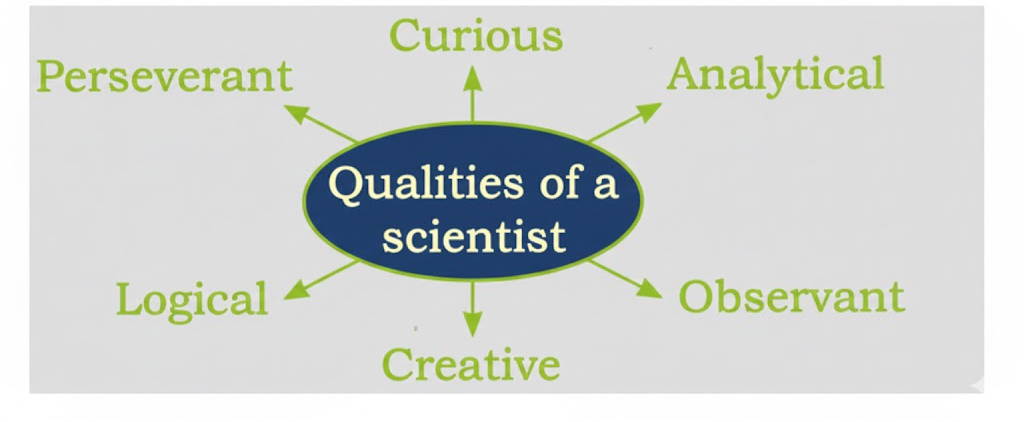
I. Work in pairs. What qualities do you associate with a scientist? Share your answers with your classmates and teacher. Complete the word web given below.
Answer:
Some qualities associated with a scientist may include curiosity, patience, creativity, observation skills, logical thinking, problem-solving ability, and a strong desire to learn and experiment.
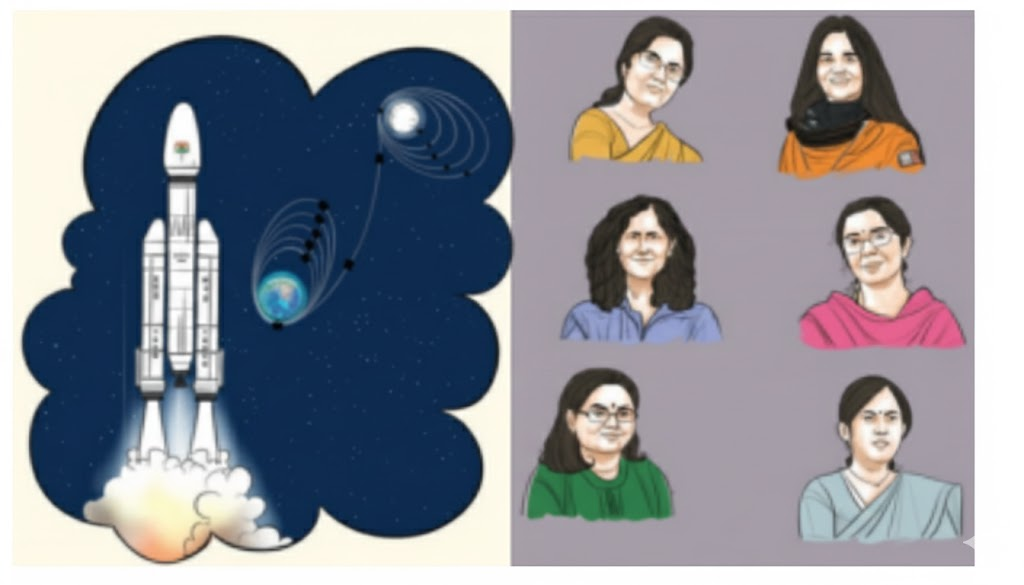
II. Some pictures of women scientists are given below. What do you know about their work? Share your answers with your classmates and teacher.
Answer:
Kalpana Chawla – She was the first woman of Indian origin to travel into space. A NASA astronaut, she tragically lost her life in the Space Shuttle Columbia accident in 2003.
Dr. Tessy Thomas – Popularly called the “Missile Woman of India,” she made major contributions to DRDO’s Agni missile programme.
Dr. Ritu Karidhal – Known as the “Rocket Woman of India,” she served as the Deputy Operations Director of ISRO’s Mars Orbiter Mission and also played a leading role in Chandrayaan-2.
Dr. Indira Hinduja – A pioneer in reproductive science in India, she is credited with delivering the nation’s first test-tube baby.
Bibha Chowdhuri: The Beam of Light that Lit the Path for Women in Indian Science Class 8 Question Answer – Let us discuss (Page 237)
I. Arrange the following events from Bibha Chowdhuri’s life in the correct order of occurrence. Share your answers with your classmates and teacher.
1. The International Astronomical Union (IAU) honoured her legacy by renaming a star in the constellation Leo—HD 86081—as ‘Bibha’.
2. She became the first woman faculty member at the Tata Institute of Fundamental Research (TIFR).
3. Bibha Chowdhuri was born in pre-independent India.
4. The Government of India declared a chair professorship in Bibha’s name.
5. She joined the University of Manchester under the guidance of the celebrated Nobel Laureate, Patrick M.S. Blackett.
6. She was nominated for a Nobel Prize by Erwin Schrodinger.
Answer:
3 → 5 → 6 → 2 → 1 → 4
Class 8 English Bibha Chowdhuri: The Beam of Light that Lit the Path for Women in Indian Science Question Answer – Let us think and reflect (Pages 237-239)
I. Read the given extracts and answer the questions that follow.
1. In 1945, Bibha’s academic journey took her to the University of Manchester. Under the guidance of the celebrated Nobel Laureate, Patrick M.S. Blackett, she delved deeper into the field of cosmic rays. Her Ph.D. thesis on cosmic rays earned local recognition, with newspapers introducing her as ‘India’s New Woman Scientist—She has an eye for Cosmic Rays’.
(i) Why is the mention of Patrick M.S. Blackett, a Nobel Laureate, significant in this extract?
Answer:
The mention of Patrick M. S. Blackett is important because it shows that Bibha worked under one of the most esteemed and well-known scientists of that era. This highlights the high quality of her research and the respect she had earned in the field of physics.
(ii) What can be inferred about the public perception of women scientists in the 1940s from the title given to her by the press ‘India’s New Woman Scientist’?
A. Women scientists were widely accepted and celebrated at that time.
B. The world was still doubtful about the capabilities of women scientists.
C. Women scientists were as common and renowned as men in the 1940s.
D. Women were not allowed to study sciences or pursue scientific careers.
Answer:
B. The world was still doubtful about the capabilities of women scientists.
(iii) In the phrase ‘celebrated Nobel Laureate,’ the word ‘celebrated’ refers to all of the following EXCEPT someone who is
A. famous and highly respected
B. frequently seen in public
C. renowned for their achievements
D. well-regarded in their field
Answer:
B. frequently seen in public
(iv) Complete the following sentence suitably.
The phrase ‘She has an eye for Cosmic Rays’ suggests that ____________
Answer:
The phrase ‘She has an eye for Cosmic Rays’ suggests that she had a deep understanding and insight into the study of cosmic rays.
2. The journey from Bibha Chowdhuri’s era to today’s women scientists has been long and arduous, but it is also inspiring. The struggles Chowdhuri faced are a stark reminder of how far we’ve come—and how much Jiirther we have to go. But with every cosmic achievement— be it landing on the moon or reaching Mars—these women prove that the journey is well worth it. Bibha Chowdhuri’s legacy lives on. Her story continues to inspire young women to pursue their passions, break barriers, and leave their mark on the world. As the stars of Indian science shine brighter, Bibha Chowdhuri, the beacon-beam of light, ’ will always guide the way.
(i) What can be inferred about the challenges faced by women scientists today, as compared to Bibha Chowdhuri’s era?
A. Women scientists no longer face any barriers.
B. The challenges remain, but progress has been made.
C. The struggles have become more difficult over time.
D. The struggles are the same as they were for Chowdhuri.
Answer:
B. The challenges remain, but progress has been made.
(ii) The phrase ‘Bibha Chowdhuri’s legacy lives on’ suggests that ____________
Answer:
The phrase “Bibha Chowdhuri’s legacy lives on” means that her work and achievements continue to inspire and guide future generations.
(iii) Why is Bibha Chowdhuri referred to as a “beacon’ and a “beam of light’ in the extract?
Answer: Because she opened doors for women in science through her courage, dedication, and groundbreaking work, inspiring and encouraging others to follow similar paths.
(iv) State whether the following sentence is a fact or an opinion.
Bibha Chowdhuri was the beacon, the ‘beam of light’ whose story continues to inspire young women.
Answer: Opinion – It shows the writer’s respect and personal interpretation of her lasting legacy.
II. Answer the following questions.
1. Why is Bibha Chowdhuri considered a pioneer in the field of science?
Answer:
Bibha Chowdhuri is regarded as a pioneer because she was the first Indian woman physicist to work in the advanced field of high-energy particle physics. She challenged gender barriers, carried out important research on cosmic rays and subatomic particles, and opened the path for future generations of women in Indian science.
2. What does Bibha Chowdhuri’s nomination by Erwin Schrodinger tell us about her abilities?
Answer: It shows that Bibha Chowdhuri’s research was of very high quality and respected worldwide. Being nominated for the Nobel Prize by a famous scientist like Erwin Schrödinger highlights the significance of her contributions and her remarkable talent.
3. Bibha Chowdhuri never worked for awards or recognition. Support this statement with evidence from the text.
Answer: Despite her groundbreaking research, Bibha Chowdhuri never received any awards during her lifetime. She continued to work with dedication, often remaining in the background and choosing to focus on her love for science rather than on fame or recognition.
4. How does the renaming of a star as ‘Bibha’ serve as both a literal and symbolic recognition of her contributions to science?
Answer: Literally, it ensures that her name will remain forever in the cosmos, and symbolically, it represents the “beam of light” she was in the world of science—shining brightly, guiding future generations, and honouring the brilliance that was once overlooked.
5. How do the roles of women in ISRO today reflect broader changes in societal attitudes towards women in STEM in India?
Answer: Women in ISRO today lead important space missions, reflecting how society has evolved to acknowledge and encourage women’s abilities in science and technology. This advancement has been made possible because of trailblazers like Bibha Chowdhuri.
6. What is the writer’s purpose of highlighting the contributions of Bibha Chowdhuri and other modern women scientists?
Answer: The writer’s goal is to motivate readers—especially young girls—by highlighting how women have risen above obstacles to succeed in science. The passage also aims to recognise lesser-known achievers and encourage gender equality in STEM fields.
7. How might this text help shape people’s perception of the role of women in other traditionally male-dominated fields?
Answer: This text challenges gender stereotypes and urges society to see women as equally capable in every field, including those long dominated by men. It inspires people to value and support women’s contributions across all professions.
Bibha Chowdhuri: The Beam of Light that Lit the Path for Women in Indian Science Class 8 Questions and Answers – Let us learn (Pages 239-244)
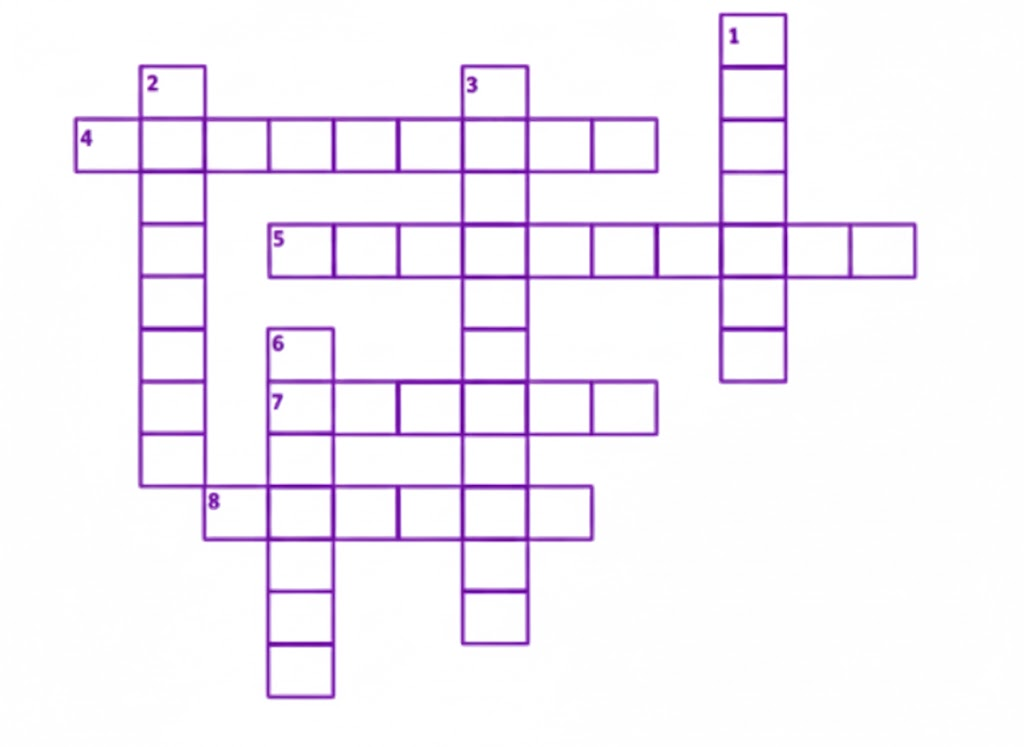
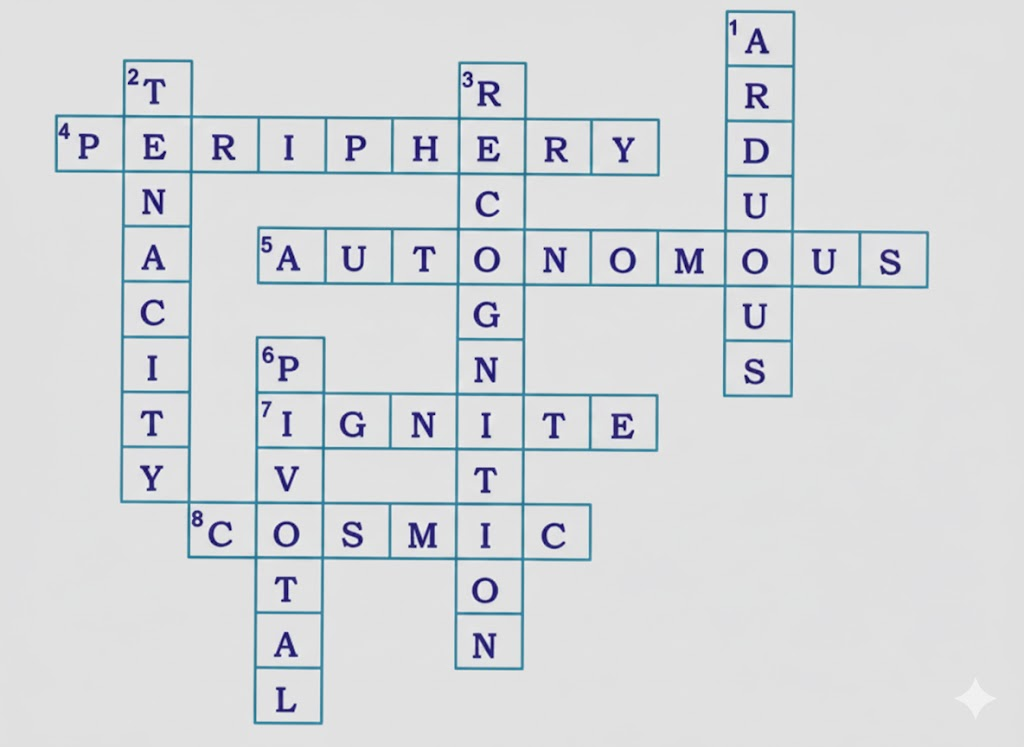
I. Complete the crossword puzzle by filling in the antonyms from the clues given below in the table. You may refer to the text.
Answer:
II. Substitute the underlined phrase in the sentences with the suitable words from the box given below.
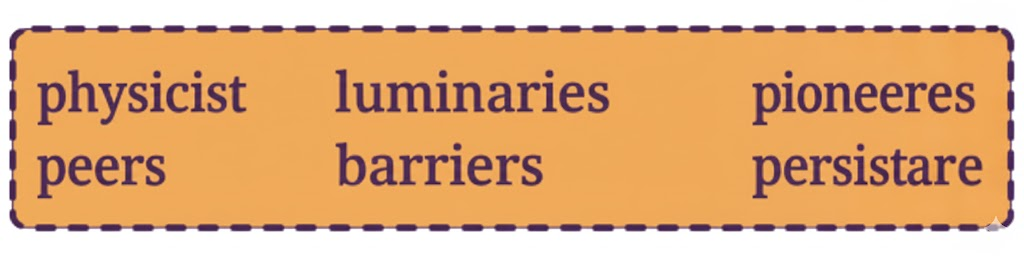
1. They are considered to be the first people to start the online markets.
2. A scientist who studies matter, energy, light, etc.
3. Most of my friends are my classmates and are my age.
4. We first welcomed all the famous and important people in folk song for the award ceremony.
5. My brother finally succeeded in his business because of his continuous efforts and determination.
6. We should remove all the things that block our way in achieving success
Answer:
1. Pioneers
2. Physicist
3. Peers
4. Luminaries
5. Persistence
6. Barriers
III. The words ‘professorship’, ‘mentorship’, and ‘leadership’ are used in the text. These words are made by adding the suffix ‘-ship’ to the words ‘professor’, ‘mentor’ and ‘leader’. Similarly, we can make words by adding -ment and -hood to certain words.
Now, make words by adding suitable suffixes -ship, -ment, and -hood to the words given below.
One example has been done for you.
achieve + ment = achievement
1. member + _______________ = _________________
2. govern + _______________ = _________________
3. partner + _______________ = _________________
4. child + _______________ = _________________
5. citizen + _______________ = _________________
6. entertain + _______________ = _________________
7. brother + _______________ = _________________
8. agree + _______________ = _________________
Answer:
1. member + ship = membership
2. govern + ment = government
3. partner + ship = partnership
4. child + hood = childhood
5. citizen + ship = citizenship
6. entertain + ment = entertainment
7. brother + hood = brotherhood
8. agree + ment = agreement
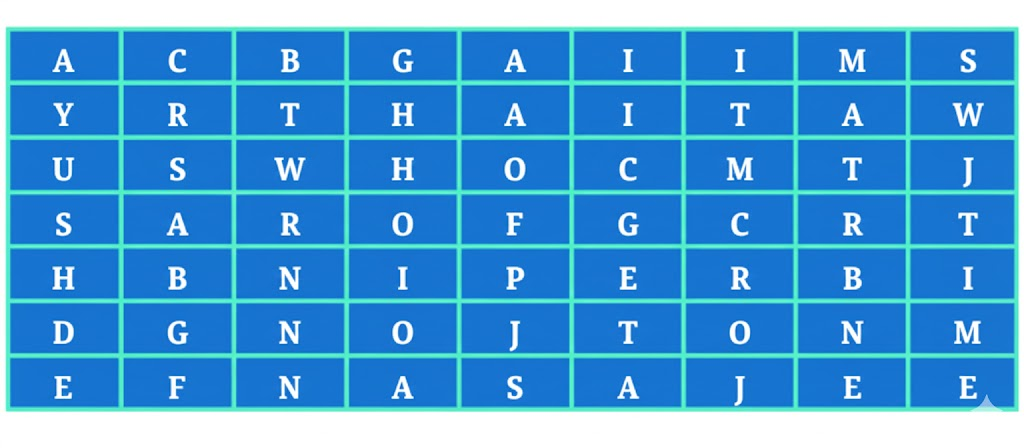
IV. The abbreviations—ISRO and STEM— used in the text are called acronyms because they are read or pronounced as full words.
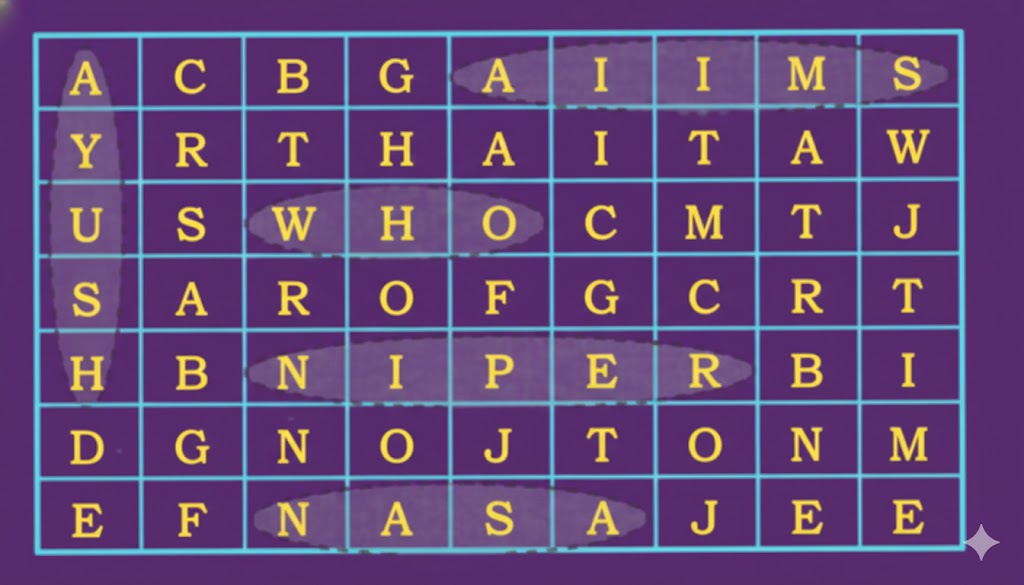
The grid given below has acronyms for the following. Circle the acronyms in the grid.
1. National Aeronautics and Space Administration
2. All India Institute of Medical Sciences
3. Ayurveda, Yoga and Naturopathy, Unani, Siddha, and Homoeopathy
4. National Institute of Pharmaceutical Education and Research
5. World Health Organization
Clipping
The short form of laboratory is lab. In making this short form, the front part of the word is retained and the end part is removed or clipped.
Clipping is a method of making words from larger words in English. There are three clipping methods.
1. Back clipping: a word is made by removing the end part of a word and retaining the front part (exam—examination,
ad—advertisement, gas—gasoline, memo—memorandum, gym—gymnasium, photo—photograph, etc.).
2. Front clipping: a word is made by removing the front part of a word and retaining the end part (phone—telephone,net—internet, bike—motorbike, net—internet, etc.).
3. Middle clipping: a word is made by removing the front and the end parts of the word and retaining the middle part (flu—influenza, fridge—refrigerator, etc.).
Answer:
V. Read the following sentence from the text and the table that follows. …, the foundation was laid by early pioneers like Bibha Chowdhuri…
Here the verb is expressed in passive form.
Verbs can be expressed in either active voice or passive voice.
When the subject performs the action, the sentence is said to be in active voice. On the other hand, when the subject receives the action, the sentence is in passive voice.
Generally, sentences written in active voice are considered effective.
However, passive voice is used when the
action is more important than the doer,
A cure for the disease was discovered.
(The focus is on the discovery, not on who discovered it.)
doer of the action (agent) is obvious,
The national anthem is sung at the beginning of the event.
(It is clear that people sing it, so mentioning the doer is unnecessary.)
doer of the action is unknown.
The car was stolen last night.
(The identity of the thief is unknown.)
Now, complete the following news report with the passive form of verbs given in the box below. (Remember that the verb must agree with the subject.)
Last year, significant advancements in medical science 1. __________ in leading medical journals when a new vaccine for malaria 2. __________. The vaccine 3. __________ through several clinical trials and results 4. _________ in those journals. During the trials, blood samples 5. __________ regularly from participants to monitor their immune response. The amount of antibodies produced 6. __________ carefully to assess the effectiveness of the vaccine.
Answer:
1. were published
2. was discovered
3. was tested
4. were recorded
5. were taken
6. was measured
VI. Read the following report of an experi¬ment. Rewrite the report using passive verbs wherever necessary.
I conducted an experiment to investigate the effects of light on plant growth. I placed various plants under different light conditions and measured their growth over several weeks. I recorded data daily to track the height of each plant. At the end of the experiment, I analysed the results and found that plants exposed to natural light grew significantly taller than those under artificial light. I concluded that sunlight plays a crucial role in plant development. I presented my findings to the class, highlighting the importance of light in enhancing photosynthesis and overall plant health.
You may begin like this.
An experiment was conducted…
Answer:
I conducted an experiment to study how light affects plant growth. I placed different plants under various light conditions and measured their growth over several weeks. I recorded the height of each plant every day.
At the end of the experiment, I analysed the results and found that the plants kept in natural light grew much taller than those under artificial light. From this, I concluded that sunlight plays an important role in plant development.
I presented my findings to the class, explaining how light enhances photosynthesis and improves overall plant health.
VII. Read the instructions given in the box on landing of Chandrayaan. Complete the passage by choosing the correct answer from the options given.
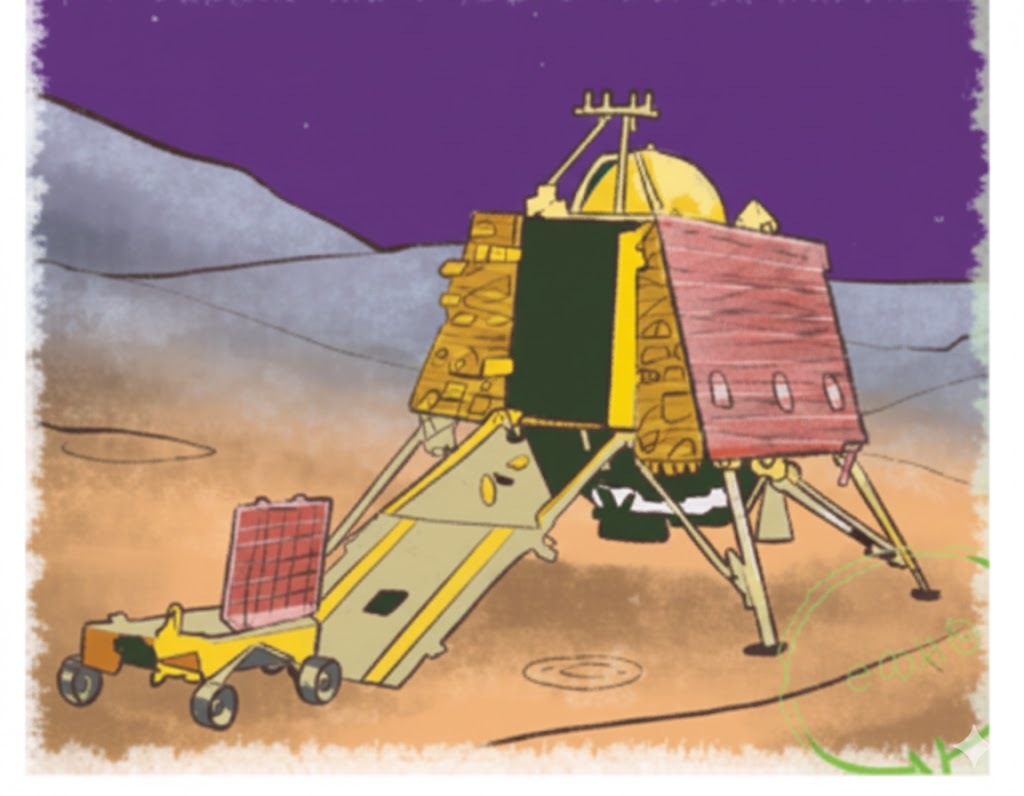
Launch the spacecraft towards the Moon from Earth.
Position the spacecraft to enter the Moon’s orbit.
Adjust the spacecraft’s path for landing.
Slow down the spacecraft as it nears the Moon’s surface.
Release the rover to explore the surface and collect valuable data
Chandrayaan’s landing mission involves several key steps. First, the spacecraft 1.________ towards the Moon from the Earth. Then, it 2. ________ to enter the Moon’s orbit. After reaching the Moon’s orbit, the spacecraft’s path 3. ________ for landing. Next, the spacecraft 4. ________ as it nears the Moon’s surface. Finally, the rover 5.________ to explore the surface and collect valuable data.
(i) A. launched
B. were launched
C. was launched
D. is launched
Answer:
C. was launched
(ii) A. position
B. was positioned
C. is positioned
D. has positioned
Answer:
B. was positioned
(iii) A. adjusted
B. was adjusted
C. is adjusted
D. were adjusted
Answer:
B. was adjusted
(iv) A. slowed down
B. was slowed down
C. is slowed down
D. were slowed down
Answer:
B. was slowed down
(v) A. is released
B. has released
C. were released
D. was released
Answer:
D. was released
Bibha Chowdhuri: The Beam of Light that Lit the Path for Women in Indian Science Question Answer Class 8 – Let us listen (Page 244)
I. You will listen to a podcast about Artificial Intelligence. As you listen, answer the following questions by selecting the correct options. Refer to the NCERT Textbook Page 251 for transcript.
1. What is one of the key benefits of AI in the healthcare sector?
(i) Helps doctors communicate faster with patients.
(ii) Provides personalised treatments and faster diagnoses.
(iii) Focuses on cosmetic surgeries to improve appearance.
Answer:
(ii) Provides personalised treatments and faster diagnoses
2. How did AI play a crucial role during the global pandemic?
(i) AI robots monitored patient behaviour in hospitals.
(ii) AI assisted in speeding up the discovery of new medicines.
(iii) AI developed different types of vaccines by itself.
Answer:
(ii) AI assisted in speeding up the discovery of new medicines.
3. What example was given regarding AI’s role in renewable energy?
(i) AI is optimising the placement of wind turbines and solar panels in cities.
(ii) AI is promoting alternative energy from wind turbines and solar panels.
(iii) AI is improving the performance of wind turbines and solar panels.
Answer:
(iii) AI is improving the performance of wind turbines and solar panels.
4. What does AI offer to teachers in the field of education?
(i) Helps teachers assign grades more quickly.
(ii) Allows teachers to communicate better with students.
(iii) Helps teachers analyse student performance.
Answer:
(iii) Helps teachers analyse student performance.
5. What is one of the user-friendly features that AI is enhancing for people with disabilities?
(i) Helps them find better jobs in the mainstream.
(ii) Improves speech recognition and voice command technologies.
(iii) Trains individuals to interact with robots.
Answer:
(ii) Improves speech recognition and voice command technologies.
Class 8 English Chapter 15 Question Answer – Let us speak
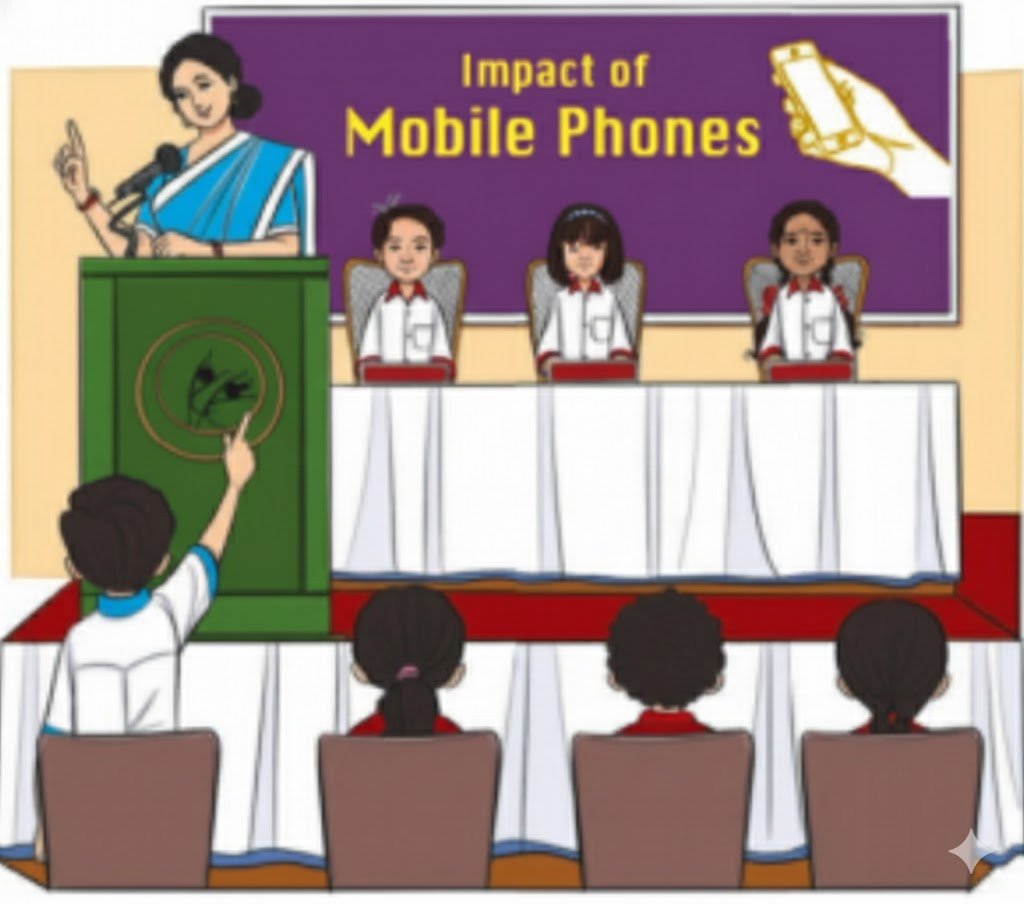
I. Form a group of five. Conduct a panel discussion on the topic, ‘Evaluating the Impact of Mobile Phones—Beneficial or Harmful’. Each student will take on one of the following roles.
Moderator (initiates and directs the flow of the discussion inviting the speakers to share their views on the subject; at the end sums up the points of discussion and thanks the members of the group)
Principal (opposed to—focus on discipline in school)
Teacher (in favour of—partially in favour, educational use with limitations)
Parent (opposed to—concerned about health and social effects on children)
Student (in favour of—highlighting the benefits like connectivity and learning)
You may use the cues given below and add your own ideas when speaking.
Principal
As a Principal, I strongly believe mobile phones are largely disruptive because…
Teacher
From an educator’s perspective, I think mobile phones can be valuable but…
Parent
As a parent, I’m concerned that mobile phones pose certain risks to children’s health and social development…
Student
As a student, I feel mobile phones are essential because…
Answer:
Panel Discussion: “Evaluating the Impact of Mobile Phones—Beneficial or Harmful?”
1. Moderator:
Good morning, everyone.
Welcome to today’s panel discussion on the topic “Evaluating the Impact of Mobile Phones—Beneficial or Harmful?”
Joining us today are a Principal, a Teacher, a Parent, and a Student, each sharing their views on this topic. Let us begin with the Principal.
2. Principal (Opposed to mobile phones):
As a Principal, I firmly believe that mobile phones are mostly disruptive in schools. They distract students, lower their concentration, and affect discipline. I have observed many students misusing phones for games and social media. In my view, mobile phones should not be allowed on school premises.
3. Teacher (Partially in favour):
From a teacher’s point of view, I can see both advantages and disadvantages. Mobile phones can support learning through educational apps, online research, and quick communication. However, students must be guided to use them responsibly. I support their use only under supervision and within strict limits.
4. Parent (Opposed to mobile phones):
As a parent, I worry about the health and social effects of mobile phones. Children spend excessive time on screens, which causes eye strain, reduces physical activity, and limits real-world interactions. It is becoming increasingly difficult to encourage healthier habits.
5. Student (In favour of mobile phones):
As a student, I feel that mobile phones are very helpful tools for learning and staying connected. We use them for online classes, accessing study materials, and clearing doubts through educational platforms. They also help us stay in touch with our family and friends. What matters is using them wisely.
Moderator (Conclusion):
Thank you all for sharing your valuable opinions. Today’s discussion shows that mobile phones can be both beneficial and harmful, depending on how they are used. With responsible usage, proper guidelines, and awareness, we can benefit from this technology while avoiding its negative effects.
Thank you for being part of this insightful session!
NCERT Class 8 English Poorvi Chapter 15 Question Answer – Let us write
I. Your school recently hosted the Zonal Science Exhibition, in which teams of students from 25 schools participated enthusiastically. As the student editor, write a report on the exhibition to be published in your school magazine. Use the cues given below with your own ideas to compose this report.
Who was the organiser and who hosted the exhibition?
When (date and time) and where was it held?
Why was it held?
Who participated?
Who was the Chief Guest?
What were the competitions held? For example: Science Quiz, Science Models, etc.
What were the topics of models exhibited? Give details.
Which team got the trophy for best exhibit?
What were the observations of the Chief Guest and other visitors?
Points to remember:
1. Write the report in past tense, passive voice, and third person.
2. Follow proper format with a headline, reporter’s name, and three paragraphs.
Answer:
Young Innovators Shine at the Zonal Science Exhibition
By: Aarav Mehta, Student Editor
The Zonal Science Exhibition 2025 was held successfully at Green Valley Public School on 10 August 2025 in the school auditorium. The event was organised by the Science Department in collaboration with the District Education Office. The main aim of the exhibition was to encourage scientific thinking, creativity, and innovation among students.
Participation and Events
A total of 25 schools from the zone participated enthusiastically. The exhibition was inaugurated by the Chief Guest, Dr. Anjali Rao, a distinguished scientist from the Indian Institute of Science.
The programme included several competitions such as the Science Quiz, Model Display, and Poster Making Contest.
Students showcased models on topics like Renewable Energy, Space Technology, Water Conservation, and Artificial Intelligence. Among all the entries, the model titled “Smart Irrigation System” by Springdale Public School was awarded the Best Exhibit Trophy for its innovation and practical usefulness.
Observations and Conclusion
The Chief Guest praised the students for their creativity and scientific spirit. Visitors were amazed by the students’ research, presentation, and problem-solving skills. The exhibition successfully spread awareness about scientific learning and inspired students to think creatively and innovate.
The event concluded with a vote of thanks delivered by the school Principal, followed by the distribution of certificates and mementos to all participants.
Class 8th English Chapter 15 Bibha Chowdhuri: The Beam of Light that Lit the Path for Women in Indian Science Question Answer – Let us explore (Pages 247-248)
I. In recent times, Augmented Reality and Virtual Reality are changing the way students learn. Let us know more about them.
Augmented reality (AR) enhances a person’s environment by adding digital elements to what can be seen in real time, usually through a smartphone camera.
Virtual reality (VR) offers a fully immersive experience, replacing the real world with a simulated one.
Through AR and VR, the students can see and interact with things that they could not interact with in real life. This enables younger students to understand difficult ideas easily.
To keep up with the times, NCERT has developed the e-Pathshala AR (Augmented Reality) App under the aegis of MHRD, Government of India.
This App aims to enable students to go beyond textbooks and four walls of the classrooms and learn concepts by directly experimenting rather than only through reading and memorisation.
This revolutionary effort will change most students from passive listeners to active learners.
This effort is in line with the Prime Minister’s Digital India vision to empower varied sectors using technology and addressing the triple need of skill, scale, and speed.
Gear up for the new age education!
https://ciet.ncert.gov.in/ar-vr
II. The Government of India has come out with a new set of National Awards in the field of Science, Technology, and Innovation known as ‘Rashtriya Vigyan Puraskar’.
The objective of the Rashtriya Vigyan Puraskar (RVP) is to recognise the notable and inspiring contribution made by the scientists, technologists, and innovators individually or in teams in various fields of science, technology, and technology-led innovation.
1. Vigyan Ratna (VR) award will recognise lifetime achievements and contributions made in any field of science and technology.
2. Vigyan Shri (VS) award will recognise distinguished contributions in any field of science and technology.
3. Vigyan Yuva-Shanti Swarup Bhatnagar (VY-SSB) award will recognise and encourage young scientists up to the age of 45 years, who have made an exceptional contribution in any field of science and technology.
4. Vigyan Team (VT) award to be given to a team comprising three or more scientists/researchers/innovators, who have made an exceptional contribution working in a team in any field of science and technology.
https://pib.gov.in/PressReleaseIframePage.aspx?PRID=1959262
III. A glimpse of women pioneers from different fields.
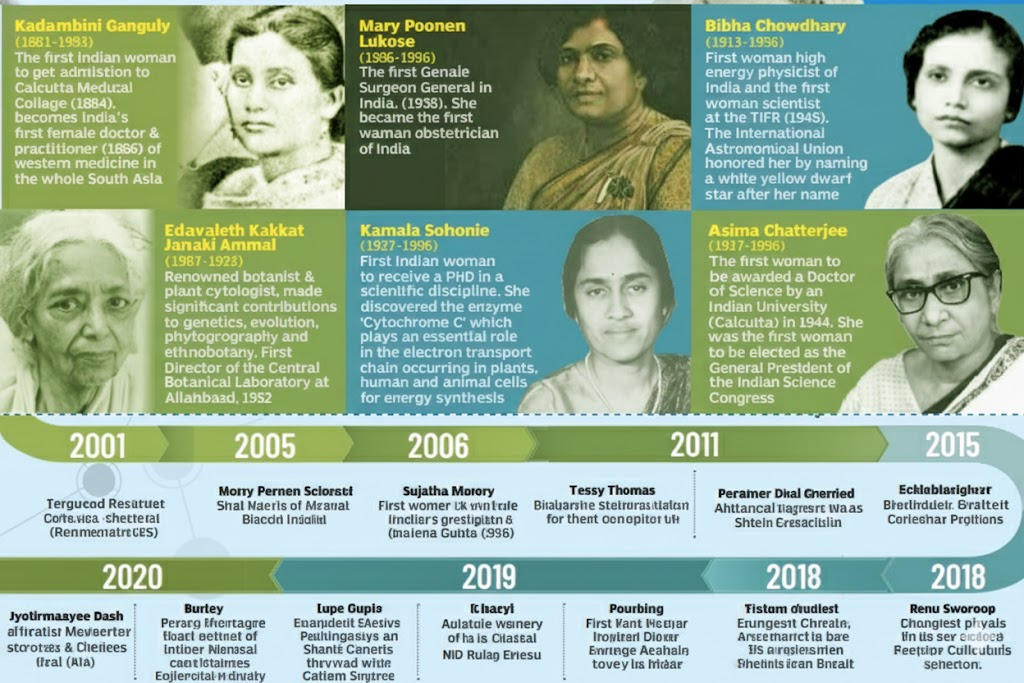
Source: https://www.indiascienceandtechnology.gov.in/sites/all/themes/
vigyan/images/Women’s_Scientist_Brochure_Low_Res.pdf
Bibha Chowdhuri: The Beam Of Light That Lit The Path For Women In Indian Science – Key Concepts
Learning about Bibha Chowdhuri from NCERT Solutions Class 8 English Poorvi Chapter 15 empowers students to appreciate the dedication and achievements of India’s women scientists. This chapter encourages curiosity and shows how persistence can break barriers in science.
Reviewing the 2026-27 NCERT exercises for this chapter helps build strong comprehension and vocabulary. Focus on understanding each scientist’s journey, and use examples from the text for effective answers in your exams.
Consistent practice of chapter-wise solutions makes you exam-ready. Highlight key events, contributions, and scientific terms to improve recall and achieve higher marks in your Class 8 English exams.
FAQs on NCERT Solutions For Class 8 English Chapter 15 Bibha Chowdhuri - 2026-27 Free PDF Download (Login Required)
1. What are NCERT Solutions for Class 8 English Poorvi Chapter 15 Bibha Chowdhuri The Beam Of Light That Lit The Path For Women In Indian Science?
NCERT Solutions for Class 8 English Poorvi Chapter 15 provide detailed, step-by-step answers for all textbook questions on Bibha Chowdhuri, ideal for CBSE 2026–27 exam preparation.
- Covers intext, back exercise, and exemplar questions
- Includes key definitions, important events, and explanations
- Offers diagrams, value points, summary, and exam tips
- Available in an easy-to-download PDF format
2. How to write stepwise NCERT answers for full marks in Class 8 English Poorvi Chapter 15?
To score full marks, write NCERT answers in a clear, stepwise format covering all parts of the question:
- Begin with a direct answer using key terms from the chapter such as Bibha Chowdhuri, women in Indian science
- Structure long answers with an introduction, body, and conclusion
- Include definitions or diagrams wherever the question demands
- Highlight CBSE keywords for better scoring
3. Which questions are likely to appear from Class 8 English Poorvi Chapter 15 in school exams?
Questions commonly asked from Chapter 15 include:
- Short answers on Bibha Chowdhuri’s achievements
- Long answers about her contribution to Indian science
- MCQs on chapter events and names
- Definitions or significance of Bibha Chowdhuri’s discoveries
4. Are diagrams or definitions mandatory in Class 8 English Poorvi Chapter 15 answers?
Diagrams or definitions are required when specifically mentioned in the question or marking scheme:
- Include neat diagrams if the question asks for illustration
- Definitions should be exam-ready if the term is important
- Marks are often awarded for correct labeling and precise definitions
5. Where can I download the NCERT Solutions for Class 8 English Poorvi Chapter 15 PDF?
You can download the Class 8 English Poorvi Chapter 15 solutions PDF from educational websites that provide free CBSE resources.
- Look for a one-click PDF download button
- Ensure the file matches the 2026–27 syllabus
- Offline PDFs help in easy revision and last-minute prep
6. What is the summary of Bibha Chowdhuri The Beam Of Light That Lit The Path For Women In Indian Science?
The chapter highlights Bibha Chowdhuri as a scientist who broke barriers for women in science in India.
- Details her struggles and major scientific contributions
- Explains how she inspired future generations of women scientists
- Focuses on her research work with cosmic rays and legacy
7. How do NCERT Solutions for Class 8 English Poorvi Chapter 15 help in exam preparation?
These solutions improve exam readiness by:
- Providing CBSE-conforming, stepwise answers to all exercise questions
- Boosting understanding of key topics and exam keywords
- Supplying quick revision notes for last-minute prep
- Helping avoid common mistakes through expert tips
8. What are the important topics from NCERT Class 8 English Poorvi Chapter 15 for CBSE board exams?
Focus on these high-weightage topics for Chapter 15:
- Bibha Chowdhuri’s scientific career and achievements
- Role in empowering women in Indian science
- Her research on cosmic rays
- Values and lessons learned from her life
9. How to structure long answers for NCERT Class 8 English Poorvi Chapter 15 to score more?
For better marks, structure long answers as follows:
- Start with a brief introduction stating the main theme
- Add well-organised paragraphs with supporting details and examples
- Use bullets or numbering where needed
- End with a concise conclusion or personal insight
10. Are NCERT Solutions enough for Class 8 English exams?
NCERT Solutions are essential and often sufficient for scoring high in Class 8 English exams:
- They cover all important textbook and back exercise questions
- Answer format matches CBSE marking schemes
- For extra practice, use sample papers and MCQs for revision
11. How to learn definitions and diagram/map labelling for Class 8 English Poorvi Chapter 15?
To master definitions and diagrams:
- Memorise exam-ready definitions from NCERT solutions
- Practice drawing and neatly labelling any required diagrams or maps
- Use marking-scheme tips for proper labeling and presentation
12. Do examiners award partial marks for correct steps even if the final answer is wrong?
Yes, CBSE examiners often award partial marks for correct steps or methods shown, even if the final answer is incorrect:
- Always write all steps clearly in your answer
- Use keywords and logical reasoning to get method marks
- This is especially useful in long or multi-step questions
