






Why Paper Bag Day Promotes Eco-Friendly Habits in Students
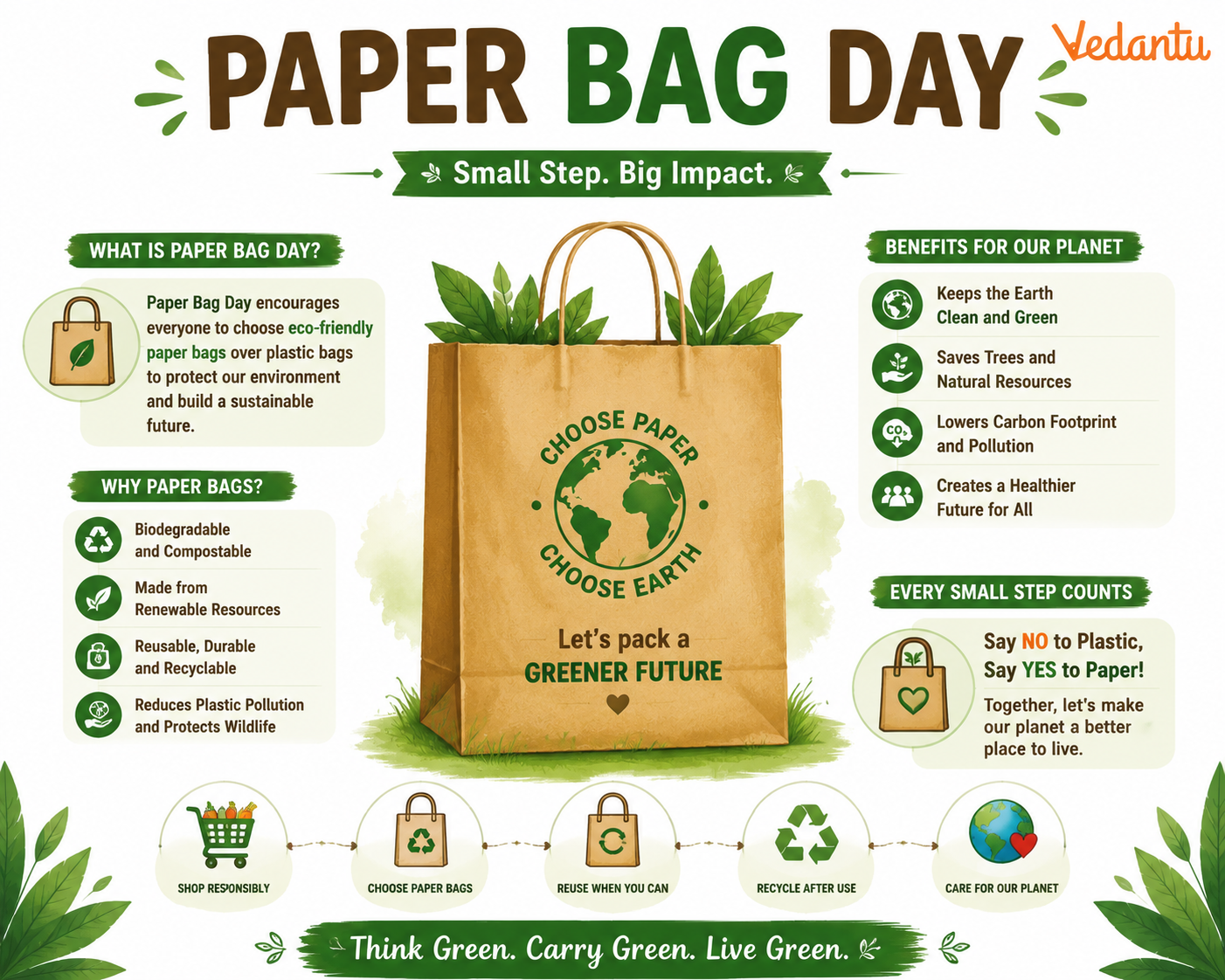
Paper Bag Day is observed every year on July 12 to spread awareness about the harmful effects of plastic bags and to promote the use of eco-friendly paper bags. This day highlights the importance of sustainable living and encourages people to switch to biodegradable alternatives. Paper Bag Day plays a significant role in environmental protection, waste reduction, and promoting responsible consumer behavior. It is widely observed by schools, environmental groups, and communities to educate people about reducing plastic pollution.
History of Paper Bag Day
Paper Bag Day is celebrated to honor the invention and development of paper bags. Francis Wolle invented the first paper bag making machine in 1852, which made mass production possible. Later, Margaret E. Knight improved the design in 1871 by creating a machine that produced flat-bottom paper bags, making them more practical and durable. The day recognizes these innovations and promotes their relevance in today’s environmentally conscious world.
Significance of Paper Bag Day
Paper Bag Day is important because it promotes environmental sustainability. Plastic bags take hundreds of years to decompose and cause severe pollution to land and water bodies. Paper bags, on the other hand, are biodegradable, recyclable, and less harmful to wildlife.
- Raises awareness about plastic pollution.
- Encourages eco-friendly alternatives.
- Promotes recycling and reuse habits.
- Supports sustainable business practices.
Why Paper Bags are Better than Plastic Bags
Paper bags offer several environmental benefits when compared to plastic bags. They decompose faster and reduce long-term pollution. Though paper production also uses resources, proper recycling and responsible usage can minimize environmental impact.
Comparison Between Paper Bags and Plastic Bags
| Feature | Paper Bags | Plastic Bags |
|---|---|---|
| Decomposition Time | Few weeks to months | Hundreds of years |
| Environmental Impact | Biodegradable and recyclable | Causes soil and water pollution |
| Reusability | Reusable and recyclable | Limited reuse and often discarded |
The comparison clearly shows that paper bags are a more sustainable option when managed properly. However, reducing overall consumption and encouraging reusable cloth bags is also essential for environmental balance.
How Paper Bag Day is Celebrated
Paper Bag Day is celebrated in various ways to spread awareness and promote sustainable practices. Educational institutions, environmental organizations, and businesses actively participate in campaigns.
- Organizing workshops on making paper bags at home.
- Conducting awareness campaigns about plastic pollution.
- Encouraging shops to shift to paper packaging.
- Promoting recycling drives in communities.
Environmental Impact of Plastic Bags
Plastic bags pose a serious threat to the environment. They clog drainage systems, contribute to flooding, harm marine life, and release toxic chemicals when burned. Microplastics formed from degraded plastic bags enter the food chain and affect both animals and humans. Paper Bag Day reminds people to adopt safer alternatives and reduce plastic dependency.
Interesting Facts About Paper Bags
- The first paper bag machine was invented in 1852 by Francis Wolle.
- Margaret E. Knight is known as the mother of the grocery bag.
- Paper bags can be recycled multiple times before the fibers weaken.
- Many countries have banned or restricted single-use plastic bags.
Conclusion
Paper Bag Day serves as a reminder of our responsibility toward the environment. By choosing paper bags over plastic, individuals can contribute to reducing pollution and protecting natural ecosystems. While paper bags are not a perfect solution, they are a step toward sustainable living. Observing Paper Bag Day encourages conscious consumer choices, recycling habits, and collective efforts to create a cleaner and greener planet.
FAQs on Paper Bag Day Celebration and Its Importance
1. What is Paper Bag Day and why is it celebrated?
Paper Bag Day is observed to promote the use of eco-friendly paper bags instead of plastic bags to protect the environment. It spreads awareness about:
- Reducing plastic pollution
- Saving wildlife and marine life
- Encouraging sustainable living
- Recycling and reuse practices
2. When is Paper Bag Day celebrated?
Paper Bag Day is celebrated on July 12 every year to encourage people to reduce plastic usage. The day focuses on:
- Promoting eco-friendly bags
- Spreading awareness in schools and communities
- Supporting environmental protection campaigns
3. What is the main message of the chapter "Paper Bag Day" in English?
The main message of the chapter "Paper Bag Day" is to teach students the importance of caring for the environment. The lesson emphasizes:
- The harmful effects of plastic pollution
- The benefits of using paper bags
- Individual responsibility toward nature
- Small actions that create big environmental change
4. Why are paper bags considered better than plastic bags?
Paper bags are considered better than plastic bags because they are environmentally friendly and biodegradable. Key advantages include:
- They decompose naturally
- They reduce land and water pollution
- They are recyclable and reusable
- They help protect animals from plastic waste
5. How does Paper Bag Day help in environmental protection?
Paper Bag Day helps in environmental protection by spreading awareness about reducing plastic use. It contributes by:
- Encouraging plastic-free habits
- Promoting recycling initiatives
- Educating students about climate change
- Supporting green campaigns
6. What activities are conducted on Paper Bag Day in schools?
Schools celebrate Paper Bag Day through awareness and creative activities. Common activities include:
- Making handmade paper bags
- Poster-making competitions
- Environmental awareness speeches
- Cleanliness and recycling drives
7. What are the environmental problems caused by plastic bags?
Plastic bags cause serious environmental problems because they are non-biodegradable and harmful to ecosystems. Major issues include:
- Soil and water pollution
- Harm to marine animals and wildlife
- Blocked drainage systems
- Increased landfill waste
8. How can individuals contribute on Paper Bag Day?
Individuals can support Paper Bag Day by adopting eco-friendly habits. They can:
- Carry reusable paper or cloth bags
- Avoid single-use plastics
- Spread awareness among friends and family
- Participate in recycling programs
9. What is the importance of eco-friendly alternatives like paper bags?
Eco-friendly alternatives like paper bags are important because they reduce environmental damage. Their significance includes:
- Lower carbon footprint
- Biodegradable and recyclable properties
- Support for green living initiatives
- Contribution to sustainable development goals
10. How does the chapter "Paper Bag Day" promote responsible citizenship?
The chapter "Paper Bag Day" promotes responsible citizenship by teaching environmental ethics and awareness. It encourages students to:
- Take responsibility for their actions
- Reduce plastic consumption
- Protect natural resources
- Support eco-friendly practices
