






Powers and Responsibilities of a District Magistrate in Indian Administration
The District Collector or District Magistrate is one of the most important administrative officers in India. The post plays a central role in district governance and acts as a link between the state government and the people at the district level. The District Collector is responsible for revenue administration, maintenance of law and order, implementation of government schemes, and overall coordination of development activities. This position is usually held by an officer of the Indian Administrative Service - IAS. Understanding the role of the District Collector or Magistrate is important for students, especially those preparing for competitive examinations.
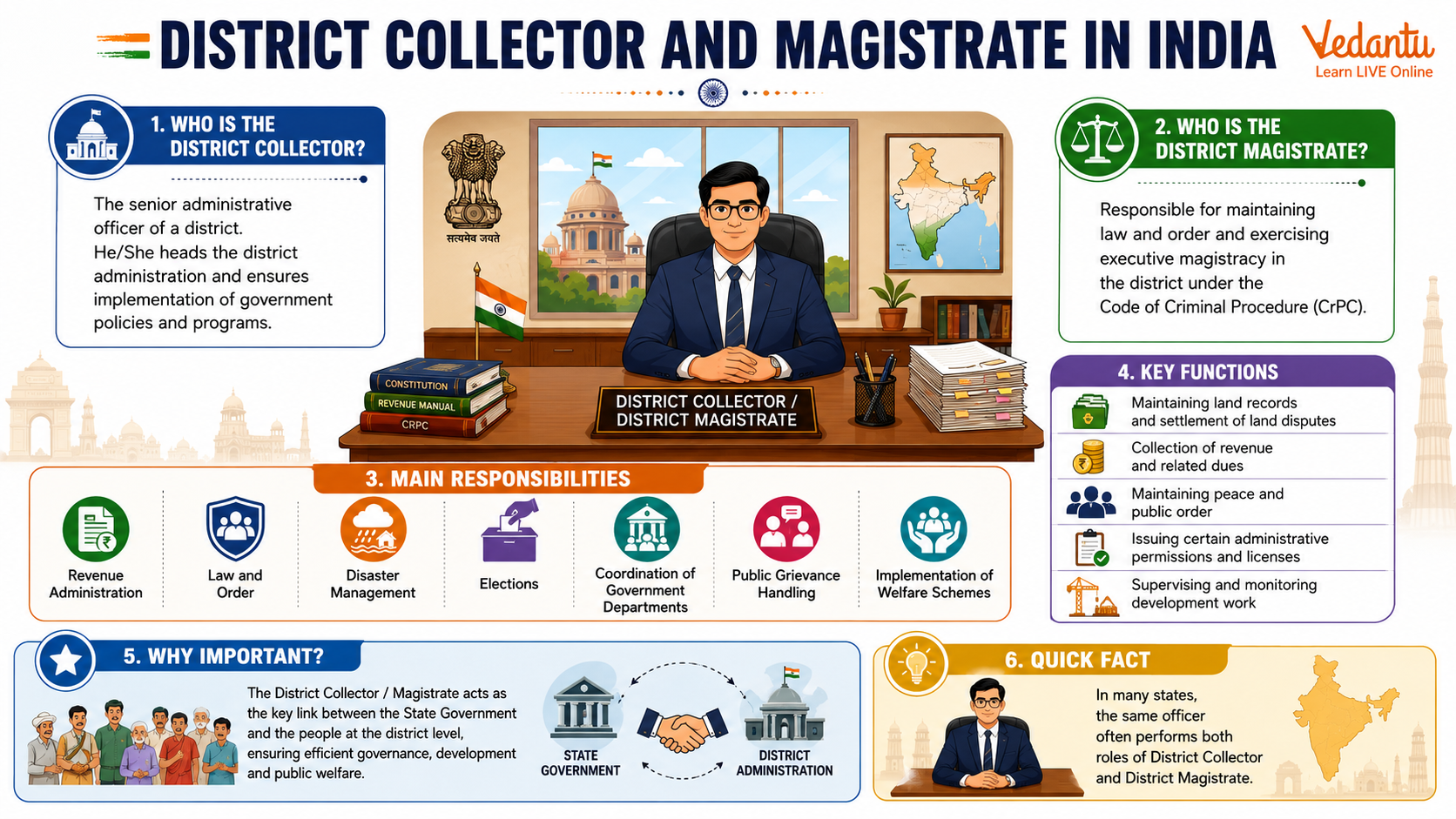
Who is a District Collector or District Magistrate?
A District Collector is the chief administrative officer of a district in India. The same officer is also called the District Magistrate when performing judicial and law and order duties. In some states, the officer is referred to as Deputy Commissioner. Though the titles may vary, the core responsibilities remain largely the same.
- Head of district administration
- Chief revenue officer of the district
- Responsible for maintaining law and order
- Coordinator of development activities
Historical Background
The post of District Collector was created during British rule in 1772 by Warren Hastings. Initially, the main function was the collection of land revenue. Over time, the role expanded to include judicial and executive responsibilities. After independence, the office continued with modifications under the Indian Constitution, and today it plays a vital role in district administration.
Appointment of District Collector
The District Collector is usually an officer of the Indian Administrative Service - IAS. The officer is appointed by the state government.
Selection Process
- Clear the Civil Services Examination conducted by the Union Public Service Commission - UPSC
- Undergo training at Lal Bahadur Shastri National Academy of Administration
- Serve in various administrative posts
- Appointed as District Collector by the state government
Powers and Functions of District Collector
1. Revenue Functions
- Collection of land revenue
- Maintenance of land records
- Supervision of subordinate revenue officers
- Relief during natural calamities
2. Law and Order Functions
- Acts as District Magistrate
- Controls and supervises the police in the district
- Imposes Section 144 of the Criminal Procedure Code when required
- Issues licenses for arms and public events
3. Executive and Development Functions
- Implements government schemes and welfare programs
- Coordinates activities of various government departments
- Conducts elections in the district
- Supervises disaster management operations
Key Responsibilities of District Collector
| Area | Role | Examples |
|---|---|---|
| Revenue | Chief Revenue Officer | Land tax collection |
| Law and Order | District Magistrate | Imposing Section 144 |
| Development | District Administrator | Implementing welfare schemes |
The District Collector performs multiple roles simultaneously. This makes the office one of the most powerful and responsible positions in the district administration system.
Importance of District Collector in India
The District Collector is considered the backbone of district administration. The officer ensures smooth functioning of government policies at the grassroots level. During emergencies such as floods, droughts, or pandemics, the District Collector plays a crucial leadership role. The position also ensures coordination between elected representatives and administrative departments.
Difference Between District Collector and District Magistrate
Although both terms refer to the same officer, the title changes according to the function being performed.
- District Collector - Refers to revenue-related functions
- District Magistrate - Refers to law and order responsibilities
Conclusion
The District Collector or District Magistrate holds a key position in the Indian administrative system. From maintaining law and order to implementing development programs, the officer ensures effective governance at the district level. The role has evolved from revenue collection during British rule to a comprehensive administrative leadership position in modern India. Knowledge about the District Collector is essential for understanding how governance functions at the district level in India.
FAQs on District Collector and Magistrate in India: Duties and Importance
1. Who is the District Collector Magistrate in India?
The District Collector Magistrate (DC/DM) is the chief administrative and executive officer of a district in India. Key roles include:
- Head of district administration
- Representative of the State Government
- In charge of law and order as District Magistrate
- Supervisor of revenue collection and land administration
2. What are the main duties of a District Collector?
The main duties of a District Collector include administration, revenue, and magisterial functions. These responsibilities involve:
- Maintaining law and order
- Collecting land revenue and taxes
- Conducting elections in the district
- Managing disaster relief and crisis management
- Implementing government schemes and welfare programs
3. How is a District Collector appointed in India?
A District Collector is appointed from officers of the Indian Administrative Service (IAS). The process includes:
- Clearing the UPSC Civil Services Examination
- Undergoing training at LBSNAA (Lal Bahadur Shastri National Academy of Administration)
- Posting by the State Government
4. What is the difference between District Collector and District Magistrate?
The terms District Collector and District Magistrate (DM) refer to the same officer but with different functions.
- Collector: Handles revenue and land administration
- District Magistrate: Maintains law and order and supervises police administration
5. What are the powers of a District Magistrate?
The District Magistrate has significant administrative and legal powers to maintain peace and order. These include:
- Imposing Section 144 of CrPC
- Supervising the district police
- Issuing licenses for arms and public events
- Handling preventive detention matters
6. What is the salary of a District Collector in India?
The salary of a District Collector (IAS Officer) is based on the 7th Pay Commission. It generally includes:
- Basic pay starting around ₹56,100 per month (entry level)
- Higher pay with seniority and promotion
- Additional perks like government accommodation, vehicle, and staff
7. Why is the District Collector called the backbone of district administration?
The District Collector is called the backbone of district administration because they coordinate all government departments at the district level. Their importance lies in:
- Implementing state and central government policies
- Supervising development programs
- Ensuring inter-departmental coordination
- Responding to emergencies and disasters
8. What qualifications are required to become a District Collector?
To become a District Collector, a candidate must qualify for the IAS through UPSC Civil Services Examination. Basic requirements include:
- A bachelor’s degree from a recognized university
- Meeting the age limit criteria set by UPSC
- Clearing Prelims, Mains, and Interview stages
9. What is the historical origin of the District Collector post?
The post of District Collector originated during the British East India Company rule in 1772 under Warren Hastings. Initially created for revenue collection, the role later expanded to include:
- Judicial functions
- Magisterial powers
- Administrative responsibilities
10. Is the District Collector the highest authority in a district?
Yes, the District Collector/District Magistrate is the highest administrative authority in a district. Their authority includes:
- Supervising all district-level government offices
- Maintaining law and order
- Overseeing revenue and development activities
