






Key Differences Between Wildlife Sanctuaries, Biosphere Reserves and National Parks in Tabular Form
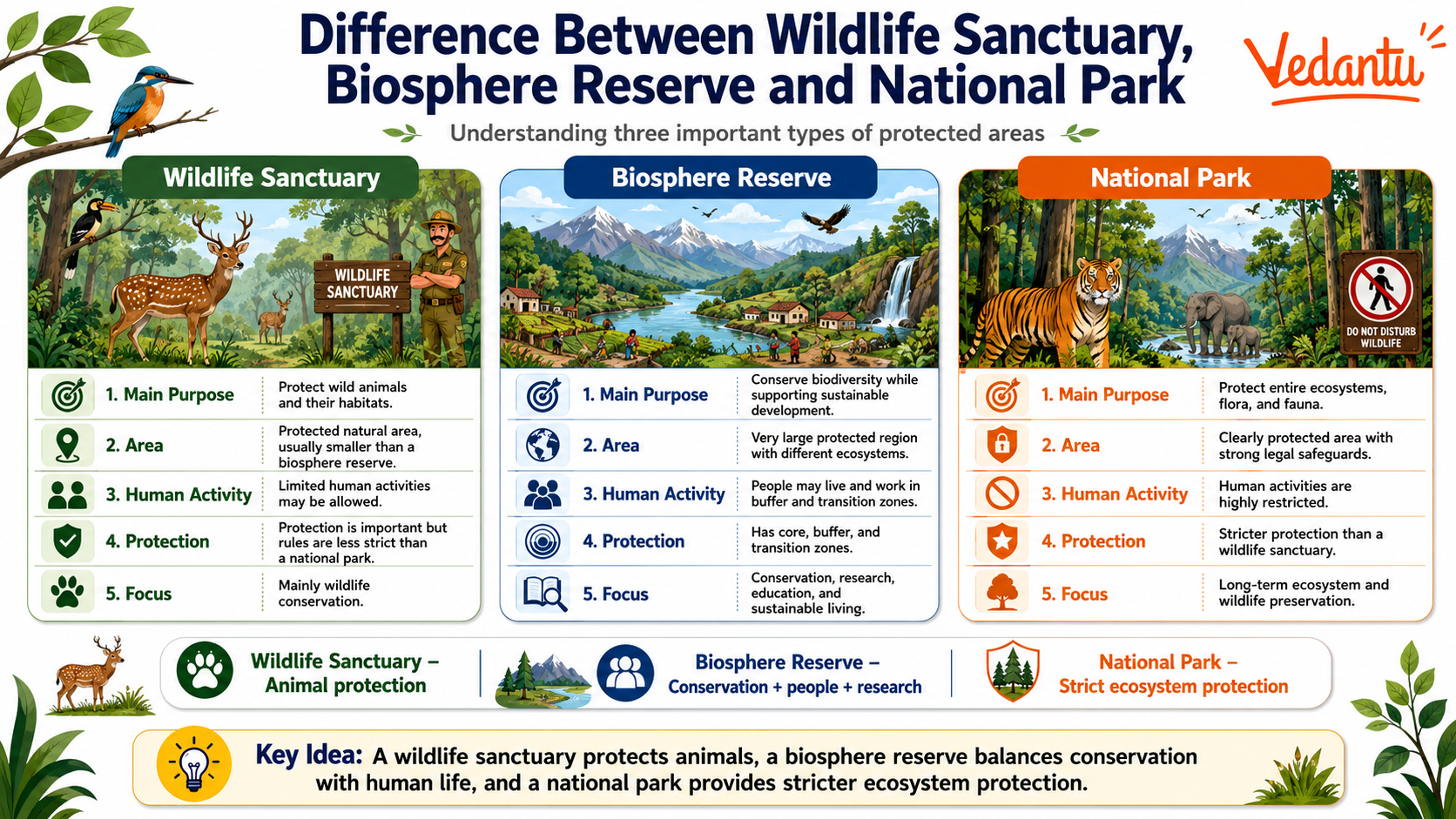
Wildlife conservation is an essential part of environmental protection and sustainable development. In India and many other countries, different types of protected areas have been created to conserve biodiversity and natural habitats. The three most important categories are Wildlife Sanctuary, National Park, and Biosphere Reserve. Although these terms are often used interchangeably, they differ in objectives, level of protection, human activities allowed, and legal status. Understanding the difference between Wildlife Sanctuary, Biosphere Reserves and National Park is important for school exams, competitive exams like UPSC and NEET, and general awareness.
What is a Wildlife Sanctuary?
A Wildlife Sanctuary is a protected area established to conserve wildlife species and their habitats. It focuses mainly on protecting animals from hunting, poaching, and habitat destruction. Human activities may be allowed to some extent, provided they do not harm wildlife.
Key Features of Wildlife Sanctuary
- Declared by the State Government under the Wildlife Protection Act, 1972.
- Focuses mainly on protection of specific animal species.
- Limited human activities like grazing or collection of forest produce may be allowed.
- Boundaries are not always clearly fixed.
- Examples - Ranganathittu Bird Sanctuary, Gir Wildlife Sanctuary.
What is a National Park?
A National Park is a strictly protected area created to conserve biodiversity, including flora, fauna, and landscapes. It offers a higher level of protection compared to a Wildlife Sanctuary. Human activities such as grazing, hunting, or cultivation are strictly prohibited.
Key Features of National Park
- Declared by the Central or State Government under the Wildlife Protection Act, 1972.
- Protects entire ecosystems including plants, animals, and landscapes.
- No human activities like grazing, hunting, or farming are allowed.
- Boundaries are clearly defined and strictly maintained.
- Examples - Jim Corbett National Park, Kaziranga National Park.
What is a Biosphere Reserve?
A Biosphere Reserve is a large protected area meant to conserve biodiversity along with promoting sustainable development. It includes terrestrial, marine, and coastal ecosystems. Unlike Wildlife Sanctuaries and National Parks, Biosphere Reserves focus on balancing conservation with human activities.
Key Features of Biosphere Reserve
- Established under UNESCO’s Man and the Biosphere Programme.
- Divided into three zones - Core zone, Buffer zone, and Transition zone.
- Core zone is strictly protected with no human activity.
- Buffer and transition zones allow limited and sustainable human activities.
- Examples - Nilgiri Biosphere Reserve, Sundarbans Biosphere Reserve.
Difference Between Wildlife Sanctuary, National Park and Biosphere Reserve
| Basis of Comparison | Wildlife Sanctuary | National Park |
|---|---|---|
| Purpose | Protection of specific wildlife species | Protection of entire ecosystem |
| Human Activities | Limited activities allowed | Strictly prohibited |
| Boundary | Not always fixed | Clearly defined and fixed |
The table above shows key differences between Wildlife Sanctuary and National Park. Biosphere Reserves are larger areas that may include one or more National Parks and Wildlife Sanctuaries within them and aim to combine conservation with sustainable development.
Zonation in Biosphere Reserve
- Core Zone - Completely protected area with no human interference.
- Buffer Zone - Surrounds the core zone and allows research and limited activities.
- Transition Zone - Outermost area where sustainable economic activities are permitted.
Importance of Protected Areas
- Conserve endangered species and biodiversity.
- Maintain ecological balance and prevent extinction.
- Support scientific research and environmental education.
- Promote eco-tourism and sustainable development.
- Help in climate regulation and conservation of natural resources.
Conclusion
Wildlife Sanctuary, National Park, and Biosphere Reserve are important categories of protected areas designed to conserve nature and biodiversity. A Wildlife Sanctuary provides protection mainly to animals with some human activity allowed. A National Park ensures stricter protection of entire ecosystems with no human interference. A Biosphere Reserve is a larger region that integrates conservation with sustainable development through zonation. Understanding these differences is essential for academic exams, competitive exams, and environmental awareness. These protected areas play a crucial role in preserving the natural heritage of our planet for future generations.
FAQs on Difference Between Wildlife Sanctuary, Biosphere Reserves and National Park Explained Clearly
1. What is the main difference between a Wildlife Sanctuary, Biosphere Reserve, and National Park?
The main difference lies in the level of protection, purpose, and human activity allowed in each protected area.
• A Wildlife Sanctuary focuses on protecting animals with limited human activities permitted.
• A National Park offers stricter protection with no human interference like grazing or private ownership.
• A Biosphere Reserve is a larger area aimed at conserving biodiversity, research, and sustainable development.
These protected areas are part of in-situ conservation methods under environmental protection laws.
2. What is a Wildlife Sanctuary?
A Wildlife Sanctuary is a protected area created to conserve wild animals and their habitats.
• Declared under the Wildlife Protection Act, 1972.
• Limited human activities like grazing or forest resource collection may be allowed.
• Boundaries can be altered by state governments.
Wildlife sanctuaries focus on animal conservation, habitat protection, and biodiversity preservation.
3. What is a National Park?
A National Park is a strictly protected area established to conserve wildlife and natural ecosystems.
• No human activities like grazing, hunting, or cultivation are allowed.
• Boundaries cannot be changed without approval of the legislature.
• Provides higher protection than a wildlife sanctuary.
Examples include Jim Corbett National Park and Kaziranga National Park, known for biodiversity conservation.
4. What is a Biosphere Reserve?
A Biosphere Reserve is a large protected area aimed at conserving biodiversity along with sustainable development.
• Recognized under UNESCO’s Man and the Biosphere (MAB) Programme.
• Divided into Core Zone, Buffer Zone, and Transition Zone.
• Promotes research, conservation, and sustainable living.
It integrates ecosystem protection, human participation, and environmental research.
5. Which protected area has the highest level of protection?
A National Park provides the highest level of legal protection among the three.
• No grazing or private land ownership allowed.
• Strict government control and monitoring.
• Focuses entirely on ecosystem preservation.
In comparison, Wildlife Sanctuaries allow limited activities, while Biosphere Reserves balance conservation with sustainable use.
6. Can human activities take place in Wildlife Sanctuaries, National Parks, and Biosphere Reserves?
Yes, but the level of human activity varies in each protected area.
• Wildlife Sanctuary: Limited activities like grazing may be permitted.
• National Park: No human activities or private ownership allowed.
• Biosphere Reserve: Sustainable human activities allowed in transition zones.
This difference is important for UPSC, SSC, and other competitive exams.
7. How are Biosphere Reserves structured?
A Biosphere Reserve is divided into three interrelated zones for effective management.
• Core Zone: Strictly protected for wildlife conservation.
• Buffer Zone: Limited research and tourism allowed.
• Transition Zone: Human settlements and sustainable development permitted.
This zonation supports biodiversity conservation and ecological balance.
8. Who declares Wildlife Sanctuaries, National Parks, and Biosphere Reserves in India?
Different authorities declare these protected areas under environmental laws.
• Wildlife Sanctuaries: Declared by State Governments.
• National Parks: Declared by State Governments with stricter legal procedures.
• Biosphere Reserves: Declared by the Government of India; some recognized by UNESCO.
All are governed under the Wildlife Protection Act, 1972 and environmental policies.
9. Why are Wildlife Sanctuaries, National Parks, and Biosphere Reserves important?
These protected areas are essential for conserving flora, fauna, and natural ecosystems.
• Prevent extinction of endangered species.
• Maintain ecological balance and biodiversity.
• Support research, education, and eco-tourism.
They play a major role in environmental conservation, climate regulation, and sustainable development.
10. What are some examples of Wildlife Sanctuaries, National Parks, and Biosphere Reserves in India?
India has numerous protected areas under each category.
• Wildlife Sanctuary: Ranganathittu Bird Sanctuary.
• National Park: Ranthambore National Park.
• Biosphere Reserve: Nilgiri Biosphere Reserve.
These examples are frequently asked in General Knowledge (GK) and competitive exams.
