






Key Themes and Meaning of International Defence Agreements in the Lesson
Defence deals refer to agreements between countries or between a government and defense manufacturers for the purchase, sale, development, or transfer of military equipment, technology, and services. These deals play a crucial role in strengthening national security, modernizing armed forces, and building strategic partnerships. In recent years, defence deals have gained importance due to changing global security dynamics, technological advancements, and geopolitical tensions. Understanding defence deals is essential for students preparing for competitive exams and for anyone interested in international relations and national security.
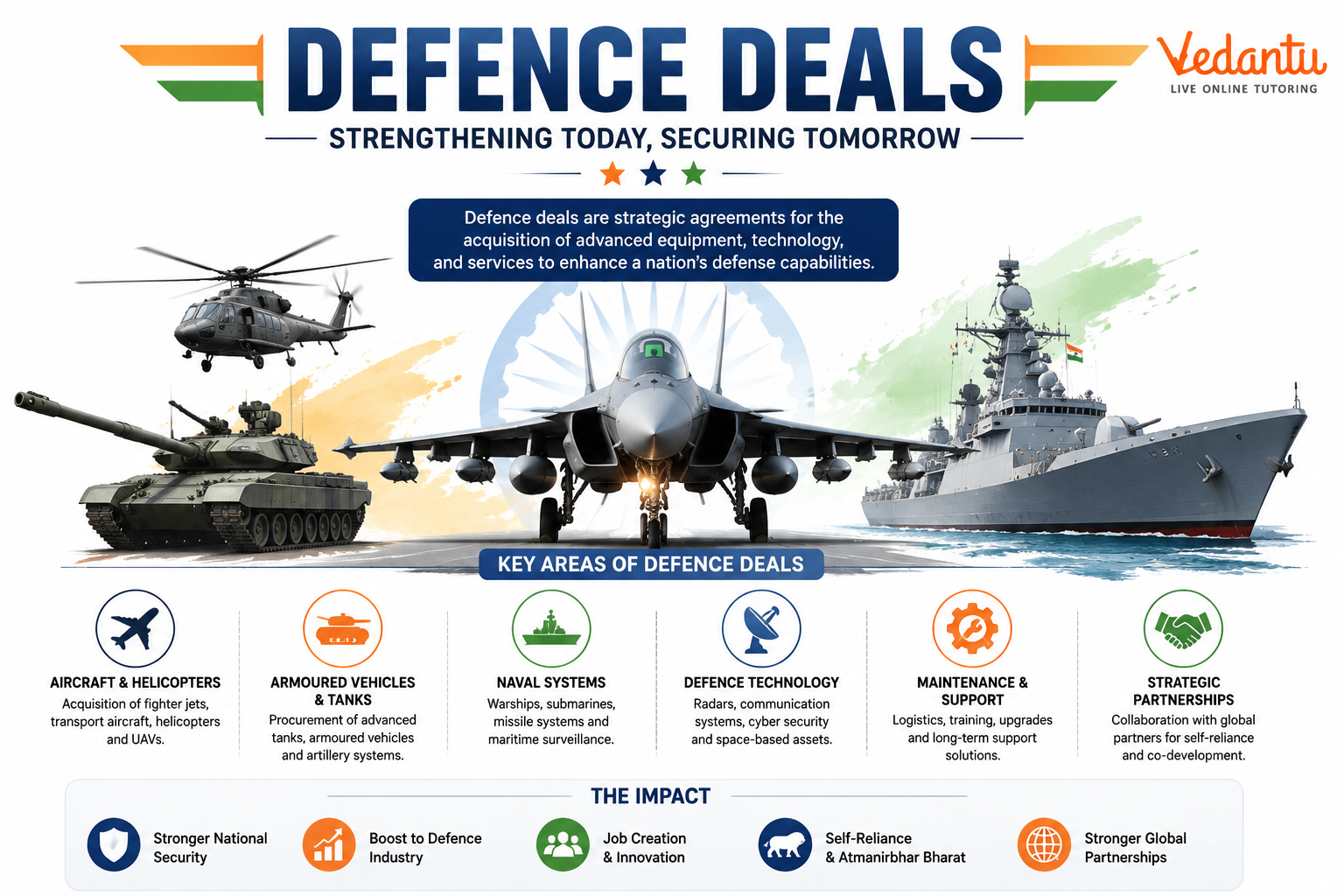
What are Defence Deals?
Defence deals are formal contracts or agreements signed by governments to procure weapons, aircraft, naval vessels, missiles, communication systems, and other military equipment. These deals may also include technology transfer, joint production, research collaboration, training, and maintenance support.
- Procurement of fighter jets, submarines, tanks, and artillery guns
- Purchase of surveillance and radar systems
- Joint development of missiles and defense technologies
- Technology transfer and local manufacturing agreements
Objectives of Defence Deals
Countries enter into defence deals to enhance their military capabilities and ensure preparedness against external and internal threats. These deals also contribute to economic growth and diplomatic relations.
- Modernization of armed forces with advanced technology
- Strengthening national security and deterrence capability
- Reducing dependency on outdated equipment
- Promoting domestic defense manufacturing under self reliance initiatives
- Enhancing strategic and diplomatic partnerships
Types of Defence Deals
1. Government to Government Deals
These agreements are signed directly between two governments. They are considered more transparent and secure, as they reduce the involvement of middlemen.
2. Direct Commercial Sales
In this type, a country purchases defense equipment directly from a foreign company, subject to government approvals.
3. Joint Development and Production
Two or more countries collaborate to design, develop, and manufacture defense systems together. This helps in technology sharing and cost reduction.
4. Offset Agreements
Offset clauses require foreign suppliers to invest a portion of the contract value in the purchasing country, boosting local industry and employment.
Major Components of a Defence Deal
| Component | Description | Importance |
|---|---|---|
| Equipment Supply | Delivery of weapons or systems | Enhances combat capability |
| Technology Transfer | Sharing of technical knowledge | Builds domestic capacity |
| Maintenance and Training | After sales service and skill development | Ensures long term operational readiness |
Each defence deal usually includes multiple components to ensure smooth integration of new systems into the armed forces. Maintenance and training are critical for effective use of advanced military technology.
Defence Deals and Geopolitics
Defence deals often reflect strategic alignments and geopolitical priorities. When countries sign major arms agreements, it strengthens political trust and military cooperation. Such deals can also influence regional power balance and act as a deterrent against adversaries.
- Strengthening alliances and partnerships
- Countering regional security threats
- Increasing diplomatic leverage
- Enhancing defense exports and global influence
Challenges in Defence Deals
Despite their importance, defence deals are often complex and may face several challenges during negotiation and execution.
- High financial cost and budget constraints
- Delays in delivery and implementation
- Allegations of corruption or lack of transparency
- Dependence on foreign suppliers for spare parts
Importance of Defence Deals for National Development
Defence deals contribute not only to security but also to economic and technological growth. Through technology transfer and local production, countries can develop indigenous defense industries. This generates employment, promotes research and development, and strengthens the overall industrial base.
A strong defense sector also enhances a nation's global standing and bargaining power in international forums.
Preparation Tips for Competitive Exams
For General Knowledge and current affairs preparation, defence deals are frequently asked in exams. Students should focus on recent agreements, partner countries, equipment involved, and their strategic significance.
- Keep track of major recent defence agreements in the news
- Understand the type of equipment and its purpose
- Study the strategic importance of the deal
- Revise key terms such as technology transfer and offset policy
Conclusion
Defence deals are vital instruments of national security, technological advancement, and diplomatic strategy. They shape military strength and influence global power dynamics. By understanding the structure, objectives, and impact of defence deals, students and readers can gain deeper insight into how nations safeguard their interests and build strategic partnerships. For competitive exams, staying updated on recent defence agreements and their implications is essential for scoring well in General Knowledge sections.
FAQs on Defence Deals Chapter Summary and Explanation for Students
1. What are Defence Deals?
Defence Deals are agreements between countries or defense companies for the purchase, sale, or development of military equipment and technology.
They usually include:
• Procurement of fighter jets, submarines, missiles, tanks, and drones
• Transfer of defence technology and joint production
• Strategic partnerships and military cooperation
These agreements strengthen national security, military modernization, and geopolitical relations, and are often discussed in competitive exams under current affairs and international relations.
2. Why are Defence Deals important for a country?
Defence Deals are crucial for strengthening national security and military preparedness.
They help in:
• Modernizing the armed forces with advanced weapons systems
• Enhancing border security and combat readiness
• Boosting indigenous defence manufacturing under programs like Make in India
• Improving diplomatic ties through strategic alliances
Such deals directly impact a nation’s defence capability, deterrence power, and global standing.
3. What is the meaning of Defence Procurement?
Defence Procurement refers to the process by which a government acquires military equipment and services for its armed forces.
The process includes:
• Identifying operational requirements
• Inviting global or domestic tenders
• Technical and financial evaluation
• Signing contracts and delivery
In India, procurement is guided by the Defence Acquisition Procedure (DAP), ensuring transparency and accountability in defence contracts.
4. What is the Rafale Defence Deal?
The Rafale Defence Deal is an agreement between India and France for the purchase of 36 Rafale fighter jets.
Key highlights:
• Signed in 2016
• Deal value approximately €7.87 billion
• Includes advanced weapons like METEOR and SCALP missiles
• Enhances the strength of the Indian Air Force (IAF)
This deal is frequently asked in GK and current affairs exams due to its strategic and political significance.
5. What is meant by Defence Technology Transfer?
Defence Technology Transfer (ToT) means sharing technical knowledge and production rights from one country or company to another.
It involves:
• Local manufacturing of defence equipment
• Sharing of design, blueprints, and expertise
• Reducing dependence on foreign imports
Technology transfer strengthens self-reliance, indigenous defence production, and strategic autonomy.
6. Which countries are major players in global Defence Deals?
The major global exporters in Defence Deals are countries with advanced military industries.
Top defence exporters include:
• United States
• Russia
• France
• China
• Germany
These nations dominate the global arms trade, military exports, and weapons manufacturing market.
7. What is the role of DRDO in Defence Deals in India?
The Defence Research and Development Organisation (DRDO) plays a key role in developing indigenous defence technologies.
Its responsibilities include:
• Designing missiles, radar systems, and combat vehicles
• Supporting Make in India in defence
• Reducing dependency on foreign defence imports
DRDO strengthens India’s defence research, innovation, and self-reliance.
8. What are offset clauses in Defence Deals?
Offset clauses require foreign defence suppliers to invest a portion of the contract value back into the buying country’s economy.
Offsets may include:
• Investing in local defence industries
• Technology transfer agreements
• Setting up manufacturing units
Offsets promote economic growth, job creation, and domestic defence production.
9. What challenges are associated with Defence Deals?
Defence Deals often face challenges related to transparency, cost, and political scrutiny.
Common issues include:
• Allegations of corruption or irregularities
• Delays in delivery and cost escalation
• Strategic dependence on foreign suppliers
• Complex negotiation processes
These concerns make defence agreements a sensitive topic in public policy and international relations.
10. How do Defence Deals impact international relations?
Defence Deals significantly influence diplomatic ties and global power dynamics.
They contribute to:
• Strengthening strategic partnerships
• Building military alliances like NATO cooperation
• Expanding geopolitical influence
• Enhancing regional security and deterrence
Thus, defence agreements are not just commercial contracts but key tools of foreign policy and global diplomacy.
