






West Highland White Terrier temperament, grooming, and health needs explained
The West Highland White Terrier, often lovingly called the “Westie,” is a cheerful and confident small dog breed. Known for its bright white coat and lively nature, this adorable terrier has won hearts all over the world. Originally bred in Scotland to hunt small animals, the West Highland White Terrier is now a popular family pet. Let’s explore exciting West Highland White Terrier facts, characteristics, habitat, diet, life cycle, and interesting details about this charming companion dog.
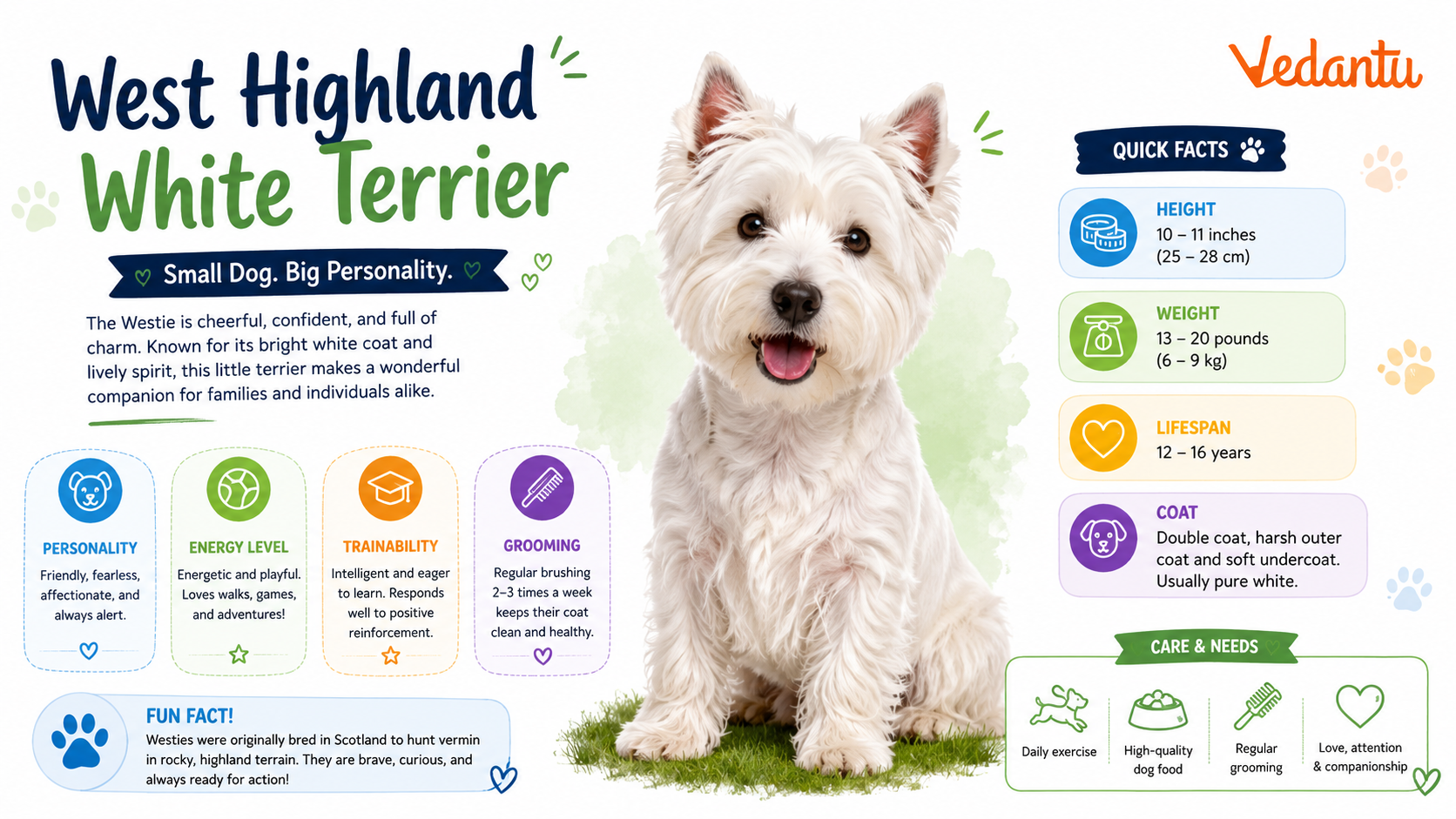
Quick Facts and Statistics
| Feature | Details |
|---|---|
| Common Name | West Highland White Terrier (Westie) |
| Scientific Name | Canis lupus familiaris |
| Animal Group | Mammal |
| Origin | Scotland |
| Height | 25–28 cm |
| Weight | 6–10 kg |
| Lifespan | 12–16 years |
| Diet | Omnivore (mainly meat-based dog food) |
| Habitat | Homes, apartments, and family environments |
Appearance and Physical Characteristics
West Highland White Terrier Habitat
The West Highland White Terrier habitat today is mainly human homes. However, this breed originally lived and worked in the rugged highlands of Scotland.
- Comfortable in apartments and houses.
- Enjoys moderate climates but tolerates cold well.
- Needs daily walks and playtime in parks or gardens.
- Loves being around family members.
West Highland White Terrier Diet
The West Highland White Terrier diet mainly includes high-quality dog food rich in protein.
- Lean meats like chicken or lamb.
- Commercial dry or wet dog food.
- Occasional healthy treats.
- Fresh water every day.
Behaviour and Lifestyle
Life Cycle of a West Highland White Terrier
- Birth: Puppies are born in litters of about 2–5.
- Puppy Stage: Very playful and require training and socialization.
- Adult Stage: Fully grown by 12 months, active and energetic.
- Senior Stage: Around 10+ years, may slow down but remain affectionate.
Temperament and Domestic Life
The West Highland White Terrier is one of the most popular small family dogs due to its friendly nature.
- Good with children when properly trained.
- Loyal and forms strong bonds with owners.
- Needs grooming to maintain its white coat.
- Enjoys mental stimulation and training games.
What Makes the West Highland White Terrier Special?
Amazing West Highland White Terrier Facts
- They were originally bred to hunt foxes and rodents.
- The breed dates back to the 1700s in Scotland.
- They are part of the terrier group of dogs.
- Their coat does not shed heavily compared to many breeds.
- They have a loud bark for their size.
- They are popular in advertisements and media.
Interesting Facts About West Highland White Terrier
Fun Facts for Kids
- Westies look like tiny white teddy bears.
- They can learn tricks quickly.
- They enjoy chasing balls.
- They sometimes tilt their head when curious.
- They are small but very brave!
FAQs on West Highland White Terrier: Complete Breed Overview
1. What is a West Highland White Terrier?
The West Highland White Terrier, often called a Westie, is a small, energetic dog breed from Scotland known for its bright white coat and playful personality.
- Origin: Scotland
- Breed Group: Terrier
- Size: Small dog breed
- Personality: Brave, friendly, alert
- Also known as: Westie dog, white terrier
2. How big do West Highland White Terriers get?
A full-grown West Highland White Terrier is a small but sturdy dog with a compact body.
- Height: 10–11 inches tall
- Weight: 15–20 pounds
- Body Type: Strong and muscular
- Considered a small-sized terrier breed
3. Are Westies good family dogs?
Yes, Westies are friendly and make great family pets when trained and socialized properly.
- Good with respectful children
- Playful and energetic
- Loyal to their owners
- May chase small animals due to strong terrier instincts
4. How long do West Highland White Terriers live?
The average Westie lifespan is between 12 and 16 years with proper care.
- Healthy diet helps long life
- Regular vet checkups are important
- Daily exercise keeps them fit
- Good grooming supports skin health
5. Do Westies bark a lot?
Yes, West Highland White Terriers can bark often because they are alert watchdogs.
- They bark to warn about strangers
- They respond to noises quickly
- Early obedience training reduces excessive barking
- Common in many terrier breeds
6. How do you groom a West Highland White Terrier?
Regular grooming keeps a Westie’s white coat clean and healthy.
- Brush 2–3 times per week
- Bathe when needed with gentle dog shampoo
- Trim hair every few months
- Check ears and trim nails regularly
7. Are West Highland White Terriers easy to train?
Westies are smart but can be independent, so training requires patience and consistency.
- Use positive reinforcement
- Keep training sessions short and fun
- Start socialization early
- They respond well to treats and praise
8. What do Westies eat?
A balanced diet helps a West Highland White Terrier stay strong and active.
- High-quality dry or wet dog food
- Protein for muscle health
- Limited treats to avoid weight gain
- Fresh water available at all times
9. Do West Highland White Terriers have health problems?
Like many purebred dogs, Westies may have certain health issues.
- Skin allergies and itchy skin
- Hip problems
- Dental disease
- Regular vet visits help prevent serious issues
10. Why are West Highland White Terriers white?
The Westie’s white coat was specially bred to make them easy to spot during hunting.
- Bred in Scotland for hunting small animals
- White color prevented hunting accidents
- Now a key breed standard
- Recognized by major kennel clubs
