






Are Wandering Spiders Dangerous? Bite Facts, Habitat, and How to Identify Them
The Wandering Spider is a large and powerful spider famous for its speed and strong venom. Unlike many spiders that spin webs to catch prey, it actively hunts and moves around, which is why it is called a “wandering” spider. Found mainly in Central and South America, this spider is both fascinating and feared. Let’s explore Wandering Spider facts, habitat, diet, characteristics, and why it is important in nature.
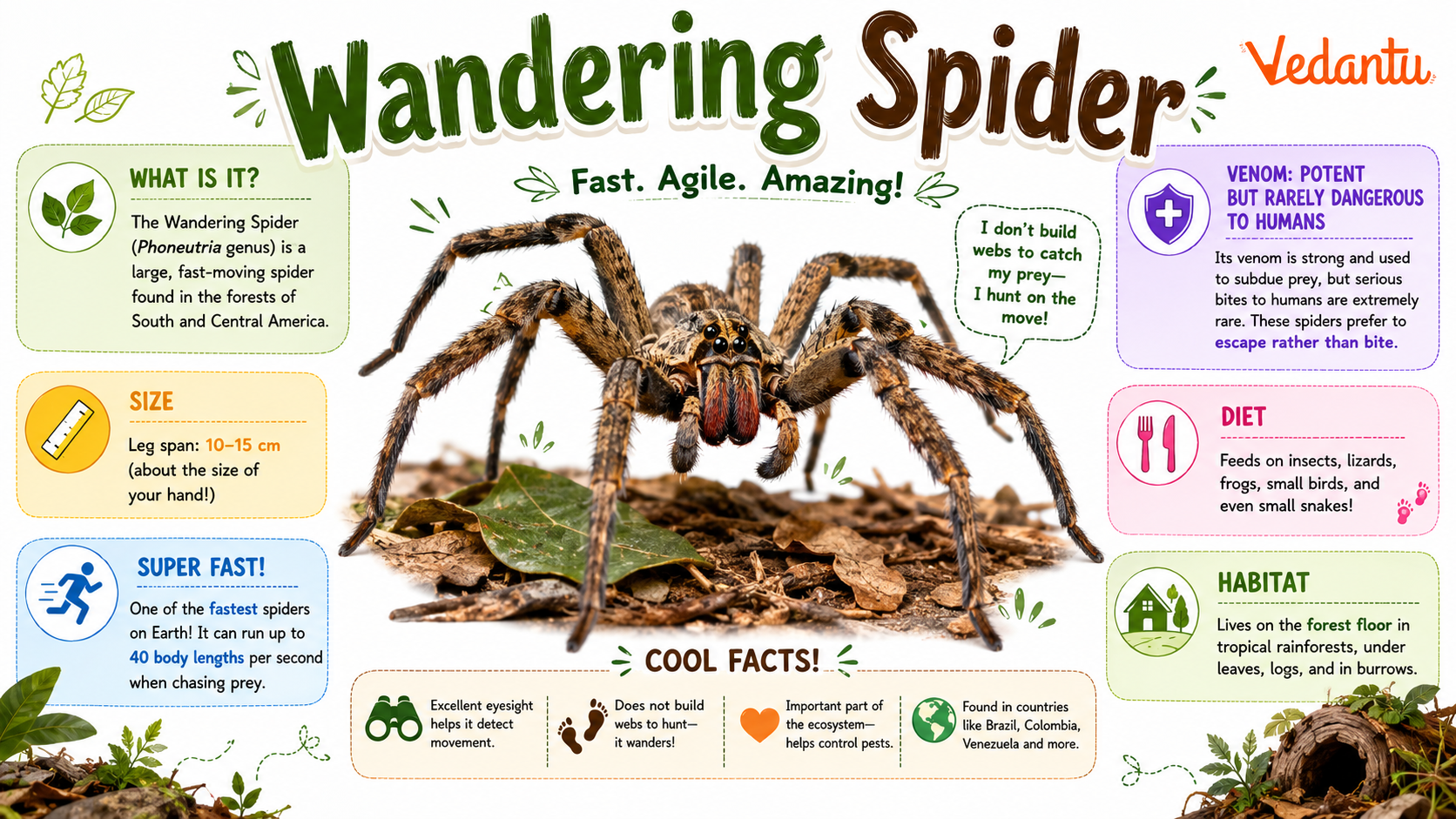
Quick Facts About Wandering Spider
| Feature | Details |
|---|---|
| Common Name | Wandering Spider |
| Scientific Genus | Phoneutria |
| Animal Group | Arachnid |
| Size | Up to 15 cm leg span |
| Habitat | Tropical forests, plantations, urban areas |
| Diet | Insects, small reptiles, frogs, small mammals |
| Activity | Nocturnal |
| Special Feature | Strong neurotoxic venom |
Appearance and Physical Characteristics
- Large, hairy body with long strong legs.
- Brown to dark brown colour with black markings.
- Red or orange hairs near the mouth parts.
- Eight eyes arranged in three rows.
- Powerful fangs that inject venom.
Wandering Spider Habitat and Distribution
- Mainly found in Brazil, Colombia, Peru, and other South American countries.
- Lives in tropical rainforests.
- Often hides under logs, rocks, and leaf litter.
- Sometimes enters houses or banana shipments.
Diet and Feeding Habits
- Carnivorous predator.
- Eats insects like crickets and cockroaches.
- Also feeds on small frogs, lizards, and even small rodents.
- Does not build a web to trap prey.
- Uses speed and venom to catch food.
Behaviour and Lifestyle
- Solitary and aggressive when threatened.
- Active mostly at night (nocturnal).
- Wanders on the forest floor searching for prey.
- Raises front legs in a defensive warning pose.
Wandering Spider Life Cycle
Female lays eggs in a silk sac and guards them carefully.
Baby spiders hatch and stay close for a short time.
Young spiders shed their skin several times as they grow.
Become fully grown hunters capable of reproduction.
What Makes the Wandering Spider Special?
Importance and Role in Nature
Amazing Wandering Spider Facts
- Can raise its body high and show bright markings when threatened.
- Venom affects the nervous system.
- Some species are called “banana spiders.”
- They are excellent climbers.
- They rely on vibration sensing to detect prey.
- Females are usually larger than males.
Fun Facts for Kids
FAQs on Wandering Spider: Facts, Behavior, and Identification Guide
1. What is a Wandering Spider?
Wandering spiders are large, fast-moving spiders that hunt without building webs. They actively search for prey instead of trapping insects in silk.
- Belong mainly to the family Ctenidae
- Also called Brazilian wandering spiders or banana spiders
- Found mostly in Central and South America
- Known for strong venom and defensive behavior
People also ask: Are wandering spiders dangerous? Where do wandering spiders live?
2. Why are Brazilian wandering spiders considered dangerous?
Brazilian wandering spiders are considered dangerous because they have powerful venom and may bite when threatened.
- Venom affects the nervous system
- Can cause pain, sweating, and muscle problems
- Rarely life-threatening with quick medical care
- Listed among the most venomous spiders in the world
People also search: most dangerous spiders, venomous spiders in Brazil.
3. Where do wandering spiders live?
Wandering spiders live mainly in warm tropical regions of the Americas.
- Rainforests of Brazil, Colombia, and Peru
- Banana plantations and farms
- Woodpiles, houses, and gardens
- Dark hiding places during the daytime
They prefer warm climates and humid environments.
4. What do wandering spiders eat?
Wandering spiders are carnivores that eat insects and small animals.
- Crickets, cockroaches, and beetles
- Small frogs and lizards
- Sometimes small rodents
- Other spiders
They hunt at night using speed and strong venom instead of webs.
5. How big is a wandering spider?
Wandering spiders are large spiders with long legs and strong bodies.
- Body length: about 1.5–2 inches (4–5 cm)
- Leg span: up to 6 inches (15 cm)
- Usually brown with dark markings
Their size and speed make them look even scarier, but they usually avoid humans.
6. Do wandering spiders build webs?
Wandering spiders do not build webs to catch prey.
- They are active hunters
- Move around at night searching for food
- Use silk only for egg sacs and safety lines
This hunting style is why they are called "wandering" spiders.
7. What happens if a wandering spider bites you?
A wandering spider bite can cause pain and other symptoms but is rarely deadly with treatment.
- Immediate strong pain
- Swelling and redness
- Sweating or nausea
- Seek medical help quickly
Antivenom is available in many areas where these spiders live.
8. How do wandering spiders protect themselves?
Wandering spiders defend themselves by showing a warning posture and biting if necessary.
- Raise front legs high in the air
- Show red mouthparts as a warning
- May jump or move quickly
This defensive display scares predators and warns humans to stay away.
9. Are wandering spiders the same as banana spiders?
Brazilian wandering spiders are sometimes called banana spiders, but the name can refer to different species.
- Often found in banana shipments
- Belong to the genus Phoneutria
- Not the same as harmless golden orb-weaver banana spiders
Always check the scientific name to avoid confusion.
10. Are wandering spiders dangerous to kids?
Wandering spiders can be dangerous, but bites are rare and treatable with fast care.
- They do not hunt humans
- Bite only when threatened
- Teach kids not to touch wild spiders
- Wear gloves when moving wood or plants in tropical areas
Learning about venomous spiders helps children stay safe and informed.
