






Where Do Trout Live and What Do They Eat in the Wild?
Trout are beautiful freshwater fish known for their colourful bodies and strong swimming skills. They live in cool, clean rivers and lakes and are popular among anglers around the world. Trout are part of the salmon family and are famous for their speed, sharp eyesight, and ability to swim upstream. In this page, explore amazing Trout facts, Trout habitat, Trout diet, Trout life cycle, and why these fish are important in nature.
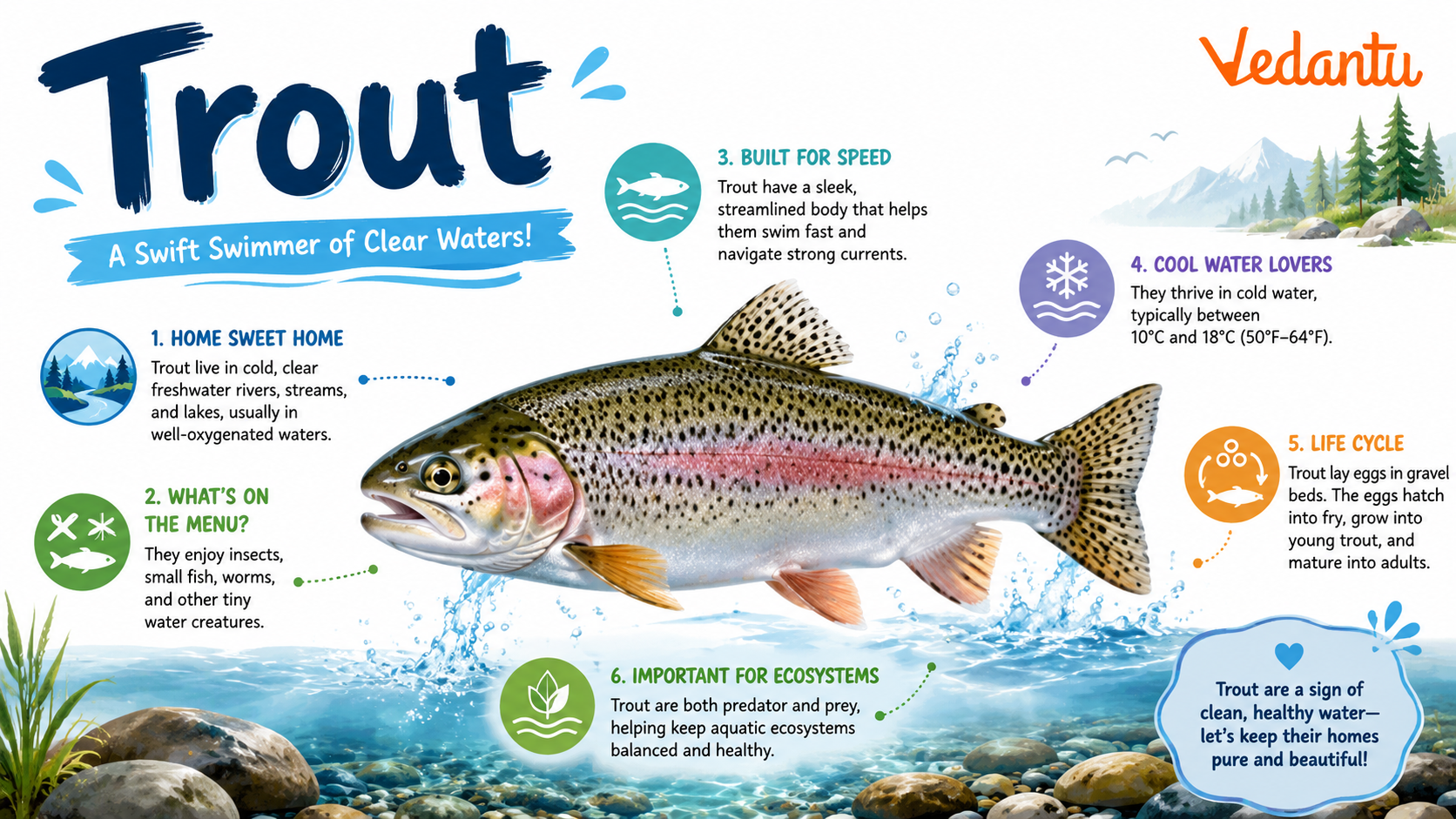
Quick Facts About Trout
| Feature | Details |
|---|---|
| Common Name | Trout |
| Scientific Family | Salmonidae |
| Animal Group | Fish |
| Habitat | Rivers, streams, lakes (cool freshwater) |
| Diet | Insects, worms, small fish |
| Lifespan | 3–7 years (some species live longer) |
| Special Feature | Spotted body and powerful tail |
| Conservation Status | Varies by species |
Appearance and Physical Characteristics
- Body Shape: Long, slim, and streamlined for fast swimming.
- Colour: Greenish, brown, silver, or golden with black and red spots.
- Fins: Strong tail fin for speed and balance.
- Skin: Covered with small scales and slimy coating for protection.
- Size: Usually 20–70 cm long, depending on species.
Trout Habitat and Distribution
- Found in North America, Europe, and parts of Asia.
- Prefer cold mountain streams and rivers.
- Also live in deep, cool lakes.
- Need clean water with plenty of oxygen.
Some trout species migrate to the sea and return to freshwater to breed. These are called sea trout.
Trout Diet and Feeding Habits
Trout are carnivores.
Insects, insect larvae, worms, and small fish.
Quick swimmers that catch prey using sharp eyesight.
Both predator and prey in freshwater ecosystems.
Behaviour and Lifestyle
- Usually live alone or in small groups.
- Very active swimmers.
- Prefer hiding under rocks, logs, or plants.
- Move upstream during breeding season.
- Sensitive to pollution and temperature changes.
Trout Life Cycle
- Egg: Females lay eggs in gravel nests in riverbeds.
- Alevin: Baby fish hatch and carry a yolk sac for food.
- Fry: Young trout start swimming and feeding on tiny insects.
- Juvenile: Grow larger and develop spots.
- Adult: Mature fish reproduce and continue the cycle.
What Makes Trout Special?
Types of Trout
Known for pink stripe along the body.
Brownish body with dark and red spots.
Colourful patterns and light spots.
Larger species found in deep lakes.
Importance and Role in Nature
Amazing Trout Facts
- Trout belong to the same family as salmon.
- They can jump out of water to catch insects.
- Some trout travel hundreds of kilometres to spawn.
- They breathe through gills.
- Trout can see both above and below the water surface.
- Their spots help them blend into rocky riverbeds.
Fun Facts for Kids
FAQs on Trout Fish: Complete Guide to Species, Habitat, and Diet
1. What is a trout?
A trout is a freshwater fish known for living in cold, clean rivers and lakes.
- Trout belong to the salmon family (Salmonidae).
- They are closely related to salmon and char.
- They are popular for fishing, aquaculture, and outdoor sports.
- Common types include rainbow trout, brown trout, and brook trout.
2. Where do trout live?
Trout live in cold, clear freshwater habitats with lots of oxygen.
- Found in rivers, streams, and mountain lakes.
- Prefer cool water temperatures between 50–60°F (10–16°C).
- Some species like steelhead trout migrate to the ocean.
- Often live in North America, Europe, and parts of Asia.
3. What do trout eat?
Trout are carnivorous fish that eat insects and small animals.
- Feed on aquatic insects like mayflies and caddisflies.
- Eat small fish and fish eggs.
- Sometimes consume worms, crustaceans, and tiny frogs.
- Their diet changes as they grow from fry to adult trout.
4. What are the different types of trout?
There are many species of trout, each with unique colors and habitats.
- Rainbow trout – known for a pink stripe along the side.
- Brown trout – have brown bodies with dark spots.
- Brook trout – actually a type of char with bright markings.
- Lake trout – live in deep, cold lakes.
5. How big can trout grow?
Trout size depends on the species and habitat conditions.
- Most freshwater trout grow between 8–20 inches.
- Lake trout can grow over 3 feet long.
- Weight ranges from a few ounces to over 40 pounds.
- Food supply and water quality affect growth.
6. Are trout good to eat?
Yes, trout are healthy and tasty fish often enjoyed as seafood.
- Rich in protein and omega-3 fatty acids.
- Have soft, flaky meat with a mild flavor.
- Common cooking methods include grilling, baking, and pan-frying.
- Popular in both wild fishing and fish farming (aquaculture).
7. How do trout reproduce?
Trout reproduce by laying eggs in freshwater streams.
- Female trout lay eggs in nests called redds.
- Males fertilize the eggs outside the body.
- Eggs hatch into tiny fish called fry.
- Spawning usually happens in fall or spring, depending on the species.
8. Why are trout important to the ecosystem?
Trout play a key role in keeping freshwater ecosystems healthy.
- Help control insect populations.
- Serve as food for bears, birds, and larger fish.
- Indicate clean and healthy water quality.
- Support recreational fishing industries.
9. What is the difference between trout and salmon?
Trout and salmon are related but differ in lifestyle and size.
- Both belong to the Salmonidae family.
- Salmon usually migrate to the ocean and grow larger.
- Many trout stay in freshwater their whole lives.
- Salmon are generally bigger and travel longer distances to spawn.
10. Can trout live in warm water?
Trout cannot survive well in warm water because they need cold, oxygen-rich habitats.
- Prefer temperatures below 65°F (18°C).
- Warm water holds less dissolved oxygen.
- High temperatures can cause stress or death.
- Climate change can impact trout populations.
