






What Is a Terrapin? Habitat, Diet, Lifespan, and Unique Adaptations
Terrapins are small to medium-sized turtles that live in brackish water, where rivers meet the sea. They are special because they can survive in both salty and fresh water. With their hard shells, webbed feet, and calm nature, terrapins are excellent swimmers and clever survivors. Learning about terrapin habitat, diet, characteristics, and life cycle helps us understand why these reptiles are so important to coastal ecosystems.
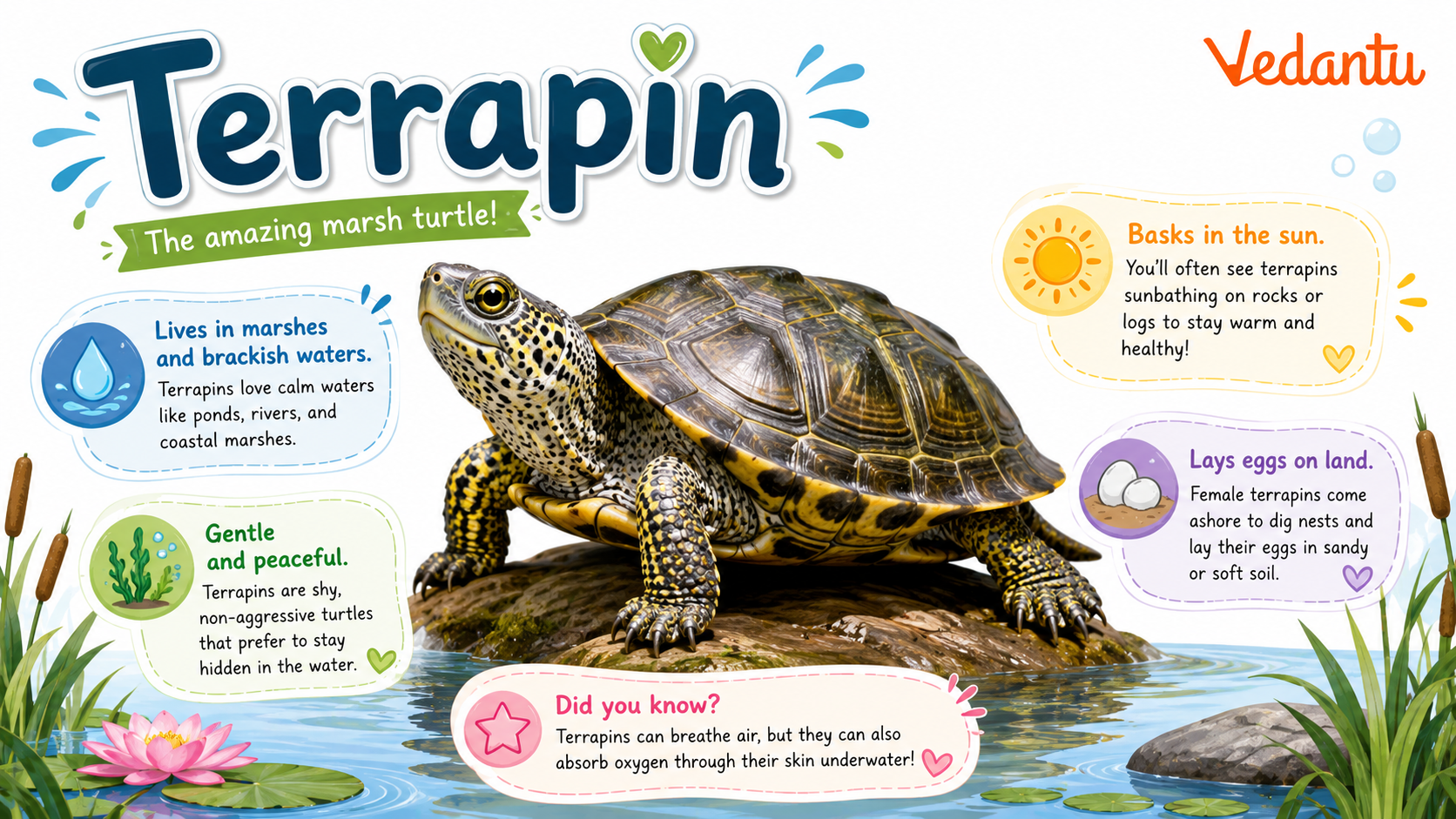
Quick Facts About Terrapin
| Feature | Details |
|---|---|
| Common Name | Terrapin |
| Scientific Example | Malaclemys terrapin (Diamondback Terrapin) |
| Animal Group | Reptile |
| Habitat | Brackish water – marshes, estuaries, coastal lagoons |
| Diet | Carnivore (crabs, snails, small fish) |
| Lifespan | 25–40 years (sometimes more) |
| Movement | Swims using webbed feet |
| Conservation Status | Some species are Near Threatened |
Appearance and Physical Characteristics
- Hard, dome-shaped shell for protection.
- Skin colour ranges from grey to brown.
- Often has dark spots or patterns on the shell.
- Strong, webbed feet for swimming.
- Sharp beak-like mouth to crush shells of prey.
Habitat and Distribution
Terrapin habitat is mainly found in brackish water, which is a mix of saltwater and freshwater.
- Coastal marshes and estuaries
- Mangrove swamps
- River mouths
- Shallow lagoons near the sea
Terrapin Diet and Feeding Habits
The terrapin diet mainly includes small aquatic animals.
- Crabs
- Snails
- Clams and mussels
- Small fish
- Insects
Behaviour and Lifestyle
- Mostly active during the day (diurnal).
- Excellent swimmers but also bask in the sun.
- Spend time on mudflats or rocks to warm up.
- Withdraw into their shell when threatened.
- Usually solitary but may gather in good feeding areas.
Terrapin Life Cycle
- Egg Laying: Female terrapins lay eggs in sandy nests on land.
- Incubation: Eggs hatch after about 2–3 months.
- Hatchlings: Baby terrapins make their way to water on their own.
- Growth: They grow slowly and reach maturity in several years.
- Adult Stage: Adults live for decades in coastal habitats.
What Makes Terrapins Special?
Importance and Role in Nature
Amazing Terrapin Facts
- Terrapins can close their shell tightly to avoid predators.
- They can live more than 30 years in the wild.
- Some terrapins have beautiful diamond-shaped patterns.
- They can tolerate different salt levels in water.
- Female terrapins are usually larger than males.
- They bask in the sun to control body temperature.
Fun Facts for Kids
- Terrapins love sunbathing on warm rocks!
- They are excellent swimmers but slow on land.
- Baby terrapins are very tiny and cute.
- Their shell grows as they grow.
- They hide inside their shell when scared.
FAQs on Terrapin Turtle Guide: Species, Habitat, and Behavior
1. What is a terrapin?
A terrapin is a small to medium-sized brackish water turtle that lives where rivers meet the sea.
- The word "terrapin" comes from a Native American term meaning “little turtle.”
- Terrapins are a type of aquatic turtle.
- They usually live in coastal marshes, estuaries, and mangrove swamps.
- The most famous species is the Diamondback Terrapin.
2. Where do terrapins live?
Terrapins live in warm coastal areas with a mix of salt and fresh water called brackish water habitats.
- Estuaries (where rivers meet the ocean)
- Salt marshes and coastal wetlands
- Mangrove swamps
- Shallow bays along the Atlantic and Gulf coasts
3. What do terrapins eat?
Terrapins are omnivores, which means they eat both plants and animals.
- Small fish
- Crabs and snails
- Clams and shellfish
- Aquatic plants
4. What is the difference between a terrapin, turtle, and tortoise?
The main difference is where they live and how they adapt to their environment.
- Terrapins live in brackish coastal waters.
- Turtles usually live in oceans or freshwater.
- Tortoises live on land and rarely swim.
5. What does a terrapin look like?
A terrapin has a patterned shell and webbed feet for swimming.
- A hard, rounded carapace (top shell)
- Skin with spots or stripes
- Webbed feet for strong swimming
- Colors ranging from gray to brown
6. How long do terrapins live?
Terrapins can live for several decades in the wild.
- Average lifespan: 25–40 years
- Some may live even longer in safe habitats
- Females often live longer than males
7. Are terrapins endangered?
Some terrapin populations are threatened due to human activities.
- Habitat destruction of wetlands
- Accidental capture in crab traps
- Pollution and climate change
- Road accidents during nesting season
8. How do terrapins reproduce?
Terrapins lay eggs on sandy or soft soil areas near water.
- Females dig nests in sand dunes or marsh edges.
- They lay about 4–18 eggs at a time.
- Eggs hatch in about 60–80 days.
9. Can terrapins live in freshwater?
Terrapins prefer brackish water but can survive in low-salt or freshwater for short periods.
- They are specially adapted to handle salt and fresh water mixtures.
- Their bodies help balance salt levels.
- They are not true sea turtles.
10. Why are terrapins important to the ecosystem?
Terrapins play an important role in keeping coastal ecosystems balanced.
- They control populations of snails and small shellfish.
- They help maintain healthy salt marsh habitats.
- They are part of the wetland food web.
