






Where Do Storks Live? Habitat, Diet, Migration, and Life Cycle Explained
A stork is a large, long-legged bird known for its tall body, long neck, and strong pointed beak. These birds are often seen standing in shallow water or flying high in the sky with wide wings. Storks are famous for their impressive nests and long-distance migrations. Learning about stork habitat, stork diet, and stork characteristics helps us understand how these beautiful birds survive in wetlands and open landscapes around the world.
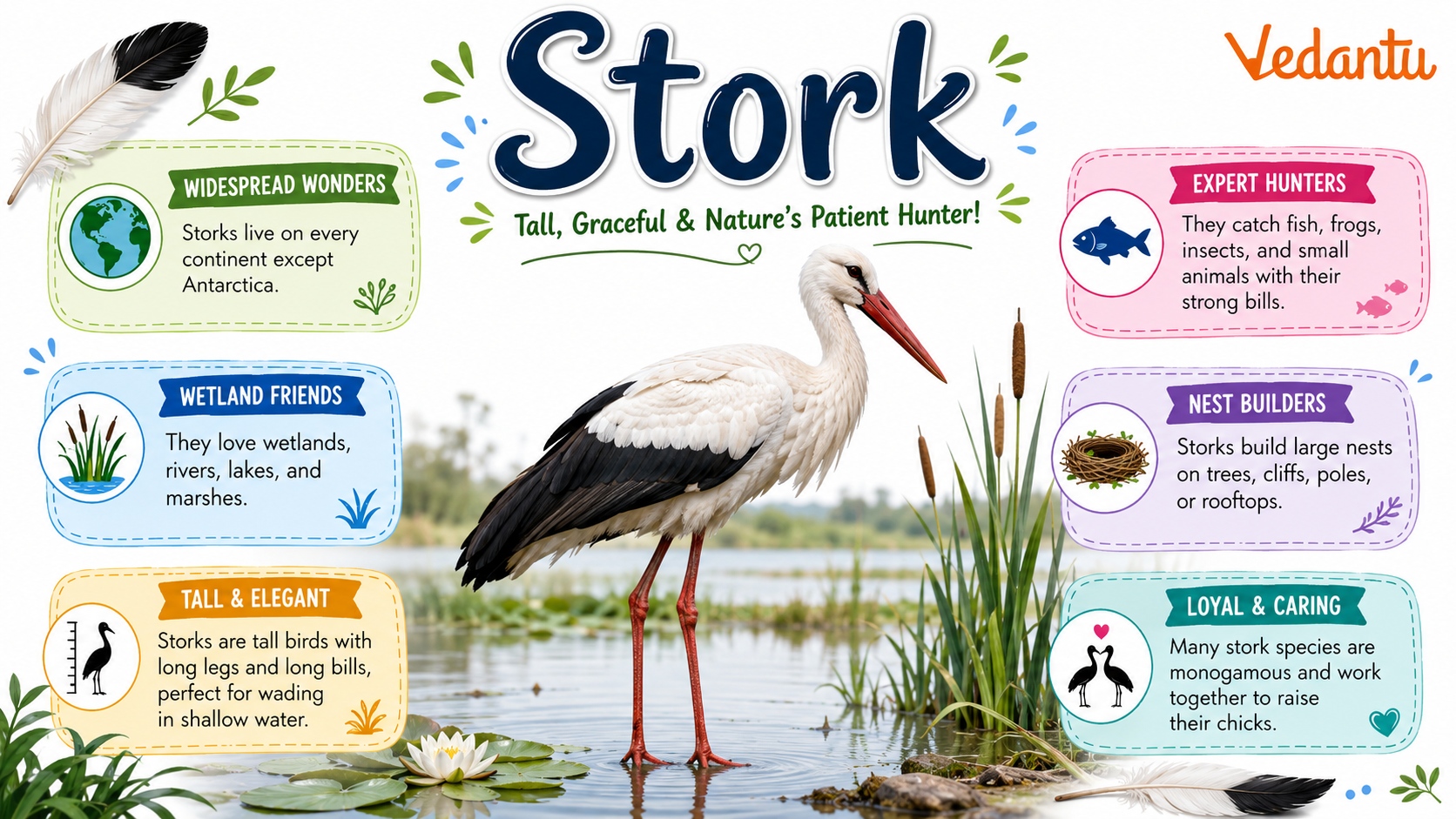
Quick Facts About Stork
| Feature | Details |
|---|---|
| Common Name | Stork |
| Scientific Family | Ciconiidae |
| Animal Group | Bird |
| Size | 60 cm to 150 cm tall (varies by species) |
| Wingspan | Up to 3 meters in large species |
| Diet | Carnivore (fish, frogs, insects, small animals) |
| Habitat | Wetlands, grasslands, riversides |
| Lifespan | 20–30 years in the wild |
| Found In | Africa, Europe, Asia, Americas |
| Young One | Chick |
Appearance and Physical Characteristics
- Very tall body with long, thin legs.
- Long neck that helps in catching prey.
- Strong, straight, pointed beak.
- Broad wings for soaring high in the sky.
- Usually white, black, or grey feathers (varies by species).
Habitat and Distribution
Stork habitat mainly includes wetlands and open landscapes. They prefer places where food is easy to find.
- Swamps and marshes
- Riverbanks and lakes
- Flooded grasslands
- Agricultural fields
Diet and Feeding Habits
The stork diet mainly includes small animals found in water and grasslands.
- Fish
- Frogs
- Insects
- Small reptiles
- Rodents
Behaviour and Lifestyle
- Many species migrate long distances every year.
- They often travel in large groups during migration.
- Mostly active during the day.
- They soar high using warm air currents to save energy.
Life Cycle of a Stork
- Egg Stage: Female lays 2–5 eggs in a large nest.
- Chick Stage: Eggs hatch after about 30–35 days.
- Growing Stage: Parents feed chicks with regurgitated food.
- Adult Stage: Young storks learn to fly in about 2 months.
Flight Adaptations
- Large and wide wings for gliding.
- Lightweight hollow bones.
- Strong chest muscles for powerful wing beats.
- Ability to use thermal air currents to fly long distances.
What Makes Stork Special?
Importance and Role in Nature
Amazing Stork Facts
- There are about 19 different species of storks.
- The Marabou stork is one of the largest species.
- Some storks migrate from Europe to Africa.
- They can glide for hours without flapping much.
- Storks often return to the same nest every year.
- They communicate by clattering their beaks.
Fun Facts for Kids
- Storks are often shown in stories delivering babies.
- They can grow taller than a child!
- Their nests can weigh hundreds of kilograms.
- They love warm, sunny places.
- Baby storks learn to fly in just a few weeks.
FAQs on Stork Bird: Fascinating Facts, Habitat, and Behavior
1. What is a stork?
A stork is a large, long-legged wading bird known for its long neck and strong beak.
- Belongs to the Ciconiidae family
- Lives near wetlands, rivers, and lakes
- Famous for migration and large stick nests
- Often linked to baby-delivery stories in folklore
2. Where do storks live?
Storks live in warm regions and wet habitats around the world.
- Found in Europe, Africa, and Asia
- Prefer marshes, wetlands, grasslands, and riverbanks
- Build nests on trees, rooftops, and tall poles
- Migrate to warmer places during winter
3. What do storks eat?
Storks are carnivorous birds that eat small animals they find in water or on land.
- Feed on fish, frogs, and insects
- Also eat small reptiles, rodents, and worms
- Use their long beaks to catch prey
- Hunt in shallow water and grassy fields
4. Why are storks associated with delivering babies?
Storks are linked to babies because of old European folklore and myths.
- The white stork nests on rooftops near families
- Seen as symbols of good luck and new life
- Popularized in children’s stories and cartoons
- It is a myth, not a real behavior
5. Are storks migratory birds?
Yes, many storks are migratory birds that travel long distances each year.
- Fly from Europe to Africa during winter
- Travel thousands of kilometers in groups
- Use warm air currents called thermals
- Return home in spring to breed
6. How big is a stork?
Storks are large birds with impressive wingspans.
- Height: about 3 to 5 feet tall
- Wingspan: up to 10 feet in some species
- Have long legs and long pointed beaks
- Usually white, black, or a mix of both colors
7. How do storks build their nests?
Storks build large, strong nests using sticks and natural materials.
- Use twigs, grass, and leaves
- Build nests high on trees, chimneys, or poles
- Reuse and add to the same nest each year
- Nests can grow very large over time
8. What are the different types of storks?
There are several species of storks found around the world.
- White Stork (Ciconia ciconia)
- Black Stork (Ciconia nigra)
- Marabou Stork
- Saddle-billed Stork
- Each species has unique colors and habitats
9. How long do storks live?
Storks can live for many years, especially in safe environments.
- Average lifespan: 20 to 30 years
- May live longer in zoos or protected areas
- Face dangers like habitat loss and predators
- Strong flyers that survive long migrations
10. Why are storks important to the ecosystem?
Storks help keep nature balanced by controlling animal populations.
- Eat pests like insects and rodents
- Help maintain healthy wetland ecosystems
- Act as indicators of environmental health
- Support biodiversity in their habitats
