






Sheepdog Temperament, Training Needs, and Best Breeds Explained
A sheepdog is a hardworking and intelligent dog specially trained to guard and guide sheep. Known for their sharp minds and quick movements, sheepdogs are famous for helping farmers manage large flocks. These dogs are not just strong and active but also extremely loyal and friendly. In this page, explore amazing Sheepdog facts, Sheepdog habitat, Sheepdog diet, Sheepdog characteristics, and why they are so important to humans.
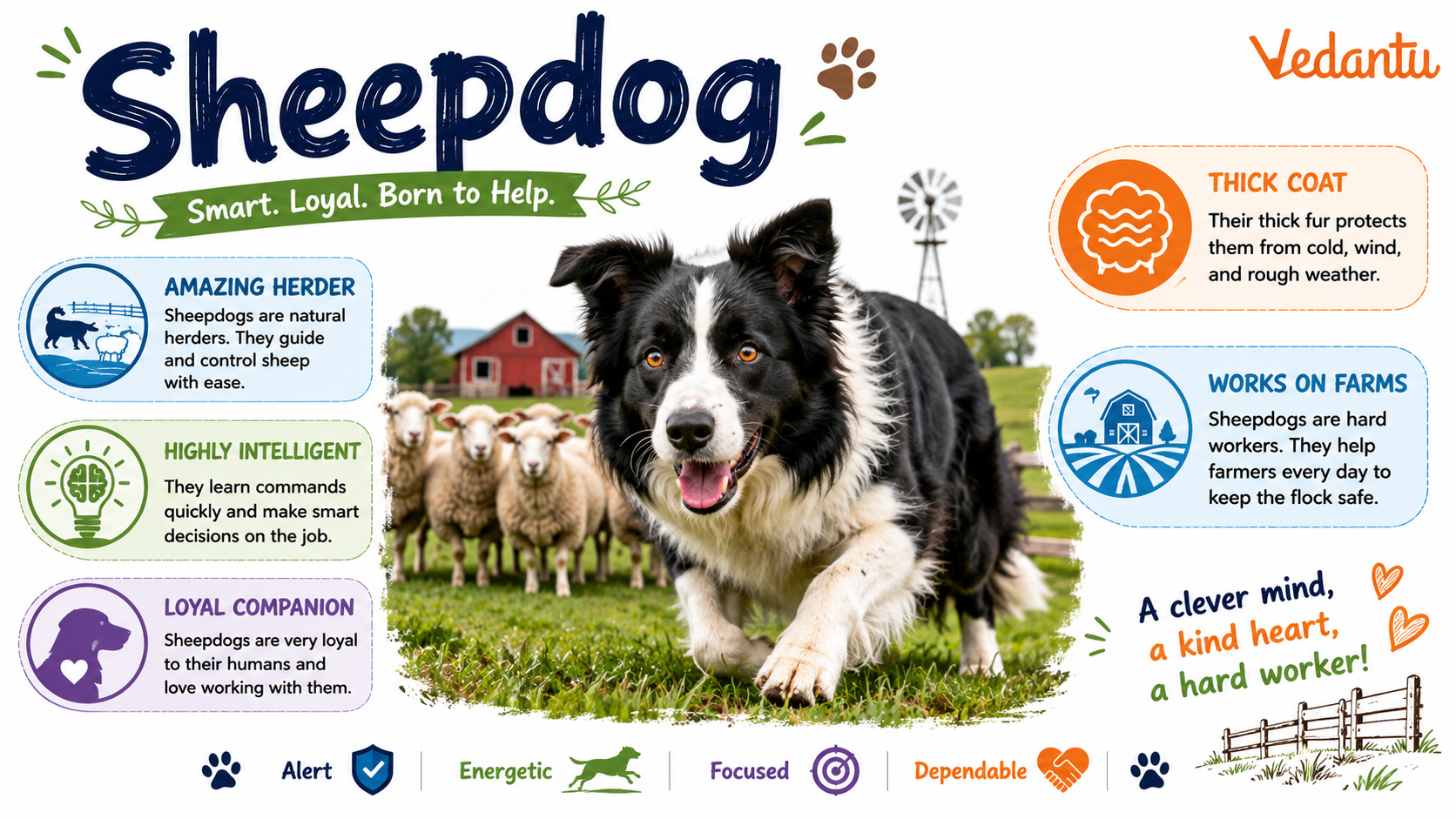
Quick Facts About Sheepdog
| Feature | Details |
|---|---|
| Common Name | Sheepdog |
| Animal Group | Mammal |
| Type | Domestic Working Dog (Herding Breed) |
| Average Lifespan | 10–15 years |
| Habitat | Farms, grasslands, countryside |
| Diet | Omnivore (mainly dog food, meat-based diet) |
| Young One | Puppy |
| Special Skill | Herding and protecting livestock |
Appearance and Physical Characteristics
- Medium to large-sized body with strong muscles.
- Thick double coat to protect from cold and rain.
- Colours include black, white, brown, grey, or mixed patterns.
- Bright, alert eyes that help them watch over sheep.
- Strong legs built for running long distances.
Sheepdog Habitat and Distribution
Since sheepdogs are domestic animals, their habitat depends on human settlements. They are commonly found in:
- Farms and ranches
- Open grasslands
- Mountain pastures
- Countryside villages
Sheepdog Diet and Feeding Habits
The Sheepdog diet is designed to give them high energy because they are very active animals.
Mostly meat-based dog food rich in protein.
Vegetables, grains, and healthy fats.
Plenty of fresh water due to active lifestyle.
High-calorie diet for long working hours.
Behaviour and Lifestyle
- Very intelligent and quick learners.
- Extremely loyal to their owners.
- Highly energetic and playful.
- Protective of sheep and family members.
- Communicate through barking, body posture, and eye contact.
Sheepdog Life Cycle
- Birth: Female sheepdogs give birth to 4–8 puppies at a time.
- Puppy Stage: Puppies are playful and start basic training at a young age.
- Training Stage: At 6–12 months, they begin learning herding skills.
- Adult Stage: Fully trained adults actively herd and guard sheep.
- Senior Stage: After years of service, they retire and live a calmer life.
Temperament and Domestic Life
Good with families if properly trained.
Responds quickly to commands.
Requires daily physical and mental activity.
Guards livestock and home.
Types of Sheepdogs
- Border Collie – Fast, intelligent, and highly skilled.
- Australian Shepherd – Energetic and friendly.
- Old English Sheepdog – Shaggy coat and gentle nature.
- Shetland Sheepdog – Small but very active.
Importance of Sheepdogs
Amazing Sheepdog Facts
- Sheepdogs can understand hundreds of words and commands.
- Some sheepdogs can herd over 100 sheep at once.
- They use body language more than barking while herding.
- Sheepdog trials are special competitions held worldwide.
- They can run very fast and change direction quickly.
- Many sheepdogs enjoy learning tricks and solving puzzles.
Fun Facts for Kids
FAQs on Sheepdog: Complete Guide to Breeds, Temperament, and Care
1. What is a Sheepdog?
A Sheepdog is a special type of dog trained to help farmers herd and protect sheep.
- Herding dog that moves sheep from one place to another
- Protects livestock from predators like wolves
- Very intelligent, alert, and hardworking
- Commonly used on farms and ranches
2. What breeds are considered Sheepdogs?
Several popular dog breeds are known as Sheepdogs because of their strong herding instincts.
- Border Collie – highly intelligent and fast
- German Shepherd – loyal and protective
- Old English Sheepdog – fluffy and friendly
- Shetland Sheepdog – small but energetic
- Australian Shepherd – agile farm dog
3. What does a Sheepdog do on a farm?
A Sheepdog helps farmers manage and protect their sheep every day.
- Guides sheep into pens or fields
- Keeps the flock together
- Guards against predators
- Responds to whistle or voice commands
4. Are Sheepdogs good family pets?
Yes, many Sheepdogs make excellent family pets when properly trained and exercised.
- Very loyal and protective
- Good with children
- Need lots of exercise and playtime
- Thrive with mental stimulation and training
5. How smart are Sheepdogs?
Sheepdogs are among the smartest dog breeds in the world.
- Border Collies rank as one of the most intelligent dogs
- Learn commands quickly
- Can solve problems independently
- Understand hand signals and whistles
6. How are Sheepdogs trained?
Sheepdogs are trained using consistent commands, whistles, and positive rewards.
- Start training as puppies
- Use voice and whistle signals
- Practice herding with experienced dogs
- Reward good behavior with treats or praise
7. What is the difference between a Sheepdog and a Shepherd dog?
A Sheepdog usually herds sheep, while a Shepherd dog may guard or protect livestock.
- Sheepdogs move and control flocks
- Shepherd dogs often focus on protection
- Some breeds, like the German Shepherd, can do both
8. Do Sheepdogs need a lot of exercise?
Yes, Sheepdogs need plenty of daily exercise to stay healthy and happy.
- Require long walks or runs
- Enjoy playing fetch or agility games
- Need mental challenges like puzzle toys
- Can become bored without activity
9. Where did Sheepdogs originate?
Sheepdogs originated in farming regions where people raised sheep for wool and meat.
- Border Collies came from Scotland and England
- German Shepherds originated in Germany
- Bred for strong herding instincts
- Developed to work closely with farmers
10. Why do Sheepdogs stare at sheep?
Sheepdogs stare at sheep because it is part of their natural herding behavior called "the eye."
- The intense gaze controls the flock
- Helps guide sheep without barking
- Shows focus and concentration
- Common in Border Collies and other herding breeds
