






Saint Bernard Facts, Temperament, Size, Lifespan, and Care Tips
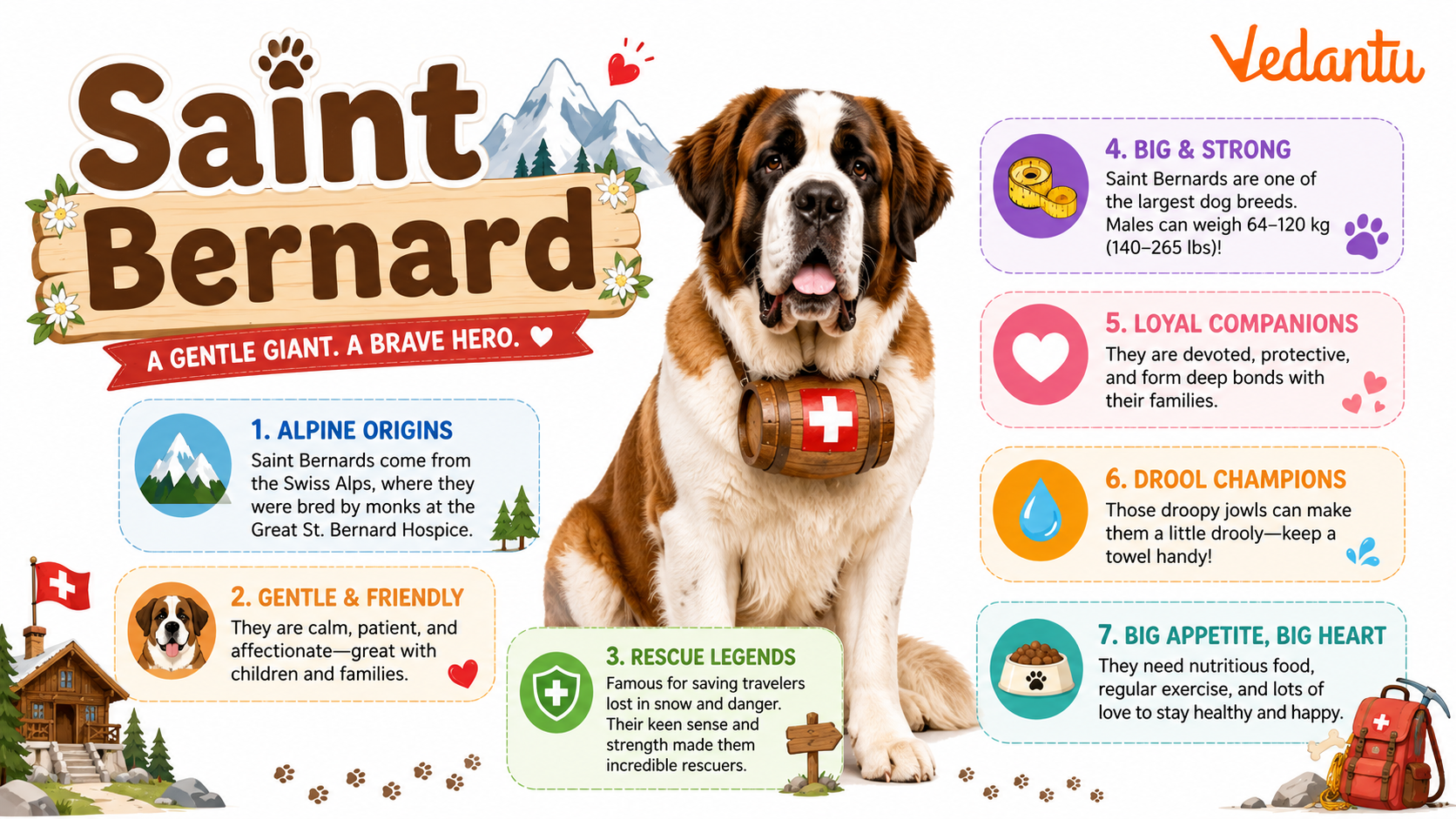
The Saint Bernard is one of the largest and most lovable dog breeds in the world. Famous for its rescue work in snowy mountains, this powerful dog is gentle, patient, and extremely loyal. Originally bred in the Swiss Alps, the Saint Bernard is known for saving lost travellers in heavy snow. With its huge size, kind eyes, and fluffy coat, this breed is both a brave worker and a caring family companion.
Quick Facts About Saint Bernard
| Feature | Details |
|---|---|
| Common Name | Saint Bernard |
| Scientific Name | Canis lupus familiaris |
| Animal Group | Mammal (Dog Breed) |
| Origin | Swiss & Italian Alps |
| Height | 65–90 cm (at shoulder) |
| Weight | 50–90 kg or more |
| Lifespan | 8–10 years |
| Diet | Omnivorous (mainly meat-based dog food) |
| Famous For | Snow rescue missions |
Appearance and Physical Characteristics
- Very large and muscular body.
- Broad head with kind, droopy eyes.
- Short or long thick coat.
- Colour: White with red, brown, or brindle patches.
- Strong legs for walking in deep snow.
- Large paws that act like snowshoes.
Saint Bernard Habitat
The original Saint Bernard habitat was the snowy mountains of the Alps between Switzerland and Italy. Monks at the Great St. Bernard Pass bred these dogs to help rescue travellers lost in snowstorms.
- Cold mountain regions
- Snowy and icy environments
- Today found worldwide as family pets
- Prefer cool climates over hot weather
Diet and Feeding Habits
The Saint Bernard diet mainly includes high-quality dog food rich in protein to support its large body and strong muscles.
- Meat-based food (chicken, beef, lamb)
- Dry kibble or wet dog food
- Fresh water in large amounts
- Occasional vegetables and healthy treats
Behaviour and Lifestyle
Life Cycle of a Saint Bernard
- Puppy Stage: Born in litters, puppies grow very quickly in the first year.
- Adolescent Stage: Training and socialisation are important.
- Adult Stage: Fully grown by 2–3 years, strong and calm.
- Senior Stage: After 7 years, they slow down and need extra care.
The Saint Bernard life cycle is similar to other large dog breeds but their growth rate is faster due to their size.
What Makes the Saint Bernard Special?
Temperament and Domestic Life
- Very affectionate and loving.
- Good with children and other pets.
- Needs early training due to large size.
- Requires space because of its huge body.
- Moderate grooming needed due to shedding.
Importance of Saint Bernard
Amazing Saint Bernard Facts
- They have saved thousands of lives in the Alps.
- The famous barrel around their neck is mostly a legend.
- They can detect humans buried under snow.
- One famous Saint Bernard named Barry saved over 40 people.
- They grow very quickly during puppyhood.
- They are among the heaviest dog breeds in the world.
Interesting Facts About Saint Bernard
- They were originally bred by monks.
- They drool a lot due to loose lips.
- They appear in many movies and cartoons.
- They can be either short-haired or long-haired.
Fun Facts for Kids
FAQs on Saint Bernard Dog Breed: Complete Guide to This Gentle Giant
1. What is a Saint Bernard dog?
Saint Bernard is a giant working dog breed famous for mountain rescues and its gentle personality.
- Originated in the Swiss Alps
- Originally bred as a rescue dog by monks
- Known for being calm, loyal, and friendly
- One of the largest dog breeds in the world
2. How big do Saint Bernard dogs get?
Saint Bernards are giant dogs that grow very large and heavy.
- Height: 26–30 inches tall
- Weight: 120–180 pounds
- Males are usually larger than females
- They grow quickly during puppyhood
3. Are Saint Bernards good family dogs?
Saint Bernard dogs are excellent family pets because they are gentle and loving.
- Very patient with children
- Friendly toward family members
- Protective but not aggressive
- Best suited for homes with enough space
4. Why are Saint Bernards famous for rescue work?
Saint Bernards became famous for saving travelers lost in snowy mountains.
- Worked at the Great St. Bernard Hospice
- Helped find people buried in snow avalanches
- Used their strong sense of smell to track humans
- Symbol of alpine search and rescue dogs
5. What do Saint Bernard dogs eat?
Saint Bernard diet should be balanced and nutritious to support their large size.
- High-quality large-breed dog food
- Protein-rich meals for muscle growth
- Fresh water available at all times
- Controlled portions to prevent obesity
6. How long do Saint Bernards live?
Saint Bernard lifespan is shorter compared to smaller dog breeds.
- Average life expectancy: 8–10 years
- Regular vet checkups improve health
- Healthy diet and exercise help extend lifespan
- Prone to some large-breed health issues
7. Do Saint Bernards need a lot of exercise?
Saint Bernard exercise needs are moderate despite their giant size.
- Daily walks are important
- Enjoy outdoor play in cool weather
- Do not require intense running
- Avoid overheating in hot climates
8. Do Saint Bernard dogs drool a lot?
Saint Bernards are known for heavy drooling due to their loose lips.
- Drool especially after eating or drinking
- More drool in warm weather
- Owners often keep towels handy
- It is normal for this breed
9. What are common health problems in Saint Bernards?
Saint Bernard health issues are mostly related to their giant size.
- Hip and elbow dysplasia
- Bloat (gastric torsion)
- Heart problems
- Joint and bone conditions
10. Are Saint Bernards easy to train?
Saint Bernard training is generally easy because they are smart and eager to please.
- Respond well to positive reinforcement
- Early puppy training is important
- Socialization helps prevent shyness
- Gentle but consistent guidance works best
