






Where Do Raccoons Live, What Do They Eat, and How Do They Survive?
Raccoons are clever, curious mammals known for their black “mask” and bushy ringed tail. These intelligent animals are famous for exploring trash bins, climbing trees, and solving problems with their tiny, hand-like paws. Found mostly in North America, raccoons easily adapt to forests, wetlands, and even busy cities. Let’s explore exciting raccoon facts, raccoon habitat, raccoon diet, raccoon characteristics, and why these smart animals are so important in nature.
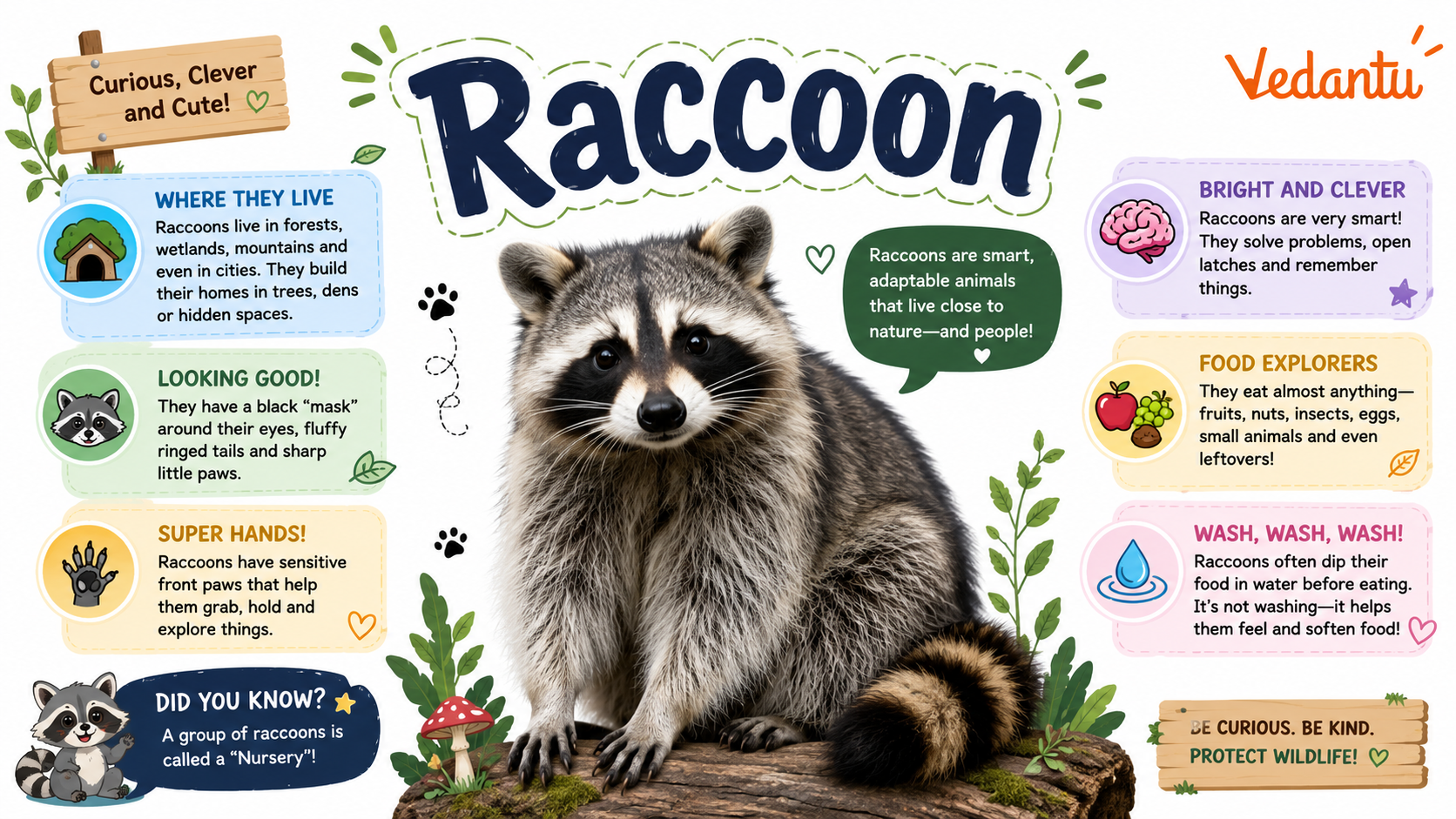
Quick Facts and Statistics
| Feature | Details |
|---|---|
| Common Name | Raccoon |
| Scientific Name | Procyon lotor |
| Animal Group | Mammal |
| Size | 40–70 cm (body length) |
| Weight | 4–9 kg (can be heavier in cities) |
| Lifespan | 2–5 years in wild; up to 15 years in captivity |
| Habitat | Forests, wetlands, urban areas |
| Diet | Omnivore – fruits, insects, fish, small animals |
| Young One | Kit |
| Conservation Status | Least Concern |
Appearance and Physical Characteristics
- Black Mask: Dark fur around the eyes that looks like a bandit mask.
- Ringed Tail: Bushy tail with 4–7 black rings.
- Grey-Brown Fur: Thick and soft for protection from cold weather.
- Sharp Claws: Helpful for climbing trees and digging.
- Hand-like Paws: Very sensitive front paws that can open jars and doors.
Raccoon Habitat and Distribution
Raccoons are highly adaptable animals. Their habitat includes:
- Deciduous and mixed forests
- Wetlands and riverbanks
- Marshes and swamps
- Urban areas and cities
They are mainly found in North America but have also spread to parts of Europe and Japan.
Raccoon Diet and Feeding Habits
Raccoons eat both plants and animals.
Fruits, berries, nuts, corn, and seeds.
Insects, frogs, fish, eggs, and small mammals.
In cities, they may eat leftovers from garbage bins.
Raccoons often “wash” their food in water. This behavior may help them feel the food better rather than actually cleaning it.
Behaviour and Lifestyle
- Nocturnal: Active mostly at night.
- Solitary: Usually live alone except during mating season.
- Excellent Climbers: Can climb trees and even buildings.
- Smart Problem Solvers: Can remember solutions for years.
- Communication: Use growls, purrs, whistles, and body movements.
Raccoon Life Cycle
- Mating Season: Late winter to early spring.
- Birth: 2–5 kits are born after about 2 months.
- Baby Stage: Kits are blind at birth and depend on their mother.
- Growing Up: Young raccoons learn climbing and hunting skills.
- Adult Stage: Become independent after about one year.
What Makes Raccoons Special?
Can solve complex tasks and remember them for up to 3 years.
Can identify objects without seeing them.
Can climb down trees headfirst by rotating their hind feet.
Easily adjust to city life.
Importance and Role in Nature
- Help control insect and rodent populations.
- Disperse seeds by eating fruits.
- Serve as prey for larger predators like coyotes and owls.
- Maintain balance in forest and wetland ecosystems.
Amazing Raccoon Facts
Fun Facts for Kids
- A baby raccoon is called a kit.
- Raccoons sometimes sleep in tree holes.
- They use their tails for balance while climbing.
- Raccoons can make more than 50 different sounds.
- They are sometimes called “trash pandas” in cities.
FAQs on Raccoon: Fascinating Facts About This Clever Mammal
1. What is a raccoon?
A raccoon is a small, clever wild animal known for its black mask-like face and bushy tail.
- It belongs to the mammal family.
- Its scientific name is Procyon lotor.
- Raccoons are famous for their curious behavior and smart problem-solving skills.
- They are often seen in forests, cities, and suburbs.
2. Where do raccoons live?
Raccoons live in many different habitats across North America.
- They are commonly found in forests, wetlands, and marshes.
- They also adapt well to urban areas and neighborhoods.
- Raccoons build dens in tree holes, caves, attics, or abandoned burrows.
- Their ability to live near humans makes them very adaptable wildlife.
3. What do raccoons eat?
Raccoons are omnivores, which means they eat both plants and animals.
- They enjoy fruits, berries, and nuts.
- They eat insects, frogs, fish, and small animals.
- In cities, they may search for food scraps in trash cans.
- Their flexible diet helps them survive in many environments.
4. Why do raccoons have a black mask?
The black mask on a raccoon’s face helps reduce glare and improve night vision.
- Raccoons are mostly nocturnal animals (active at night).
- The dark fur around their eyes may help them see better in low light.
- The mask also makes them easy to recognize among wild animals.
- This feature is one of their most unique characteristics.
5. Are raccoons dangerous to humans?
Raccoons are usually shy but can become defensive if they feel threatened.
- They may bite or scratch to protect themselves.
- Wild raccoons can carry rabies and other diseases.
- It is important not to feed or approach wild animals.
- Watching raccoons from a safe distance is the best choice.
6. Are raccoons smart animals?
Raccoons are considered very intelligent animals.
- They can solve simple puzzles and open containers.
- They remember solutions to problems for a long time.
- Their front paws are highly sensitive and act like hands.
- This intelligence helps them find food and survive.
7. What do baby raccoons look like?
Baby raccoons, called kits, are small, furry, and adorable.
- They are born with closed eyes and open them after about 3 weeks.
- Kits stay with their mother raccoon for up to a year.
- They learn how to find food and climb from their mother.
- Most litters have 2 to 5 babies.
8. How long do raccoons live?
Raccoons usually live 2 to 5 years in the wild.
- In zoos or protected areas, they can live up to 20 years.
- Predators include coyotes, bobcats, and large birds of prey.
- Cars and habitat loss also affect their lifespan.
- Good food and safe shelter help them live longer.
9. Why do raccoons wash their food?
Raccoons appear to wash their food, but they are actually feeling it with their sensitive paws.
- Their paws have many nerve endings that help them explore.
- Water increases their sense of touch.
- This behavior is called dousing.
- It helps them understand what they are about to eat.
10. What makes raccoons important in nature?
Raccoons play an important role in the ecosystem.
- They help control insect and rodent populations.
- They spread seeds by eating fruits.
- They are part of the food chain as both predator and prey.
- Their presence helps keep natural habitats balanced.
