






What Do Lorikeets Eat? Diet, Habitat, Behavior & Fun Facts
Lorikeets are bright, playful parrots famous for their rainbow-coloured feathers and brush-like tongues. These energetic birds are mostly found in Australia and nearby islands. They are known for feeding on sweet nectar and pollen, which makes them important pollinators in nature. With their loud calls, strong wings, and social behaviour, lorikeets are one of the most eye-catching and fascinating birds to learn about.
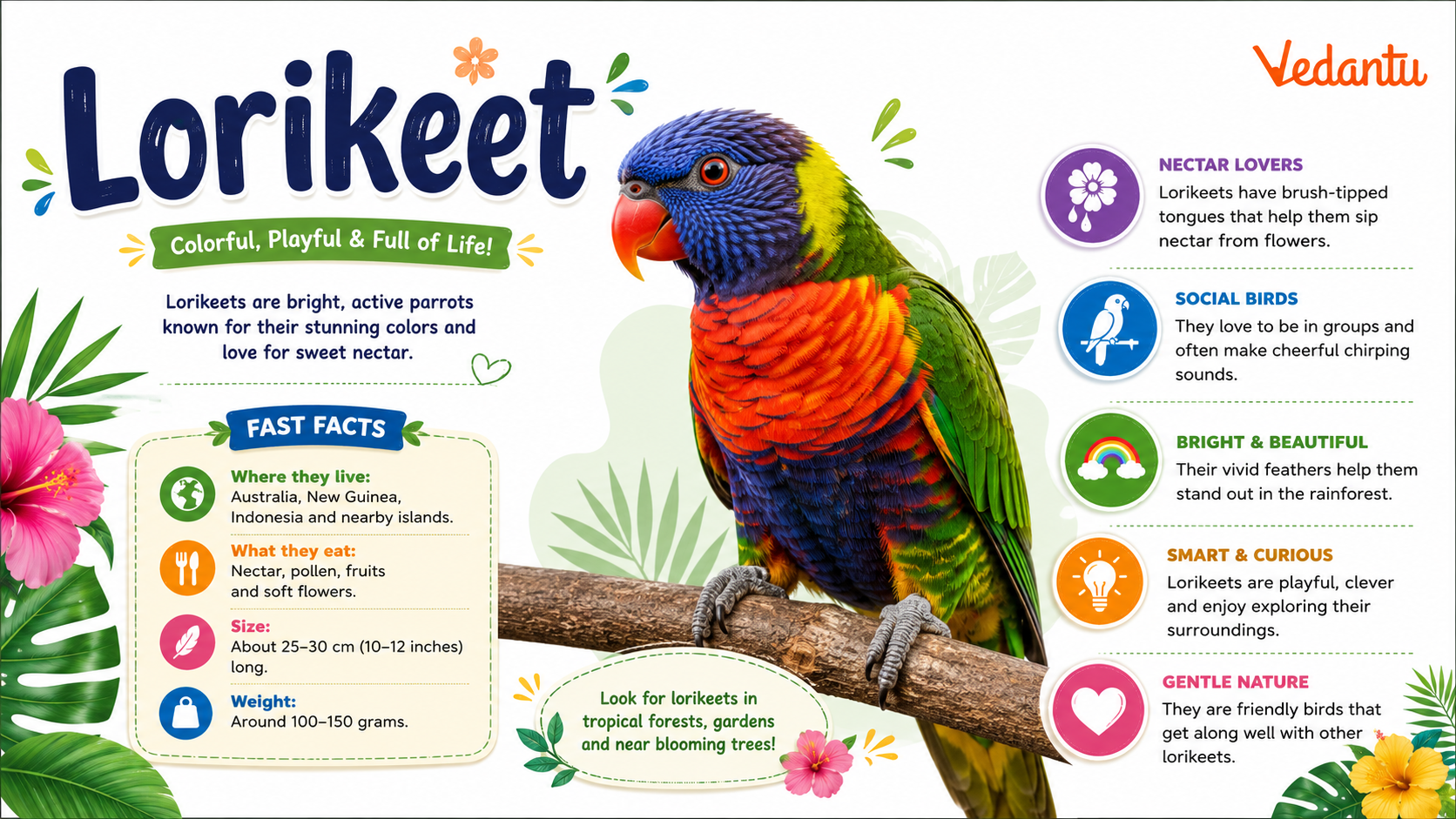
Quick Facts About Lorikeets
| Feature | Details |
|---|---|
| Common Name | Lorikeet |
| Scientific Group | Tribe: Loriini |
| Animal Group | Bird (Parrot family) |
| Size | 15–30 cm (varies by species) |
| Weight | 40–150 grams |
| Lifespan | 10–20 years |
| Habitat | Forests, woodlands, gardens, coastal areas |
| Diet | Nectar, pollen, fruits, soft seeds |
| Special Feature | Brush-tipped tongue for drinking nectar |
| Found In | Australia, Indonesia, Papua New Guinea, Pacific islands |
Appearance and Physical Characteristics
- Feathers: Very bright colours like red, green, blue, yellow, and orange.
- Beak: Curved and strong, perfect for gripping branches and food.
- Tongue: Special brush-like tip to collect nectar and pollen.
- Body: Slim and lightweight for easy flying.
- Eyes: Sharp vision to spot flowers and fruits.
Lorikeet Habitat and Distribution
The natural lorikeet habitat includes warm and tropical regions. These birds prefer places where flowering trees grow in large numbers.
- Rainforests and tropical forests
- Woodlands and coastal bushlands
- Urban parks and home gardens
- Areas with eucalyptus and flowering trees
Lorikeets are mainly found in Australia, New Guinea, Indonesia, and nearby Pacific islands. Some species adapt well to cities and towns.
Diet and Feeding Habits
The lorikeet diet is very different from many other parrots.
Behaviour and Lifestyle
- Very Social: Often seen in noisy flocks.
- Active During Day: They are diurnal birds.
- Loud Calls: Use sharp screeches and chatter to communicate.
- Playful Nature: Known for hanging upside down while feeding.
- Strong Fliers: Fly quickly and directly between trees.
Flight Adaptations
Lorikeets are powerful fliers with special adaptations.
- Strong chest muscles for active flight.
- Lightweight hollow bones.
- Broad wings for smooth gliding.
- Tail feathers for balance and direction control.
Life Cycle of a Lorikeet
- Egg Stage: Female lays 1–3 white eggs in tree hollows.
- Incubation: Eggs hatch after about 3–4 weeks.
- Chicks: Born blind and featherless; parents feed them nectar and soft food.
- Fledgling: Young birds learn to fly in about 7–8 weeks.
- Adult: Reach maturity in about one year.
What Makes Lorikeets Special?
Importance and Role in Nature
- Help in pollination of flowering plants.
- Support forest growth and biodiversity.
- Serve as food for larger birds and predators.
- Bring beauty and colour to natural ecosystems.
Amazing Lorikeet Facts
Fun Facts for Kids
- Lorikeets sometimes hang upside down while eating!
- They love sweet foods just like humans.
- Their bright feathers look like a flying rainbow.
- They can learn simple sounds and mimic noises.
- They are very playful and energetic birds.
FAQs on Lorikeet Bird: Colorful Parrot with a Brush-Tipped Tongue
1. What is a Lorikeet?
A lorikeet is a small, colorful parrot known for eating nectar and pollen.
- Belongs to the parrot family (Psittacidae)
- Found mainly in Australia, New Guinea, and nearby islands
- Has a special brush-tipped tongue for feeding on flowers
- Often confused with lories, which are closely related birds
2. Where do lorikeets live?
Lorikeets live in warm regions with lots of trees and flowering plants.
- Common in Australia, especially coastal areas
- Found in rainforests, woodlands, and urban parks
- Nest in tree hollows
- Often seen in cities like Sydney and Brisbane
3. What do lorikeets eat?
Lorikeets mainly eat sweet foods like nectar and fruits.
- Feed on nectar and pollen from flowers
- Eat soft fruits such as berries and apples
- Use their special brush-like tongue to collect nectar
- Sometimes drink tree sap
4. Why are lorikeets so colorful?
Lorikeets are brightly colored to help them blend into flowers and attract mates.
- Feathers show bright green, blue, red, and yellow
- Colors help with camouflage in trees
- Bright plumage attracts a mate during breeding season
- Example: the Rainbow Lorikeet is one of the most colorful parrots
5. Are lorikeets good pets?
Lorikeets can be pets, but they need special care and attention.
- Require a nectar-based diet, not regular seeds
- Very active and noisy birds
- Need a large cage and daily interaction
- Best for experienced bird owners
6. How long do lorikeets live?
Lorikeets can live for many years, especially in safe environments.
- In the wild: about 7–15 years
- In captivity: up to 20 years with proper care
- Healthy diet and safe habitat increase lifespan
7. What is the difference between a lorikeet and a parrot?
A lorikeet is a type of parrot with special feeding features.
- All lorikeets are parrots, but not all parrots are lorikeets
- Lorikeets have a brush-tipped tongue for nectar
- Most parrots eat seeds and nuts
- Lorikeets are usually more colorful and energetic
8. How do lorikeets build their nests?
Lorikeets build nests inside tree holes for safety.
- Use natural tree hollows
- Line nests with wood dust or soft materials
- Lay about 1–3 eggs per breeding season
- Both parents help care for the chicks
9. Are lorikeets endangered?
Most lorikeet species are not endangered, but some face threats.
- Rainbow Lorikeet is common and widespread
- Habitat loss affects certain rare lorikeet species
- Threats include deforestation and illegal pet trade
- Conservation programs help protect their natural habitats
10. Why are lorikeets important to the environment?
Lorikeets play an important role in pollination and healthy ecosystems.
- Spread pollen between flowers
- Help plants grow by acting as pollinators
- Support biodiversity in forests and woodlands
- Are part of the natural food chain
