






Impala habitat, diet, behavior, and survival adaptations
The impala is a fast and elegant antelope found in Africa. Known for its amazing jumping ability and alert nature, this animal is one of the most common sights in African savannas. Impala facts reveal that they are highly adaptable, social, and quick to escape from predators. Their speed, agility, and teamwork make them true survival experts in the wild.
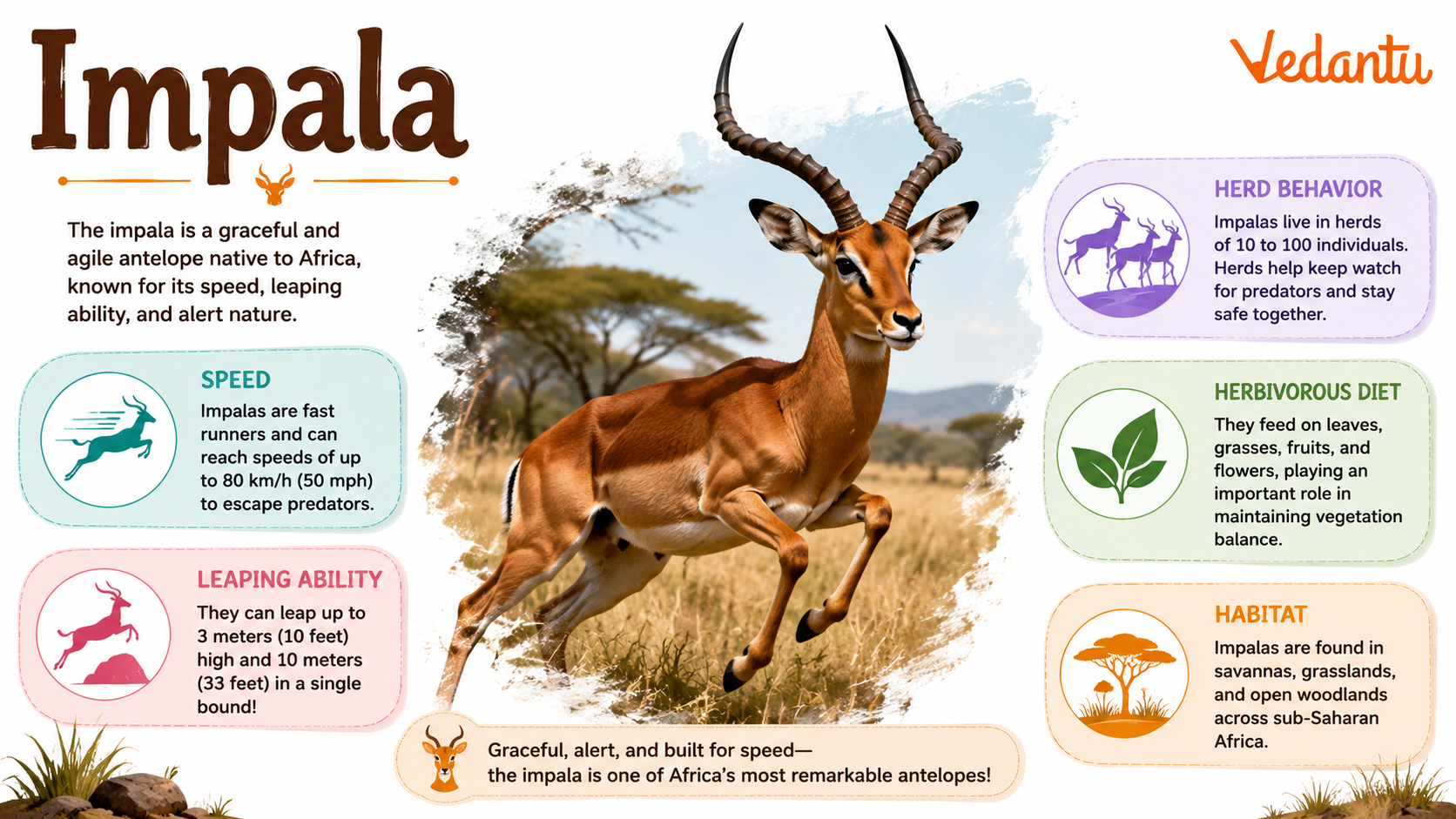
Quick Facts About Impala
| Feature | Details |
|---|---|
| Common Name | Impala |
| Scientific Name | Aepyceros melampus |
| Animal Group | Mammal (Antelope) |
| Size | About 75–95 cm tall at shoulder |
| Weight | 40–75 kg |
| Lifespan | 12–15 years (wild) |
| Habitat | Savannas and light woodlands |
| Diet | Grass, leaves, shoots |
| Top Speed | Up to 80 km/h |
| Conservation Status | Least Concern |
Appearance and Physical Characteristics
- Slender and graceful body shape.
- Reddish-brown coat with a lighter white belly.
- Black stripes on the tail and ears.
- Long, curved horns in males (up to 90 cm).
- Strong back legs built for jumping and running.
Habitat and Distribution
The impala habitat mainly includes African savannas and open woodlands. They prefer areas with:
- Plenty of grass for grazing.
- Nearby bushes or trees for shelter.
- Access to water sources.
Impalas are commonly found in countries like Kenya, Tanzania, South Africa, Botswana, and Zimbabwe. They adapt well to both wet and dry seasons.
Diet and Feeding Habits
Impala diet includes grass, leaves, fruits, and young shoots.
They graze on grass in the rainy season and browse on leaves in the dry season.
They eat quickly while staying alert for predators.
They are important prey for lions, cheetahs, leopards, and wild dogs.
Behaviour and Lifestyle
- Live in herds of 10 to over 100 individuals.
- Males defend territories during breeding season.
- Very alert and use loud snorts to warn others of danger.
- Active mainly during the day and cool evenings.
Life Cycle of an Impala
- Mating Season: Usually at the end of the rainy season.
- Gestation: About 6–7 months.
- Birth: One baby called a fawn is born.
- Early Days: The mother hides the fawn in tall grass for protection.
- Growth: Young impalas join nursery groups before becoming adults.
What Makes Impala Special?
Can leap up to 3 metres high.
Can jump up to 10 metres in length.
Run at speeds up to 80 km/h.
Large ears help detect danger quickly.
Importance and Role in Nature
Essential prey for large carnivores.
Help maintain balance in grasslands.
Spread seeds through droppings.
Support the entire savanna food web.
Amazing Impala Facts
- Impalas can change direction quickly while running.
- They sometimes mix with zebras and wildebeests for safety.
- Their black heel glands release scent signals.
- They can survive in areas with seasonal water shortages.
- Young impalas can stand within minutes of birth.
- They are among the most common antelopes in Africa.
Fun Facts for Kids
FAQs on Impala: Fascinating Facts About Africa’s Agile Antelope
1. What is an Impala?
An impala is a fast and graceful African antelope known for its amazing jumping ability.
- Belongs to the antelope family
- Lives mainly in Eastern and Southern Africa
- Known for its slim body and reddish-brown coat
- Famous for leaping up to 10 meters (33 feet) in one jump
- Often seen in savannas and grasslands
2. Where do impalas live?
Impalas live in warm African savannas, woodlands, and grasslands near water sources.
- Found in countries like Kenya, Tanzania, South Africa, and Zimbabwe
- Prefer areas with grass for grazing and trees for shelter
- Avoid dense forests and deserts
- Stay close to rivers and watering holes
3. What do impalas eat?
Impalas are herbivores, which means they eat plants.
- Feed mainly on grass
- Also eat leaves, shoots, herbs, and fruits
- Change diet depending on the season
- Graze during wet seasons and browse in dry seasons
4. How fast can an impala run?
An impala can run up to 60 km/h (37 mph) to escape predators.
- Uses speed to avoid lions, cheetahs, and leopards
- Can leap high and far in zigzag patterns
- Jumps help confuse predators
- Combines speed, agility, and endurance
5. What do impalas look like?
Impalas are medium-sized antelopes with a slim body and long legs.
- Have a reddish-brown coat with a white belly
- Black stripes on the tail and thighs
- Males have long, curved lyre-shaped horns
- Large eyes and ears for spotting danger
6. Are impalas social animals?
Yes, impalas are social animals that live in groups called herds.
- Female herds can have up to 100 members
- Males may form bachelor groups
- Dominant males protect territory during breeding season
- Living in herds helps protect against predators
7. What animals hunt impalas?
Impalas are prey animals and are hunted by many African predators.
- Lions
- Cheetahs
- Leopards
- Hyenas and wild dogs
- Young impalas may be hunted by eagles and crocodiles
8. How do impalas protect themselves?
Impalas protect themselves using speed, sharp senses, and group behavior.
- Run very fast to escape danger
- Leap high to confuse predators
- Use strong hearing and eyesight
- Stay in herds for safety
9. How long do impalas live?
Impalas usually live around 12 to 15 years in the wild.
- Lifespan depends on predators and environment
- Live longer in protected wildlife reserves
- Young impalas are most at risk
10. Why are impalas important in the ecosystem?
Impalas play an important role in the African ecosystem as both grazers and prey animals.
- Help control grass and plant growth
- Provide food for large predators
- Support the balance of the savanna food chain
- Contribute to biodiversity in wildlife habitats
