






Howler Monkey Habitat, Diet, Behavior, and Why Their Call Is So Loud
The Howler Monkey is famous for its powerful roar that echoes across tropical forests. Known as one of the loudest land animals, this tree-dwelling primate lives high in the canopy of Central and South American rainforests. With its strong tail, leafy diet, and social lifestyle, the Howler Monkey is truly a fascinating creature. Let’s explore amazing Howler Monkey facts, its habitat, diet, characteristics, and why it is important to nature.
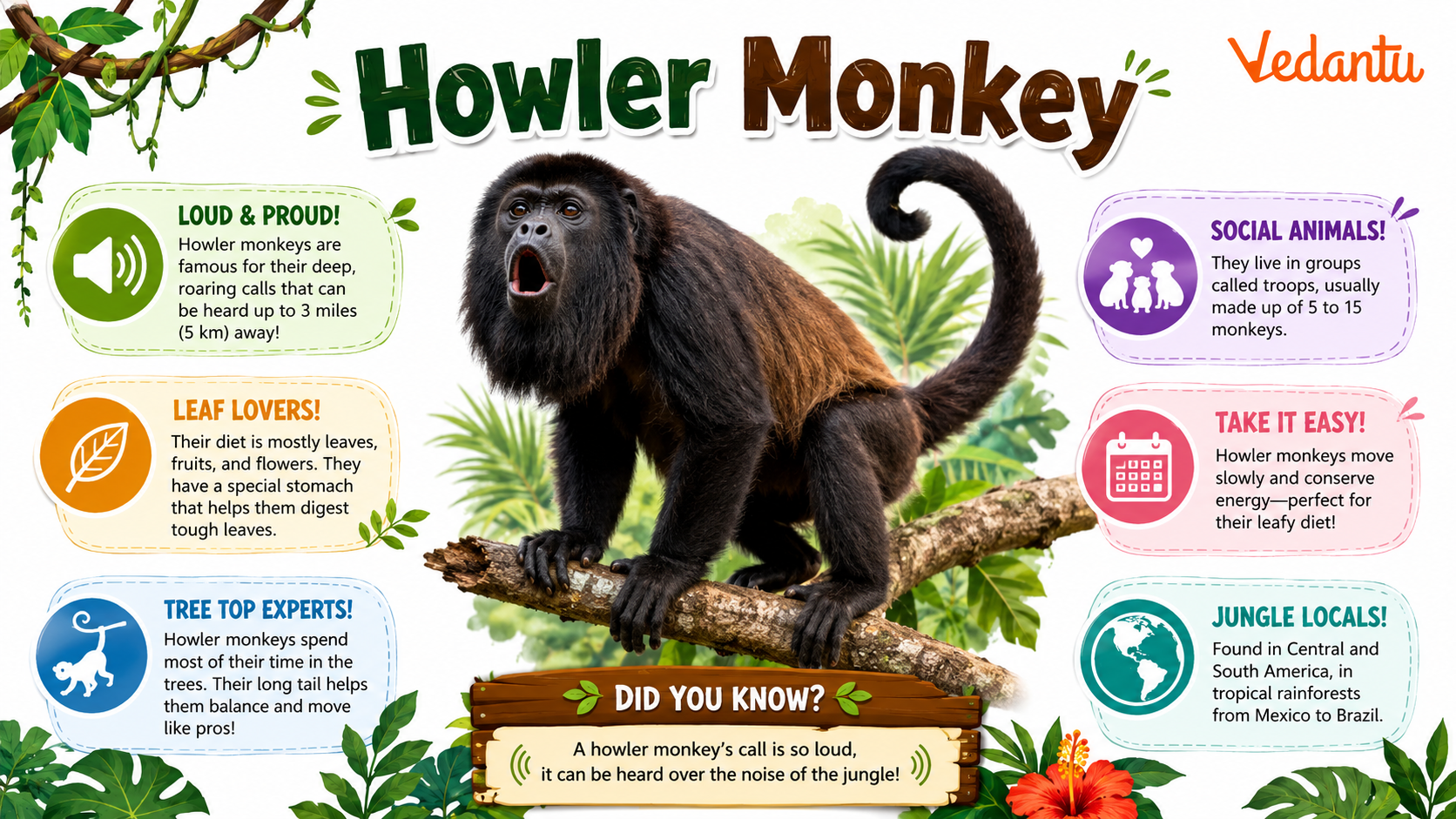
Quick Facts About Howler Monkey
| Feature | Details |
|---|---|
| Common Name | Howler Monkey |
| Scientific Genus | Alouatta |
| Animal Group | Mammal (Primate) |
| Size | 56–92 cm (body length) |
| Weight | 4–10 kg |
| Lifespan | 15–20 years |
| Habitat | Tropical rainforests |
| Diet | Leaves, fruits, flowers |
| Special Feature | Extremely loud howling call |
| Conservation Status | Varies by species (some threatened) |
Appearance and Physical Characteristics
- Body: Medium-sized monkey with a strong and muscular body.
- Fur Colour: Black, brown, red, or golden depending on species.
- Tail: Long, prehensile (can grip branches like a hand).
- Face: Flat face with wide nostrils.
- Throat: Enlarged throat bone (hyoid bone) helps produce loud sounds.
Howler Monkey Habitat and Distribution
- Found in Central and South America.
- Countries include Brazil, Mexico, Peru, Costa Rica, and Colombia.
- Lives mainly in tropical rainforests and forest edges.
- Spends most of its life in the upper canopy of trees.
- Rarely comes down to the ground.
The Howler Monkey habitat is rich in tall trees and thick vegetation. These monkeys depend on forests for food, safety, and social life.
Diet and Feeding Habits
Mainly herbivorous (plant-eater).
Leaves (especially young leaves).
Fruits, flowers, and sometimes nuts.
Moves slowly and eats while sitting on branches.
The Howler Monkey diet is rich in leaves. Because leaves are hard to digest, these monkeys rest a lot to save energy.
Behaviour and Lifestyle
- Live in groups of 6–15 members.
- Very social and communicate through loud calls.
- Active mostly during the day (diurnal).
- Move slowly compared to other monkeys.
- Use tail for balance and gripping branches.
Why Do They Howl?
- To mark their territory.
- To warn other groups to stay away.
- To communicate within the group.
Howler Monkey Life Cycle
- Birth: Female gives birth to one baby at a time.
- Infant Stage: Baby clings tightly to mother’s belly.
- Juvenile Stage: Starts exploring branches and eating leaves.
- Adult Stage: Joins group activities and may form its own group later.
The Howler Monkey life cycle includes strong parental care. Mothers protect and feed their young until they become independent.
What Makes the Howler Monkey Special?
Importance and Role in Nature
- Help in seed dispersal by spreading fruit seeds.
- Maintain forest health and balance.
- Part of the rainforest food chain.
- Indicator of healthy forest ecosystems.
Amazing Howler Monkey Facts
Fun Facts for Kids
- Howler Monkeys sound like a jungle alarm clock!
- They use their tail like an extra hand.
- Baby monkeys love riding on their mother’s back.
- They prefer lazy days filled with leaf-eating.
- You can hear them before you see them!
FAQs on Howler Monkey: Amazing Facts About the Loudest Monkey in the Rainforest
1. What is a Howler Monkey?
A Howler Monkey is a large New World monkey famous for its extremely loud roar-like calls.
- Belongs to the genus Alouatta
- Found in Central and South America
- Known as one of the loudest land animals
- Lives mostly in the rainforest canopy
- Is a type of arboreal primate (tree-dwelling monkey)
2. Why are Howler Monkeys so loud?
Howler Monkeys are loud because they use powerful calls to protect their territory and communicate with their group.
- Have a special enlarged hyoid bone in their throat
- Calls can travel up to 3 miles (5 km) through the rainforest
- Use howls to warn other monkey troops
- Helps avoid physical fights
- Commonly heard at dawn and dusk
3. Where do Howler Monkeys live?
Howler Monkeys live in tropical forests across Central and South America.
- Found in countries like Brazil, Mexico, Costa Rica, and Peru
- Prefer rainforests, dry forests, and mangroves
- Spend most of their lives in the upper tree canopy
- Rarely come down to the ground
4. What do Howler Monkeys eat?
Howler Monkeys mainly eat leaves, making them one of the few leaf-eating monkeys.
- Primary diet includes leaves
- Also eat fruits, flowers, and nuts
- Have a special digestive system to break down tough leaves
- Rest often to help digest their food
5. How big is a Howler Monkey?
A Howler Monkey is medium to large in size compared to other monkeys.
- Body length: about 16–28 inches
- Tail length: about 20–30 inches
- Weight: between 7–20 pounds
- Have a strong prehensile tail for gripping branches
6. Are Howler Monkeys dangerous to humans?
Howler Monkeys are generally not dangerous and avoid human contact.
- Prefer staying high in trees
- Use loud calls instead of fighting
- May defend themselves if threatened
- Wild animals should always be observed from a safe distance
7. How long do Howler Monkeys live?
Howler Monkeys can live for many years, especially in protected environments.
- Live about 15–20 years in the wild
- May live longer in zoos or wildlife reserves
- Face threats from predators and habitat loss
8. What predators hunt Howler Monkeys?
Howler Monkeys have several natural predators in the rainforest ecosystem.
- Jaguars
- Harpy eagles
- Large snakes like boa constrictors
- Humans through deforestation and hunting
9. Are Howler Monkeys endangered?
Some species of Howler Monkeys are threatened due to habitat destruction.
- Status depends on the species (e.g., Black Howler Monkey)
- Main threat is deforestation
- Also affected by illegal wildlife trade
- Protected in many national parks
10. What makes Howler Monkeys unique?
Howler Monkeys are unique because of their powerful voice and tree-dwelling lifestyle.
- One of the loudest mammals on Earth
- Have a strong prehensile tail like a fifth hand
- Live in social groups called troops
- Important for rainforest ecosystems as seed spreaders
