






How to Care for a Golden Hamster at Home: Cage Setup, Food, and Lifespan Tips
The Golden Hamster is a small, adorable rodent famous for its soft golden fur and cute cheek pouches. Also known as the Syrian hamster, it is one of the most popular pet hamsters in the world. In the wild, it lives in dry regions and builds underground burrows. From its unique sleeping habits to its food-storing skills, Golden Hamster facts are full of surprises for young animal lovers.
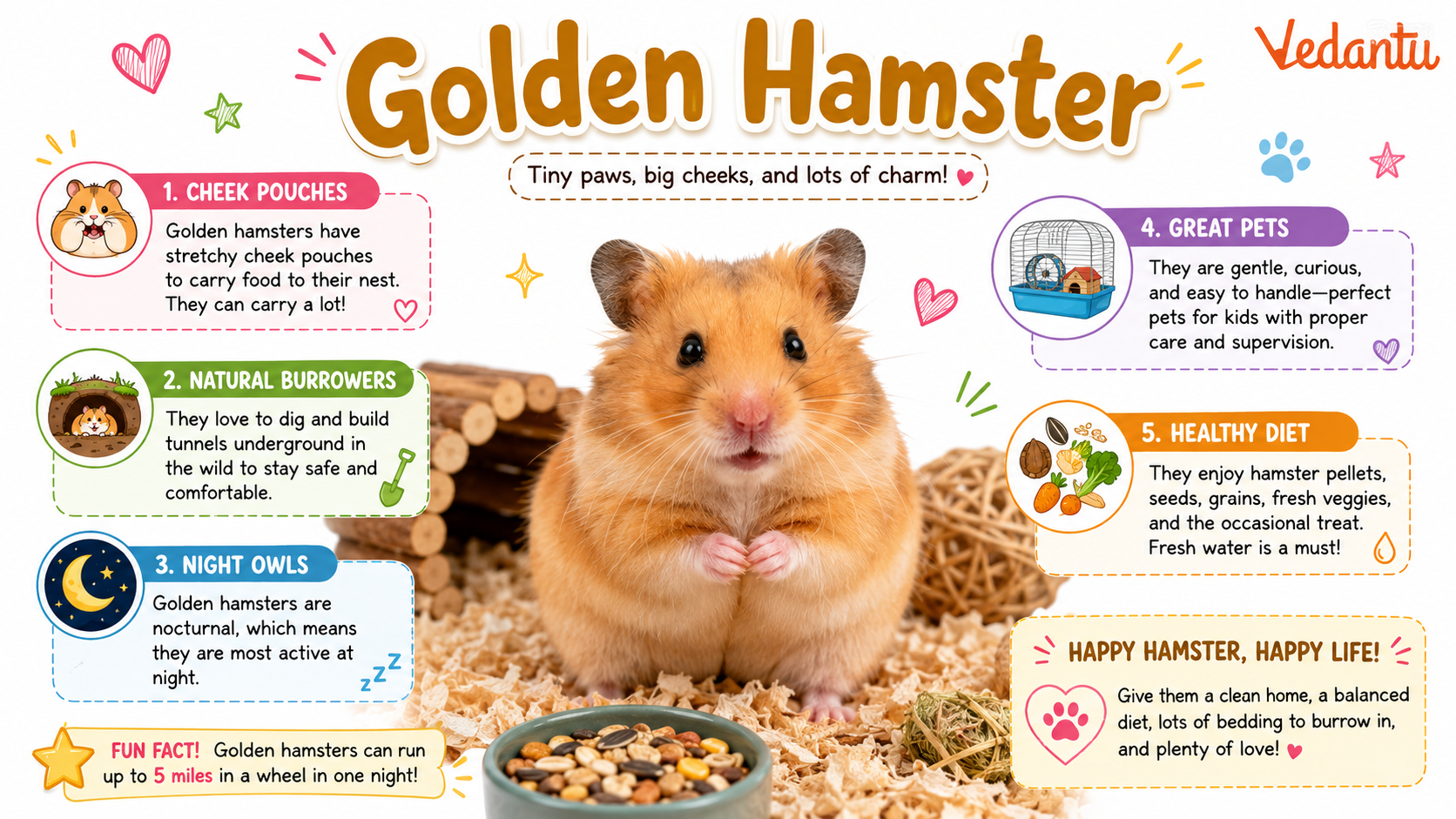
Quick Facts and Statistics
| Feature | Details |
|---|---|
| Common Name | Golden Hamster / Syrian Hamster |
| Scientific Name | Mesocricetus auratus |
| Animal Group | Mammal (Rodent) |
| Size | 13–18 cm long |
| Weight | 100–150 grams |
| Lifespan | 2–3 years |
| Golden Hamster Habitat | Dry grasslands and deserts (mainly Syria) |
| Golden Hamster Diet | Seeds, grains, fruits, insects |
| Young One | Pup |
Appearance and Physical Characteristics
- Soft golden-brown fur with a lighter belly.
- Small rounded ears and shiny black eyes.
- Short tail, almost hidden under fur.
- Strong front teeth that never stop growing.
- Expandable cheek pouches to carry food.
Habitat and Distribution
- Originally found in Syria and nearby Middle Eastern regions.
- Lives in dry grasslands, deserts, and farmlands.
- Digs deep underground burrows to stay cool and safe.
- Burrows have separate rooms for sleeping, storing food, and raising babies.
Diet and Feeding Habits
- Seeds and grains
- Fruits and vegetables
- Nuts
- Insects and small invertebrates
Behaviour and Lifestyle
Life Cycle and Reproduction
- Birth: Babies (pups) are born blind and hairless.
- Early Growth: Eyes open in about 2 weeks.
- Weaning: Start eating solid food after 3 weeks.
- Adult Stage: Fully grown in 6–8 weeks.
- Lifespan: Usually 2–3 years.
Temperament and Domestic Life
- Generally gentle if handled carefully.
- Can be trained to recognise their owner’s voice.
- Needs a clean cage, exercise wheel, and chew toys.
- Should be handled softly to avoid stress.
What Makes the Golden Hamster Special?
Importance and Role in Nature
- Helping spread seeds in the wild.
- Being part of the food chain for predators.
- Used in scientific research studies.
- Teaching children responsibility as pets.
Amazing Facts About Golden Hamster
Fun Facts for Kids
- Golden Hamsters love running on wheels.
- They sleep curled up in a tiny ball.
- They stuff food in their cheeks like tiny backpacks.
- Baby hamsters are called pups.
- They are most playful at night.
FAQs on Golden Hamster Care Guide: Facts, Diet, and Behavior
1. What is a Golden Hamster?
Golden Hamster is a small, furry pet rodent also known as the Syrian hamster or teddy bear hamster.
- Scientific name: Mesocricetus auratus
- Native to Syria and nearby Middle Eastern regions
- Popular as a children’s pet because it is gentle and easy to care for
- Usually golden-brown, but can come in many colors
2. How big do Golden Hamsters grow?
Golden Hamsters grow larger than most other hamster breeds.
- Average length: 5 to 7 inches (13–18 cm)
- Weight: 100 to 150 grams
- Lifespan: 2 to 3 years with proper care
3. What do Golden Hamsters eat?
Golden Hamsters eat a balanced diet of seeds, pellets, fruits, and vegetables.
- Hamster pellets for complete nutrition
- Fresh vegetables like carrots, cucumber, and broccoli
- Small amounts of fruits like apple or banana
- Occasional protein such as boiled egg or mealworms
4. Are Golden Hamsters good pets for kids?
Golden Hamsters are great starter pets for responsible kids.
- They are usually friendly and easy to tame
- Need simple daily care like feeding and cleaning
- Prefer living alone, which avoids fighting
- Best handled gently and with adult supervision
5. Do Golden Hamsters need to live alone?
Yes, Golden Hamsters must live alone to stay safe and happy.
- They are naturally solitary animals
- Can become aggressive if housed together
- Each hamster needs its own cage, food bowl, and wheel
6. What kind of cage does a Golden Hamster need?
A Golden Hamster needs a spacious, safe, and well-ventilated cage.
- Minimum size: 450+ square inches of floor space
- A solid-bottom cage with bedding for burrowing
- Exercise wheel (8–12 inches wide)
- Hideouts, tunnels, and chew toys
7. Are Golden Hamsters nocturnal?
Golden Hamsters are nocturnal, meaning they are active at night.
- Sleep during most of the daytime
- Wake up in the evening and night
- Love running on their exercise wheel after dark
8. How do you take care of a Golden Hamster?
Taking care of a Golden Hamster involves daily feeding, clean housing, and gentle handling.
- Provide fresh food and water every day
- Clean the cage weekly
- Offer chew toys for dental health
- Handle calmly to build trust
9. How long do Golden Hamsters live?
Golden Hamsters usually live between 2 and 3 years.
- Healthy diet increases lifespan
- Clean cage prevents illness
- Regular activity keeps them fit
10. Why do Golden Hamsters store food in their cheeks?
Golden Hamsters store food in their cheek pouches to carry it to a safe place.
- They have special expandable cheek pouches
- Use them to gather food quickly
- Hide food in their nest for later
