






Where Do Geckos Live and How Do They Climb Walls?
Geckos are small, fascinating reptiles known for their ability to climb walls and even walk on ceilings. These unique lizards are found in warm regions around the world and are famous for their sticky toes, bright eyes, and chirping sounds. From deserts to rainforests and even inside houses, geckos adapt easily to different environments. Let’s explore gecko facts, gecko habitat, gecko diet, and what makes these tiny reptiles so special.
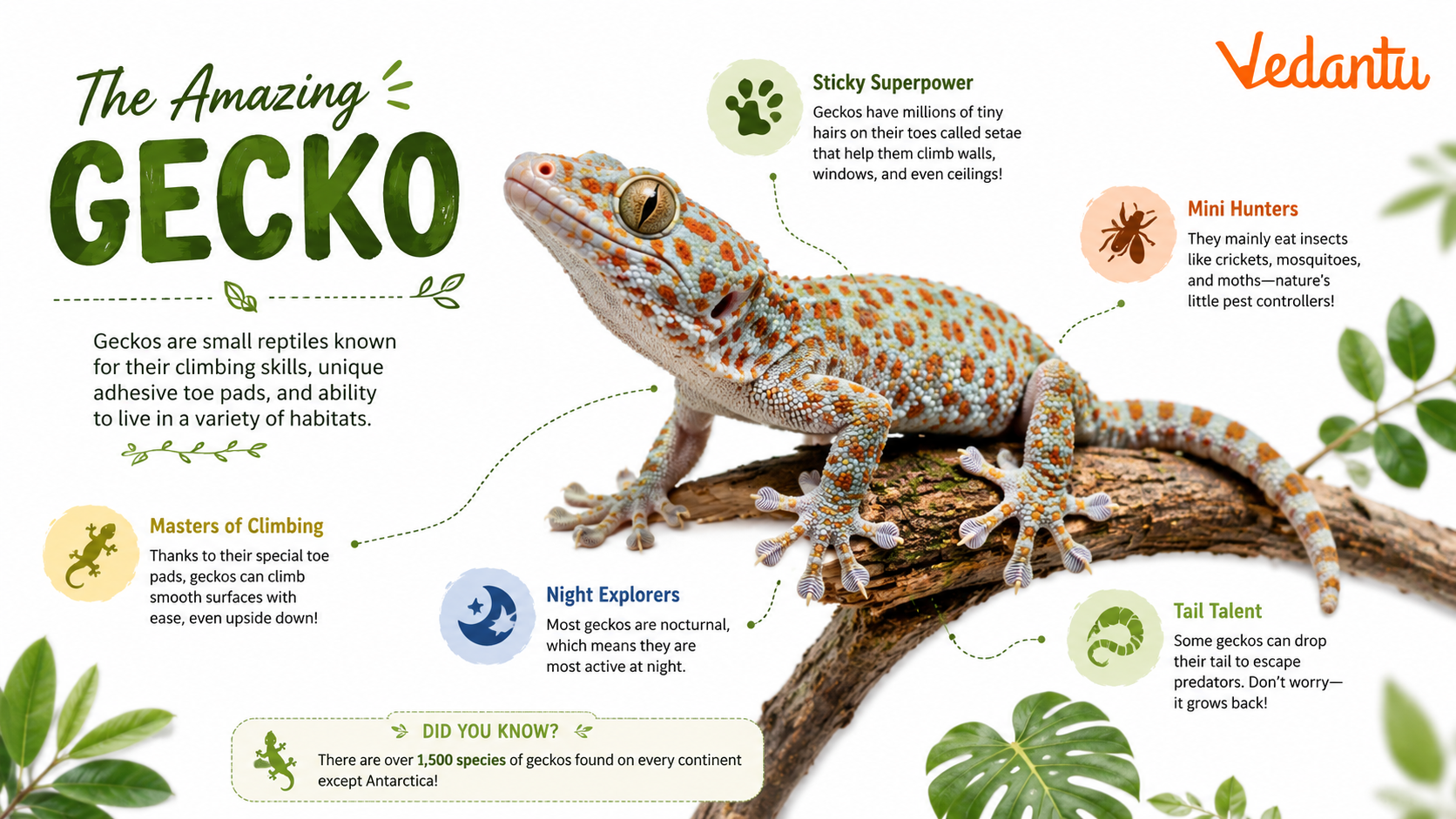
Quick Facts About Gecko
| Feature | Details |
|---|---|
| Common Name | Gecko |
| Animal Group | Reptile |
| Scientific Family | Gekkonidae |
| Size | 1.6 cm to 60 cm (depending on species) |
| Lifespan | 5–15 years |
| Diet | Insects, spiders, small invertebrates |
| Habitat | Forests, deserts, grasslands, houses |
| Activity Time | Mostly Nocturnal |
Appearance and Physical Characteristics
- Small to medium-sized lizards.
- Large eyes with vertical pupils (like cats).
- Soft, bumpy, or smooth skin.
- Colours include brown, green, grey, yellow, and even bright patterns.
- Long tail that helps with balance.
Gecko Habitat and Distribution
Geckos live in warm climates around the world. Their adaptability allows them to survive in many types of environments.
- Tropical rainforests
- Dry deserts
- Mountain regions
- Urban houses and buildings
Gecko Diet and Feeding Habits
The gecko diet mainly includes insects, making them helpful pest controllers.
Mosquitoes, flies, moths, crickets, spiders.
Mostly active at night.
Quick movement and sticky tongue grab.
Control insect population.
Behaviour and Lifestyle
- Mostly solitary animals.
- Active during the night (nocturnal).
- Hide under rocks, tree bark, or in cracks during the day.
- Some species can drop their tails to escape predators.
Sound or Call
Unlike many lizards, geckos can make sounds such as chirps, clicks, and squeaks. They use these sounds to communicate and warn others.
Gecko Life Cycle
- Egg Stage: Female geckos lay 1–2 hard-shelled eggs.
- Hatching: Eggs hatch in a few weeks.
- Young Gecko: Baby geckos look like tiny adults.
- Adult Stage: Grow, hunt independently, and reproduce.
What Makes Gecko Special?
Can climb walls and ceilings.
Can regrow lost tails.
Excellent eyesight in low light.
One of the few lizards that can make sounds.
Importance and Role in Nature
- Help control insect populations.
- Serve as food for birds and larger animals.
- Maintain balance in ecosystems.
Amazing Gecko Facts
Fun Facts for Kids
- Geckos can stick to ceilings without glue.
- They chirp like tiny birds.
- Baby geckos are ready to hunt right after hatching.
- They love porch lights because insects gather there.
- Some geckos change colour slightly to blend in.
FAQs on Gecko: Complete Guide to Species, Diet, and Behavior
1. What is a gecko?
A gecko is a small type of lizard known for its sticky feet and big eyes.
- Geckos belong to the reptile family.
- They are found in warm regions around the world.
- Most geckos are active at night (nocturnal).
- They are famous for climbing walls and ceilings.
2. Where do geckos live?
Geckos live in warm climates across many parts of the world.
- They are common in Asia, Africa, Australia, and the Americas.
- Some live in rainforests, deserts, and rocky areas.
- House geckos often live near people in homes and buildings.
3. How do geckos climb walls and ceilings?
Geckos climb walls using special sticky toe pads that act like natural glue.
- Their feet have tiny hair-like structures called setae.
- Setae help them stick using van der Waals forces.
- This allows them to walk on glass, walls, and even ceilings.
4. What do geckos eat?
Geckos mainly eat insects and are helpful for controlling pests.
- They eat flies, mosquitoes, and crickets.
- Larger geckos may eat small worms or other tiny animals.
- Pet geckos are often fed mealworms and fruit mixes.
5. Are geckos dangerous to humans?
Geckos are generally harmless and not dangerous to people.
- Most geckos do not bite.
- They are not poisonous or venomous.
- They prefer to run away instead of fight.
6. Why do geckos make chirping sounds?
Geckos chirp to communicate with other geckos.
- They make clicking or chirping noises.
- Sounds are used to warn others or attract mates.
- The tokay gecko is especially known for its loud call.
7. Can geckos regrow their tails?
Yes, many geckos can regrow their tails if they lose them.
- They drop their tail to escape predators.
- The tail continues to wiggle to distract danger.
- A new tail slowly grows back over time.
8. How long do geckos live?
Geckos can live for several years depending on the species.
- Wild geckos usually live 5–10 years.
- Pet geckos like the leopard gecko can live 15–20 years.
- Good care and diet increase lifespan.
9. What are the different types of geckos?
There are over 1,500 species of geckos around the world.
- Leopard gecko – popular pet species.
- Tokay gecko – known for loud calls.
- Crested gecko – has a unique crest above its eyes.
- House gecko – commonly found in homes.
10. Are geckos good pets for kids?
Some geckos can be good pets for responsible kids with adult supervision.
- Leopard geckos are calm and easy to handle.
- They need a warm tank and proper food.
- Regular cleaning and gentle care are important.
