






Are Daddy Longlegs Spiders, Harvestmen, or Crane Flies? Key Differences Explained
Daddy Longlegs is a common name used for small creatures with extremely long, thin legs. Many people confuse them with spiders, but not all Daddy Longlegs are true spiders. These fascinating animals are often seen in gardens, homes, and forests. Known for their delicate appearance and harmless nature, Daddy Longlegs are interesting to study because of their unique body structure, behaviour, and role in controlling insects.
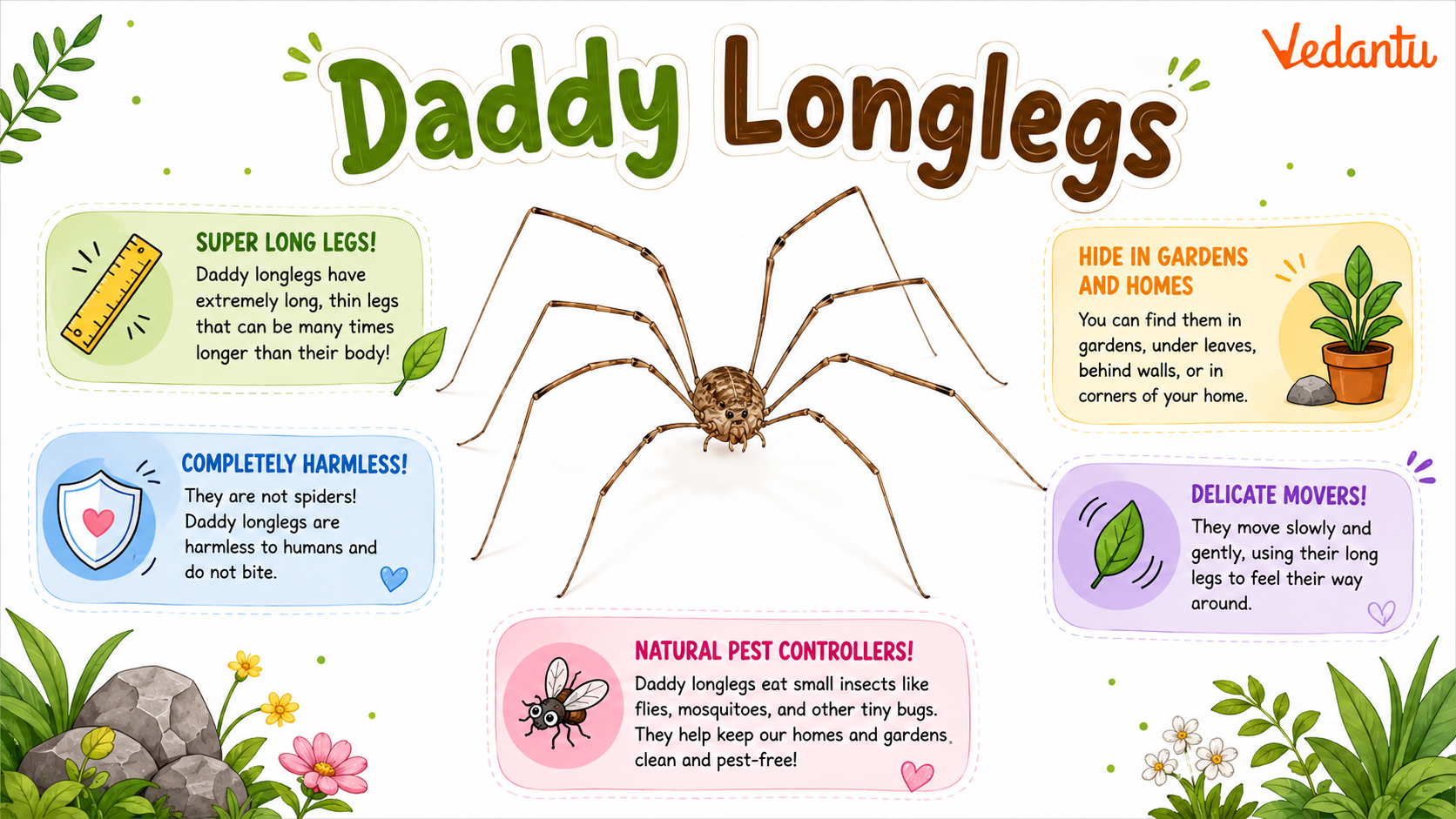
Quick Facts About Daddy Longlegs
| Feature | Details |
|---|---|
| Common Name | Daddy Longlegs |
| Scientific Group | Opiliones (Harvestmen) – most common type |
| Animal Group | Arachnid (related to spiders and scorpions) |
| Body Length | 2–10 mm (very small body) |
| Leg Span | Up to 5–7 cm in some species |
| Habitat | Gardens, forests, grasslands, homes |
| Diet | Insects, small invertebrates, plant matter |
| Lifespan | About 1 year |
Appearance and Physical Characteristics
- Very small, round or oval body.
- Extremely long, thin legs compared to body size.
- Usually brown, grey, or light tan in colour.
- Eight legs like spiders.
- Single, fused body segment (unlike true spiders).
Habitat and Distribution
- Found on every continent except Antarctica.
- Prefer moist and shady places.
- Common in gardens, forests, under rocks, and leaf litter.
- Sometimes seen inside homes, especially in corners or ceilings.
Diet and Feeding Habits
- Eat small insects like flies, ants, and beetles.
- Feed on dead insects and decaying plant material.
- Some species also eat fungi.
- Use their long legs to sense vibrations and locate food.
Behaviour and Lifestyle
Life Cycle of Daddy Longlegs
- Egg Stage: Female lays eggs in soil or under leaves.
- Young Stage: Hatchlings look like tiny adults but smaller.
- Growth: They shed their outer covering several times.
- Adult Stage: Fully grown with long legs and ready to reproduce.
The Daddy Longlegs life cycle usually completes within one year.
What Makes Daddy Longlegs Special?
Importance and Role in Nature
Amazing Daddy Longlegs Facts
- Not all Daddy Longlegs are spiders.
- There are over 6,000 known species worldwide.
- Their legs can be several times longer than their body.
- They do not spin webs.
- They have simple eyes placed on a small raised bump.
- They are one of the oldest land animals, existing for millions of years.
Fun Facts for Kids
FAQs on Daddy Longlegs: Fascinating Facts, Myths, and Identification Guide
1. What is a Daddy Longlegs?
A Daddy Longlegs is a common name used for different long-legged creatures, including spiders and insects.
- The name can refer to a Harvestman (order Opiliones).
- It can also mean a Cellar Spider (family Pholcidae).
- In some countries, it refers to a large Crane Fly.
- All have very long, thin legs and small bodies.
- The meaning depends on where you live (People Also Ask).
2. Is a Daddy Longlegs really a spider?
A Daddy Longlegs is sometimes a spider, but not always.
- Harvestmen are not true spiders.
- Cellar spiders are real spiders.
- Harvestmen have one body section, while spiders have two.
- True spiders can make silk webs and have venom glands.
- This difference often confuses kids and adults (People Also Search).
3. Are Daddy Longlegs poisonous or dangerous?
Most Daddy Longlegs are harmless and not dangerous to humans.
- Harvestmen do not have venom glands.
- Cellar spiders have mild venom but it is not harmful to people.
- They rarely bite humans.
- They are not aggressive insects or arachnids.
- The myth that they are “the most poisonous spider” is false.
4. Why are Daddy Longlegs called Daddy Longlegs?
The name Daddy Longlegs comes from their extremely long, skinny legs.
- “Daddy” is an old friendly nickname.
- “Longlegs” describes their body shape.
- The name is a common nickname, not a scientific term.
- Scientific names include Opiliones and Pholcidae.
- Different countries use the name differently.
5. Where do Daddy Longlegs live?
Daddy Longlegs live in many places around the world, both indoors and outdoors.
- They are found in gardens, forests, and fields.
- Cellar spiders like basements and ceilings.
- They prefer dark, damp places.
- They are common in North America, Europe, and other regions.
- They hide during the day and come out at night.
6. What do Daddy Longlegs eat?
Daddy Longlegs eat small insects and tiny creatures.
- They feed on flies, ants, and mosquitoes.
- Some eat dead insects (scavengers).
- Cellar spiders catch prey in sticky webs.
- Harvestmen may eat plant material and fungi.
- They help control pest insects naturally.
7. How many legs does a Daddy Longlegs have?
A Daddy Longlegs has eight long legs like other arachnids.
- They belong to the arachnid family.
- Arachnids have 8 legs, not 6 like insects.
- Their legs are much longer than their body.
- They use their legs to sense movement.
- If attacked, they can sometimes lose a leg to escape.
8. How are Harvestmen different from true spiders?
Harvestmen are different from true spiders in body shape and behavior.
- Harvestmen have one rounded body section.
- Spiders have two body parts: cephalothorax and abdomen.
- Harvestmen do not spin silk webs.
- They do not have venom glands.
- Both belong to the class Arachnida.
9. Do Daddy Longlegs help the environment?
Yes, Daddy Longlegs are helpful because they control insect populations.
- They eat pest insects like mosquitoes.
- They help keep homes and gardens balanced.
- They are part of the food chain.
- Birds and small animals eat them.
- They support a healthy ecosystem.
10. How long do Daddy Longlegs live?
Most Daddy Longlegs live for about one to two years.
- The lifespan depends on the species.
- Many hatch from eggs laid in soil.
- They grow through several stages.
- Some survive through winter in sheltered places.
- Their life cycle is simple compared to many insects.
