






Where Do Conch Live and What Do They Eat?
The conch is a beautiful sea snail known for its large spiral shell and cultural importance. Found in warm oceans, it is admired for its unique shape, smooth texture, and loud sound when blown like a trumpet. Conch facts reveal that this marine mollusk plays an important role in ocean ecosystems. From coral reefs to sandy sea beds, the conch habitat is rich and diverse, making it one of the most fascinating sea creatures to explore.
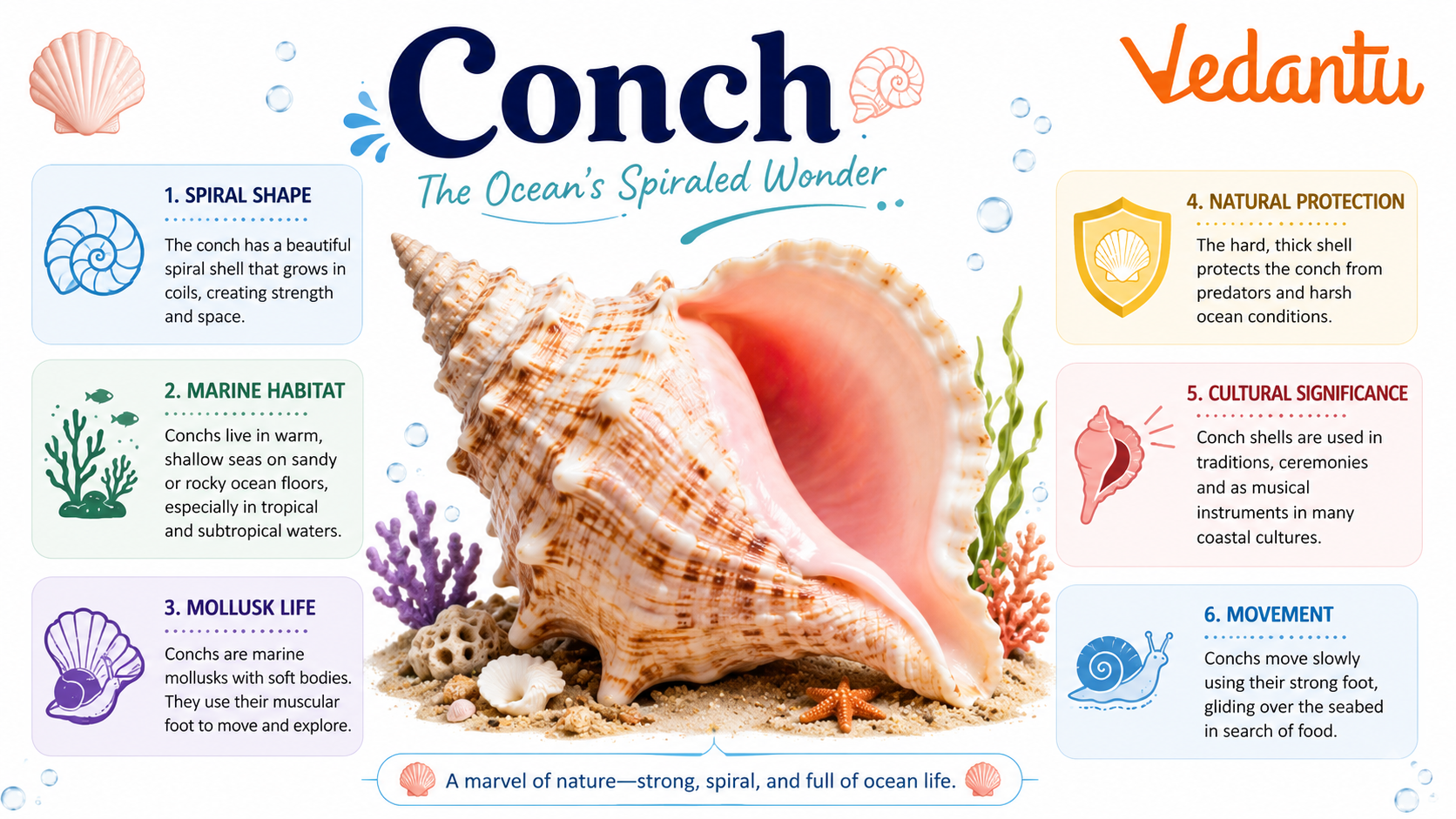
Quick Facts About Conch
| Feature | Details |
|---|---|
| Common Name | Conch |
| Scientific Group | Strombus (Queen Conch: Lobatus gigas) |
| Animal Group | Mollusk (Sea Snail) |
| Habitat | Warm shallow seas, coral reefs, sandy bottoms |
| Diet | Algae and sea plants |
| Average Size | 15–30 cm long (some grow larger) |
| Lifespan | Up to 20–30 years |
| Special Feature | Large spiral shell and trumpet-like sound |
Appearance and Physical Characteristics
- Hard, thick spiral shell with pointed spire.
- Outer shell is usually cream, brown, or pinkish.
- Inside of shell often bright pink or orange.
- Soft body with a muscular foot for movement.
- Two long eye stalks to detect light and movement.
One of the most interesting conch characteristics is its heavy shell, which protects it from predators. As the conch grows, its shell grows too, forming beautiful spiral patterns.
Conch Habitat and Distribution
- Lives in warm tropical waters.
- Common in the Caribbean Sea and Gulf of Mexico.
- Found near coral reefs and sea grass beds.
- Prefers shallow water with sandy bottoms.
The conch habitat provides plenty of algae and sea plants for food. Clear, warm waters help them grow properly and maintain healthy shells.
Conch Diet and Feeding Habits
Herbivore (plant-eater).
Algae, sea grass, and tiny sea plants.
Uses a tongue-like organ called radula to scrape food.
Helps control algae growth in marine ecosystems.
Behaviour and Lifestyle
- Mostly slow-moving sea creature.
- Uses strong muscular foot to “hop” forward.
- Usually found alone but may gather in groups during breeding.
- Pulls into shell when threatened.
Conch Life Cycle
- Egg Stage: Females lay long strings of eggs in sandy areas.
- Larva Stage: Tiny larvae float in water as plankton.
- Juvenile Stage: Young conchs settle on sea floor and grow small shells.
- Adult Stage: Shell thickens and forms a wide lip as it matures.
The conch life cycle can take several years before it becomes fully mature.
What Makes Conch Special?
Types of Conch
- Queen Conch: Large size, pink interior shell.
- Fighting Conch: Smaller, active and strong foot.
- Milk Conch: Smooth, lighter coloured shell.
Importance of Conch
Amazing Conch Facts
- Conchs can live for more than 20 years.
- Their shells grow thicker as they age.
- They can “leap” using their strong foot.
- The queen conch is one of the largest sea snails.
- They are sensitive to water pollution.
- Overfishing has reduced conch populations in some regions.
Interesting Facts About Conch
- The word “conch” is pronounced as “konk”.
- Not all spiral shells are true conchs.
- The pink colour inside the shell is highly valued.
- Conch pearls are rare and very expensive.
Fun Facts for Kids
FAQs on Conch: Fascinating Facts About This Unique Sea Snail
1. What is a conch?
A conch is a type of large sea snail known for its beautiful spiral shell.
- It is a marine mollusk that lives in warm ocean waters.
- The word “conch” is often used to describe its bright, spiral conch shell.
- Conches are part of the gastropod family, which means they move using a muscular foot.
- They are commonly found in the Caribbean Sea and tropical oceans.
2. Where do conch live?
Conch live in warm, shallow ocean waters around the world.
- They are commonly found in the Caribbean, Florida Keys, and Bahamas.
- They prefer seagrass beds and sandy sea floors.
- Conches thrive in tropical and subtropical waters.
- They hide in sand to protect themselves from predators.
3. What does a conch look like?
A conch has a large, spiral-shaped shell with bright colors inside.
- The shell is thick and heavy with a pointed top called a spire.
- Inside, it may have a shiny pink or orange color.
- The body of the conch is soft and has two long eye stalks.
- It moves using a strong, muscular foot.
4. What do conch eat?
Conch mainly eat plants found in the ocean.
- They feed on seagrass and algae.
- They use a rough tongue-like organ called a radula to scrape food.
- Young conch may also eat tiny sea plants.
- Their diet helps keep ocean ecosystems balanced.
5. Can you eat conch?
Yes, conch is eaten as seafood in many coastal countries.
- It is popular in Caribbean cuisine.
- Dishes include conch fritters, soups, and salads.
- The meat is firm and slightly sweet.
- Overfishing has led to conch conservation laws in some areas.
6. What is a conch shell used for?
A conch shell is used for decoration, music, and cultural traditions.
- People use it as a musical instrument by blowing into it like a horn.
- It is important in Hindu and Buddhist rituals.
- Some cultures use it as a signal horn.
- It is also collected as a decorative seashell.
7. How does a conch protect itself?
A conch protects itself using its hard outer shell and strong body.
- The thick spiral shell shields it from predators.
- It can pull its soft body inside the shell.
- Some conch use a sharp, claw-like structure called an operculum for defense.
- They may bury themselves in sand to hide.
8. How long do conch live?
Conch can live for many years in the ocean.
- A queen conch can live up to 20–30 years.
- They grow slowly over time.
- Their shell gets thicker and larger as they age.
- Growth rings on the shell can show their age.
9. What is a queen conch?
The queen conch is the most famous and largest type of conch species.
- Its scientific name is Lobatus gigas.
- It has a large shell with a bright pink interior.
- It lives mainly in the Caribbean Sea.
- It is important for both marine ecosystems and local fishing industries.
10. Why are conch important to the ocean?
Conch are important because they help keep ocean ecosystems healthy.
- They control the growth of seagrass and algae.
- They are a food source for animals like sea turtles and humans.
- Their shells provide shelter for small sea creatures after they die.
- They support biodiversity in coral reef habitats.
