






Where Do Catfish Live, What Do They Eat, and How Do They Survive?
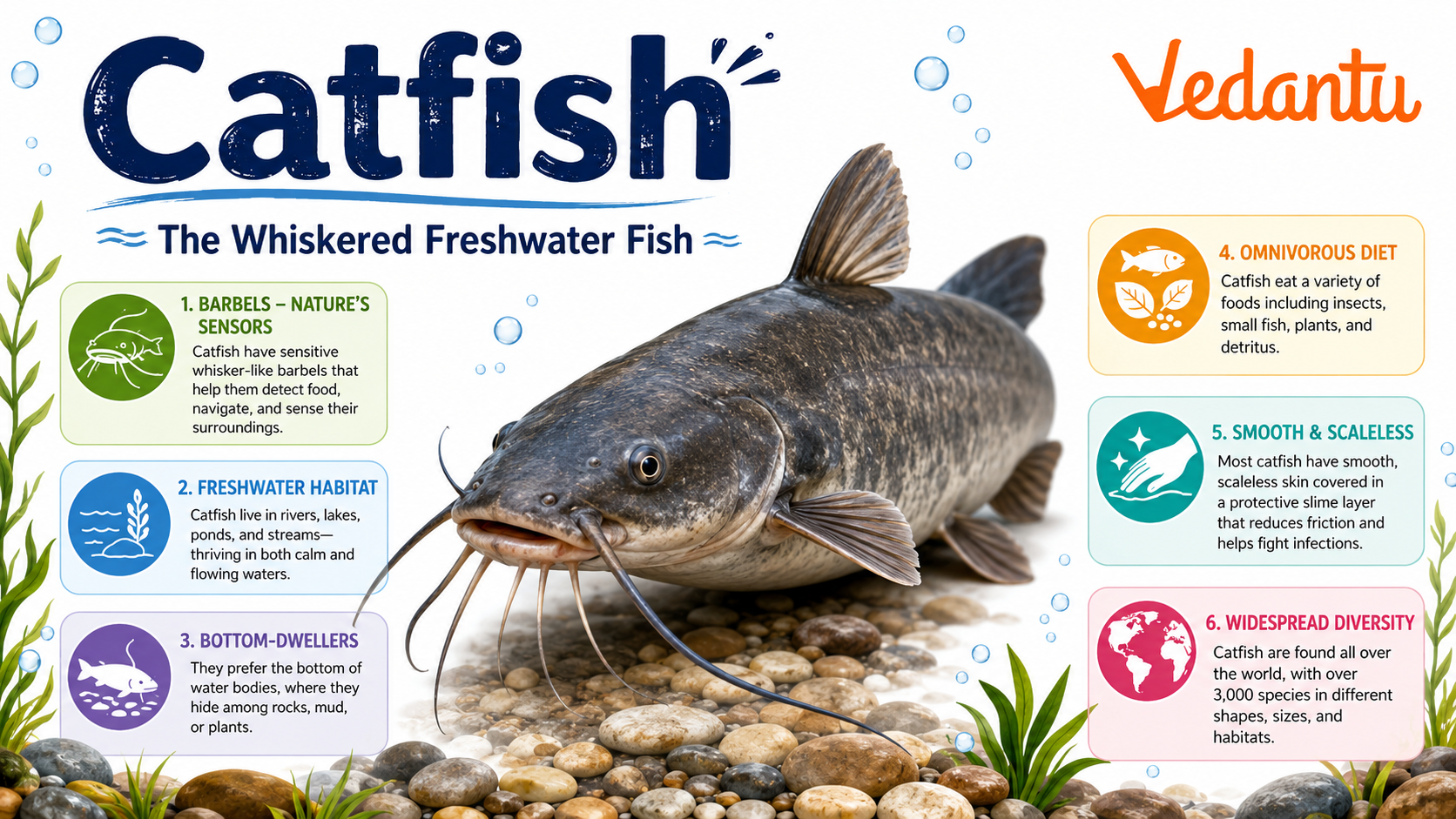
Catfish are fascinating freshwater and marine fish known for their long whisker-like barbels and smooth, scaleless bodies. Found across the world, these unique fish live in rivers, lakes, ponds, and even oceans. With over 3,000 species, catfish show amazing diversity in size, colour, and behaviour. From tiny aquarium species to giant river monsters, catfish facts reveal how well they adapt to different water habitats and survive using special senses.
Quick Facts and Statistics
| Feature | Details |
|---|---|
| Common Name | Catfish |
| Scientific Order | Siluriformes |
| Animal Group | Fish |
| Number of Species | 3,000+ species worldwide |
| Habitat | Rivers, lakes, ponds, swamps, oceans |
| Diet | Omnivore (plants and small animals) |
| Lifespan | 8–20 years (varies by species) |
| Special Feature | Sensitive barbels to detect food |
Appearance and Physical Characteristics
- Whiskers (Barbels): Long, thin feelers around the mouth that look like a cat’s whiskers.
- Body Shape: Usually flat-headed with a long, smooth body.
- Skin: Most species do not have scales; instead, they have smooth, slimy skin.
- Fins: Strong dorsal and pectoral fins, sometimes with sharp spines.
- Size Range: From a few centimetres to over 2.5 metres (giant Mekong catfish).
Habitat and Distribution
- Found on every continent except Antarctica.
- Live mostly in freshwater habitats like rivers and lakes.
- Some species survive in salty ocean waters.
- Prefer muddy or dark waters where they can hide easily.
- Often stay near the bottom of water bodies.
The catfish habitat is very diverse. These fish are highly adaptable and can live in slow-moving rivers, swamps, and even flooded forests.
Diet and Feeding Habits
Catfish eat plants, algae, insects, worms, and small fish.
They search for food along the river or lake bed.
Many species are more active and feed at night.
They help control insect and small fish populations.
The catfish diet depends on species and habitat, but most use their barbels to sense vibrations and smells in the water.
Behaviour and Lifestyle
- Mostly nocturnal (active at night).
- Prefer hiding under rocks, logs, or muddy bottoms.
- Some species are solitary, while others gather in groups.
- Can produce sounds using their fins and swim bladder.
- Use sharp spines for defence against predators.
Life Cycle of Catfish
- Egg Stage: Female lays eggs in nests or safe areas.
- Larva Stage: Eggs hatch into tiny larvae.
- Juvenile Stage: Young fish grow and develop fins and barbels.
- Adult Stage: Fully grown catfish reproduce and continue the cycle.
The catfish life cycle varies among species, but many show parental care, with males guarding the eggs.
What Makes Catfish Special?
Types and Diversity
- Channel Catfish: Common in North America.
- Blue Catfish: Large species found in big rivers.
- Cory Catfish: Small and popular in aquariums.
- Giant Mekong Catfish: One of the largest freshwater fish.
Importance and Role in Nature
Amazing Catfish Facts
- There are more than 3,000 species of catfish.
- Some catfish can grow longer than a tall human.
- They can survive in muddy and dark waters.
- Certain species can breathe air for short periods.
- Many catfish make grunting or croaking sounds.
- They are farmed widely for food.
Interesting Facts About Catfish
- Not all catfish have scales.
- Their whiskers are not for smelling only but also for touching and tasting.
- Some species are venomous and have mild toxins in their spines.
- They are one of the most diverse fish groups.
Fun Facts for Kids
FAQs on Catfish: Amazing Facts About This Whiskered Freshwater Fish
1. What is a catfish?
A catfish is a type of fish known for its whisker-like feelers called barbels.
- They belong to the group Siluriformes.
- They have smooth skin instead of scales.
- They use their barbels to find food in dark or muddy water.
- They live in rivers, lakes, ponds, and even oceans.
2. Why is it called a catfish?
A catfish is called a catfish because its long barbels look like a cat’s whiskers.
- Barbels help them taste and sense movement.
- These whiskers make them unique among freshwater fish.
- The name comes from their cat-like facial features.
3. Where do catfish live?
Catfish live in a wide range of water habitats around the world.
- Most species prefer freshwater like rivers and lakes.
- Some live in brackish water or the ocean.
- They are found on every continent except Antarctica.
- They like muddy or dark water where they can hide.
4. What do catfish eat?
Catfish are mostly bottom feeders that eat many kinds of food.
- They eat insects, worms, and small fish.
- Some species eat plants and algae.
- Large catfish may eat frogs or smaller animals.
- They use their strong sense of smell to find food.
5. Are catfish dangerous?
Most catfish are not dangerous to humans, but some have mild defenses.
- Some species have sharp spines on their fins.
- A few can give a painful sting if handled carelessly.
- They are generally shy and avoid people.
- Giant species are rare and usually harmless.
6. How big can catfish grow?
Catfish size varies greatly depending on the species.
- Small species grow only a few inches long.
- The Mekong giant catfish can grow over 9 feet (3 meters).
- Some can weigh more than 600 pounds (270 kg).
- Most common freshwater catfish are medium-sized.
7. Do catfish have scales?
Most catfish do not have scales and instead have smooth, slimy skin.
- Their skin is covered with a protective mucus layer.
- This helps protect them from germs and injury.
- Some species have bony plates called scutes.
8. How do catfish find food in muddy water?
Catfish find food using their strong senses of smell and touch.
- Their barbels act like taste sensors.
- They can detect tiny movements in water.
- They are active at night, making them nocturnal fish.
- This helps them survive in dark or cloudy water.
9. Are catfish important to people?
Catfish are important for food, fishing, and ecosystems.
- They are widely farmed in aquaculture.
- They are popular in cooking, especially in Southern cuisine.
- They help clean waterways by eating waste.
- Many people enjoy catching catfish for sport.
10. How long do catfish live?
Catfish can live for many years depending on their species and habitat.
- Small species may live 5–10 years.
- Larger species can live over 20 years.
- Some aquarium catfish live longer with proper care.
- Clean water and good food help them live longer.
