






What Is a Canine? Characteristics, Types, Behavior, and Fun Facts
Canines are a fascinating group of mammals that include dogs, wolves, foxes, jackals, and coyotes. They are known for their sharp senses, strong social bonds, and intelligent behaviour. From wild forests to our homes, canines have adapted to live in many different environments. Learning about canine facts, habitat, diet, characteristics, and life cycle helps us understand why these animals are so important in nature and in human life.
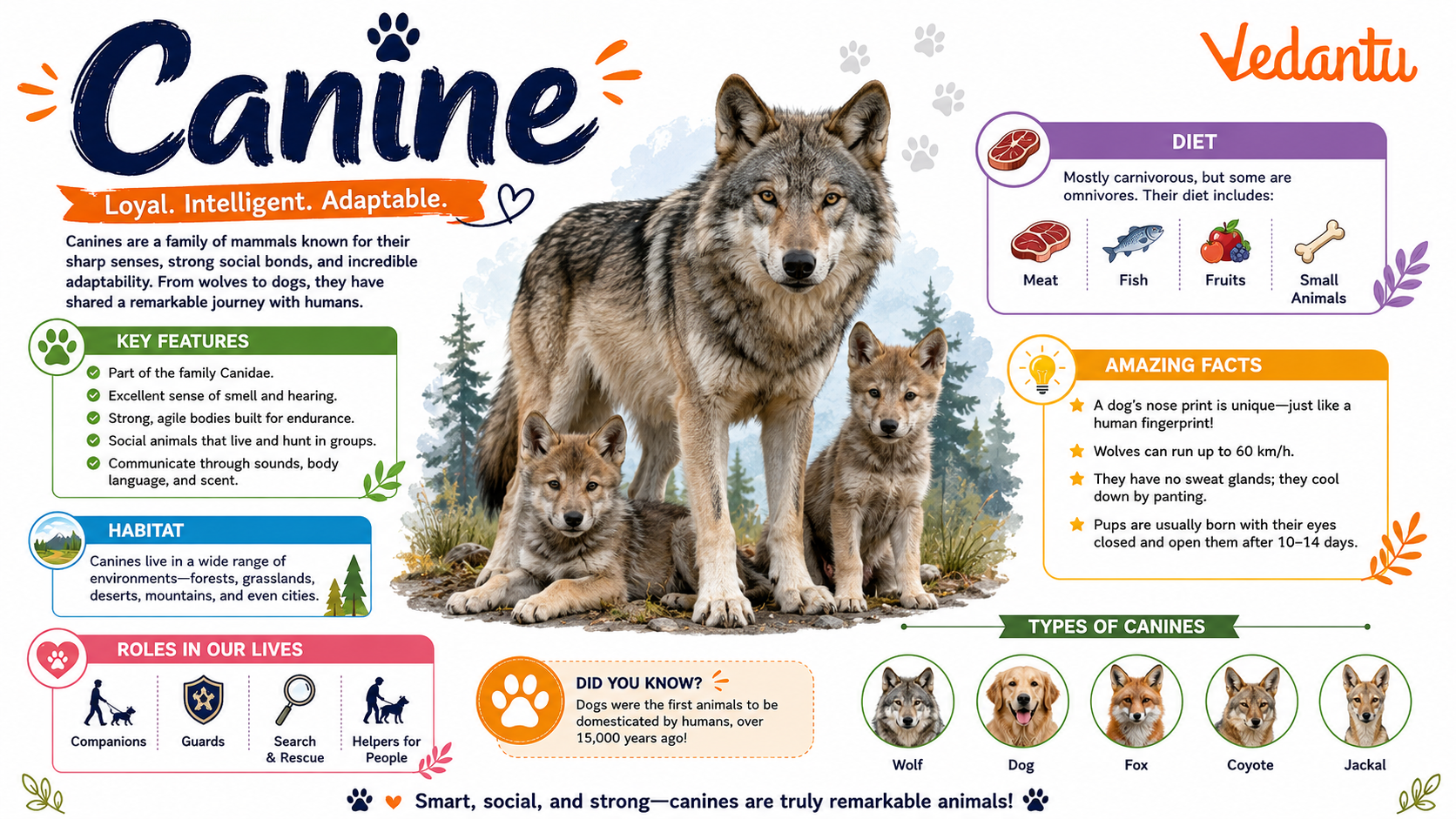
Quick Facts About Canine
| Feature | Details |
|---|---|
| Common Group Name | Canine (Dog family) |
| Scientific Family | Canidae |
| Animal Group | Mammal |
| Diet | Mainly Carnivore (some are Omnivores) |
| Habitat | Forests, grasslands, deserts, mountains, and human homes |
| Lifespan | 10–15 years (domestic dogs), varies in wild species |
| Young One | Pup |
| Special Feature | Excellent sense of smell and hearing |
Appearance and Physical Characteristics
- Medium to large-sized mammals with strong, flexible bodies.
- Covered with fur that may be short, long, thick, or thin.
- Long snout with sharp teeth designed for tearing meat.
- Four strong legs with claws (not retractable).
- Long bushy or straight tail used for balance and communication.
Habitat and Distribution
- Wild canines live in forests, grasslands, deserts, and mountains.
- Wolves are found in North America, Europe, and Asia.
- Foxes are found almost all over the world.
- Domestic dogs live with humans in homes across the globe.
- They adapt well to cold, hot, and moderate climates.
Diet and Feeding Habits
Most wild canines eat meat such as deer, rabbits, rodents, and birds.
Domestic dogs can eat meat, vegetables, grains, and special dog food.
Wolves often hunt in packs to catch larger prey.
Canines help control prey populations and maintain ecosystem balance.
Behaviour and Lifestyle
- Many wild canines live and hunt in packs.
- They communicate using howls, barks, growls, and body language.
- Highly territorial and protective of their group.
- Some species are active during the day; others are more active at night.
- Domestic dogs are known for loyalty and bonding with humans.
Sound or Call
- Howl: Used by wolves to communicate over long distances.
- Bark: Common in domestic dogs for alert and expression.
- Growl: Warning sound when feeling threatened.
Life Cycle of a Canine
- Birth: Female gives birth to live young called pups.
- Puppy Stage: Pups are born blind and depend on their mother.
- Growing Stage: They learn to walk, hunt, and socialise.
- Adult Stage: Fully grown and capable of hunting or reproduction.
- Old Age: Activity reduces as they grow older.
Types and Diversity of Canines
Wild, strong pack hunters.
Small, clever, and adaptable.
Found mainly in Africa and Asia.
Hundreds of breeds with different sizes and personalities.
Temperament and Domestic Life
- Friendly and loyal companions.
- Easy to train with patience and rewards.
- Used for guarding, herding, hunting, and assisting people with disabilities.
- Require regular exercise, grooming, and proper food.
Importance and Role in Nature
Control populations of herbivores and small animals.
Provide emotional support and protection.
Help in search-and-rescue and police work.
Assist farmers in managing livestock.
Amazing Canine Facts
- Dogs were domesticated from wolves thousands of years ago.
- There are more than 340 recognised dog breeds worldwide.
- Wolves can travel long distances in search of food.
- Foxes use their bushy tails for balance and warmth.
- Canines have excellent night vision.
- Some dogs can understand over 200 words and gestures.
Interesting Facts About Canine
Fun Facts for Kids
- Puppies wag their tails when they are happy.
- Dogs can dream just like humans.
- Some dogs love swimming, while others prefer running.
- Foxes have very sharp hearing.
- Wolves live in families called packs.
FAQs on Canine Explained: Species, Traits, and Roles of Dogs
1. What is a canine?
A canine is a member of the dog family, including dogs, wolves, foxes, and coyotes.
- The word canine comes from the Latin word Canis, meaning dog.
- It refers to animals in the Canidae family.
- Common examples include domestic dogs, wolves, foxes, and jackals.
- Canines are known for their sharp canine teeth, strong sense of smell, and social behavior.
2. What animals belong to the canine family?
The canine family (Canidae) includes wild and domestic dog-like animals.
- Domestic dogs (Canis lupus familiaris)
- Gray wolves
- Foxes
- Coyotes
- Jackals
- Dingoes
3. What are the main characteristics of canines?
Canines have special physical and behavioral traits that help them survive.
- Sharp canine teeth for tearing food
- Excellent sense of smell and hearing
- Strong legs built for running
- Fur-covered bodies
- Social behavior, often living in packs
4. Are domestic dogs and wolves the same species?
Yes, domestic dogs and wolves belong to the same species but are different subspecies.
- Scientific name of wolf: Canis lupus
- Scientific name of dog: Canis lupus familiaris
- Dogs were domesticated over 15,000 years ago.
- Dogs are usually friendlier and live with humans.
5. What do canines eat?
Most canines are omnivores, meaning they eat both meat and plants.
- Wild canines eat meat, such as deer or rabbits.
- They may also eat fruits, berries, and insects.
- Domestic dogs eat specially prepared dog food with balanced nutrients.
6. Where do canines live?
Canines live in many different habitats around the world.
- Forests
- Grasslands
- Deserts
- Mountains
- Human homes (for pet dogs)
7. How do canines communicate?
Canines communicate using sounds, body language, and scent signals.
- Barking, howling, and whining
- Body signals like wagging tails or raised ears
- Scent marking to show territory
8. Why are canines important to humans?
Canines, especially dogs, play important roles in human life.
- They are loving pets and companions.
- They work as police dogs and rescue dogs.
- They help as guide dogs for people with disabilities.
- They assist in farming as herding dogs.
9. How long do canines live?
The lifespan of a canine depends on its species and size.
- Domestic dogs live about 10–15 years.
- Smaller dog breeds often live longer than large breeds.
- Wild canines like wolves usually live 6–8 years in the wild.
10. What is the difference between canines and felines?
Canines and felines belong to different animal families with unique traits.
- Canines are part of the Canidae family (dogs, wolves, foxes).
- Felines are part of the Felidae family (cats, lions, tigers).
- Canines usually live in packs, while felines are often solitary.
- Canines have longer snouts; felines have shorter faces and retractable claws.
