






What Is a Canada Goose? Facts, Diet, Migration, and Where They Live
The Canada Goose is one of the most well-known water birds in the world. Famous for its V-shaped flying formation and loud honking calls, this bird is often seen near lakes, rivers, and parks. Canada Goose facts reveal that it is strong, intelligent, and highly social. With its striking black head and white chin strap, this bird is easy to recognise. Let’s explore the Canada Goose habitat, diet, life cycle, characteristics, and why it is important in nature.
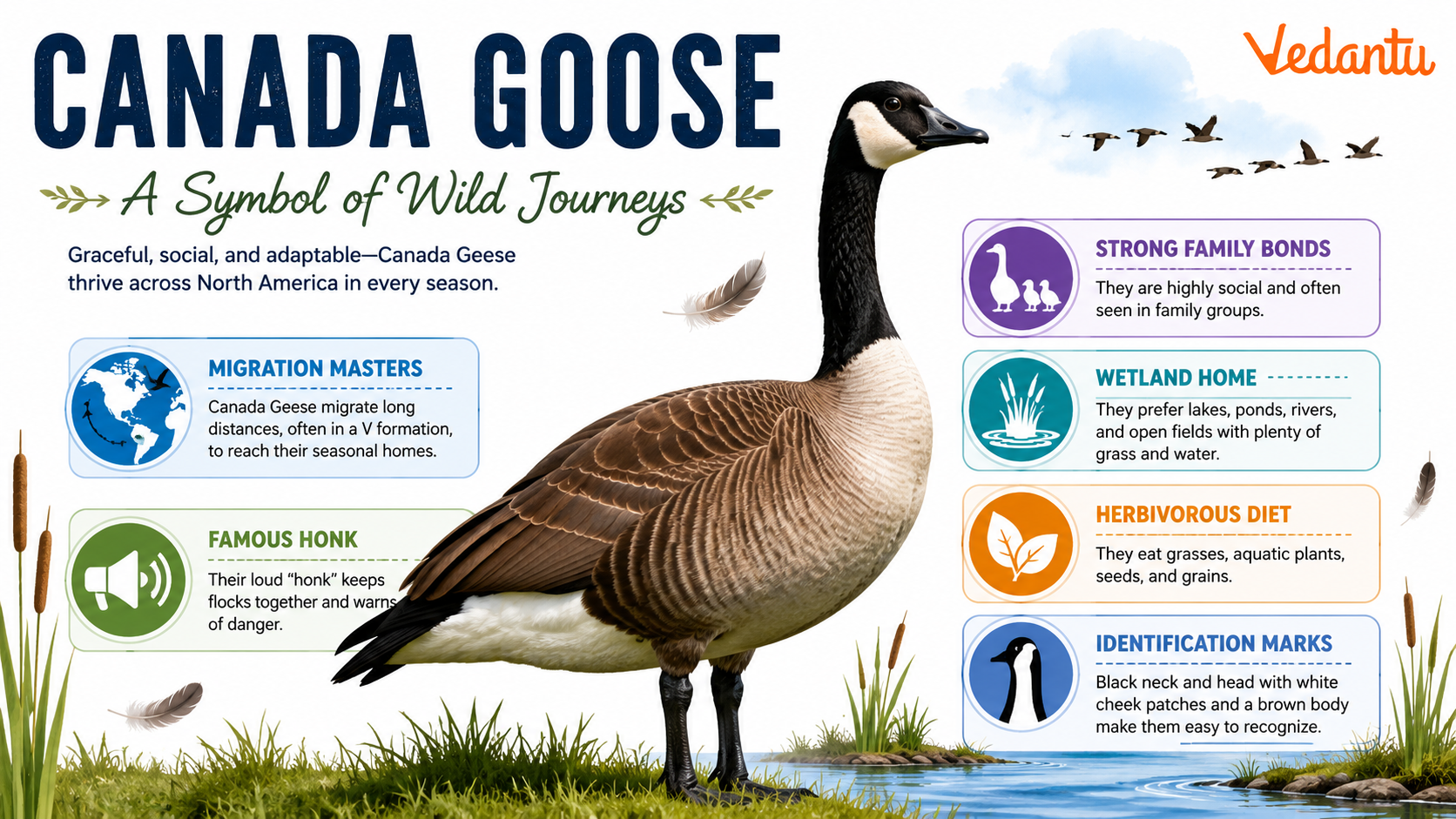
Quick Facts and Statistics
| Feature | Details |
|---|---|
| Common Name | Canada Goose |
| Scientific Name | Branta canadensis |
| Animal Group | Bird |
| Length | 75–110 cm |
| Wingspan | 127–185 cm |
| Weight | 3–6.5 kg |
| Diet | Herbivore |
| Habitat | Lakes, ponds, rivers, grasslands |
| Lifespan | 10–25 years |
| Conservation Status | Least Concern |
Appearance and Physical Characteristics
- Large body with a long black neck.
- Black head with a white chin strap (looks like a small white band under the chin).
- Brown body feathers with a lighter chest.
- Strong black beak and webbed feet for swimming.
- Wide wings built for long-distance flying.
Habitat and Distribution
The Canada Goose habitat includes freshwater lakes, ponds, rivers, marshes, and open grasslands. These birds are native to North America but are now found in many parts of Europe and Asia as well.
- Prefer areas near water.
- Often seen in parks and golf courses.
- Migrate south during winter.
- Return north in spring for breeding.
Diet and Feeding Habits
Canada Goose diet: Mainly herbivorous.
- Grasses and leaves
- Aquatic plants
- Grains and seeds
- Sometimes small insects
They feed by grazing on land or dipping their heads underwater to pull up plants.
Behaviour and Lifestyle
Live in large groups called flocks.
Fly in a V shape to save energy during migration.
Adults guard their young carefully.
Travel thousands of kilometres each year.
Life Cycle of a Canada Goose
- Egg Stage: Female lays 2–8 eggs in a nest near water.
- Incubation: Eggs hatch after about 25–30 days.
- Goslings: Baby geese are called goslings and can walk and swim within a day.
- Juvenile Stage: Young birds learn to fly in about 2–3 months.
- Adult Stage: Become fully mature in about 2–3 years.
Flight Adaptations
- Large powerful wings for long-distance travel.
- Light but strong bones.
- Strong chest muscles for flapping.
- Ability to fly at high altitudes.
- V-formation reduces air resistance and saves energy.
Sound or Call
Canada Geese are famous for their loud “honk-honk” sound.
- Used to communicate while flying.
- Warn others of danger.
- Keep the flock together during migration.
Importance and Role in Nature
Amazing Facts About Canada Goose
Interesting Facts About Canada Goose
- They can sleep while floating on water.
- Goslings stay with parents for nearly a year.
- They often return to the same nesting place every year.
- Their migration is guided by the sun and Earth’s magnetic field.
Fun Facts for Kids
FAQs on Canada Goose: Identification, Habitat, and Behavior Guide
1. What is a Canada Goose?
The Canada Goose is a large wild bird known for its long black neck and loud honking sound.
- Scientific name: Branta canadensis
- Native to North America
- Recognized by its black head and neck with a white chinstrap
- Often seen flying in a V-shaped formation
2. Where do Canada Geese live?
Canada Geese live near freshwater areas like lakes, rivers, and ponds.
- Found across Canada, the United States, and parts of Europe
- Prefer wetlands, parks, and grassy fields
- Nest close to water for safety from predators
3. Why do Canada Geese migrate?
Canada Geese migrate to find warmer weather and more food.
- Fly south during winter
- Return north in spring to breed
- Travel in V-formation to save energy
4. What do Canada Geese eat?
Canada Geese are herbivores that mostly eat plants.
- Grasses and leaves
- Seeds and grains
- Aquatic plants
- Sometimes small insects
5. How big is a Canada Goose?
A Canada Goose is a large bird with a wide wingspan.
- Length: about 30–43 inches
- Wingspan: up to 6 feet
- Weight: between 6–14 pounds
6. Why do Canada Geese honk?
Canada Geese honk to communicate with each other.
- Warn others about danger
- Stay connected during migration flights
- Protect their territory
7. Are Canada Geese dangerous?
Canada Geese are usually calm but can become protective.
- May hiss if they feel threatened
- Protect their nests and babies (goslings)
- Rarely attack unless provoked
8. What are baby Canada Geese called?
Baby Canada Geese are called goslings.
- Born covered in soft yellow feathers
- Can walk and swim within one day
- Stay with parents for protection
9. How long do Canada Geese live?
Canada Geese can live for many years in the wild.
- Average lifespan: 10–25 years
- Longer life in safe environments
- Main threats include predators and habitat loss
10. How can you identify a Canada Goose?
You can identify a Canada Goose by its unique black and white markings.
- Black neck and head
- White chinstrap patch
- Brown body with light chest
- Loud honking call
