






Boer Goat Facts: Origin, Weight, Temperament, and Meat Production
The Boer Goat is one of the most famous meat goat breeds in the world. Known for its strong body, fast growth, and high-quality meat, this goat is widely raised by farmers. Originally from South Africa, Boer goats are now found in many countries. In this page, you will explore Boer Goat facts, habitat, diet, characteristics, life cycle, importance, and interesting facts in a simple and student-friendly way.
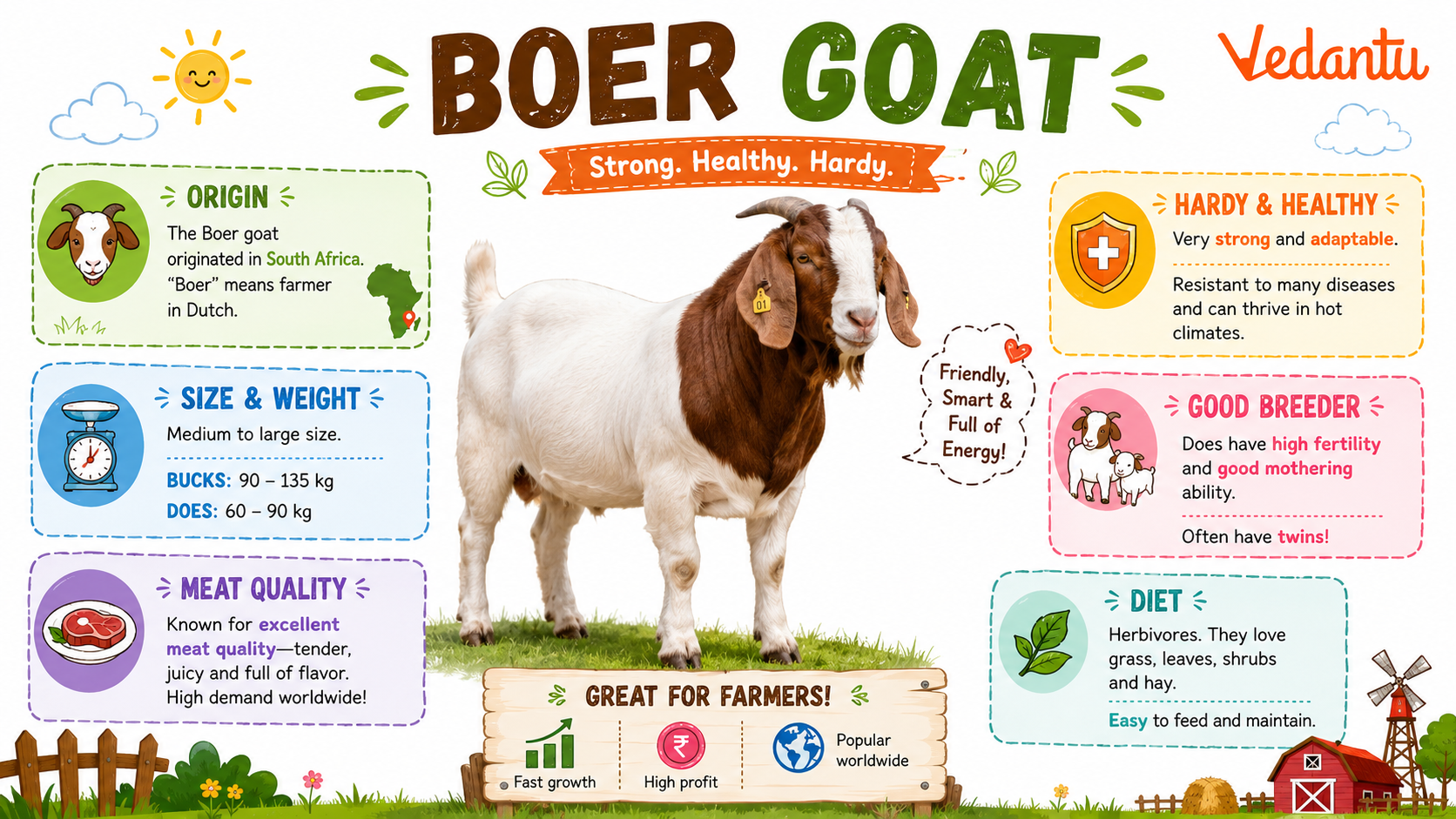
Quick Facts About Boer Goat
| Feature | Details |
|---|---|
| Common Name | Boer Goat |
| Origin | South Africa |
| Animal Group | Mammal |
| Type | Domestic Livestock |
| Weight | Male: 110–135 kg Female: 90–100 kg |
| Lifespan | 8–12 years |
| Diet | Herbivore (plants, grass, shrubs) |
| Young One | Kid |
| Main Use | Meat Production |
Appearance and Physical Characteristics
- Large, muscular, and strong body.
- White body with a reddish-brown head.
- Long, droopy ears.
- Curved backward horns.
- Short, smooth hair coat.
- Broad chest and well-developed legs.
One of the most noticeable Boer Goat characteristics is its heavy and solid build. It grows faster than many other goat breeds and has a wide body shape that supports high meat production.
Habitat and Distribution
- Originally from South Africa.
- Now found in India, USA, Australia, and many other countries.
- Can adapt to hot, dry, and semi-arid climates.
- Raised mainly on farms and grasslands.
The Boer Goat habitat usually includes open farms, grazing lands, and dry regions. These goats are highly adaptable and can survive in different weather conditions if properly cared for.
Diet and Feeding Habits
- Herbivores – eat only plant-based food.
- Feed on grass, leaves, shrubs, and crop residues.
- Can browse small bushes and weeds.
- Require clean water daily.
The Boer Goat diet plays an important role in its fast growth. They are excellent grazers and can eat a wide variety of plants, which makes them easy to raise in rural areas.
Behaviour and Lifestyle
Life Cycle of a Boer Goat
- Birth: A baby goat is called a kid. Twins are common.
- Kid Stage: Drinks mother’s milk and starts nibbling plants within weeks.
- Young Goat: Grows quickly and gains weight fast.
- Adult: Reaches maturity around 5–8 months.
The Boer Goat life cycle is known for rapid growth and strong reproduction ability, which makes the breed highly popular among farmers.
Temperament and Domestic Life
- Friendly and easy to handle.
- Suitable for small and large farms.
- Requires shelter from heavy rain and extreme cold.
- Needs regular vaccination and proper feeding.
Boer goats are mainly raised for commercial meat production. They are hardy animals and can adapt well to different farming systems.
Importance of Boer Goat
Amazing Facts About Boer Goat
- Boer goats grow faster than most other goat breeds.
- They can give birth to twins or even triplets.
- They have strong resistance to diseases.
- They are considered one of the best meat goat breeds worldwide.
- They have excellent mothering ability.
- They can adapt to tough environmental conditions.
Interesting Facts About Boer Goat
Fun Facts for Kids
- A baby Boer goat is called a kid.
- They love climbing on rocks and small platforms.
- They can recognize their owners.
- They chew food again after swallowing (called rumination).
- They can make funny bleating sounds!
FAQs on Boer Goat: Complete Guide to Size, Diet, and Care
1. What is a Boer Goat?
A Boer Goat is a large meat-producing goat breed known for its fast growth and strong body.
- Originated in South Africa
- Bred mainly for meat production
- Recognized for its white body and brown head
- Popular in goat farming and livestock projects
- Known for strength, size, and adaptability
2. Where do Boer Goats come from?
The Boer Goat comes from South Africa and was developed for high-quality meat.
- The word “Boer” means farmer in Dutch/Afrikaans
- Bred in the early 1900s
- Created by crossing local African goats
- Now raised worldwide in the USA, Australia, and Europe
- Common in commercial goat farming
3. What does a Boer Goat look like?
A Boer Goat has a strong body with a special color pattern that makes it easy to recognize.
- White body with a red or brown head
- Long, floppy ears
- Curved horns
- Muscular chest and shoulders
- Short, smooth hair
4. What are Boer Goats used for?
Boer Goats are mainly used for meat production because they grow quickly and have strong muscles.
- Raised for chevon (goat meat)
- Used in crossbreeding programs
- Shown in agricultural fairs and 4-H events
- Help improve meat quality in other goat breeds
- Important in commercial livestock farming
5. How big do Boer Goats get?
Boer Goats are one of the largest goat breeds in the world.
- Adult males (bucks) weigh about 200–300 pounds
- Adult females (does) weigh about 150–200 pounds
- Grow faster than many other goat breeds
- Have a broad, muscular body
- Reach market weight quickly
6. What do Boer Goats eat?
Boer Goats eat plants and are known as herbivores.
- Grass and pasture plants
- Leaves, shrubs, and weeds
- Hay and grains on farms
- Mineral supplements for health
- Fresh, clean water daily
7. Are Boer Goats easy to care for?
Yes, Boer Goats are hardy animals that adapt well to different climates.
- Strong immune systems
- Can live in hot and dry areas
- Need shelter from extreme weather
- Require regular health checks
- Benefit from proper fencing and safe housing
8. How long do Boer Goats live?
A healthy Boer Goat can live for many years with good care.
- Average lifespan is 8–12 years
- Good nutrition helps them live longer
- Regular veterinary care is important
- Safe housing prevents injuries
- Proper breeding management supports longevity
9. What makes Boer Goats special compared to other goat breeds?
Boer Goats are special because they grow faster and produce more meat than many other goat breeds.
- High fertility rates
- Strong mothering ability
- Fast weight gain
- Excellent meat quality
- Popular choice in commercial goat farming
10. Can kids raise Boer Goats for school projects?
Yes, kids can raise Boer Goats for school and 4-H livestock projects with adult supervision.
- Great for learning responsibility
- Common in 4-H and FFA programs
- Teach animal care and farming skills
- Often shown at county fairs
- Help students understand agriculture and livestock management
