






How Does the Arctic Fox Survive in Extreme Cold?
The Arctic Fox is one of the most amazing animals found in the icy Arctic region. Known for its thick white fur and clever survival skills, this small mammal can live in extremely cold temperatures where very few animals survive. From changing its coat color to hunting under deep snow, the Arctic Fox is full of surprising adaptations. Let’s explore Arctic Fox facts, habitat, diet, characteristics, and why this fluffy animal is so special.
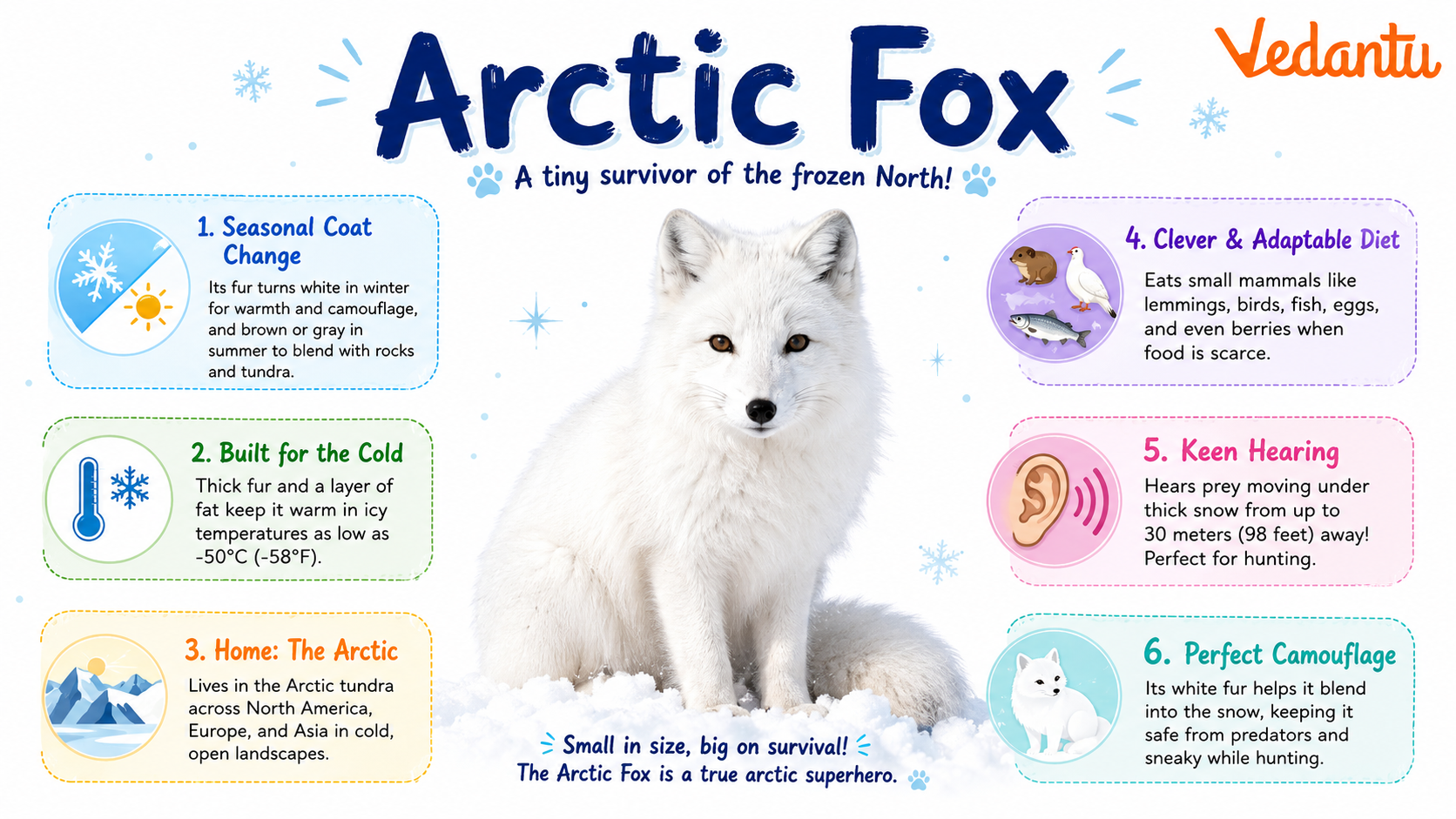
Quick Facts About Arctic Fox
| Feature | Details |
|---|---|
| Common Name | Arctic Fox |
| Scientific Name | Vulpes lagopus |
| Animal Group | Mammal |
| Size | 46–68 cm long (without tail) |
| Weight | 2.5–9 kg |
| Lifespan | 3–6 years (wild) |
| Habitat | Arctic tundra |
| Diet | Lemmings, birds, fish, carrion |
| Conservation Status | Least Concern (some local populations at risk) |
Appearance and Physical Characteristics
- Small, compact body with short legs and rounded ears.
- Thick, fluffy fur that keeps it warm in freezing temperatures.
- White coat in winter and brown/grey coat in summer.
- Long bushy tail used for warmth and balance.
- Furry paws that act like natural snow boots.
Arctic Fox Habitat and Distribution
The Arctic Fox habitat includes some of the coldest places on Earth.
- Lives in the Arctic tundra.
- Found in Greenland, Canada, Alaska, Russia, Iceland, and Scandinavia.
- Prefers open, treeless areas covered with snow and ice.
- Builds dens in the ground with many tunnels and entrances.
Diet and Feeding Habits
The Arctic Fox diet mainly includes small animals found in the tundra.
- Main food: Lemmings (small rodents).
- Also eats birds, eggs, fish, and insects.
- Sometimes follows polar bears to eat leftover food.
- Stores extra food under the snow for later.
Behaviour and Lifestyle
Arctic Fox Life Cycle
- Breeding season begins in spring.
- Female gives birth to 5–10 pups in a den.
- Pups are born blind and depend on parents.
- They grow quickly during summer.
- By autumn, young foxes learn to hunt.
What Makes Arctic Fox Special?
Importance and Role in Nature
- Controls rodent populations in the Arctic.
- Helps maintain balance in the tundra ecosystem.
- Acts as both predator and scavenger.
- Provides food for larger predators.
Amazing Arctic Fox Facts
Fun Facts for Kids
- Arctic Foxes look like fluffy snowballs in winter.
- They jump high to catch prey under snow.
- Their ears are small to reduce heat loss.
- Baby Arctic Foxes are called pups.
- They are smaller than most other fox species.
FAQs on Arctic Fox: Amazing Adaptations for Life in the Tundra
1. What is an Arctic Fox?
The Arctic Fox is a small, fluffy mammal that lives in the cold Arctic tundra and is specially adapted to survive freezing temperatures.
- Scientific name: Vulpes lagopus
- Also called the polar fox or snow fox
- Belongs to the canine family, like dogs and wolves
- Known for its thick fur and color-changing coat
- Lives in icy regions of North America, Europe, and Asia
2. Where do Arctic Foxes live?
Arctic Foxes live in the extremely cold Arctic regions near the North Pole.
- Found in the Arctic tundra
- Live in countries like Canada, Greenland, Russia, Norway, and Alaska
- Dig warm shelters called dens in the snow or ground
- Survive temperatures as low as -50°C (-58°F)
3. Why does the Arctic Fox change color?
The Arctic Fox changes color to help it camouflage and stay safe from predators.
- White fur in winter to blend in with snow
- Brown or gray fur in summer to match rocks and soil
- This seasonal change helps with hunting and protection
- Camouflage is a key survival adaptation
4. What do Arctic Foxes eat?
Arctic Foxes are omnivores, which means they eat both animals and plants.
- Main food: lemmings and small rodents
- Also eat birds, eggs, and fish
- Sometimes eat berries and seaweed
- May follow polar bears to eat leftover scraps
5. How do Arctic Foxes survive in freezing weather?
Arctic Foxes survive extreme cold because of their amazing physical adaptations.
- Have very thick, warm fur
- Small ears reduce heat loss
- Furry paws act like natural snow boots
- Wrap their bushy tail around their body for warmth
6. How big is an Arctic Fox?
An Arctic Fox is a small fox species about the size of a house cat.
- Length: 18 to 27 inches (without tail)
- Weight: 6 to 20 pounds
- Tail length: about 12 inches
- Compact body helps conserve body heat
7. Are Arctic Foxes endangered?
Arctic Foxes are not globally endangered, but some populations are at risk.
- Listed as Least Concern worldwide
- Threatened by climate change
- Habitat loss due to melting Arctic ice
- Competition from the larger Red Fox
8. How long do Arctic Foxes live?
Arctic Foxes usually live 3 to 6 years in the wild.
- Can live up to 10 years in captivity
- Face dangers like predators and harsh weather
- Main predators include wolves and polar bears
9. Do Arctic Foxes hibernate?
Arctic Foxes do not hibernate and stay active all winter.
- Hunt for food even in snowstorms
- Use thick fur for warmth instead of sleeping all winter
- Store extra food in their dens
- Adapted to survive year-round in the Arctic climate
10. What are some interesting facts about Arctic Foxes?
Arctic Foxes have many cool features that make them unique Arctic animals.
- Have the warmest fur of any mammal in the Arctic
- Can hear lemmings moving under the snow
- Travel long distances across sea ice
- Are important to the Arctic ecosystem
- Known for their fluffy tail and playful behavior
