









All You Need to Know About Plant and Animal Cell
Plant cells and animal cells are both eukaryotic cells, meaning they contain a true nucleus and membrane-bound organelles. Although they share several structural similarities, they differ in shape, organelles, and functions because plants and animals have different lifestyles and energy requirements.
Plant cells are specialised for photosynthesis and structural support, whereas animal cells are adapted for movement, metabolism, and complex body functions. Understanding these differences is essential for topics related to cell biology, classification, and structure of living organisms.
Structure of Plant and Animal Cell
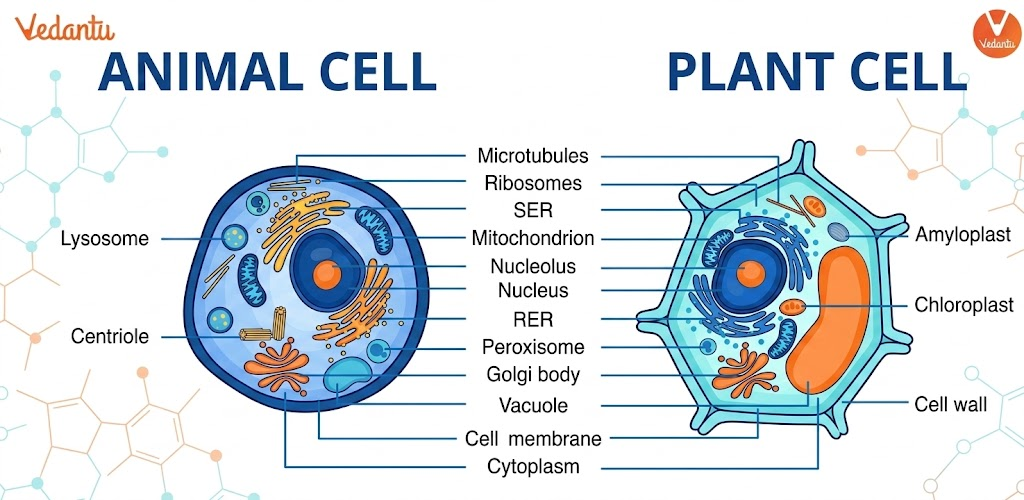
SER: Smooth Endoplasmic Reticulum
RER: Rough Endoplasmic Reticulum
Differences Between Plant Cell and Animal Cell
Feature | Plant Cell | Animal Cell |
Cell Wall | Present | Absent |
Shape | Fixed rectangular | Irregular or round |
Vacuole | One large central vacuole | Small temporary vacuoles |
Chloroplasts | Present | Absent |
Photosynthesis | Occurs | Does not occur |
Centrioles | Absent in most plants | Present |
Lysosomes | Rare | Present |
Mode of nutrition | Autotrophic | Heterotrophic |
Energy storage | Starch | Glycogen |
Plastids | Present | Absent |
Examples: | leaf cells, root hair cells, guard cells, and xylem cells | nerve cells, muscle cells, red blood cells, and epithelial cells |
Plant Cell Diagram: Understand the Structure and Function
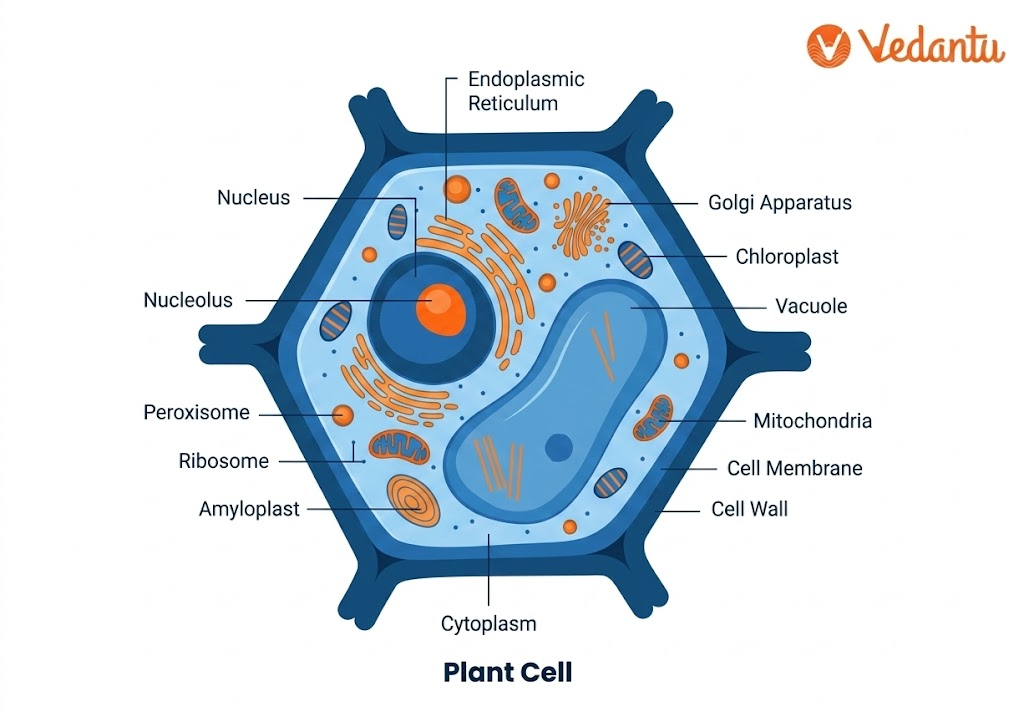
Plant cells are the basic structural units of plants. Their structure is adapted for photosynthesis, storage, and maintaining rigidity. These cells usually have a rectangular or fixed shape due to the presence of a rigid cell wall.
Major Components of Plant Cell
1. Cell Wall
The cell wall is a rigid outer covering made primarily of cellulose. It provides structural support, protection, and maintains the shape of the plant cell. This is one of the major features that distinguishes plant cells from animal cells.
2. Large Central Vacuole
Plant cells contain a large vacuole that occupies most of the cell volume. It stores water, nutrients, and waste products. The vacuole also maintains turgor pressure, which helps plants remain upright.
3. Chloroplasts
Chloroplasts are the sites of photosynthesis. They contain chlorophyll, which captures sunlight and converts it into chemical energy. This organelle is present only in plant cells.
4. Plasma Membrane
The plasma membrane lies just inside the cell wall. It regulates the movement of substances into and out of the cell.
5. Nucleus
The nucleus controls all cellular activities and contains genetic material in the form of DNA.
6. Mitochondria
Mitochondria generate energy through cellular respiration. They are known as the powerhouse of the cell.
7. Endoplasmic Reticulum
The ER helps in the synthesis and transport of proteins and lipids.
8. Golgi Apparatus
The Golgi body modifies, packages, and transports proteins and lipids to different parts of the cell.
Interesting Fact: Plasmolysis in a plant cell is defined as the shrinkage of the cytoplasm and plasma membrane, causing them to pull away from the rigid cell wall. This occurs when a living plant cell is placed in a hypertonic solution, leading to the loss of water from the cell through osmosis (exosmosis). As water exits, the turgor pressure decreases, resulting in the contraction of the cell contents.
Animal Cell Diagram: Understand the Structure and Function
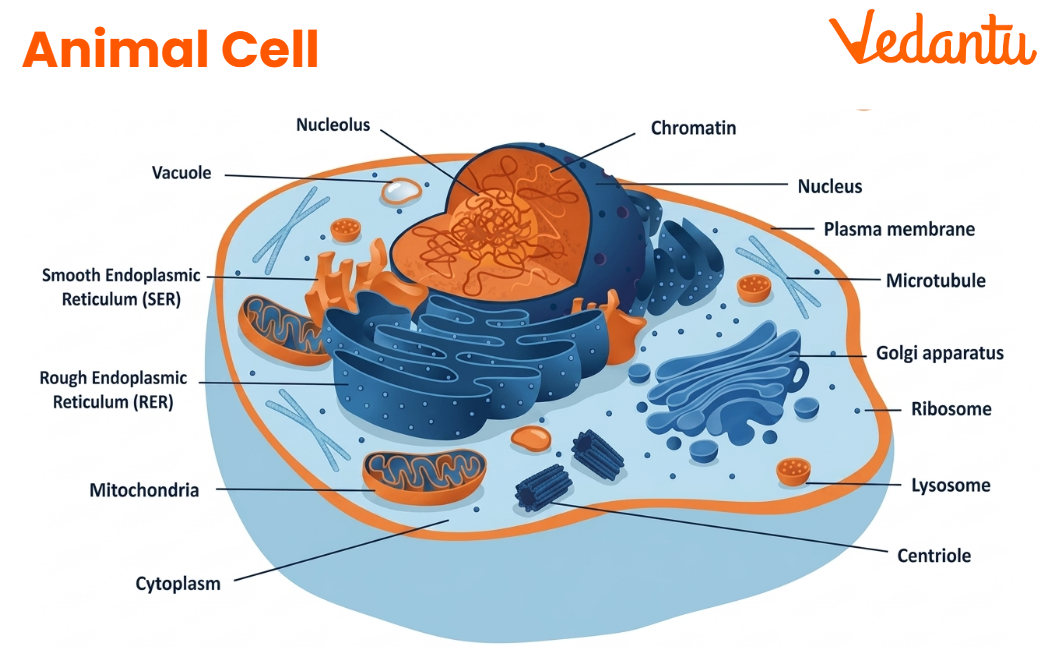
Animal cells are found in animals and are specialised for a wide variety of functions including movement, digestion, and sensory response. These cells do not perform photosynthesis and therefore lack chloroplasts.
Animal cells usually have an irregular or round shape because they do not have a rigid cell wall.
Major Components of Animal Cell
1. Cell Membrane
The outermost boundary of the animal cell is the cell membrane. It regulates the movement of substances and provides flexibility to the cell.
2. Absence of Cell Wall
Animal cells do not have a cell wall. This allows cells to change shape and form complex tissues.
3. Small Vacuoles
Animal cells may contain small temporary vacuoles. Unlike plant cells, they do not possess a large central vacuole.
4. Centrioles
Centrioles are cylindrical structures involved in cell division. These are present in animal cells but absent in most plant cells.
5. Lysosomes
Lysosomes contain digestive enzymes that break down waste materials and damaged organelles. They act as the waste disposal system of the cell.
6. Nucleus
The nucleus acts as the control centre and stores DNA.
7. Cytoplasm
The cytoplasm is a jelly-like substance in which all organelles are suspended.
8. Mitochondria
These organelles generate energy for cellular activities.
9. Golgi Apparatus
The Golgi body packages and transports proteins and lipids.
Similarities Between Plant and Animal Cells
Despite their differences, plant and animal cells share many common features:
Both are eukaryotic cells
Both contain nucleus
Both have mitochondria
Both contain cytoplasm
Both possess endoplasmic reticulum
Both have Golgi apparatus
Both perform cellular respiration
Introduction to Cells
A cell is the smallest structural and functional unit of life. All living organisms are composed of cells that perform essential life processes such as:
Growth
Respiration
Reproduction
Metabolism
Response to stimuli
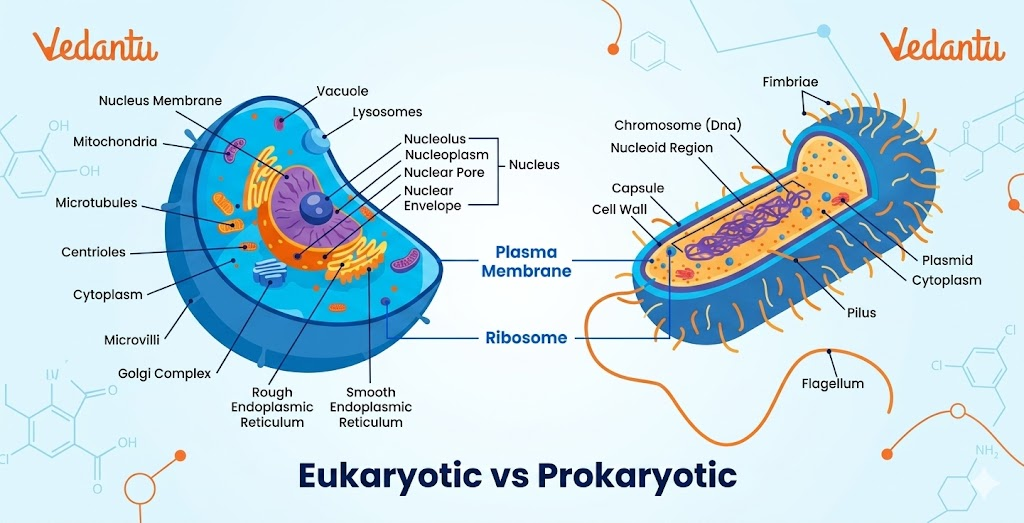
Cells are broadly classified into two main types:
Prokaryotic Cells
Simple and primitive cells
No true nucleus
No membrane-bound organelles
Example: Bacteria
Eukaryotic Cells
Complex cells with a well-defined nucleus
Contain membrane-bound organelles
Found in plants, animals, fungi, and protists
Plant and animal cells belong to this category
Key Summary
Plant cells contain cell wall, chloroplast, and large vacuole
Animal cells contain centrioles and lysosomes
Plant cells perform photosynthesis
Animal cells depend on other organisms for food
Both are eukaryotic cells with membrane-bound organelles


FAQs on Difference Between Plant Cell and Animal Cell: Structure and Function
1. What is the main difference between a plant cell and an animal cell for NEET?
The main difference between plant cell and animal cell is the presence of a cell wall and chloroplast in plant cells, which are absent in animal cells. Key distinctions relevant for NEET include:
- Cell Wall: Present in plant cells, absent in animal cells
- Chloroplast: Plant cells have chloroplasts for photosynthesis; animal cells do not
- Vacuole: Large central vacuole in plant cells; small or absent in animal cells
- Shape: Plant cells are generally rectangular or regular; animal cells are round or irregular
2. List three main differences between plant cell and animal cell as per NEET syllabus.
Three main differences between plant cell and animal cell are:
- Plant cells have a rigid cell wall made of cellulose, while animal cells lack a cell wall.
- Plant cells contain chloroplasts for photosynthesis; animal cells do not.
- Plant cells have a large central vacuole, whereas animal cells have small vacuoles or none.
3. Do animal cells have cell walls?
No, animal cells do not have cell walls. Instead, animal cells are enclosed only by a flexible plasma membrane which allows shape variation. This is a major NEET difference between animal and plant cells, as plant cells possess both a cell wall and plasma membrane.
4. Why do plant cells have chloroplasts?
Plant cells have chloroplasts to carry out photosynthesis and make their own food. Chloroplasts contain chlorophyll, which captures sunlight. Key roles include:
- Converting light energy into chemical energy (glucose)
- Supporting autotrophic nutrition in plants
- Making plants independent food producers, unlike animal cells
5. Which organelle is present in plant cells but absent in animal cells?
The cell wall and chloroplast are organelles present in plant cells but absent in animal cells. For NEET, remember:
- Cell wall: Provides structural support and rigidity
- Chloroplast: Responsible for photosynthesis
6. What is the function of the large central vacuole in plant cells?
The large central vacuole in plant cells maintains cell shape and stores nutrients, waste, and water. Key functions relevant for NEET include:
- Providing turgor pressure which keeps the plant upright
- Storing essential ions, sugars, and waste products
- Regulating water balance within the cell
7. How do plant and animal cells differ in terms of shape and size?
Plant cells are usually regular and rectangular, whereas animal cells are more rounded and irregular in shape. Differences include:
- Plant cells: Fixed, box-like shape due to cell wall
- Animal cells: Flexible shape with no rigid wall
- Both types can vary in size depending on function
8. Why don't animal cells perform photosynthesis?
Animal cells do not perform photosynthesis because they lack chloroplasts and chlorophyll. Differences compared to plant cells:
- Chloroplasts (with chlorophyll) are essential for photosynthesis in plant cells
- Animal cells rely on consuming organic matter (heterotrophic nutrition)
- This absence is a key NEET difference between plant and animal cells
9. Can you give a NEET-focused table comparing plant and animal cells?
Below is a NEET-relevant comparison of plant and animal cells:
| Feature | Plant Cell | Animal Cell |
|---|---|---|
| Cell Wall | Present | Absent |
| Chloroplast | Present | Absent |
| Vacuole | Large, central | Small or absent |
| Shape | Regular, rectangular | Irregular, round |
| Centrosome | Absent | Present |
This summary helps with quick NEET exam revision.
10. Name two structures found in animal cells but not in plant cells.
The two structures commonly found in animal cells but typically absent in plant cells are:
- Centrosomes with centrioles (important for cell division)
- Lysosomes (involved in digestion of cellular waste)
