



Class 9 English Chapter 5 Nine Gold Medals Question Answers
Reflect and Respond
I. Work in pairs. Discuss the difference between Olympics, Special Olympics, and Paralympics.
Answer:
Olympics: A global multi-sport competition where top athletes from different countries compete for gold, silver, and bronze medals.
Special Olympics: An international sports movement that provides competitions for children and adults with intellectual disabilities.
Paralympics: International multi-sport competitions organised for athletes with physical disabilities.
II. Work in pairs to match the words ‘empathy’, ‘sympathy’, and ‘compassion’ to the sentences given in the table below.
Answer
Meanings of the Words:
Sympathy: Feeling sorry for someone’s pain or difficulty.
Empathy: Understanding and sharing another person’s feelings by imagining their situation.
Compassion: Understanding someone’s suffering and helping or comforting them.
III. Work in pairs. List the words you associate with ‘empathy’. Share your responses with your classmates and teacher.
Answer:
Words associated with empathy are:
understanding, kindness, care, compassion, support, sensitivity, patience, respect, listening, and helpfulness.
(Students may add other suitable words based on their discussion.)
Check Your Understanding
I. Work in pairs. Match the words and phrases in Column 1 with their meanings in Column 2. You may read the poem again and infer the contextual meaning. Check your answers with the teacher.
Answer
II. Identify the gist of each stanza. Write the number of the stanza in the boxes given.
1. Spectators cheered participants of different events and waited enthusiastically for the final event to start. []
2. All runners dashed ahead as soon as they heard the gunshot; suddenly, one of the athletes tripped and fell on the ground. []
3. The race finished with nine athletes holding hands and winning the well-deserved gold medals; their smiles, and spectators standing up to applaud, conveyed everything. []
4. Participants got ready at the starting line and nine determined athletes waited for the sound of the gun. []
5. Athletes from various parts of the country had gone through months of training; had big dreams of winning a medal. []
6. The eight athletes stopped to help the young fallen athlete stand up, forgetting that they were competing. []
7. Nine athletes held the banner and walked hand in hand; this gesture represented the ethos of Special Olympics. [ ]
8. The young athlete felt his dreams were shattered and cried in pain and disappointment, but something unique happened. [ ]
Answer:
Spectators cheered participants of different events and waited enthusiastically for the final event to start. [2]
All runners dashed ahead as soon as they heard the gun shot; suddenly, one of the athletes tripped and fell on the ground. [4]
The race finished with nine athletes holding hands and winning the well-deserved gold medals; their smiles, and spectators standing up to applaud, conveyed everything. [8]
Participants got ready at the starting line and nine determined athletes waited for the sound of the gun. [3]
Athletes from various parts of the country had gone through months of training; had big dreams of winning a medal. [1]
The eight athletes stopped to help the young fallen athlete stand up, forgetting that they were competing. [6]
Nine athletes held the banner and walked hand in hand; this gesture represented the ethos of Special Olympics. [7]
The young athlete felt his dreams were shattered and cried in pain and disappointment, but something unique happened. [5]
III. Let us appreciate the poem.
1. Two examples of alliteration from the poem are (i) ______________ and (ii) _______________.
Answer:
(i) dashed in the dirt
(ii) stumbled and staggered
2. Give three examples of visual imagery from the poem.
(i) _________ (ii) __________ (iii) ___________
Answer:
(i) The blocks were all lined up
(ii) Nine beaming faces
(iii) Standing ovation
3. Give an example of auditory imagery from the poem.
(i) ______________
Answer:
(i) The pistol exploded
4. How does the use of imagery make the poem more appealing?
Answer: Imagery in the poem makes it more engaging by helping readers form clear pictures of the race. The sensory details like “the pistol exploded” and “nine beaming faces” create strong emotions and show the journey of the athletes from competition to kindness and unity.
5. How does the poet’s tone change from the beginning to the end of the poem?
Answer: The poet’s tone changes from the excitement and seriousness of a race to a feeling of kindness and unity. At the beginning, the athletes are focused and determined to compete. By the end, the tone becomes inspiring and joyful as the runners choose to support each other instead of only focusing on victory.
6. What is the overall mood created by the poem?
Answer: The poem creates a touching and inspiring mood. It starts with the excitement and tension of the race, moves to sadness when the athlete falls, and ends with happiness and victory. It highlights the importance of kindness, empathy, and supporting others over just winning.
7. What is the message being conveyed by the poem?
Answer: The poem conveys that kindness, teamwork, and true sportsmanship are more valuable than achieving victory alone. It shows that helping and supporting others is a greater achievement than simply winning a race.
Critical Reflection
I. Read the extracts given below and answer the questions that follow.
1. The eight other runners pulled up on their heels The ones who had trained for so long to compete One by one they all turned round and went back to help him And brought the young boy to his feet.
(i) Select the correct option to complete the sentence.
that the runners _______.
A. moved aside
B. stopped running
C. tried to run faster
D. jumped ahead
Answer: B. stopped running
(ii) Mention one character trait common to all the eight other runners.
Answer: Character trait common to all eight runners is compassion.
(iii) What is the tone of the poet in these lines?
Answer: Poet’s tone is admiring, appreciative, and deeply moved.
(iv) How might the young athlete have felt on being helped by the others?
Answer: Young athlete likely felt relieved, supported, and grateful to be helped by his peers.
(v) Would you consider this incident as a turning point in the poem? If yes, why? If no, why not?
Answer: Yes, this is the turning point because the individual race stops and becomes a collective walk of solidarity
2. That’s how the race ended, with nine gold medals They came to the finish line holding hands still And a standing ovation and nine beaming faces Said more than these words ever will.
(i) How did the nine contestants feel when they reached the finishing line together?
Answer: The nine contestants experienced great happiness, pride, and a feeling of shared achievement. Their “beaming faces” as they crossed the finish line together reflected their joy and the spirit of unity.
(ii) Why do you think all the nine contestants were given gold medals?
Answer: All the nine contestants received gold medals because they showed true sportsmanship and compassion. By choosing to help the fallen athlete instead of focusing only on winning, they represented the real spirit of the games.
(iii) Complete the sentence appropriately.
The holding of hands signifies a feeling of _____________________.
Answer: solidarity, unity, and brotherhood.
(iv) Choose the correct option to complete the sentence. The spectators giving a ‘standing ovation’ indicates that they were ___________.
A. amazed
B. speechless
C. distracted
D. thoughtful
Answer: A. amazed
(v) Explain the last line of the extract.
Answer: The last line, “Said more than these words ever will,” suggests that the moment of the nine athletes crossing the finish line together was deeply moving and could not be fully explained through words. Their act of kindness, unity, and support expressed the true meaning of compassion more powerfully than any description could.
II. Answer the following questions.
1. Describe how the setting established in the first two stanzas of the poem create a vivid atmosphere for the events that follow.
Answer: The first two stanzas show athletes arriving from different places and spectators gathering at the field with great excitement. This creates an energetic and hopeful atmosphere, preparing the readers for the emotional events of the race that follow.
2. How do you think the youngest athlete might have felt when he fell?
Answer: He may have felt disappointed, upset, and deeply hurt because his dreams and hard work seemed to be ruined when he fell. His stumble represented the loss of his hopes and efforts at that moment.
3. Why were the athletes eager to begin the race?
Answer: They had spent weeks and months preparing for the race, and it was an opportunity to showcase their hard work and dedication. The excitement of competing for medals made them eager and determined to begin.
4. What does the transformation of the hundred-yard dash to a walk symbolise?
Answer: It represents unity, kindness, and a shared sense of achievement. Instead of only trying to win the race, the athletes chose to support each other, showing that compassion and humanity are more valuable than victory.
5. How might the poem be different if the focus was solely on individual achievement rather than collective support?
Answer: If the poem focused only on individual success, it would show only one winner and others as losers. It would miss the message of unity and support, making the poem about competition rather than kindness and compassion.
6. How does the poet’s use of language and tone enhance the reader’s engagement with the poem?
Answer: The poet uses powerful imagery like “stumbled and staggered” and “dashed in the dirt” along with a caring tone to make readers connect with the emotions of the poem. The change from the excitement of the race to the act of kindness and empathy keeps readers interested in the athletes’ journey.
7. What might be the poet’s purpose of writing this poem?
Answer: The poet’s aim is to convey that real success is achieved through kindness, compassion, and unity rather than just winning medals. By showing the athletes’ support for one another, the poem highlights the importance of empathy, teamwork, and shared achievement.
Vocabulary in Context
I. The phrase ‘standing ovation’ is an example of an adjective-noun collocation. Identify two other similar examples from the poem.
Collocation is a pair or group of words that habitually appear together.
Answer:
Two other collocations from the poem are:
“Beaming faces”
This phrase describes people smiling brightly with happiness and joy.
“Gold medals”
This is a commonly used phrase in sports that represents achievement and recognition. In the poem, it symbolises the shared success and unity of all nine runners.
II. Complete the table given below by writing four nouns in Column 2 that collocate with the adjectives in Column 1. One example has been done for you. You may take the help of a dictionary.
Answer:
III. Choose the correct adjectives from those given in the box for the underlined words given in the sentences below. Ensure you do not use the same adjective twice.
The littlest athlete was moving at a steady pace.
The eight athletes had a smiling attitude.
When the athlete fell, he gave a huge cry of pain.
The spectators saw a terrible difference in the athletes who had only come to compete.
The gaudy crowd cheered the runners enthusiastically
Answer:
youngest
positive
loud
significant
Noisy
Listen and Respond
I. You will listen to a radio-talk about Patrick Gomes, a coach of special athletes. As you listen, write true or false for the statements given. (Transcript for teacher on page 268)
1. Patrick Gomes began his career in sports with track events.
Answer: True (Reason: Patrick Gomes began his career with track events in 1991.)
2. Patrick Gomes has been coaching special athletes for 10 years.
Answer: False (Reason: Patrick Gomes has been coaching for over 15 years, not 10 years.)
3. Patrick Gomes does all the household work himself.
Answer: True (Reason: Mentioned in the transcript.)
II. You will listen to the radio-talk once again. As you listen, choose the correct option for each question.
1. When the speaker uses the phrase ‘push your boundaries’, he wants listeners to _________ .
(i) challenge themselves
(ii) meet new people
(iii) be open-minded
Answer: (i) challenge themselves
2. Patrick Gomes is a _________ at present.
(i) special athlete
(ii) coach of special athletes
(iii) value education teacher
Answer: (ii) coach of special athletes
3. Special Olympic Games held at Connecticut was $a$ _________ for Patrick Gomes.
(i) motivational year
(ii) turning point
(iii) gradual change
Answer: (ii) turning point
4. As a special athlete, Patrick Gomes mostly participated in _______
(i) track events
(ii) jogging
(iii) football
Answer: (iii) football
5. Patrick Gomes believes that sports is essential because it encourages _________ along with fitness.
(i) a positive outlook
(ii) a peaceful mind
(iii) an active life
Answer: (i) a positive outlook
Speaking Activity
I. Work in pairs. Take turns to express your points of view regarding Special Olympics.
Use the key points given below to develop the conversation.
Key Points:
Importance of Special Olympics (promotes inclusion)
Impact of Special Olympics on sportspersons with special abilities
How to create awareness regarding Special Olympics
Use the sentence starters given in the table below when you speak.
Answer:
Speaking Activity – Sample Conversation
Student A: What is your opinion on the importance of Special Olympics?
Student B: Personally, I believe that Special Olympics plays an important role in promoting inclusion. It gives people with special abilities an equal opportunity to participate in sports and showcase their talents.
Student A: How do you feel about the impact of Special Olympics on sportspersons with special abilities?
Student B: From my perspective, Special Olympics builds confidence and encourages athletes to overcome challenges. It helps them feel valued and recognised for their abilities.
Student A: Do you think that Special Olympics helps change people’s attitudes towards disability?
Student B: It’s my belief that Special Olympics creates awareness and helps people understand that everyone has unique talents and abilities.
Student A: What is your take on creating awareness about Special Olympics?
Student B: I hold the opinion that schools, communities, and media should spread more information about Special Olympics. Organising events and sharing inspiring stories of athletes can help more people support this movement.
Writing Task
Slogan writing is the art of creating short, catchy, and memorable phrases that express an idea, promote a product, or inspire people. A good slogan is easy to remember, emotionally appealing, and delivers a clear message in just a few words.
Key Features of a Good Slogan
Short & Simple: Easy to say and remember.
Catchy: Uses rhythm, rhyme, or repetition.
Meaningful: Expresses the core idea clearly.
Emotional appeal: Connects with people’s feelings.
Persuasive: Encourages action or belief.
Examples of some famous international brands:
Nike: “Just Do It” – This action-oriented phrase focuses on motivation and perseverance.
Apple: “Think Different” – This slogan encourages creativity and challenging the status quo.
McDonald’s: “I’m Lovin’ It” – A globally recognised jingle that conveys the enjoyment of their food.
I. Work in pairs to write three creative slogans on Special Olympics.
One example of a slogan on Special Olympics has been given below.
Special Olympics: Igniting a Universe of Potential
Present your slogans in a creative manner and share with your classmates and teacher.
Special Olympics: Igniting a Universe of Potential
Steps to write a slogan
Understand the theme on which you want to write a slogan.
Brainstorm ideas and use them to create the slogan.
Keep it brief and simple.
It should not be more than eight to ten words.
Make the slogan catchy.
Answer:
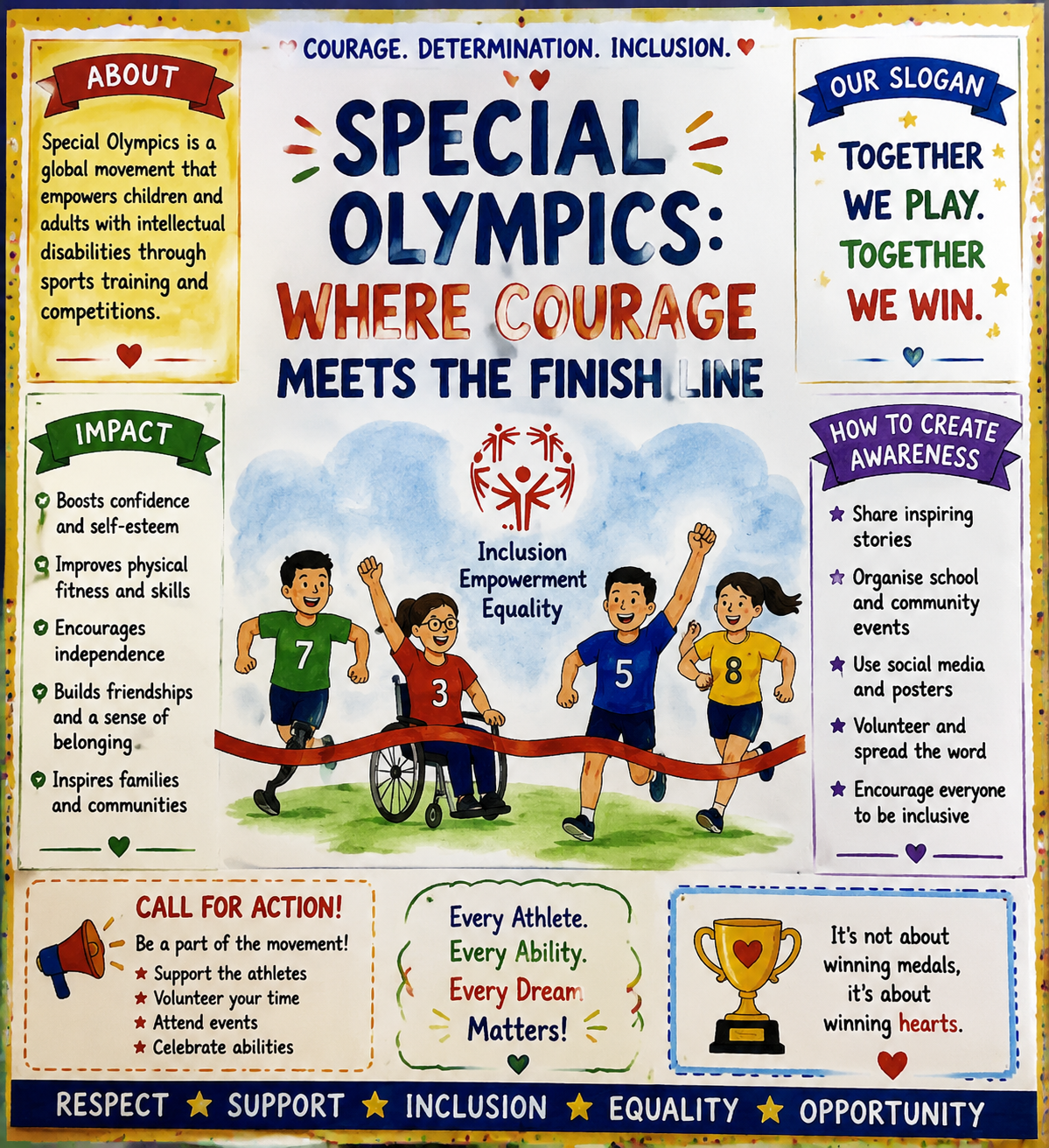
“Special Olympics: Where Courage Meets the Finish Line”
“Different Abilities, One Shared Dream: Victory for All”
“Unstoppable Spirits, Breaking Barriers Together”
Steps to design a poster
Include all vital information.
Write down the ideas.
Remember to place the slogan you created.
Use top, bottom, and sides of the poster for other important information.
Include some illustrations, a call for action, if needed.
Colour and decorate your poster.
Present your poster as a box item.
Answer:
Learning Beyond the Text
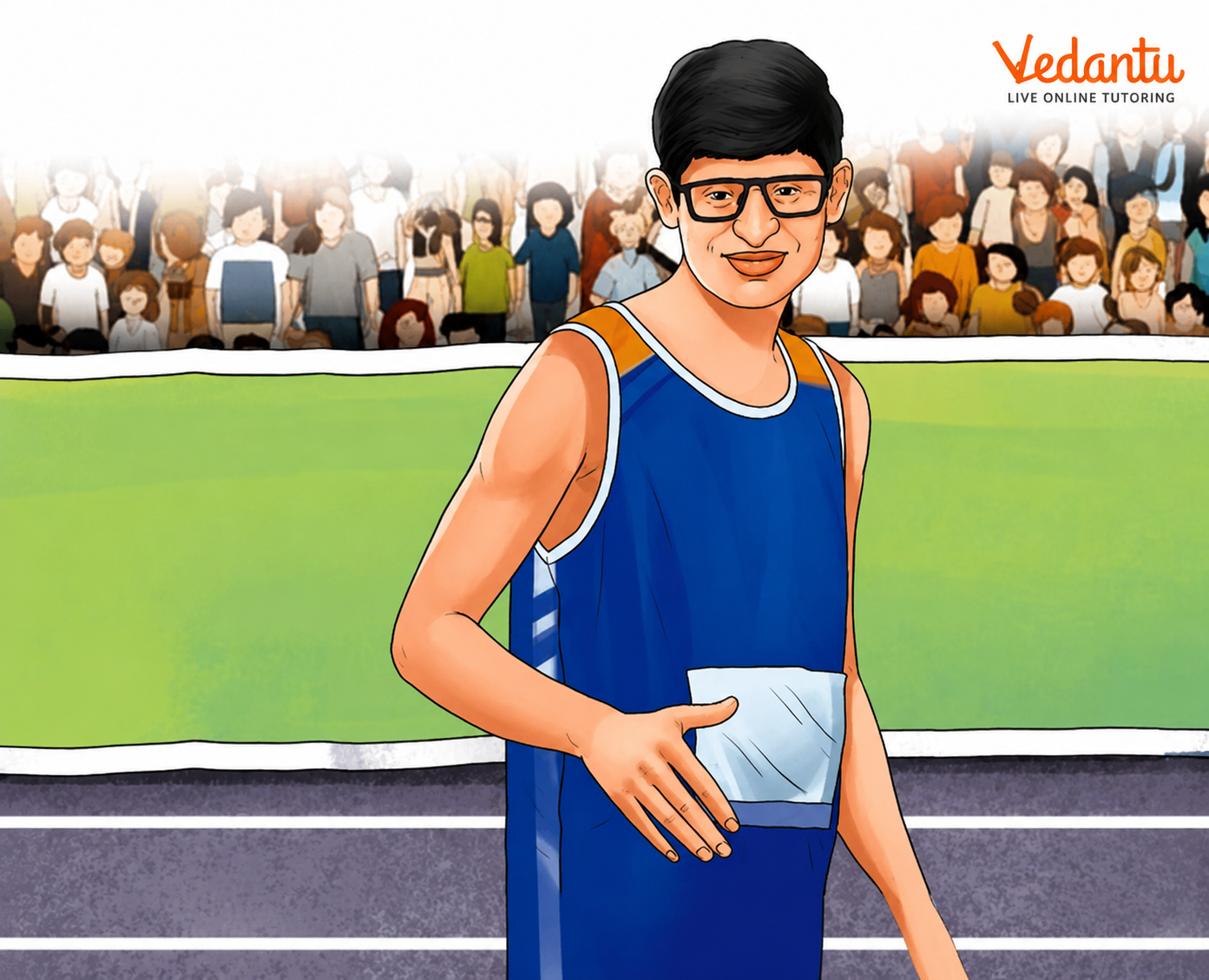
I. Read the information given below about some athletes who participated in Special Olympic Games 2023 held in Berlin, Germany.
Ravimathi Arumugam : She is an athlete who made India proud by clinching the gold medal in the 400 metre, Level C women’s race.
Aanchal Goyal : She won the gold medal in the 400 metre, Level B women’s race.
Saket Kundu: Saket Kundu achieved a rare double in track and field by winning a silver medal in the Level B mini javelin event and a bronze in the Level B 400 metre men’s race.
Find out more about other Indian achievers of Special Olympics.
Answer:
Other Indian Achievers of Special Olympics:
India has produced many talented Special Olympics athletes who have brought pride to the country through their remarkable achievements.
Siya Sarode (Powerlifting):
Siya won four medals at the 2023 Berlin Games, including two gold medals, one silver, and one bronze. She secured gold in the Deadlift and Squat events, silver in the Combined category, and bronze in the Bench Press event.
Ranveer Singh Saini (Golf):
Ranveer won the gold medal in the Level 2 Alternate Shot Team Play event at the 2023 Berlin Games with his partner Rahul Agarwal. He became the only golfer to win medals in three consecutive Special Olympics World Games, earning gold in 2015, silver in 2019, and gold in 2023. In 2025, he also won his fifth gold medal at the Asia Pacific Golf Masters Tournament in Macau.
Neel Yadav (Cycling):
Neel won a gold medal in the 1 km Time Trial and a bronze medal in the 5 km Road Race. His bronze medal was the first medal won by India’s cycling team at the Berlin Games and encouraged the entire team to achieve further success.
Geetanjali Nagvekar (Athletics):
Geetanjali won India’s first gold medal at the 2023 Berlin Games in the women’s 800 m event (Level D).
Madhav Madan (Swimming):
Madhav secured a gold medal in the 25 m freestyle event and a silver medal in the 25 m breaststroke event during the 2023 Special Olympics campaign.
Bharti (Winter Sports):
At the 2025 Special Olympics World Winter Games in Italy, India won 33 medals, including 8 gold medals. Bharti was among the notable achievers, winning two gold medals in events such as Alpine Skiing and Snowboarding.
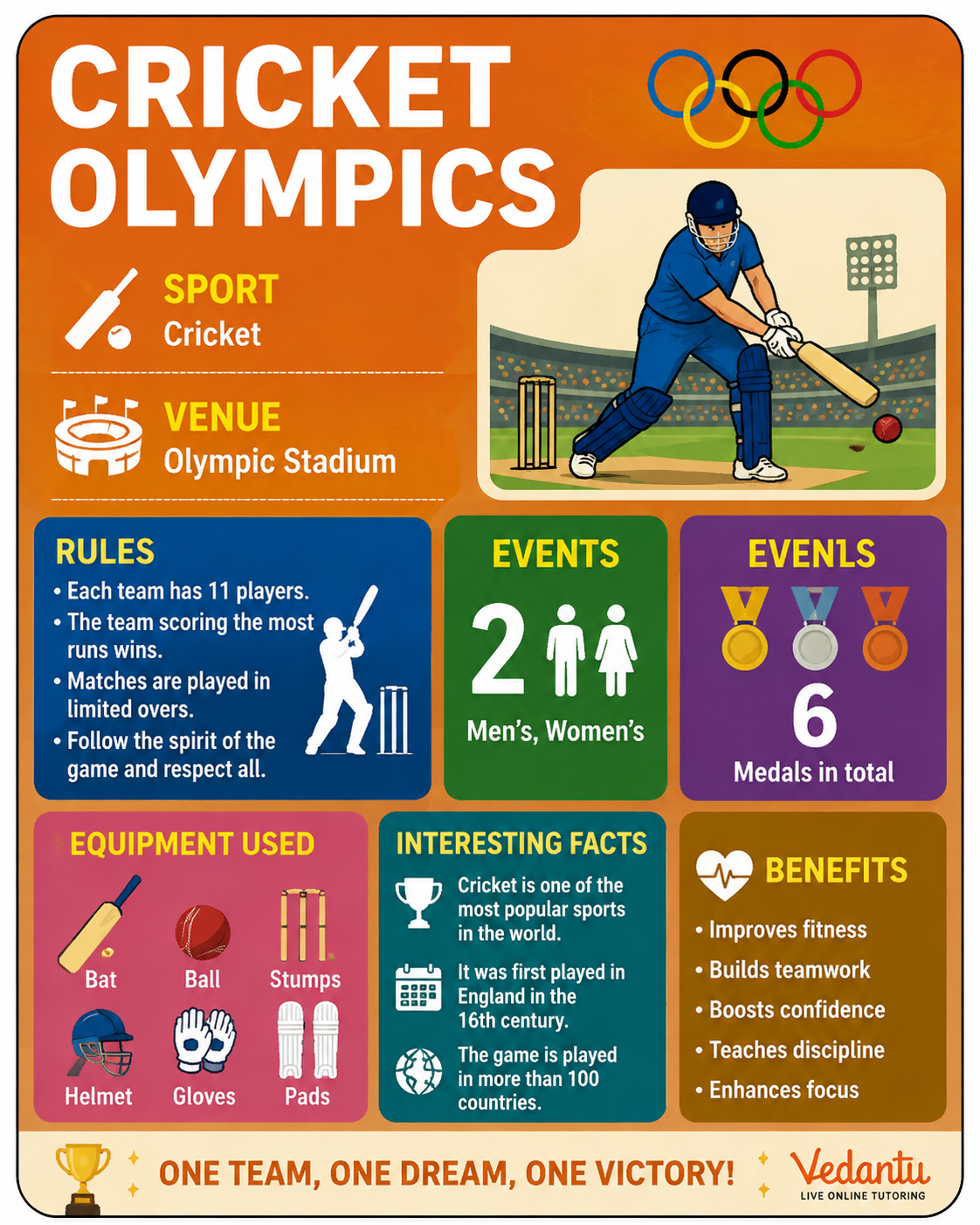
II. An infographic is a visual representation of information, data, or knowledge designed to make complex ideas easy to understand quickly. It combines text, images, charts, and icons to present information in a clear, engaging, and memorable way.
III Read the information given below in the infographic.
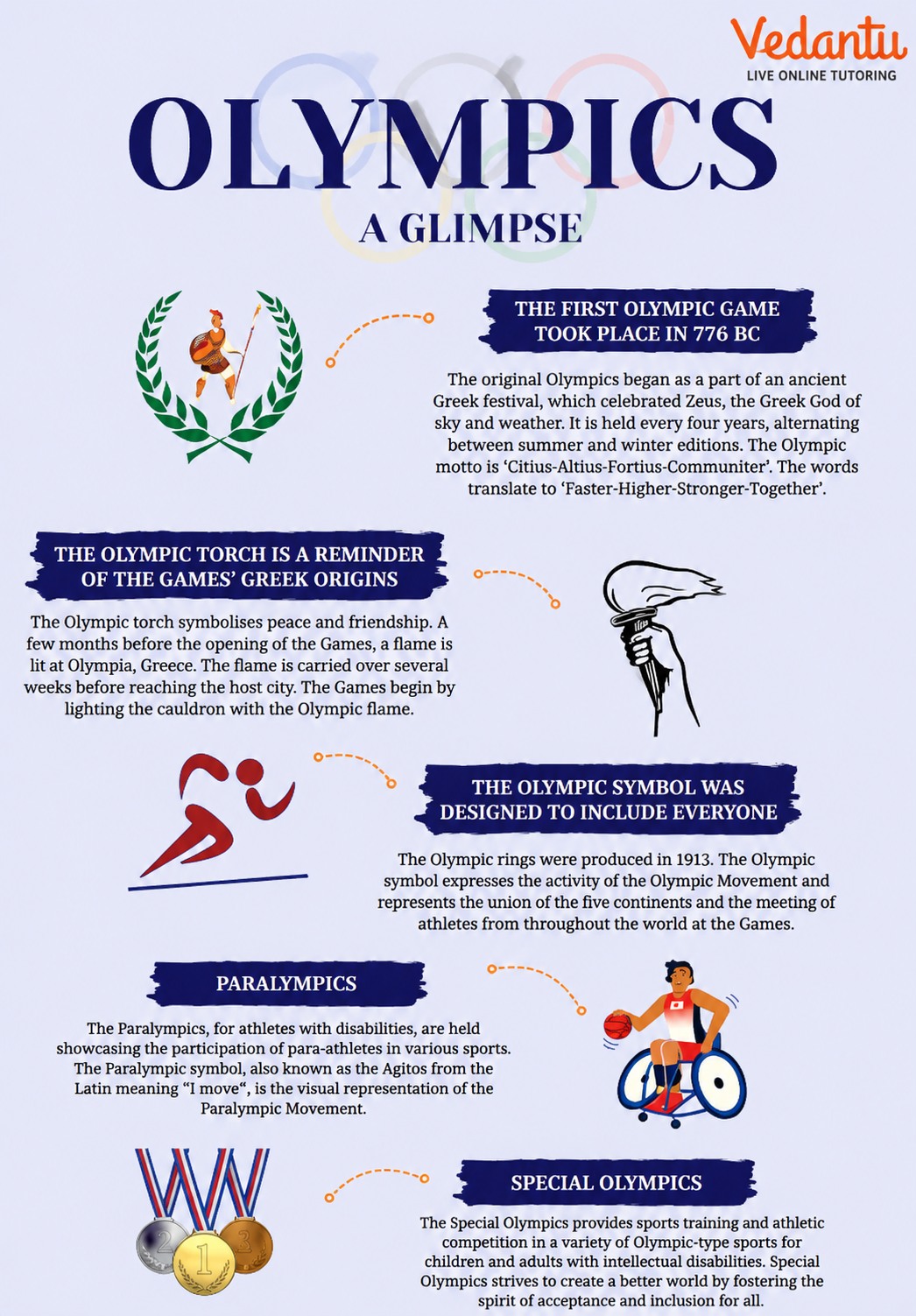
Now, create an infographic on any sport and present it in the class.
Answer:
How Does Vedantu's Nine Gold Medals Class 9 Question Answers Help Students Prepare Better?
Vedantu’s Nine Gold Medals Class 9 Question Answers help students understand the poem in a simple and structured way. These solutions focus on important concepts, exam preparation, and improving answer-writing skills.
Students can benefit from these Class 9 English Chapter 5 Nine Gold Medals Question Answers in the following ways:
Clear understanding of the poem: Helps students understand the central theme, emotions, and message of Nine Gold Medals with simple explanations.
Easy exam preparation: Covers important textbook-based questions and answers to help students revise the chapter effectively before exams.
Better answer-writing skills: Provides well-explained answers that guide students on how to frame accurate and meaningful responses.
Quick revision support: Helps learners revise key points, important ideas, and the moral values highlighted in the poem.
Improved conceptual learning: Explains the importance of teamwork, kindness, equality, and true sportsmanship shown in the poem.
By using these Class 9 English Kaveri Chapter 5 Question Answers, students can prepare confidently, strengthen their understanding, and perform better in school assessments.
Related Study Materials for Class 9 English Chapter 5 Nine Gold Medals
Class 9 English Chapter-wise Solutions For Prose & Poem
Important Study Materials for Class 9 English
FAQs on NCERT Solutions for Class 9 English Chapter 5 Nine Gold Medals 2026-27
1. What is the summary of Class 9 English Chapter 5 Nine Gold Medals?
Nine Gold Medals is a poem about a race where one participant falls down, and the other runners stop competing to help him complete the race. The poem highlights important values like kindness, teamwork, empathy, and the true meaning of sportsmanship.
2. What is the main theme of Nine Gold Medals Class 9?
The main theme of Nine Gold Medals is that compassion and helping others are more valuable than winning alone. The poem teaches students the importance of humanity, cooperation, and supporting others in difficult situations.
3. Where can students find Class 9 English Chapter 5 Nine Gold Medals question answers?
Students can find Class 9 English Chapter 5 Nine Gold Medals question answers on Vedantu. These solutions provide clear explanations of textbook questions, helping learners understand the poem and prepare effectively for exams.
4. How do Vedantu’s NCERT Solutions for Class 9 English Chapter 5 Nine Gold Medals help students?
The NCERT Solutions for Class 9 English Chapter 5 Nine Gold Medals help students understand the poem’s meaning, revise important questions, and learn how to write well-structured answers. The solutions are designed in a simple format for better learning and exam preparation.
5. How can students prepare for Class 9 English Kaveri Chapter 5 Nine Gold Medals?
Students can prepare for Class 9 English Kaveri Chapter 5 Nine Gold Medals by reading the poem carefully, understanding its message, practising important questions, and referring to NCERT chapter solutions for quick revision and better exam readiness.
