




How to Write Stepwise NCERT Answers for Class 5 EVS Chapter 1
Discuss (Page 4)
Question 1.
Do you think we can drink the water present in the oceans?
Answer:
We cannot drink water from the ocean because it contains a large amount of salt. This salt makes the water unsafe for consumption. Our bodies require clean, freshwater to remain healthy and function properly.
Question 2.
What can ocean water be used for?
Answer:
Ocean water is useful for producing salt and can also be used for washing and cleaning purposes. In certain regions, people remove the salt from seawater through a method known as desalination, which makes it safe to drink.
Activity 1 (Page 5)
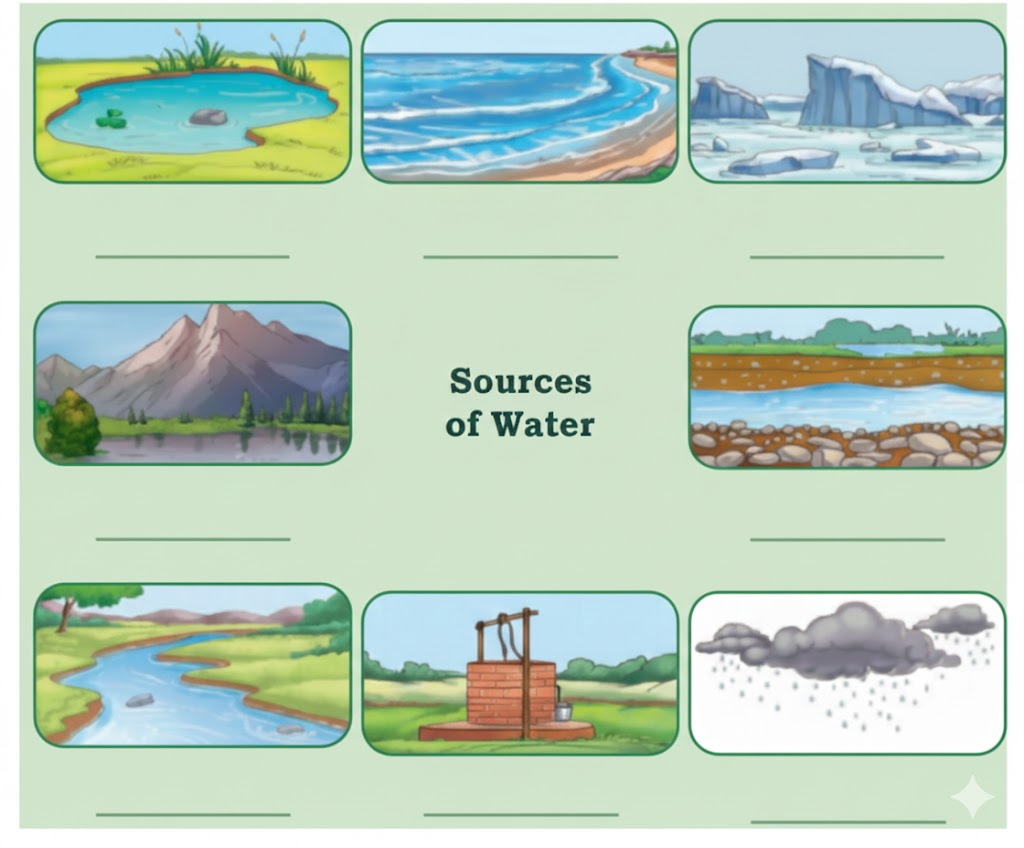
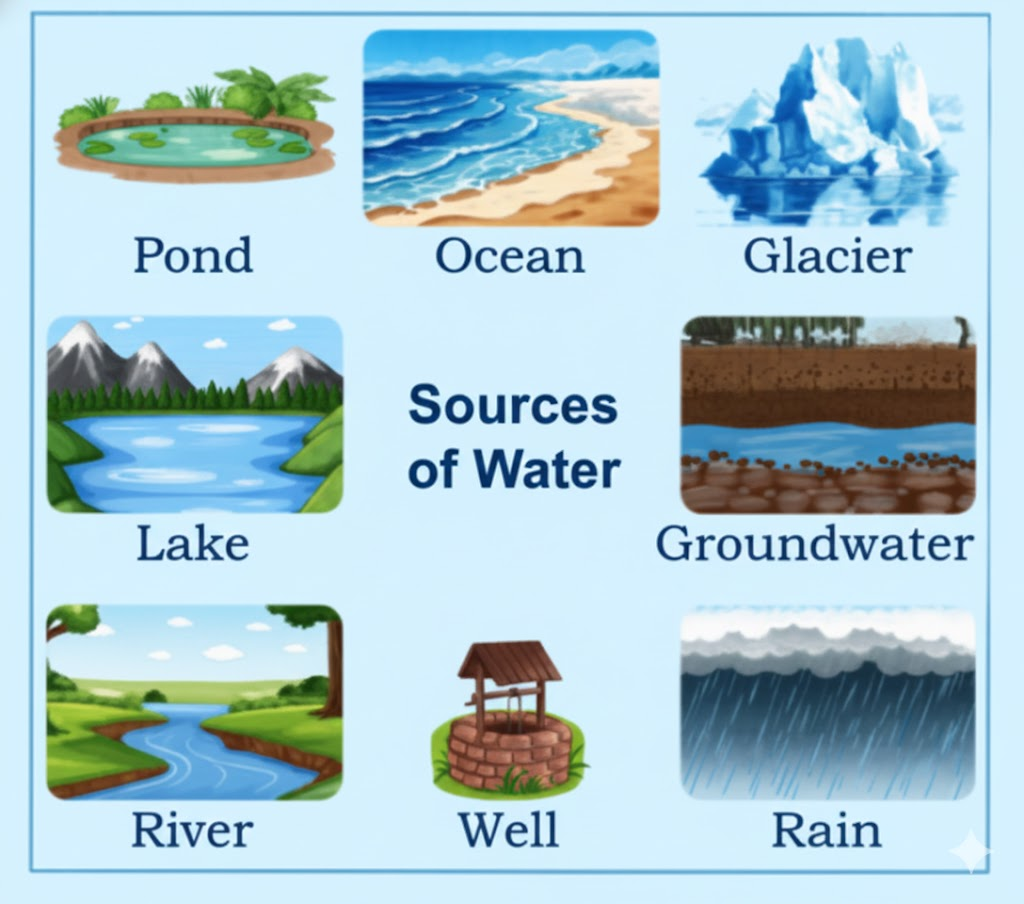
Where can we find freshwater? Identify the different freshwater sources from the images given below and write their names.
Answer:
Freshwater comes from various sources such as ponds, glaciers, lakes, rivers, groundwater, wells, and rainfall.
Activity 2 (Page 6)
Take a steel glass. Put some ice cubes in it. Observe the small water droplets forming on the glass.
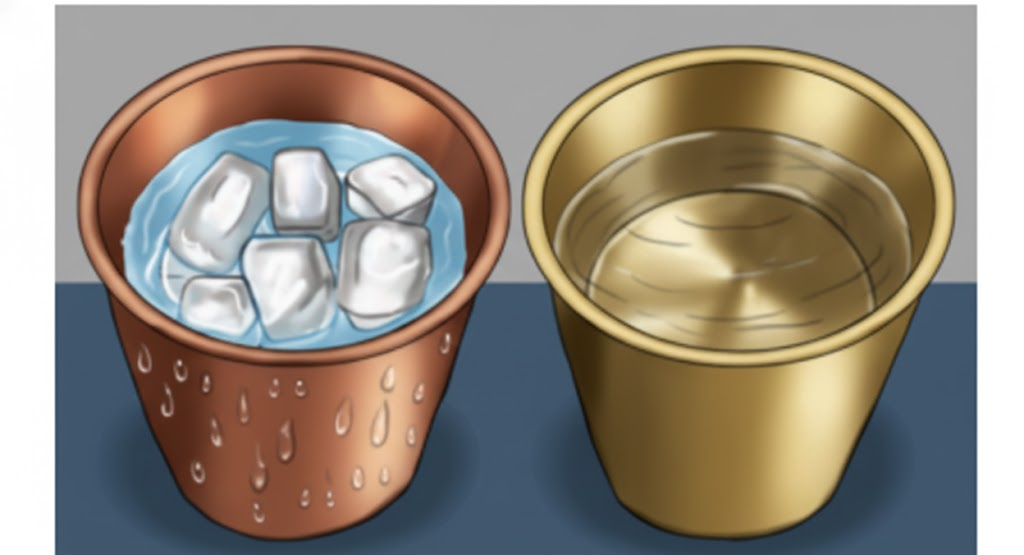
(a) Where do these water droplets come from?
…………………………………………….
(b) What happens to the ice cubes after they are left in the glass for some time?
…………………………………………….
(c) If we heat water, what will happen to it?
…………………………………………….
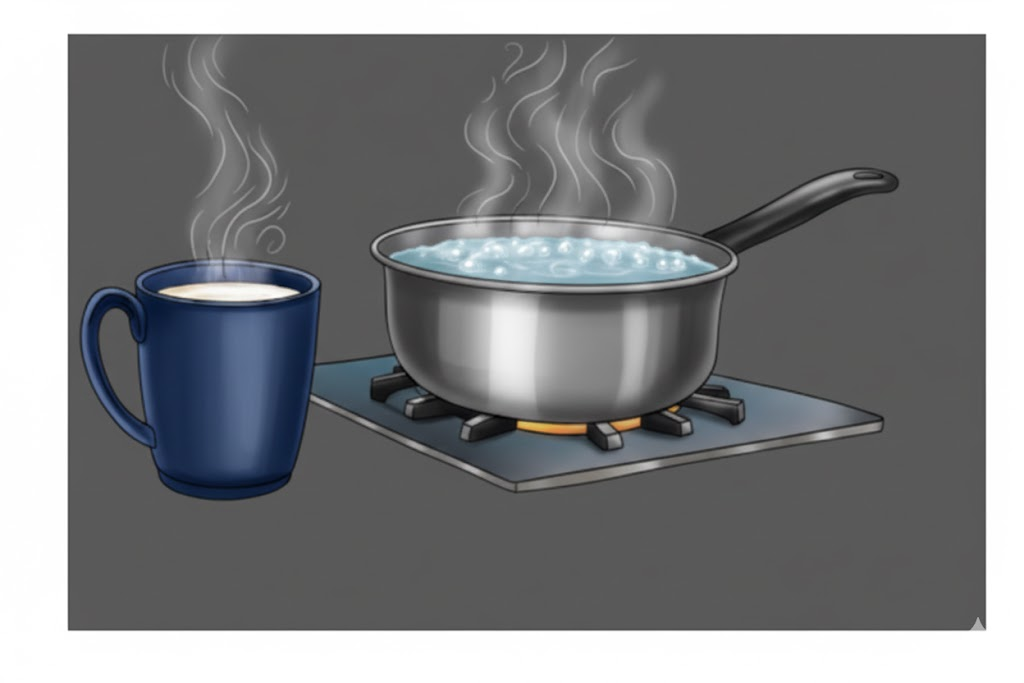
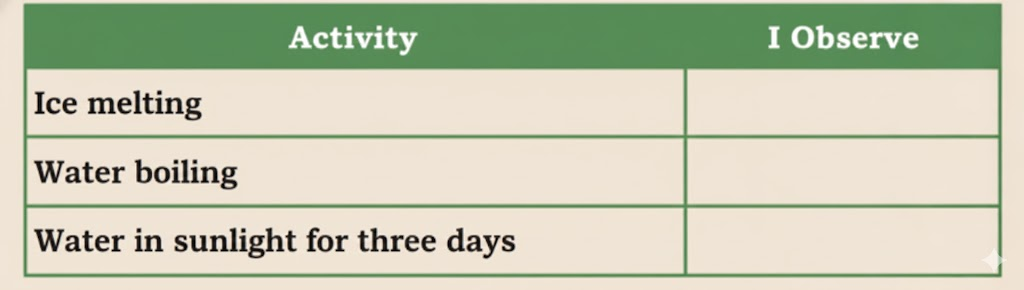
In the above activity, what forms of water do you see?
Answer:
(a) The tiny drops of water form when water vapour in the air cools and condenses.
(b) After a while, the ice cubes melt and become liquid water.
(c) When water is heated, it begins to boil and eventually turns into steam or water vapour.
This activity shows all three states of water — ice as the solid form, water as the liquid form, and steam or water vapour as the gaseous form.
Observing Changes
Activity 3 (Page 7)
Take a transparent bag.
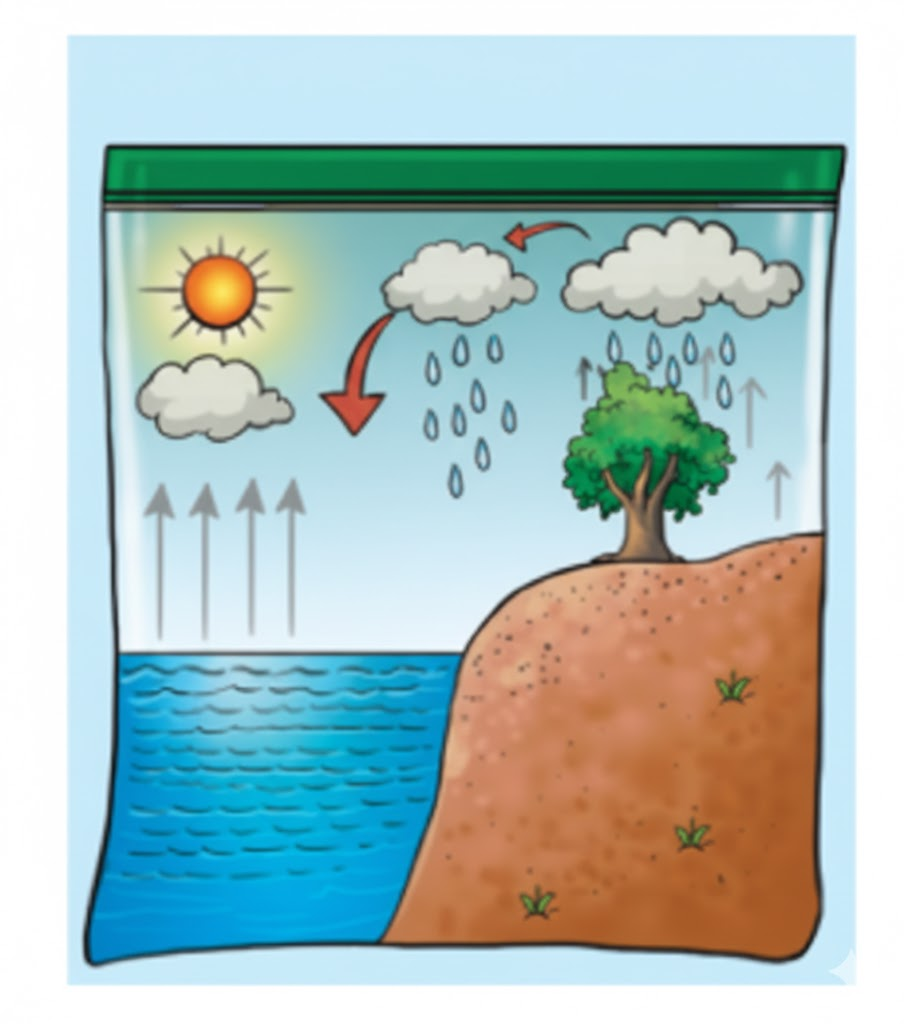
Use a marker to draw the sun, clouds, trees and arrows on it as shown in the picture.
Fill one-third of it with coloured water.
Tip: You can use blue paint or food dye for this.
Seal the bag tightly to prevent any leaks.
Place it in the sunlight.
After a few hours, observe the changes inside the bag.
Answer:
Activity 4 (Page 9)
Take a transparent glass.
Fill half of it with soil.
Slowly pour water into the soil using a spoon.
Observe what happens.
Answer:
When water is added to the soil, the soil absorbs it. The water then travels downward through the soil and gathers at the bottom of the glass.
Activity 5 (Page 9)
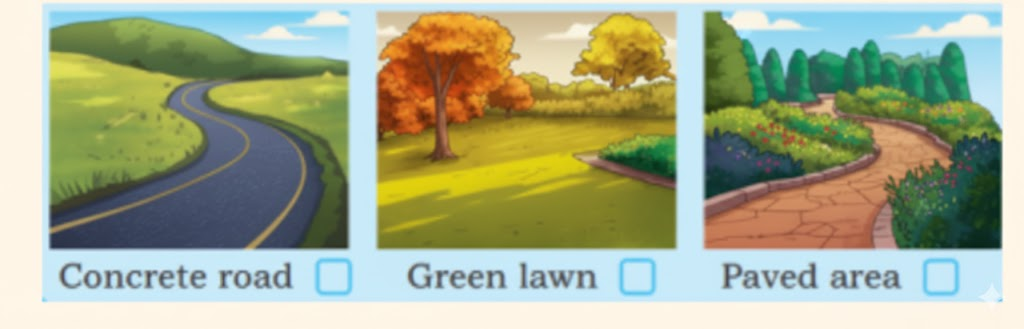
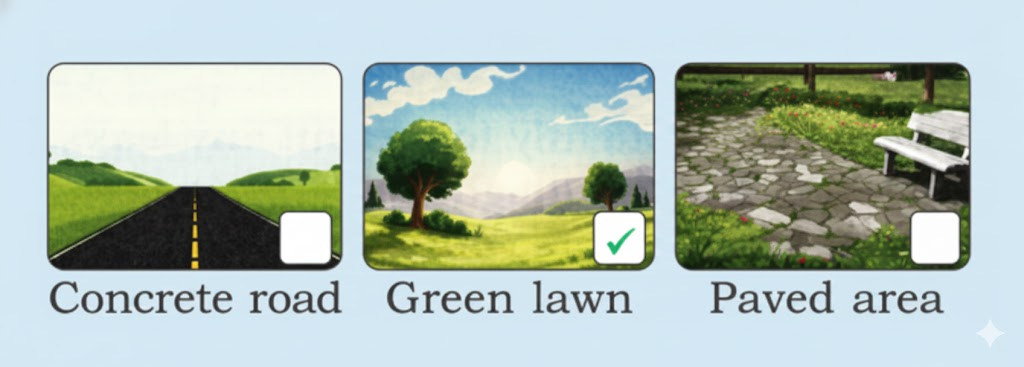
Tick the image that will help in groundwater recharge.
Answer:
Activity 6 (Pages 10-11)
Question 1.
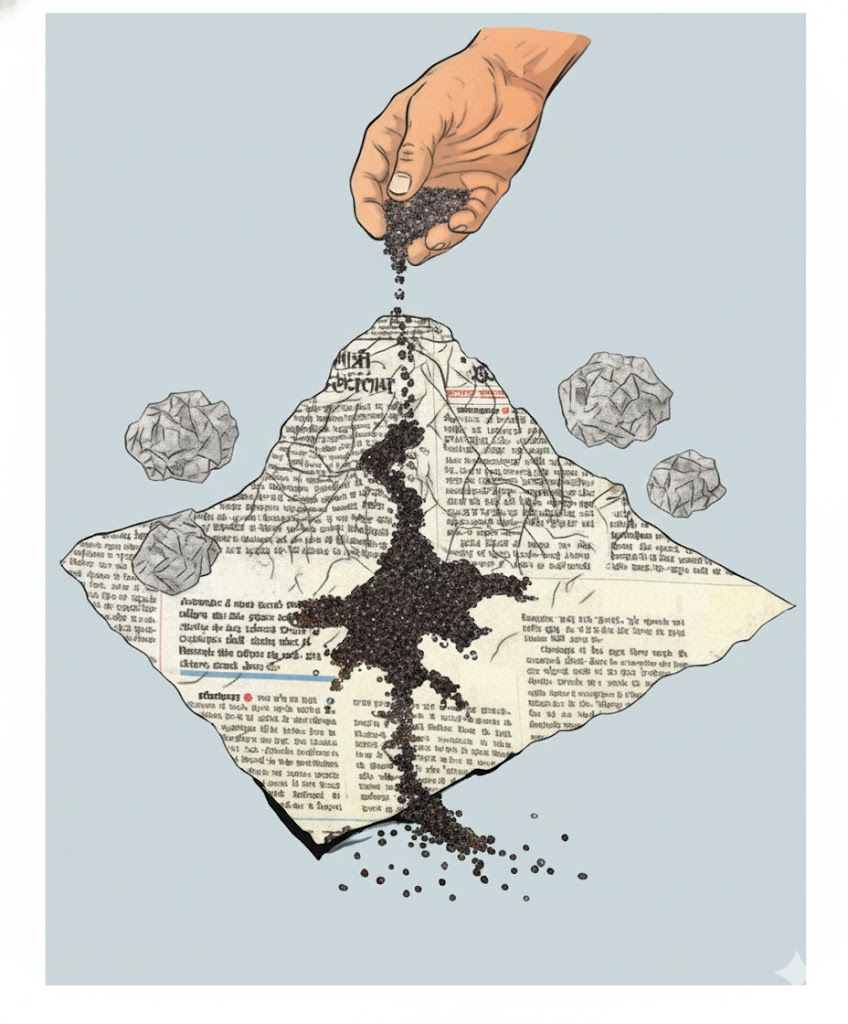
What did you observe about the mustard seeds?
Answer:
The mustard seeds moved down the slope from the top, similar to how water travels down from the mountains.
Question 2.
Are they moving in a straight line, or do they spread out in different directions?
Answer: They scattered in various directions based on how the paper was shaped.
Question 3.
Are they collecting in some areas? Do they gather like water gathers in lakes, rivers and so on?
Answer: Yes, the seeds gather in the lower parts, just as water collects in places like rivers, ponds, and lakes.
Discuss (Page 11)
On the basis of Activity 6 with mustard seeds, discuss how some rivers flow towards the Arabian Sea while some flow towards the Bay of Bengal.
Answer:
In Activity 6, we noticed that mustard seeds moved from higher ground to lower ground. Similarly, rivers travel from mountains down to the plains.
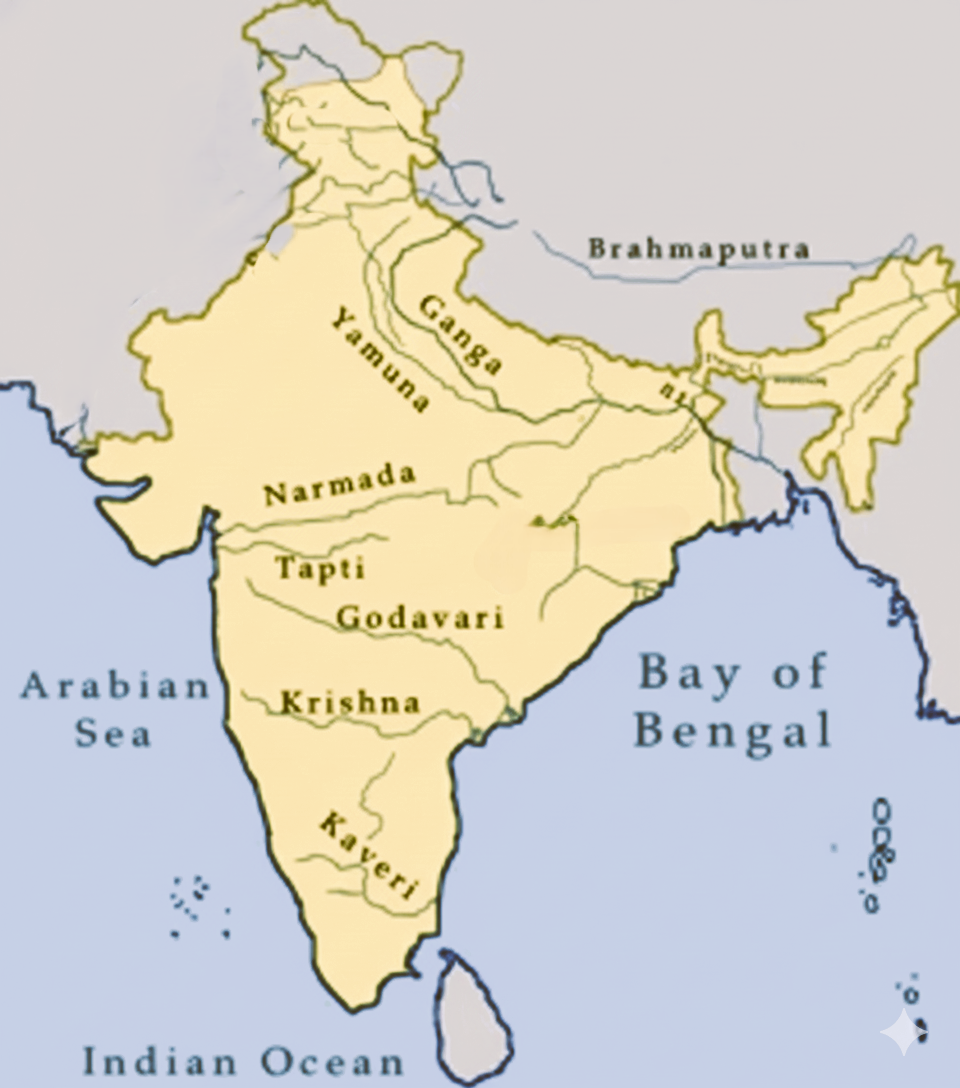
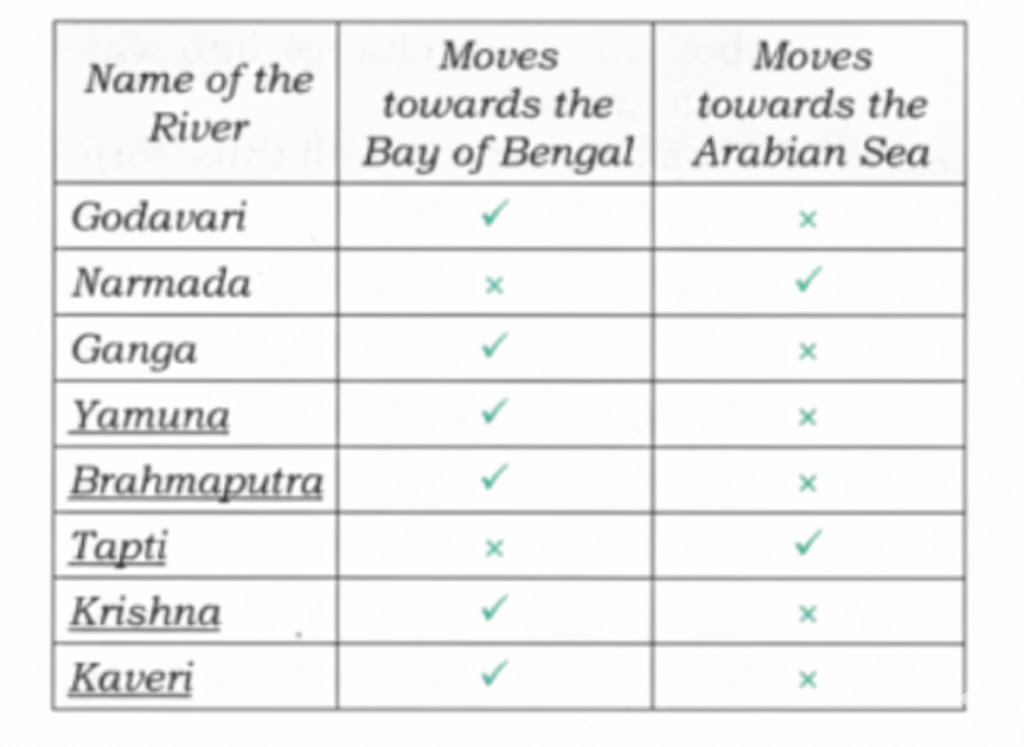
In India, some rivers move eastward toward the Bay of Bengal, while others flow westward toward the Arabian Sea. This is because rivers always follow the natural slope of the land, just as the mustard seeds did.
Activity 7 (Page 13)
Follow the Flow!
In the map, you can see the rivers flowing in different directions. Some flow into the Bay of Bengal and some into the Arabian Sea. Observe and fill in the table.
Answer:
Intext (Pages 14-15)
Complete the following table discussing with peers about the characteristics of animals on land and animals in water.
Answer:
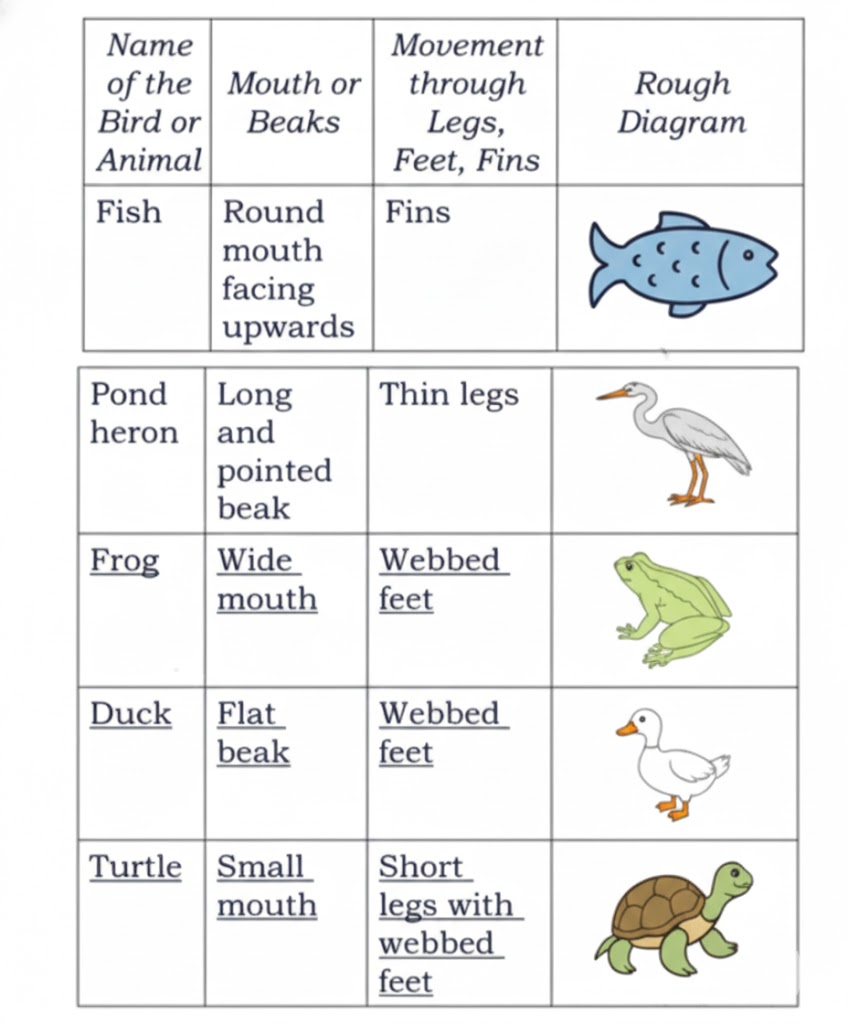
Activity 8 (Pages 17-18)
Visit a local water body like a pond, lake or an aquarium with your teacher or parents, and observe life in and around the water body.
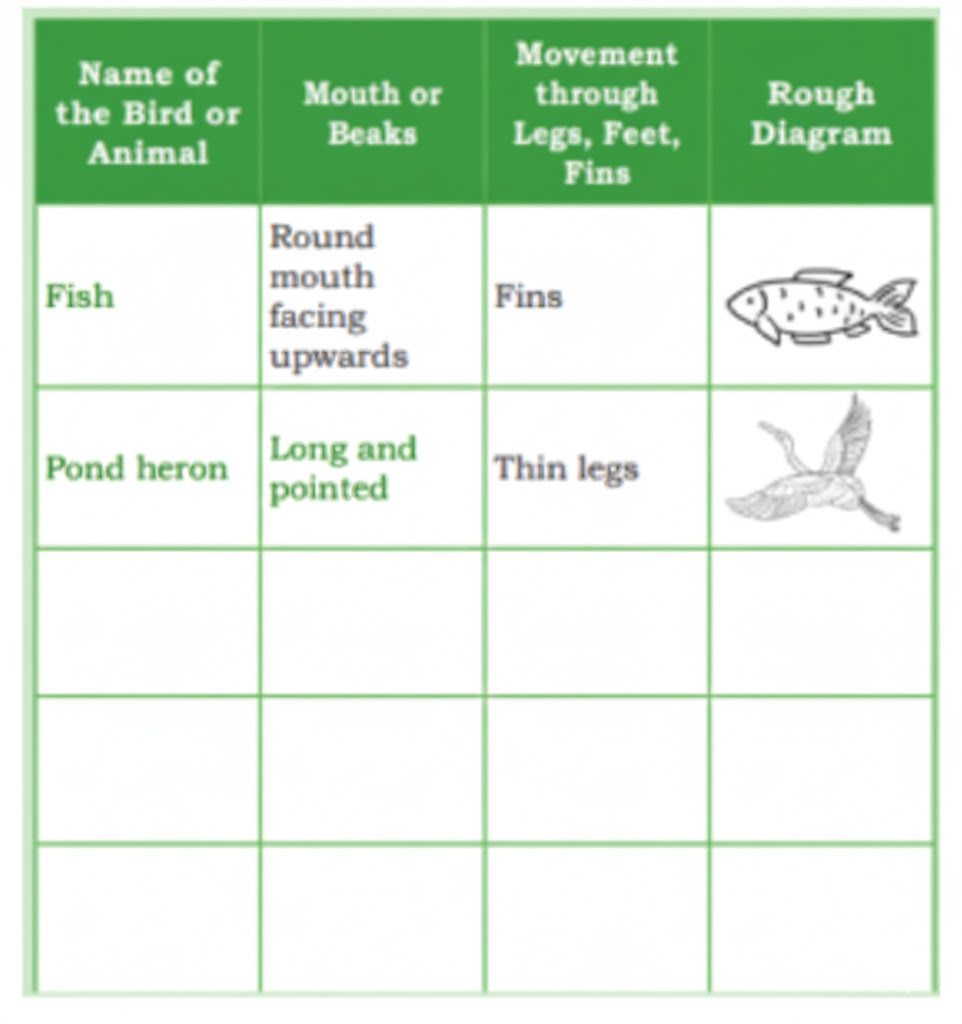
1. Based on your observations, complete the following table.
Answer:
Question 2.
Draw the plants that you saw during the visit and label them with their local name.
Answer:
Students should draw the plants by themselves.
Activity 9 (page 18)
1. Take a piece of paper and put a drop of water on it. Observe.
2. Colour the paper with a wax crayon. Now, put a drop of water on it. Do you observe any change?
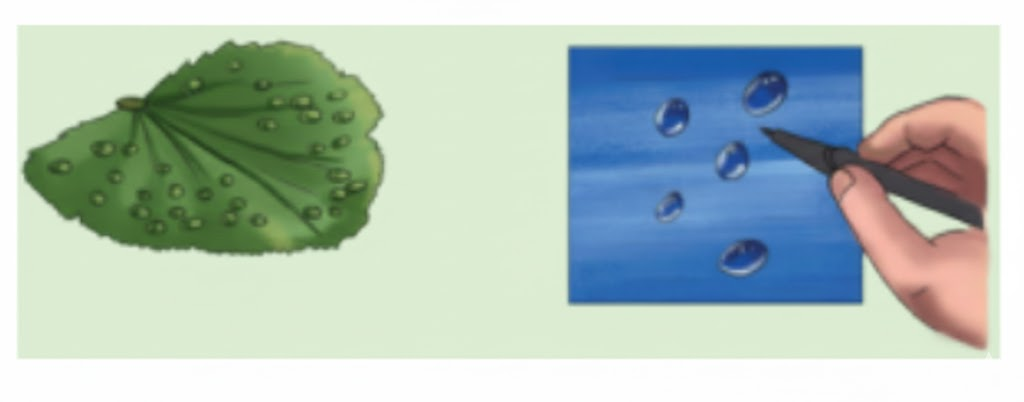
Write your observation.
………………………………….
………………………………….
Answer:
When a drop of water is placed on a plain sheet of paper, the paper absorbs it and may appear damp or slightly wrinkled. But if the paper is coloured with a wax crayon and then a drop of water is added, the water does not get absorbed. Instead, it remains on the surface as a small, rounded droplet.
Activity 10 (Page 19)
Who Eats Whom?-A River Food Chain Game
Distribute slips of paper to students. Each student writes what they choose to be (for example, small fish, big fish, frog, bird, human, crocodile, otter, etc.)
Ask the students to think about what they eat, and who eats them.
Use a string to connect the students who depend on each other for food.
Discuss what would happen if one animal disappears (for example, what if all the fish are gone?).
Answer:
Students should do it by themselves.
Let Us Reflect (Page 20)
Question 1.
Match the following:
Answer:
Question 2.
Why do you think most of the water on Earth cannot be used for drinking or farming?
Answer:
A large portion of Earth’s water is present in the oceans and seas, but it is salty and unsuitable for drinking or agriculture.
Question 3.
Large number of living beings live near water bodies. Why?
Answer: Many organisms stay close to water sources because water is vital for survival. These water bodies supply drinking water, food such as fish and aquatic plants, and also act as habitats for numerous birds and animals.
Question 4.
What would happen if it did not rain in your region for two years?
Answer: If rain did not fall for two years:
Rivers and ponds would eventually dry out.
Crops would fail to grow.
Humans and animals would struggle due to lack of water.
Groundwater reserves would decrease.
Drought and food shortages could occur.
Question 5.
What do you think happens to rainwater in a forest compared to a city?
Answer: In forests, rainwater quickly seeps into the soil, which helps refill groundwater and sustain vegetation. In cities, however, roads, pavements, and buildings are mostly covered with cement, preventing water from entering the ground. As a result, the rainwater flows away rapidly, causing waterlogging and lowering groundwater recharge.
Question 6.
Can you design a house or school that conserves water wisely? What would it include?
Answer: Yes, a water-friendly house or school would have:
A system to collect and store rainwater.
Open garden spaces where the soil can absorb water.
Ways to reuse or recycle water, especially for plants.
Water-efficient taps and toilets.
Soak pits that help replenish groundwater.
Question 7.
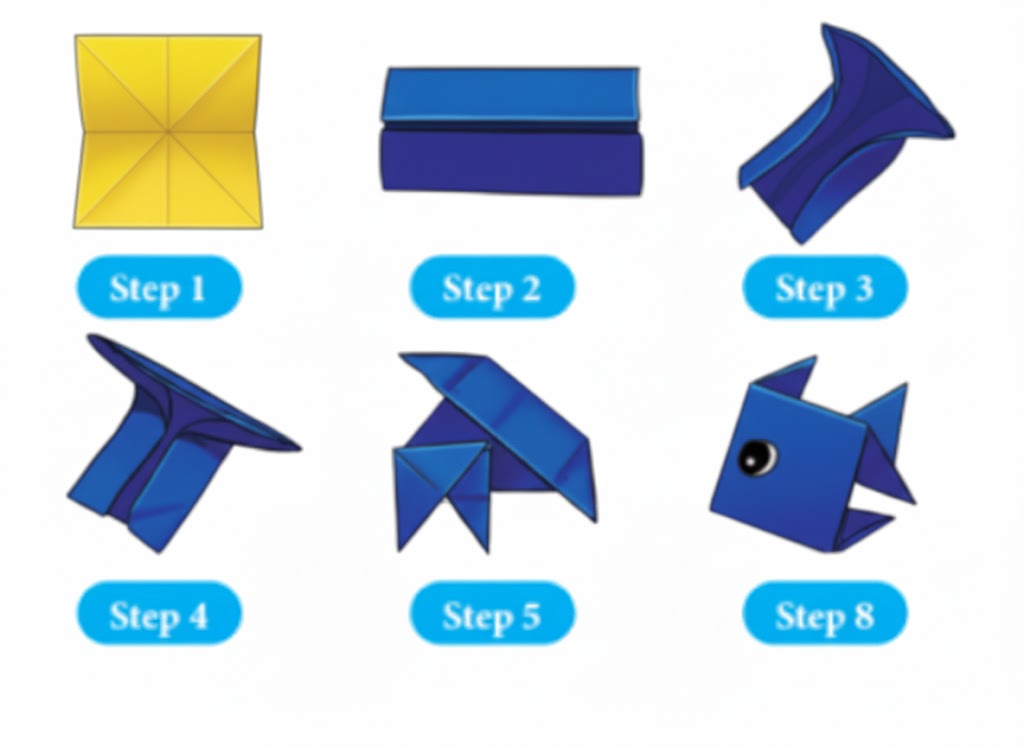
Let us make a fish by folding a piece of paper.
Answer:
Students should do it by themselves.
Key Concepts of Water—The Essence of Life
Mastering Water—The Essence of Life Class 5 helps students understand the vital role of water in our environment. This chapter highlights the water cycle, sources of water, and the importance of conservation in everyday life.
By studying NCERT Solutions for Class 5 EVS Chapter 1, learners gain clarity on water forms, habitats, and sustainable use. Focus on activities and diagrams to boost your grasp of key concepts for upcoming school assessments.
Practice regularly with exercise-based solutions and review the various water sources and their significance. This will enhance your confidence, reinforce knowledge, and help you score higher in the NCERT 2026-27 exams.
FAQs on NCERT Solutions For Class 5 Our Wonderous World Chapter 1 Water-The Essence Of Life - 2026-27 Free PDF Download (Sign-in Required)
1. What is the summary of Class 5 EVS Chapter 1?
Class 5 EVS Chapter 1 'Water—The Essence of Life' explains the importance of water, its sources, forms, uses, and ways to conserve it in our daily lives.
Key points include:
- Sources and uses of water
- Water cycle process
- Water conservation methods
- Role of water in plants, animals, and humans
2. How do you write NCERT solutions for chapter 1?
To write NCERT Solutions for Class 5 EVS Chapter 1, follow these steps for full marks:
- Read each question carefully from the textbook
- Write answers in simple, clear sentences
- Use key terms and definitions from the chapter
- Include labelled diagrams when asked
- Structure long answers in points or small paragraphs
3. Are diagrams important in evs class 5 chapter 1?
Yes, diagrams are important in Class 5 EVS Chapter 1 for understanding concepts like the water cycle and water sources.
Diagrams help you:
- Score extra marks in exams
- Explain processes visually and clearly
- Revise faster before tests
4. How can I score full marks in NCERT Class 5 EVS Chapter 1 answers?
To score full marks in NCERT Solutions for Class 5 Our Wondrous World Chapter 1, you should:
- Write stepwise, logical answers covering all points in the question
- Highlight key words such as 'water cycle', 'conservation', or 'sources of water'
- Include relevant diagrams with proper labels
- Keep answers neat and to the point
- Review marking scheme keywords
5. Where can I download the chapter’s solutions PDF?
You can download the free PDF of NCERT Solutions for Class 5 EVS Chapter 1 on trusted educational platforms.
Benefits include:
- Offline access for revision
- Stepwise, exam-oriented answers
- Inclusion of diagrams and definitions
6. What are the most important topics from 'Water—The Essence of Life' for exams?
The most important topics from Class 5 EVS Chapter 1 likely to appear in school exams are:
- Water cycle and its steps
- Sources of water (rain, river, wells, etc.)
- Importance and uses of water in daily life
- Ways to conserve water
- Properties of water
- Neatly labelled diagrams (e.g., water cycle)
7. How do I present long answers to match CBSE marking?
For long answers in Class 5 EVS Chapter 1, use the following format to match CBSE marking scheme:
- Begin with a short introduction sentence
- Use bullet points or numbered lists for clarity
- Incorporate key terms and definitions
- Add diagrams or flowcharts if relevant
- End with a brief concluding statement
8. Are NCERT Solutions enough for Class 5 EVS exams?
NCERT Solutions are generally sufficient for Class 5 EVS exams, especially when revised with practice worksheets and diagrams.
For best results:
- Thoroughly study textbook solutions
- Practice writing answers within time limits
- Attempt additional sample questions and worksheets
9. How to learn diagrams/maps for this chapter?
To learn diagrams or maps for Class 5 EVS Chapter 1:
- Practise drawing commonly asked diagrams like the water cycle
- Label all parts neatly and accurately
- Follow textbook conventions for colours and symbols
- Use diagram/label checklists from NCERT Solutions
10. Which questions are likely from this chapter in school exams?
The most likely questions from NCERT Class 5 EVS Chapter 1 include:
- Explain the water cycle with a diagram
- List different sources and uses of water
- Describe ways to save water at home and school
- Define 'conservation of water'
11. Do examiners award partial marks for correct steps even if the final answer is wrong?
Yes, CBSE examiners award partial marks for correct steps shown, even if the final answer is incomplete or contains minor mistakes.
To maximise your score:
- Always show all steps clearly
- Use correct headings and labels
- Follow structured formats from NCERT Solutions
12. Are references to textbook page numbers useful during revision?
Referencing textbook page numbers during revision is very useful.
It helps you:
- Quickly locate concepts and diagrams
- Ensure nothing is missed during studies
- Link solutions directly to textbook content
